
Annaka Harris
Author of Conscious: A Brief Guide to the Fundamental Mystery of the Mind
Works by Annaka Harris
Lights On: How Understanding Consciousness Helps Us Understand the Universe (2025) 6 copies, 1 review
Tagged
Common Knowledge
- Birthdate
- 1976
- Gender
- female
- Occupations
- writer
teacher - Organizations
- Project Reason (founder)
- Places of residence
- California, USA
- Associated Place (for map)
- California, USA
Members
Reviews
The argument is familiar. It begins with an honest account of the mystery of consciousness and how there is, as of yet, no adequate or complete scientific explanation for how subjective experience of the material world can arise from the material world. The subjective experience of seeing the color red, for example, is very different from the scientific accounts of wavelengths of light or electrochemical activity in the brain.
It is then pointed out that there is no direct external evidence show more of consciousness, and that only one’s own consciousness can be known with any degree of certainty. The problem of the “philosophical zombie,” however improbable, is nevertheless unnerving as there is no way to definitively prove that consciousness is driving the behavior of others. Consciousness is therefore one of the deepest mysteries in the universe.
Then, inevitably and out of nowhere, the assertion is made—after reviewing a few obligatory neuroscientific case studies mapping neural activity to behavior—that free will and choice is an illusion, not noticing that free will, being inextricably tied to consciousness, must remain a mystery as long as consciousness remains a mystery.
Scientists have not solved the problem of consciousness, nor have philosophers, nor has anyone else. And that means, by extension, that the problem of free will has not been conclusively solved either, despite the confident proclamations of the author and other hard determinists.
In Conscious, it is not long before the discussion takes a turn for the worse. After categorically declaring free will an illusion, Annaka Harris writes:
“Many people, however, object on ethical grounds to the assertion that conscious will is an illusion, holding that people should be held responsible for their choices and behavior. But people can (and should) be held responsible for their actions, for a variety of reasons; the two beliefs are not necessarily contradictory. We can still acknowledge the difference between premeditated, lucid actions and the sort that are caused by mental illness or other disorders of the mind/brain….A distinction between the brain’s intentional behaviors and behaviors that are caused by brain damage or other outside forces (‘against one’s will’) is valid and necessary, especially when structuring a society’s laws and criminal justice system.”
These arguments drive me insane. Notice the action verbs I've highlighted in bold. To “acknowledge” the difference and “structure” a society are both actions, or choices, which contradicts the claim that we all lack free will. If the perpetrators of a crime could not have acted otherwise, then the adjudicators of that crime also could not have acted otherwise, and so the structure of society could not be otherwise, and quickly the entire conversation descends into absurdity.
What Harris wants to say is that all matter, including mind and consciousness, adheres to the physical laws of causation, and that therefore everything is determined ahead of time because nothing can interfere with or escape predetermined physical laws. But if that’s the case, then consciousness can serve no purpose.
The determinist makes the claim that mind and consciousness arises out of the activity of the brain, but that the brain, at the most fundamental level, is simply an arrangement of atoms, and atoms must obey the laws of physics and chemistry, blind to and un-influenced by things like emotion or awareness. The state of the universe at any particular time is the result of preceding causal forces, and therefore that particular state could not have been otherwise. Since the brain, which is composed of atoms, and consciousness, which arises from it, are also part of the universe, any particular conscious state could also not have been otherwise. Any thoughts or emotions or actions you’re taking at this moment could not have been otherwise, therefore free will is an illusion.
But if this is true, then consciousness loses its evolutionary rationale. The purpose of conscious awareness, evolutionarily speaking, is the processing of information for the purposes of making choices among alternatives. If choice is an illusion, and the universe can only be one way, based on the preceding chain of causal events, then consciousness now has no function. If it now comes down to the decision to either believe in free will or deny the underlying rationale for all evolutionary theory, I think I’ll stick with free will.
The fallacy is clear: Harris is stating that there is no explanation for how consciousness or subjective experience arises out of matter, yet insists that consciousness must be subject to the same causal dynamics as matter. This is an assumption with no backing, scientific or otherwise. Ignorance of the characteristics of consciousness cannot be used as justification for the idea that consciousness must conform entirely to the known physical laws.
There’s simply no reason for me to accept these assumptions, and as long as consciousness remains a mystery, and every waking moment of my experience tells me I have some level of choice, it’s more reasonable for me to assume that I do in fact have some degree of choice, especially since I cannot really convince myself otherwise.
Harris then moves on to discuss panpsychism, or the belief that consciousness in some sense pervades all matter. Harris explains that panpsychism is in fact based on science and rationality, but then writes, “In actuality, if a version of panpsychism is correct, everything will still appear to us and behave as it already does.” Well, if that’s the case, then panpsychism is not falsifiable, and therefore not scientific. We have a name for non-falsifiable claims that can never be tested: they are called pseudoscientific.
And so Harris is simultaneously telling us it is a delusion to believe that we may have free will but it is perfectly reasonable to believe that a thermostat or electron may have consciousness.
Harris also fails to adequately address the nuances of the philosophical debate, including the various positions of determinism, compatibilism, and metaphysical libertarianism, opting instead to review of few case studies in neuroscience and promote the idea of hard determinism and the benefits of meditation. What could have been a fascinating intellectual history or philosophical analysis turned out to be a superficial account of a questionable view. And how can you write a book on consciousness and leave out Daniel Dennett? It's either a sign of ignorance or apprehension to include an alternative view.
Where I do agree with Harris is when she writes, at the end of the book, “From our current vantage point, it seems unlikely that we will ever arrive at a true understanding of consciousness.” I agree, and that’s why we shouldn’t be making categorical statements about free will, which is a component of consciousness. There are still too many unknowns about the universe and the mind, including the mysteries of the quantum world and the presence of dark matter and energy, not to mention the fact that we only have sensory access to an infinitesimally small sliver of reality. The determinist is forming their conclusions under the assumption that we have all the relevant information we need, but I think this is wrong.
My suspicion is that we’re missing something, some kind of natural explanation yet undiscovered that would provide some degree of free will. I of course do not know this, but my ignorance is on par with everyone else. And I wouldn’t write a book about it.
----
Also check out my review of, in my opinion, the far superior book I am Not a Brain: Philosophy of Mind for the Twenty-First Century by philosopher Markus Gabriel. show less
It is then pointed out that there is no direct external evidence show more of consciousness, and that only one’s own consciousness can be known with any degree of certainty. The problem of the “philosophical zombie,” however improbable, is nevertheless unnerving as there is no way to definitively prove that consciousness is driving the behavior of others. Consciousness is therefore one of the deepest mysteries in the universe.
Then, inevitably and out of nowhere, the assertion is made—after reviewing a few obligatory neuroscientific case studies mapping neural activity to behavior—that free will and choice is an illusion, not noticing that free will, being inextricably tied to consciousness, must remain a mystery as long as consciousness remains a mystery.
Scientists have not solved the problem of consciousness, nor have philosophers, nor has anyone else. And that means, by extension, that the problem of free will has not been conclusively solved either, despite the confident proclamations of the author and other hard determinists.
In Conscious, it is not long before the discussion takes a turn for the worse. After categorically declaring free will an illusion, Annaka Harris writes:
“Many people, however, object on ethical grounds to the assertion that conscious will is an illusion, holding that people should be held responsible for their choices and behavior. But people can (and should) be held responsible for their actions, for a variety of reasons; the two beliefs are not necessarily contradictory. We can still acknowledge the difference between premeditated, lucid actions and the sort that are caused by mental illness or other disorders of the mind/brain….A distinction between the brain’s intentional behaviors and behaviors that are caused by brain damage or other outside forces (‘against one’s will’) is valid and necessary, especially when structuring a society’s laws and criminal justice system.”
These arguments drive me insane. Notice the action verbs I've highlighted in bold. To “acknowledge” the difference and “structure” a society are both actions, or choices, which contradicts the claim that we all lack free will. If the perpetrators of a crime could not have acted otherwise, then the adjudicators of that crime also could not have acted otherwise, and so the structure of society could not be otherwise, and quickly the entire conversation descends into absurdity.
What Harris wants to say is that all matter, including mind and consciousness, adheres to the physical laws of causation, and that therefore everything is determined ahead of time because nothing can interfere with or escape predetermined physical laws. But if that’s the case, then consciousness can serve no purpose.
The determinist makes the claim that mind and consciousness arises out of the activity of the brain, but that the brain, at the most fundamental level, is simply an arrangement of atoms, and atoms must obey the laws of physics and chemistry, blind to and un-influenced by things like emotion or awareness. The state of the universe at any particular time is the result of preceding causal forces, and therefore that particular state could not have been otherwise. Since the brain, which is composed of atoms, and consciousness, which arises from it, are also part of the universe, any particular conscious state could also not have been otherwise. Any thoughts or emotions or actions you’re taking at this moment could not have been otherwise, therefore free will is an illusion.
But if this is true, then consciousness loses its evolutionary rationale. The purpose of conscious awareness, evolutionarily speaking, is the processing of information for the purposes of making choices among alternatives. If choice is an illusion, and the universe can only be one way, based on the preceding chain of causal events, then consciousness now has no function. If it now comes down to the decision to either believe in free will or deny the underlying rationale for all evolutionary theory, I think I’ll stick with free will.
The fallacy is clear: Harris is stating that there is no explanation for how consciousness or subjective experience arises out of matter, yet insists that consciousness must be subject to the same causal dynamics as matter. This is an assumption with no backing, scientific or otherwise. Ignorance of the characteristics of consciousness cannot be used as justification for the idea that consciousness must conform entirely to the known physical laws.
There’s simply no reason for me to accept these assumptions, and as long as consciousness remains a mystery, and every waking moment of my experience tells me I have some level of choice, it’s more reasonable for me to assume that I do in fact have some degree of choice, especially since I cannot really convince myself otherwise.
Harris then moves on to discuss panpsychism, or the belief that consciousness in some sense pervades all matter. Harris explains that panpsychism is in fact based on science and rationality, but then writes, “In actuality, if a version of panpsychism is correct, everything will still appear to us and behave as it already does.” Well, if that’s the case, then panpsychism is not falsifiable, and therefore not scientific. We have a name for non-falsifiable claims that can never be tested: they are called pseudoscientific.
And so Harris is simultaneously telling us it is a delusion to believe that we may have free will but it is perfectly reasonable to believe that a thermostat or electron may have consciousness.
Harris also fails to adequately address the nuances of the philosophical debate, including the various positions of determinism, compatibilism, and metaphysical libertarianism, opting instead to review of few case studies in neuroscience and promote the idea of hard determinism and the benefits of meditation. What could have been a fascinating intellectual history or philosophical analysis turned out to be a superficial account of a questionable view. And how can you write a book on consciousness and leave out Daniel Dennett? It's either a sign of ignorance or apprehension to include an alternative view.
Where I do agree with Harris is when she writes, at the end of the book, “From our current vantage point, it seems unlikely that we will ever arrive at a true understanding of consciousness.” I agree, and that’s why we shouldn’t be making categorical statements about free will, which is a component of consciousness. There are still too many unknowns about the universe and the mind, including the mysteries of the quantum world and the presence of dark matter and energy, not to mention the fact that we only have sensory access to an infinitesimally small sliver of reality. The determinist is forming their conclusions under the assumption that we have all the relevant information we need, but I think this is wrong.
My suspicion is that we’re missing something, some kind of natural explanation yet undiscovered that would provide some degree of free will. I of course do not know this, but my ignorance is on par with everyone else. And I wouldn’t write a book about it.
----
Also check out my review of, in my opinion, the far superior book I am Not a Brain: Philosophy of Mind for the Twenty-First Century by philosopher Markus Gabriel. show less
Well presented but disappointing. On the positive side, difficult concepts are succinctly explained in easy to understand language without getting bogged down in academic philosophical jargon. The book starts off well, with a brief overview of the Hard Problem of Consciousness and references to a couple of seminal works in the field [by Nagel and Chalmers]. And sets things up nicely by posing some thought provoking questions, that the reader is led to believe will be the subject of the show more remainder of the book as various potential solutions are examined.
Sadly that isn't at all what happens. With insufficient justification, We instead get a hasty denunciation of free-will followed by a full-throated proclamation in support of Panpsychism (the belief that essentially all things are conscious to a lesser or greater extent, not just thinking minds or smart brains). Although she does acknowledge that it's a controversial stance and attempts to address some of the criticisms, it's a weird hill to die on. It's like picking up a book called "Cars: Exploring the Automobile," reading the first chapter about Daimler, Diesel, and Ford, then spending the entire rest of the book focusing on the 1997 Chevy Nova and why it is the best car ever made, while completely ignoring the existence of BMWs and rejecting electric cars in one sentence because they don't have internal combustion engines. show less
Sadly that isn't at all what happens. With insufficient justification, We instead get a hasty denunciation of free-will followed by a full-throated proclamation in support of Panpsychism (the belief that essentially all things are conscious to a lesser or greater extent, not just thinking minds or smart brains). Although she does acknowledge that it's a controversial stance and attempts to address some of the criticisms, it's a weird hill to die on. It's like picking up a book called "Cars: Exploring the Automobile," reading the first chapter about Daimler, Diesel, and Ford, then spending the entire rest of the book focusing on the 1997 Chevy Nova and why it is the best car ever made, while completely ignoring the existence of BMWs and rejecting electric cars in one sentence because they don't have internal combustion engines. show less
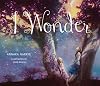
I am completely in love with this book and the message that the author wants the reader to take away from it. The central message of this book is that it is okay to say, “I don’t know.” When you do not know something, it allows you to wonder and use your mind in a creative way. The colors that the illustrator uses are enchanting, and draw your attention to all of the details in the pictures. After the colors on the book cover caught my eye, the texture made me want to read it even show more more—the cover has a unique softness. I really enjoyed how much the characters looked liked actual people, but in such a fantasy environment. I also liked that the mother made her feel okay with not knowing the answer to all of her questions, “I know what you mean, her mother agrees, “and I’m sure other people feel that way too.” I also really like that all of the questions that are in the book are questions that have a million answers to them. This is showing the reader that coming up with your own theory or logic is okay, “I like trying to imagine what was here before the beginning of everything. What do you think was here?” She thinks about it for a long time, and then she has an idea! “I wonder if there were feelings…” The author really opens up the readers mind and shows them that it is okay not to know the answers all the time. show less

This is an intriguing audio documentary that explores the nature of consciousness. Through insightful interviews with top scientists and philosophers, Harris examines whether consciousness is a fundamental part of the universe, like gravity. The conversational format, with diverse perspectives, makes complex concepts more accessible, though some ideas are challenging to follow. Harris’s narration adds a personal touch, making the experience engaging. While the material can be dense, it show more encourages deep reflection on consciousness, existence, and the cosmos. This audiobook offers a thought-provoking journey into one of the greatest mysteries of our time, leaving you questioning everything you know about the mind and the universe. show less
Lists
Awards


You May Also Like


Associated Authors
Statistics
- Works
- 4
- Members
- 576
- Popularity
- #43,501
- Rating
- 3.8
- Reviews
- 18
- ISBNs
- 19
- Languages
- 4