
Kevin Maurer
Author of Damn Lucky: One Man's Courage During the Bloodiest Military Campaign in Aviation History
About the Author
Kevin Maurer has covered special operations forces for nine years. He is the author or co-author of several books including No Easy Day and No Hero: The Evolution of a Navy SEAL. (Bowker Author Biography)
Works by Kevin Maurer
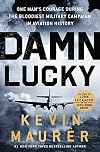
Damn Lucky: One Man's Courage During the Bloodiest Military Campaign in Aviation History (2022) 120 copies, 7 reviews
Gentlemen Bastards: On the Ground in Afghanistan with America's Elite Special Forces (2012) 56 copies, 1 review
Hunting Che: How a U.S. Special Forces Team Helped Capture the World's Most Famous Revolutionary (2013) 52 copies
Rock Force: The American Paratroopers Who Took Back Corregidor and Exacted MacArthur's Revenge on Japan (2020) 44 copies, 1 review
Sebastian Heussler's New Artful Fencing Book: A Translation and Biographical Account (2019) 2 copies
Secret Wars Journal #2 1 copy
Associated Works
No Easy Day: The Autobiography of a Navy Seal: The Firsthand Account of the Mission That Killed Osama Bin Laden (2012) 2,494 copies, 71 reviews
Tagged
Common Knowledge
- Birthdate
- 1973
- Gender
- male
- Education
- Old Dominion University, Norfolk, Virginia, USA
- Occupations
- journalist
author - Nationality
- USA
- Associated Place (for map)
- USA
Members
Reviews
Damn Lucky: One Man's Courage During the Bloodiest Military Campaign in Aviation History by Kevin Maurer
This was a fantastic book and I am pretty sure that I annoyed everyone I work with because I wouldn't stop talking about this book! My first question every time I had a meeting was "Do you like to read?" and even if the answer is no, I told them how amazing this story is and how even if they only read one book this year, this is the book they should read.
I work in Civil Aviation and it was really cool to learn about the planes that John “Lucky” Luckadoo trained on and flew. I can't show more imagine being asked to fly a plane into enemy territory with the amount of training they received.
Kevin Maurer does a fantastic job of telling Lucky's story. I cried a lot during this book, some happy tears but most were sad tears. Lucky outlived so many of his friends and fellow soldiers. I googled the heck out of Lucky as soon as I was done reading because I had to know if he was still alive.
Thank you Lucky for everything you sacrificed and thank you Kevin for telling the story. show less
I work in Civil Aviation and it was really cool to learn about the planes that John “Lucky” Luckadoo trained on and flew. I can't show more imagine being asked to fly a plane into enemy territory with the amount of training they received.
Kevin Maurer does a fantastic job of telling Lucky's story. I cried a lot during this book, some happy tears but most were sad tears. Lucky outlived so many of his friends and fellow soldiers. I googled the heck out of Lucky as soon as I was done reading because I had to know if he was still alive.
Thank you Lucky for everything you sacrificed and thank you Kevin for telling the story. show less
Damn Lucky: One Man's Courage During the Bloodiest Military Campaign in Aviation History by Kevin Maurer
Capt. John ‘Lucky’ Luckadoo’s story is a harrowing tale of courage in the face of the most horrendous circumstances imaginable. The odds against a B-17 bomber crew completing their required 25 missions were so high as to make their job arguably the most dangerous of any American Serviceman serving during World War II. What Capt. Luckadoo and his fellows endured in their efforts to end the war is something we should all learn about and understand. I personally cannot comprehend what show more kind of courage is required to climb into a bomber every day knowing the chances you and the 9 crewmen with will return are less than 50-50. And yet these men did it, not once but again and again until they completed 25 missions or, more likely, their luck ran out.
It’s difficult to read about this subject without addressing the morality of aerial bombardments and this book does not shy away from it. It discusses the whole topic of aerial bombing campaigns and their proponents, from Italian General Guilio Douhet, who first suggested bombing population centers to reduce popular support for the war (it didn’t work) to American Billy Mitchell, who advocated pinpoint strikes against the enemy’s industrial production facilities. Also covered were the differing strategies advocated by the RAF, which favored low altitude night-time bombings vs. the Americans’ preference for high altitude daytime raids. It didn’t take Lucky long to sour on war in general and what had one been an enthusiastic desire to strike at the enemy soon evolved into a single-minded drive to just survive and make it home. He summed up his thoughts beautifully in the afterword to the book that he penned himself
We were young citizen-soldiers, terribly naive and gullible about what we would be confronted with in the air war over Europe and the profound effect it would have upon every fiber of our being for the rest of our lives. We were all afraid, but it was beyond our power to quit. We volunteered for the service and, once trained and overseas, felt we had no choice but to fulfill the mission assigned.
While proud that he had served his country in time of need, he came to believe that war was a futile and foolish ’commentary on adversaries’ failure to reach a reasonable resolution of their differences’.
In this afterword, he not only shares his beliefs about war but also shares his attitudes about the current political climate in the United States. If, while reading this book, you pictured Lucky as an embittered hawk spouting war stories at the VFW hall, you would be very mistaken. In his summation, this 99 year-old veteran gives me hope that our country can once again become a nation deserving of such fine soldiers as he.
Having survived such folly, I now fear the freedoms bought with the lives and blood of my generation are being squandered by the current generation. I am appalled that we stand today on the precipice of a civil war. We are, actually, the Dis-United States of America. We are witnessing the betrayal of our cherished values from within—as well as without.
Never forget that we are all first and foremost Americans. We should look for common goals and seek compromise, rather than conquering the other side, which serves only to divide us. As private citizens, we can do something to alter our perspective. United, we’ve done amazing things: we defeated fascism, put a man on the moon, and created a cultural and economic empire that is the envy of the world.
Somehow, we’ve forgotten that. America will never be perfect. It will always have problems. But the only solution is to stay together and find common ground. Stay united. We proved that in World War II, and we can prove it again.
The only issue I have with this book is not with Capt. Luckadoo or with his story. I found that the biggest problem with it was in the way the author chose to write it. Books about actual events are generally written from a historian’s perspective or as a memoir. The style that author Maurer chose is more of a mishmashed amalgam of the two that reads like an old veteran telling war stories around the cracker barrel at the general store. While that might have worked if he had ghost-written the book from Lucky’s POV, it fails if you are trying to pass yourself off as a historian. One thing that irked me no end was that after providing Capt. Luckadoo’s correct name on page one of the book, he never referred to him by anything other than Lucky, his nickname. This is a history book, not a remake of Topgun. Capt. Luckadoo should be afforded the respect that his rank and service entitles him to. Several lines in the book, while written to sound folksy, are just plain inaccurate. In chapter 8, he writes ‘There was no reason to not answer an interphone call. If a crew member nodded off, it was a sure sign of oxygen deprivation.’ Without being an authority on the subject, I can immediately think of several reasons why anoxia isn’t the sure sign that the author contends. A few possibilities that were already suggested in the book are that he could be dead, wounded, asleep, frozen, or hungover. The interphone itself could also have been damaged. My point is that a good historian checks his facts and does not say something is certain or ‘sure’ unless it is. Capt. Luckadoo deserves more.
Bottom line: We should all strive to learn the stories of those who risked their lives for the betterment of all of us. We owe it to Capt. Luckadoo and to all of the soldiers, sailors, airmen and marines who served and did not return to understand and appreciate their sacrifice. For this, and for his excellent Afterword, I highly recommend this book.
*Quotations are cited from an advanced reading copy and may not be the same as appears in the final published edition. The review was based on an advanced reading copy obtained at no cost from the publisher in exchange for an unbiased review. While this does take any ‘not worth what I paid for it’ statements out of my review, it otherwise has no impact on the content of my review.
FYI: On a 5-point scale I assign stars based on my assessment of what the book needs in the way of improvements:
*5 Stars – Nothing at all. If it ain’t broke, don’t fix it.
*4 Stars – It could stand for a few tweaks here and there but it’s pretty good as it is.
*3 Stars – A solid C grade. Some serious rewriting would be needed for this book to be considered great or memorable.
*2 Stars – This book needs a lot of work. A good start would be to change the plot, the character development, the style, and the ending.
*1 Star – The only thing that would improve this book is a good bonfire. show less
It’s difficult to read about this subject without addressing the morality of aerial bombardments and this book does not shy away from it. It discusses the whole topic of aerial bombing campaigns and their proponents, from Italian General Guilio Douhet, who first suggested bombing population centers to reduce popular support for the war (it didn’t work) to American Billy Mitchell, who advocated pinpoint strikes against the enemy’s industrial production facilities. Also covered were the differing strategies advocated by the RAF, which favored low altitude night-time bombings vs. the Americans’ preference for high altitude daytime raids. It didn’t take Lucky long to sour on war in general and what had one been an enthusiastic desire to strike at the enemy soon evolved into a single-minded drive to just survive and make it home. He summed up his thoughts beautifully in the afterword to the book that he penned himself
We were young citizen-soldiers, terribly naive and gullible about what we would be confronted with in the air war over Europe and the profound effect it would have upon every fiber of our being for the rest of our lives. We were all afraid, but it was beyond our power to quit. We volunteered for the service and, once trained and overseas, felt we had no choice but to fulfill the mission assigned.
While proud that he had served his country in time of need, he came to believe that war was a futile and foolish ’commentary on adversaries’ failure to reach a reasonable resolution of their differences’.
In this afterword, he not only shares his beliefs about war but also shares his attitudes about the current political climate in the United States. If, while reading this book, you pictured Lucky as an embittered hawk spouting war stories at the VFW hall, you would be very mistaken. In his summation, this 99 year-old veteran gives me hope that our country can once again become a nation deserving of such fine soldiers as he.
Having survived such folly, I now fear the freedoms bought with the lives and blood of my generation are being squandered by the current generation. I am appalled that we stand today on the precipice of a civil war. We are, actually, the Dis-United States of America. We are witnessing the betrayal of our cherished values from within—as well as without.
Never forget that we are all first and foremost Americans. We should look for common goals and seek compromise, rather than conquering the other side, which serves only to divide us. As private citizens, we can do something to alter our perspective. United, we’ve done amazing things: we defeated fascism, put a man on the moon, and created a cultural and economic empire that is the envy of the world.
Somehow, we’ve forgotten that. America will never be perfect. It will always have problems. But the only solution is to stay together and find common ground. Stay united. We proved that in World War II, and we can prove it again.
The only issue I have with this book is not with Capt. Luckadoo or with his story. I found that the biggest problem with it was in the way the author chose to write it. Books about actual events are generally written from a historian’s perspective or as a memoir. The style that author Maurer chose is more of a mishmashed amalgam of the two that reads like an old veteran telling war stories around the cracker barrel at the general store. While that might have worked if he had ghost-written the book from Lucky’s POV, it fails if you are trying to pass yourself off as a historian. One thing that irked me no end was that after providing Capt. Luckadoo’s correct name on page one of the book, he never referred to him by anything other than Lucky, his nickname. This is a history book, not a remake of Topgun. Capt. Luckadoo should be afforded the respect that his rank and service entitles him to. Several lines in the book, while written to sound folksy, are just plain inaccurate. In chapter 8, he writes ‘There was no reason to not answer an interphone call. If a crew member nodded off, it was a sure sign of oxygen deprivation.’ Without being an authority on the subject, I can immediately think of several reasons why anoxia isn’t the sure sign that the author contends. A few possibilities that were already suggested in the book are that he could be dead, wounded, asleep, frozen, or hungover. The interphone itself could also have been damaged. My point is that a good historian checks his facts and does not say something is certain or ‘sure’ unless it is. Capt. Luckadoo deserves more.
Bottom line: We should all strive to learn the stories of those who risked their lives for the betterment of all of us. We owe it to Capt. Luckadoo and to all of the soldiers, sailors, airmen and marines who served and did not return to understand and appreciate their sacrifice. For this, and for his excellent Afterword, I highly recommend this book.
*Quotations are cited from an advanced reading copy and may not be the same as appears in the final published edition. The review was based on an advanced reading copy obtained at no cost from the publisher in exchange for an unbiased review. While this does take any ‘not worth what I paid for it’ statements out of my review, it otherwise has no impact on the content of my review.
FYI: On a 5-point scale I assign stars based on my assessment of what the book needs in the way of improvements:
*5 Stars – Nothing at all. If it ain’t broke, don’t fix it.
*4 Stars – It could stand for a few tweaks here and there but it’s pretty good as it is.
*3 Stars – A solid C grade. Some serious rewriting would be needed for this book to be considered great or memorable.
*2 Stars – This book needs a lot of work. A good start would be to change the plot, the character development, the style, and the ending.
*1 Star – The only thing that would improve this book is a good bonfire. show less
Damn Lucky: One Man's Courage During the Bloodiest Military Campaign in Aviation History by Kevin Maurer
2.5 stars. This was an okay book. Some of the combat sequences are memorable, and I will never cease to feel amazement and gratitude to those who went to war to defeat nazism. However, there are a number of self serving “tells” in the book that I think Lucky probably thought reflected credit on himself but in fact did the opposite. There’s also a bit of vacuous / solipsistic / narcissistic religious claptrap.
Damn Lucky: One Man's Courage During the Bloodiest Military Campaign in Aviation History by Kevin Maurer
What a book, what a man. This is the story of Maj.(ret.) John Luckadoo, who served in the 8th Air Corp during WWII flying a B-17 bomber over Nazi Germany. And what a story it is. As a Second Lieutenant he was at the controls of this iconic warplane and the harrowing encounters he experienced and survived are amazing.
The famous bombing missions during the war are well chronicled but none of us could come close to knowing what these men endured and sacrificed. But this book does define and show more deliver on the courage, bravery, and certainly terror these men faced. Many never returned from the skies on what seemed impossible missions. It can be debated whether some of the decisions made by command were wrong or even fool hardy. But the men assigned to carry them out should forever be honored by us all, as everything they did to carry them out was truly heroic.
Maj. Luckadoo certainly is one of these heroes and his ordeal in the skies and his losses, including his best friend, are heart rendering. He did his job well, he served his country as pledged, he completed his 25 missions. Hats off to you sir.
His life after service also played out well despite some of the snafus he encountered in the bureaucratic military system. He married the love of his life and went on to a successful career. And now at 99 is still with us. And his personal message at the end of the book is something everyone needs to read and respect. This comes from a man who served his country putting his life on the line as so many did, and he leaves us with a measure of what it all means in the end.
I had my own encounters with a few other of these great men from that war. My father served with a bomb group in the 15th Air Corp in southern Italy. I also met and got to know one of the pilots of the 8th while out cycling, one of my hobbies. All of these men who served during this time deserve our sincere respect and gratitude. They will soon all be gone. But never forgotten. show less
The famous bombing missions during the war are well chronicled but none of us could come close to knowing what these men endured and sacrificed. But this book does define and show more deliver on the courage, bravery, and certainly terror these men faced. Many never returned from the skies on what seemed impossible missions. It can be debated whether some of the decisions made by command were wrong or even fool hardy. But the men assigned to carry them out should forever be honored by us all, as everything they did to carry them out was truly heroic.
Maj. Luckadoo certainly is one of these heroes and his ordeal in the skies and his losses, including his best friend, are heart rendering. He did his job well, he served his country as pledged, he completed his 25 missions. Hats off to you sir.
His life after service also played out well despite some of the snafus he encountered in the bureaucratic military system. He married the love of his life and went on to a successful career. And now at 99 is still with us. And his personal message at the end of the book is something everyone needs to read and respect. This comes from a man who served his country putting his life on the line as so many did, and he leaves us with a measure of what it all means in the end.
I had my own encounters with a few other of these great men from that war. My father served with a bomb group in the 15th Air Corp in southern Italy. I also met and got to know one of the pilots of the 8th while out cycling, one of my hobbies. All of these men who served during this time deserve our sincere respect and gratitude. They will soon all be gone. But never forgotten. show less
You May Also Like


Associated Authors
Statistics
- Works
- 10
- Also by
- 5
- Members
- 324
- Popularity
- #73,084
- Rating
- 3.7
- Reviews
- 10
- ISBNs
- 32
- Languages
- 2