
Erik Bear
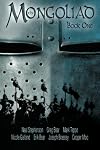
Author of The Mongoliad: Book One
Works by Erik Bear
Associated Works
Tagged
Common Knowledge
- Birthdate
- 19??
- Gender
- male
- Relationships
- Bear, Greg (father)
Anderson, Poul (grandfather) - Short biography
- Erik Bear has worked in many mediums, including video games, comic books, and regular books without pictures. He is the author of Jurassic Park: Dangerous Games, a comic book from IDW Publishing, and is one of the co-authors of The Mongoliad, a historical fantasy novel published by 47 North.
- Nationality
- USA
- Places of residence
- Seattle, Washington, USA
- Associated Place (for map)
- Washington, USA
Members
Reviews
I'm a huge Neal Stephenson fan and put off starting this series for some time (years) because I knew it would be different. Not different in the way that all Stephenson works are a bit different, I worried it would differ enough from his other works that I just wouldn't like it. Once I let go and embraced this as a not-quite-Stephenson piece of historical fiction, I was pulled into the story. The battle scenes are long and technical, not my forte but the descriptions are such that I can show more actually envision the action. My interest is more the characters and the historical context. I love that we have viewpoints within the Mongol camp and female characters that are more than victims/cheerleaders/sperm receptacles. The reach of this empire, touched on but mostly glossed over in my Western history classes, is vast and I'm taking time as I read to research the areas and time covered in the book. I know what we're heading toward and look forward to learning how these characters get there. I will read at least the next two volumes in this series, I'm not sure if I will make it through all nine. show less
Impression 30% through the book? Editing makes a HUGE difference. I subscribed to the Foreworld project for a year, but I got bogged down in chapter four and couldn't get restarted. I started it over using the iPad app to read the web version, but again I got bogged down in too many plot lines. I couldn't keep track of the characters and thus couldn't really care what happened to them.
Then I bought the Kindle version (not while it was .99, sadly) and this time the story-lines are curated in show more a way that keeps my attention. The Mongoliad is a project about authoring and writing as much as it is a finished project and one thing I think it demonstrates clearly is that stories may move from the beginning to the end, but they aren't written that way and a good editor can make the difference between something that never quite gets off the ground and a rewarding tale. Even when the books are essentially the same content.
*********************************
Impression upon reaching the end: the book isn't finished, but neither am I finished with these characters. I'm invested in them and their story lines. So much so that I'm annoyed that there wasn't any resolution or climax. Back to editing, I think everything worked except the packaging as a novel. This is a serial work in progress. The last page contained no satisfying conclusion or cliff hanger, the story just stopped. That was a bit abrupt and jarring, but only when I think of it as a novel. When I think of how it is being written, that makes perfect sense.
Now, I think I'm going to resubscribe to the Foreworld project so I can read the new chapters as they come out. show less
Then I bought the Kindle version (not while it was .99, sadly) and this time the story-lines are curated in show more a way that keeps my attention. The Mongoliad is a project about authoring and writing as much as it is a finished project and one thing I think it demonstrates clearly is that stories may move from the beginning to the end, but they aren't written that way and a good editor can make the difference between something that never quite gets off the ground and a rewarding tale. Even when the books are essentially the same content.
*********************************
Impression upon reaching the end: the book isn't finished, but neither am I finished with these characters. I'm invested in them and their story lines. So much so that I'm annoyed that there wasn't any resolution or climax. Back to editing, I think everything worked except the packaging as a novel. This is a serial work in progress. The last page contained no satisfying conclusion or cliff hanger, the story just stopped. That was a bit abrupt and jarring, but only when I think of it as a novel. When I think of how it is being written, that makes perfect sense.
Now, I think I'm going to resubscribe to the Foreworld project so I can read the new chapters as they come out. show less
The Mongoliad is maybe two solid swashbuckling novellas, burdened by a bunch of cruft. The whole series was an experiment in serialized collaborative fiction based around historical weapons-martial arts by Neal Stephenson and a bunch of other authors. The good stuff are the descriptions of melee skirmishes, which are action-packed and tactical. Of the two main stories, I more enjoyed the intrigue of Cansukh, a Mongol warrior dispatched to the capitol of Karakorum to do something about the show more alcoholic depression of Khagan Ogedai Khan, and his struggle to survive an atmosphere of decadence and intrigue with the help of the Chinese tutor and slave Lian. The other story is a lengthy quest by Cnan, a female messenger, and 11 knights to cross the Mongol empire and assassinate Ogedai Khan. From a structural perspective, the problem is that it takes about a third of the book for these stories to actually start moving, a long slog of subpar materials, and both plots are barely advanced by the end, leaving plenty more the sequels.
But from a bigger perspective, I hate how much stuff Stephenson and his collaborators just made up for the story. The Baroque Cycle was tightly grounded in the actual history of the the period. The fictionalized viewpoint characters were a lot like real people, and spent a lot of time interacting with real people. 1241 is a fascinating year in European history, with various medieval knightly orders at the height of their power and the Mongols conquering the world. Rather than engage with real history, Stephenson and his collaborators choose to invent a fictional society of Binder messengers (what, are actual Silk Road merchants boring?), and the Ordo Militum Vindicis Intactae, a knight-errant brotherhood nominally Catholic, but with secret pagan origins, and none of the actual social ties that make real feudalism so interesting. I get that this lets them stretch their story out over centuries and avoid nerds saying "gnah, actually according to this source...", but it leaves everything disconnected.
The best summary of this story might be in the story itself. One of the Mongol Khans has decided conquering is boring and runs an open call gladiatorial game before invading Europe. A knight fights a samurai. The only objective is to buy Europe a little more time by distracting the khan. It's a really cool fight, but for little purpose. show less
But from a bigger perspective, I hate how much stuff Stephenson and his collaborators just made up for the story. The Baroque Cycle was tightly grounded in the actual history of the the period. The fictionalized viewpoint characters were a lot like real people, and spent a lot of time interacting with real people. 1241 is a fascinating year in European history, with various medieval knightly orders at the height of their power and the Mongols conquering the world. Rather than engage with real history, Stephenson and his collaborators choose to invent a fictional society of Binder messengers (what, are actual Silk Road merchants boring?), and the Ordo Militum Vindicis Intactae, a knight-errant brotherhood nominally Catholic, but with secret pagan origins, and none of the actual social ties that make real feudalism so interesting. I get that this lets them stretch their story out over centuries and avoid nerds saying "gnah, actually according to this source...", but it leaves everything disconnected.
The best summary of this story might be in the story itself. One of the Mongol Khans has decided conquering is boring and runs an open call gladiatorial game before invading Europe. A knight fights a samurai. The only objective is to buy Europe a little more time by distracting the khan. It's a really cool fight, but for little purpose. show less

Disappointed. It almost makes me not want to continue with Mongoliad anymore, because getting through this felt like a chore. But to be fair, I admit my problem had to do with Book Two's direction more than anything, and that's more a matter of personal taste. Book One was different, and Book Three may yet turn out to be more my cup of tea. You never know!
Either way, these books are always tough as hell to review, because of the multiple authors and their serialized nature. Bottom line: this show more one didn't live up to my expectations. I was much less interested in the story and the characters compared to Book One. Mostly I was just bored because the plot felt like filler, and characters I liked from the first book got very little attention this time around. Does this mean I'm being set up for something much greater in Book Three? Here's hoping. show less
Either way, these books are always tough as hell to review, because of the multiple authors and their serialized nature. Bottom line: this show more one didn't live up to my expectations. I was much less interested in the story and the characters compared to Book One. Mostly I was just bored because the plot felt like filler, and characters I liked from the first book got very little attention this time around. Does this mean I'm being set up for something much greater in Book Three? Here's hoping. show less
Awards

You May Also Like
Associated Authors
Statistics
- Works
- 11
- Also by
- 2
- Members
- 1,800
- Popularity
- #14,294
- Rating
- 3.5
- Reviews
- 63
- ISBNs
- 30
- Languages
- 4