
Simon Hawke
Author of The Romulan Prize
About the Author
Disambiguation Notice:
Nicholas Yerkamov legally changed his name to Simon Hawke. He has also written under the pennames S.L. Hunter and J.D. Masters.
(ger) Nicholas Yerkamov änderte seinen Namen zu Simon Hawke. He has also written under the pennames S.L. Hunter and J.D. Masters.
Image credit: goodreads
Series
Works by Simon Hawke
Hamburger Heaven 1 copy
Fortunes Of A Fool 1 copy
Associated Works
Isaac Asimov's Wonderful Worlds of Science Fiction, Volume 2: The Science Fictional Olympics (1984) — Contributor — 98 copies, 1 review
A Date Which Will Live in Infamy: An Anthology of Pearl Harbor Stories That Might Have Been (2001) — Contributor — 16 copies
The Magazine of Fantasy and Science Fiction December 1980, Vol. 59, No. 6 (1980) — Author — 15 copies
Tagged
Common Knowledge
- Other names
- Yermakov, Nikolai Valentinovitch (name at birth)
Yermakov, Nicholas V.
Yermakov, Nicholas
Yermakov, Nick
Hunter, S. L. (pen name)
Masters, J. D. (pen name) - Birthdate
- 1951-09-30
- Gender
- male
- Occupations
- science fiction writer
fantasy writer - Organizations
- Science Fiction and Fantasy Writers of America
Authors Guild - Awards and honors
- Colorado Writer of the Year (1992)
- Nationality
- USA
- Birthplace
- New York, New York, USA
- Disambiguation notice
- Nicholas Yerkamov legally changed his name to Simon Hawke. He has also written under the pennames S.L. Hunter and J.D. Masters.
- Associated Place (for map)
- New York, USA
Members
Reviews
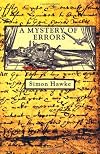
Some books have stories outside their own stories…personal stories. My wife got me a copy of this for my birthday some 19 years ago (along with an autographed copy of another Hawke book). I read a few pages, and then it sat on my nightstand for the next five years until we moved from Korea back to he states, and then in our library until it was lost with so many other books to soot and smoke damage from a fire in 2013. Hawke is one of a few authors as fall back on when I feel “reader’s show more block” creeping up on me, but this short series isn’t one of my “go to” books… mainly because I hadn’t gotten back to it after all these years. And now the error of that mystery has been corrected. It took more than half of the book before I got engaged, but I did and I did enjoy it.
Hawke says in his afterward that some might think him cheeky (paraphrased) for presuming to write about Shakespeare as a fictional character, but I agree with him that people take Shakespeare too seriously (again, paraphrasing). I don’t buy the analysis of so many… yes, so many who have based their academic careers on such analysis. I liked Hawke’s take on Shakespeare:
Okay, probably not just my opinion. show less
Hawke says in his afterward that some might think him cheeky (paraphrased) for presuming to write about Shakespeare as a fictional character, but I agree with him that people take Shakespeare too seriously (again, paraphrasing). I don’t buy the analysis of so many… yes, so many who have based their academic careers on such analysis. I liked Hawke’s take on Shakespeare:
He knew that his medium was an ephemeral one and he regarded it accordingly. He wrote his works to be performed, not deconstructed in a college classroom or analyzed with pathological precision for every possible nuance and interpretation. He understood, without a doubt, that his was a collaborative medium, that actors would bring their own contributions to the table, that plays were a dynamic group effort of the entire company, not a showcase for an individual writer's talent and/or ego.IMO, Shakespeare is far better seen and heard than read.
Students who are forced to sit through agonizing lectures by monotonous professors who drone on and on about iambic pentameter and heroic couplets never truly learn to appreciate the Bard, and more's the pity, because Shakespeare himself would have been aghast to learn that his words were putting young captive audiences to sleep. He wanted, more than anything, to make them laugh, or weep, or rage ... to make them feel, for that was why Elizabethan audiences went to the theatre.
Okay, probably not just my opinion. show less

Delightful whimsy. Cross-over to fantasy universes are done and done again, but Hawke weaves in groan-inducing puns. a self-aware narrator, and a character who is aware of the narrator! A favorite, and just what the doctor ordered for post-surgery recovery.
Five stars because I'll keep coming back to it.
Five stars because I'll keep coming back to it.

As the leading historical adjustment team of the First Division of the U.S. Army Temporal Corps, Lucas Priest, Finn Delaney, and Andre Cross are used to being called into hazardous situations in which the fate of their world is at stake. But when a sergeant in the USATC serving as a British soldier in 1897 Afghanistan is found dead next to the identical body of a Ghazi tribesman, it is clear that the trio face their most dangerous mission yet. Not only does it appear that a time stream split show more has taken place, but that the people in that timeline are also operating in the past. To find the split, Priest, Delaney and Cross join a relief expedition dispatched by the British Army into the Khyber Pass to deal with rebelling tribesmen. But what if the situation is more serious than it seems? And why is it that none of their briefing materials include any mention of a war correspondent named Winston Churchill?
With the sixth book in his Time Wars series, Simon Hawke shifts his focus to a new threat that will predominate for the rest of its run. Having previously dealt with the consequences of temporal accidents and the machinations of the history-disrupting terrorists known as the Timekeepers, the time commandos now face an alternate timeline that has declared war against them. This increases the stakes, and allows Hawke to introduce the prospect of temporal doppelgangers and a higher degree of emotional conflict. His efficient storytelling makes for a zippy, Kipling-flavored novel that is only occasionally derailed by periodic exposition-dumps that his characters make in order to clear the way for other developments, resulting in an enjoyable sci-fi adventure that provides a pleasant afternoon of light reading. show less
With the sixth book in his Time Wars series, Simon Hawke shifts his focus to a new threat that will predominate for the rest of its run. Having previously dealt with the consequences of temporal accidents and the machinations of the history-disrupting terrorists known as the Timekeepers, the time commandos now face an alternate timeline that has declared war against them. This increases the stakes, and allows Hawke to introduce the prospect of temporal doppelgangers and a higher degree of emotional conflict. His efficient storytelling makes for a zippy, Kipling-flavored novel that is only occasionally derailed by periodic exposition-dumps that his characters make in order to clear the way for other developments, resulting in an enjoyable sci-fi adventure that provides a pleasant afternoon of light reading. show less

My fourth book by Hawke originally published under the Nicholas V. Yermakov name.
This is one of those books that kind of threw me for a loop and I'm still not 100% certain how I'm 'supposed' to take it. If the main character is supposed to be a 'hero', then, yeah, I'd probably give this close to 1 or less stars. If, as I suspect, it's something like a look into the creation of a cult like organization, then this would be closer to 4 stars. So, as it stands, I rate this 3.5.
So then - show more initially I didn't realize this was a book published in 1980-something. There's indicators that the book was written in the '80s, but that might have just been 'atmosphere'. I mean, the author did live through the 1980s. As an adult. Could have a future where people are smoking a lot. Not, immediately, an indication that this was a near future book written during a period of time people were still choking away on cigarettes. Heavy mention of land-lines didn't mean cell-phones didn't exist - the phones mentioned were part of a information/phone service. The kind of thing, even today, run through land-lines. So, yeah . . ..
Okay then - the book involves as a main character an advertising executive for a company that sells 'auras' - electronic devices that people wear, 'sheath themselves within', so that they can display rain clouds, classical musicians, etc. in place of their own appearance (or, their own appearance 'bettered'). Somewhere along the way, the main character, presented up to this point as a whiny, bratty, man-child, finds himself in his office laughing manically. He'd been 'disillusioned'. And has found 'the truth'. And plans to be 'clean' now.
Basically he is the kind of guy whose 'truth' involves: (1) anything except complete openness is a lie (so, yeah, he'd probably be all for Facebook saying - only 'real names' allowed; and probably for the times when Facebook 'accidentally' breaks some privacy shield/setting); (2) anything that isn't 'his truth' is wrong; (3) compromise is evil; (4) fucking around behind your girlfriend's back is a-okay if you are a new age-y self-help guru who charges people to come hear him talk; (5) his 'truth' is really important, dude, but . . . he can't explain it, man, you can only 'experience it' - the guy had mentioned this while on a talk show, spouting bull-shit and giving run around non-answers, and gives an example of trying to explain to someone what it's like to be caught out in the rain to someone who had never experienced that. Then proceeds to give a perfect explanation of what that is like. But refuses to dish up whatever the fuck his philosophy might actually be. Because . . . reasons.
He trains people to purposefully antagonize people, to make them defensive. If his message is so great, maybe, you know, actually tell people what it might be? Instead of being all super aggressive and putting people on defensive?
So, yeah, if this book is supposed to be about showing this guy as a hero, or his 'ideas' as anything more than bull-shit, then yeah - I'd give this something like 1 or 1/2 stars.
By the way, I noticed one little thing when I finished, then turned back to the cover again to exit the book. This is one of those occasions wherein Hawke's decision to go with very plain covers that show just the title and author name actually works brilliantly with this specific book. It looked like - the book is 'clean' and has been 'disillusioned'. (by the way, the guy whose name I probably should have included in here at some point, sees 'disillusioned' as a good thing. He likes taking words and misapplying them. Here he has broken through the illusions that are caused by people making the choice to wear aura's. So he is 'disillusioned' now.)
Oh, and that rather graphic sex scene was unexpected and off-putting. Came out of left field. Just . . . graphic sex. show less
This is one of those books that kind of threw me for a loop and I'm still not 100% certain how I'm 'supposed' to take it. If the main character is supposed to be a 'hero', then, yeah, I'd probably give this close to 1 or less stars. If, as I suspect, it's something like a look into the creation of a cult like organization, then this would be closer to 4 stars. So, as it stands, I rate this 3.5.
So then - show more initially I didn't realize this was a book published in 1980-something. There's indicators that the book was written in the '80s, but that might have just been 'atmosphere'. I mean, the author did live through the 1980s. As an adult. Could have a future where people are smoking a lot. Not, immediately, an indication that this was a near future book written during a period of time people were still choking away on cigarettes. Heavy mention of land-lines didn't mean cell-phones didn't exist - the phones mentioned were part of a information/phone service. The kind of thing, even today, run through land-lines. So, yeah . . ..
Okay then - the book involves as a main character an advertising executive for a company that sells 'auras' - electronic devices that people wear, 'sheath themselves within', so that they can display rain clouds, classical musicians, etc. in place of their own appearance (or, their own appearance 'bettered'). Somewhere along the way, the main character, presented up to this point as a whiny, bratty, man-child, finds himself in his office laughing manically. He'd been 'disillusioned'. And has found 'the truth'. And plans to be 'clean' now.
Basically he is the kind of guy whose 'truth' involves: (1) anything except complete openness is a lie (so, yeah, he'd probably be all for Facebook saying - only 'real names' allowed; and probably for the times when Facebook 'accidentally' breaks some privacy shield/setting); (2) anything that isn't 'his truth' is wrong; (3) compromise is evil; (4) fucking around behind your girlfriend's back is a-okay if you are a new age-y self-help guru who charges people to come hear him talk; (5) his 'truth' is really important, dude, but . . . he can't explain it, man, you can only 'experience it' - the guy had mentioned this while on a talk show, spouting bull-shit and giving run around non-answers, and gives an example of trying to explain to someone what it's like to be caught out in the rain to someone who had never experienced that. Then proceeds to give a perfect explanation of what that is like. But refuses to dish up whatever the fuck his philosophy might actually be. Because . . . reasons.
He trains people to purposefully antagonize people, to make them defensive. If his message is so great, maybe, you know, actually tell people what it might be? Instead of being all super aggressive and putting people on defensive?
So, yeah, if this book is supposed to be about showing this guy as a hero, or his 'ideas' as anything more than bull-shit, then yeah - I'd give this something like 1 or 1/2 stars.
By the way, I noticed one little thing when I finished, then turned back to the cover again to exit the book. This is one of those occasions wherein Hawke's decision to go with very plain covers that show just the title and author name actually works brilliantly with this specific book. It looked like - the book is 'clean' and has been 'disillusioned'. (by the way, the guy whose name I probably should have included in here at some point, sees 'disillusioned' as a good thing. He likes taking words and misapplying them. Here he has broken through the illusions that are caused by people making the choice to wear aura's. So he is 'disillusioned' now.)
Oh, and that rather graphic sex scene was unexpected and off-putting. Came out of left field. Just . . . graphic sex. show less
Lists
Awards


You May Also Like


Associated Authors
Statistics
- Works
- 77
- Also by
- 11
- Members
- 8,152
- Popularity
- #2,967
- Rating
- 3.4
- Reviews
- 100
- ISBNs
- 169
- Languages
- 8
- Favorited
- 7