

Jim Sheeler
Author of Final Salute: A Story of Unfinished Lives
About the Author
Works by Jim Sheeler
Tagged
Common Knowledge
- Birthdate
- 1969
- Gender
- male
- Education
- Colorado State University (BA | journalism)
University of Colorado (MA | journalism) - Awards and honors
- Pulitzer Prize (Feature Writing, 2006)
- Short biography
- From Jim Sheeler's web site (www.jimsheeler.com):
Jim Sheeler is a “scholar in residence” at the University of Colorado and freelance reporter. He won the 2006 Pulitzer Prize for feature writing while reporting for the Rocky Mountain News. Sheeler is the author of “Final Salute” (The Penguin Press) and “Obit” (Penguin Group). He previously contributed to “Best Newspaper Writing 2006-2007” (CQ Press), and “Life on the Death Beat,” (Marion Press). Sheeler has won numerous national writing awards and served as a featured guest speaker for military and journalism organizations. - Nationality
- USA
- Associated Place (for map)
- USA
Members
Reviews
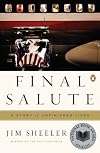
Every day, for many days, we in the United States have heard about the War in Iraq. We see it on the news, hear it on the radio, read it in the newspaper. We learn about the bombings, the deaths of military personnel, the deaths of innocent people. We can see the carnage and feel the political effects of the war, but how closely do we really feel it? Many in the US have relatives in the military, who have been deployed to Iraq or Afghanistan, but others just hear or see or read it. In Final show more Salute, Sheeler takes us into the sadness and grief of families who have been most personally affected by the war – those whose sons and husbands and fathers have given their lives to protect a country and a way of life. Sheeler shows us, through the eyes of the families, what it is like to hear “the knock” on the door well past a time anyone would reasonably be coming for a visit. He takes us into the hearts of the ones left behind as they struggle to accept what has happened and move forward in life. He takes us into the ceremonies and funerals that are performed to honor the fallen soldiers. And he does it in a way that does not happen on the news or the radio. He makes it more personal and intimate; many are tired of hearing about the war, but this is the side everyone needs to see – this is the side that is part of the cost of the war. Sam Holder, Sr., the father of one of the fallen soldiers, said, “You look at the war, and it only touches a few of us. It doesn’t touch the majority of the American people” (238). This book is a way for the war to touch more of the American people, and it will; it gets into your mind, your heart, your soul. The men and women and their stories stay with you long after the book is closed. Every American should read this book; it takes away the distance of the war and put it closer to home. show less

Jim Sheeler's Final Salute: A Story of Unfinished Lives provides an intimate, powerful, and often harrowing glimpse into the lives of people whose family members have died in the Iraq War. The book is a continuation and expansion of Sheeler's articles for the Rocky Mountain News, including his Pulitzer Prize winning "Final Salute," which he did in conjunction with photographer Todd Heisler. By expanding his initial articles, Sheeler gives us the opportunity to reflect on a situation that too show more many Americans turn a blind eye to, namely the consequences of war on those left behind.
Sheeler's book is remarkable in several respects. Despite the heartbreaking nature of the work, Final Salute is engrossing and very readable. More importantly, it is very accessible for those who have not had the situation of losing a loved one to war. Rather than emphasizing the uniqueness of these military families, Final Salute invites readers to gain a greater understanding of the pain of uncertainty and the heartbreak that comes with knowing about a loved one's death.
In order to do this, Sheeler discusses several soldiers who died in Iraq and the repercussions their deaths have had on their families. Rather than dedicating a section of the book to a single family, Sheeler makes the seemingly risky decision to divide his work into four parts, including "The Knock," "Reverberations," and "After the War, Stories." I say that this is seemingly risky because in a a less-talented writer's hands, this choice could make the book very difficult to follow. However, Sheeler successfully manages to interweave the different stories into a cohesive narrative. In some situations, the stories and the families literally connect; for instance, Sheeler shows how Kyle Burns's and Sam Holder's families form a bond with each other. Other connections remain figurative but are still powerful.
Perhaps the most notable aspect of Final Salute is that it manages to navigate the political tightrope. This book is apolitical and does not espouse any particular political agenda. What makes this remarkable is that Sheeler does not shy away from documenting his subjects' opinions regarding President Bush, the military, or the war in Iraq. By doing this, Sheeler offers an honest look into the thoughts of these families who have made a considerable sacrifice.
In a sense, Final Salute: A Story of Unfinished Lives comes at a perfect time. With the slumping housing market, rising gas prices, and uncertain economy, the war in Iraq is not at the forefront of the American consciousness. Sheeler's work reminds us that, despite the economic troubles at home, we must never forget those who serve in the military and those they leave behind. The book ends with an epilogue that allows us to see what has happened with the families he has discussed. Fittingly, these pages provide a sense of continuation but not a sense of closure, for as Lieutenant Colonel Steve Beck (one of the casualty assistance officers Sheeler followed) says "It's not an ending. It's not a period at the end of their lives. It's a semicolon. The story will continue to be told." show less
Sheeler's book is remarkable in several respects. Despite the heartbreaking nature of the work, Final Salute is engrossing and very readable. More importantly, it is very accessible for those who have not had the situation of losing a loved one to war. Rather than emphasizing the uniqueness of these military families, Final Salute invites readers to gain a greater understanding of the pain of uncertainty and the heartbreak that comes with knowing about a loved one's death.
In order to do this, Sheeler discusses several soldiers who died in Iraq and the repercussions their deaths have had on their families. Rather than dedicating a section of the book to a single family, Sheeler makes the seemingly risky decision to divide his work into four parts, including "The Knock," "Reverberations," and "After the War, Stories." I say that this is seemingly risky because in a a less-talented writer's hands, this choice could make the book very difficult to follow. However, Sheeler successfully manages to interweave the different stories into a cohesive narrative. In some situations, the stories and the families literally connect; for instance, Sheeler shows how Kyle Burns's and Sam Holder's families form a bond with each other. Other connections remain figurative but are still powerful.
Perhaps the most notable aspect of Final Salute is that it manages to navigate the political tightrope. This book is apolitical and does not espouse any particular political agenda. What makes this remarkable is that Sheeler does not shy away from documenting his subjects' opinions regarding President Bush, the military, or the war in Iraq. By doing this, Sheeler offers an honest look into the thoughts of these families who have made a considerable sacrifice.
In a sense, Final Salute: A Story of Unfinished Lives comes at a perfect time. With the slumping housing market, rising gas prices, and uncertain economy, the war in Iraq is not at the forefront of the American consciousness. Sheeler's work reminds us that, despite the economic troubles at home, we must never forget those who serve in the military and those they leave behind. The book ends with an epilogue that allows us to see what has happened with the families he has discussed. Fittingly, these pages provide a sense of continuation but not a sense of closure, for as Lieutenant Colonel Steve Beck (one of the casualty assistance officers Sheeler followed) says "It's not an ending. It's not a period at the end of their lives. It's a semicolon. The story will continue to be told." show less
It is difficult to not conflate anger/dislike/sadness about the war (any war) with those who fight its battles. If we learned one sad lesson from Vietnam, perhaps this is the most meaningful. Final Salute gives the reader a chance to look at the person behind the medals. More than this, though, it gives the reader a glimpse at the pain from which survivors never fully find relief.
Why do men and women willingly go to war? A subject for a different treatise. Should their memories be honored in show more the breach? Final Salute does that. show less
Why do men and women willingly go to war? A subject for a different treatise. Should their memories be honored in show more the breach? Final Salute does that. show less
I had tears running down my face during the entire 3 hours it took to read this book. The daughter of a Marine and sister of 2 soldiers, this book was too close to being real for me. Luckily my family always came home. Too many families have to suffer the loss of a loved one, and this books tells us how they hear of the news, and the hardships that ensue. The author did not have a political agenda, just a desire to show Civilian America what military families go through when their loved one show more dies overseas. I recommend this book for every Civilian. Period. show less
Awards


You May Also Like


Statistics
- Works
- 2
- Members
- 304
- Popularity
- #77,405
- Rating
- 4.2
- Reviews
- 16
- ISBNs
- 9