
Cheryl Sawyer
Author of The Code of Love
About the Author
Works by Cheryl Sawyer
Murder at Cirey: A Victor Constant investigation (The Victor Constant Investigations) (Volume 1) (2015) 4 copies, 1 review
Associated Works
Flirting with Pride & Prejudice: Fresh Perspectives on the Original Chick-Lit Masterpiece (2005) — Contributor — 242 copies, 9 reviews
Tagged
Common Knowledge
- Birthdate
- 1947-08-12
- Gender
- female
- Occupations
- teacher
publisher - Nationality
- New Zealand
- Associated Place (for map)
- New Zealand
Members
Reviews
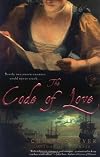
Sir Gideon Landor, heir to an earldom, is also a staunchly patriotic captain in the British Navy. He is captured in the line of duty off the island of Mauritius, where he meets Delphine Dalgliesh, the stunningly beautiful “idol of the island” – and an ardent Bonapartist. At first, they have nothing to say to each other; he views her as a beautiful but empty-headed social butterfly, while she finds him arrogant and intimidating. However, as they encounter each other more often in show more subsequent travels to France and England, they find themselves increasingly drawn to one another. But each of them is hiding an important secret: they have both been commanded by their respective governments to work as spies. In the midst of their conflicting loyalties, can Gideon and Delphine find love without compromising their honor?
I don’t think my summary of this book does it justice. The novel is an old-fashioned historical romance set during the Napoleonic Wars: it has adventure, romance, espionage, secret codes, drawing-room wit, and a wonderful cast of characters, especially Gideon and Delphine. Their romance is the heart of the story, and I think the tension between them is managed extremely well. I also appreciated the historical details Sawyer put into the novel, especially about British efforts to crack Napoleon’s military codes and about the Peninsular War. Every once in a while the language got a bit too flowery, but otherwise I have nothing bad to say about this book. I absolutely loved it and will be looking for more by Cheryl Sawyer! show less
I don’t think my summary of this book does it justice. The novel is an old-fashioned historical romance set during the Napoleonic Wars: it has adventure, romance, espionage, secret codes, drawing-room wit, and a wonderful cast of characters, especially Gideon and Delphine. Their romance is the heart of the story, and I think the tension between them is managed extremely well. I also appreciated the historical details Sawyer put into the novel, especially about British efforts to crack Napoleon’s military codes and about the Peninsular War. Every once in a while the language got a bit too flowery, but otherwise I have nothing bad to say about this book. I absolutely loved it and will be looking for more by Cheryl Sawyer! show less

This historical romance tells the story of the notorious pirate Jean Laffite and the fiery Léonore Roncival, who also has pirate blood in her veins. When Jean and Léonore first meet, the strength of their attraction is undeniable; however, they also seem destined to be enemies, since Jean first sees her when he tries to invade her island home. For Léonore, the small and insignificant island of San Stefan is her most precious asset, and she is determined to keep it safe no matter what. show more Protecting San Stefan might turn out to be impossible, however, as the major world powers – France, Spain, England, and the United States – go to war over their territory in North America. As Jean and Léonore struggle to reconcile their divergent political views with their growing love, their separate paths finally converge at the Battle of New Orleans.
Since I loved Sawyer’s The Code of Love, I had high expectations for this novel; unfortunately, maybe they were a bit too high. The writing style is every bit as excellent, and I definitely bought into the passion between Jean and Léonore. However, the plot of this book is quite slow to unfold, and the pacing tends to drag. I think the plot is also very conventional within the romance genre: the hero and heroine have a series of Big Misunderstandings, all of which could have been avoided with a little honest communication. That got on my nerves quite a bit! I did really enjoy the historical detail, though; it was extremely interesting to read about the War of 1812 from a non-American perspective. I hadn’t realized how important the Caribbean islands were to the European powers in their quest for domination in the new world. I was also interested to discover that Jean Laffite and many of the other characters in this novel were real historical figures, and Sawyer appears to have been very faithful to the historical record. Overall, if you want to read a pirate romance novel, you could do a lot worse; I liked this book well enough, but it was disappointing compared to The Code of Love. show less
Since I loved Sawyer’s The Code of Love, I had high expectations for this novel; unfortunately, maybe they were a bit too high. The writing style is every bit as excellent, and I definitely bought into the passion between Jean and Léonore. However, the plot of this book is quite slow to unfold, and the pacing tends to drag. I think the plot is also very conventional within the romance genre: the hero and heroine have a series of Big Misunderstandings, all of which could have been avoided with a little honest communication. That got on my nerves quite a bit! I did really enjoy the historical detail, though; it was extremely interesting to read about the War of 1812 from a non-American perspective. I hadn’t realized how important the Caribbean islands were to the European powers in their quest for domination in the new world. I was also interested to discover that Jean Laffite and many of the other characters in this novel were real historical figures, and Sawyer appears to have been very faithful to the historical record. Overall, if you want to read a pirate romance novel, you could do a lot worse; I liked this book well enough, but it was disappointing compared to The Code of Love. show less

I don't know why this book was such a slog. There was nothing wrong with the writing; the elements of the story were just fine; the characters should have been engaging. But for some reason I had to fight my way through to the end.
Perhaps part of it was a bit of weariness at just how utterly exquisite the heroine, Delphine, was. "She entered like lightning and arrested every conversation." Every couple of pages came another reminder of just how beautiful she was. Oh, and Our Heroine keeps show more snubbing Our Hero. When she isn't actually freezing him out her disdain is being mentioned – every couple of pages. It was writing for the attention-span-challenged.
Point of curiosity: this is one of the first times I've been given an (if you will) outsider's point of view of Shakespeare:
It was the most lowering play she had ever sat through. There was a quite unseemly burial, with a ghastly harangue over a dead woman’s body, and eventually a court scene where everyone mouthed things they didn’t mean and drank things they should never have touched. Then all of a sudden swords came out…
That, my friends, is Hamlet. I'm not sure how I was supposed to take that; "silly French girl never saw Shakespeare" or something? Sorry; I'm plumping for "lack of taste and discrimination". (If I had liked the woman it might have been "really bad production".)
Using the Bard as a point of transition, I can also say that this book was chock-full of much ado about nothing. Example: a journey is planned with all sorts and kinds of hand-wringing and trepidation about the many and varied hazards, it's all but impossible, but no! The heroine must undertake it! And she shall! And she does, and it is gotten out of the way with one line stating that it basically went without a hitch. And thud goes the buildup.
I could also bring in the Comedy of Errors, as the Hero – who has been painted as a fairly sensible bloke for most of the book – suddenly and with no explanation whatsoever does something so moronic that I had to page back a bit to make sure I didn't misread something. Nope: he really did deliberately and with aforethought decide to be that stupid. I will give him a little credit for ruefulness when he gets himself wounded, but even there ….
‘Where are you hurt?’
‘Through the chest, but it’s no problem….'
It's just a flesh wound.
Point of interest: this was the second Netgalley book I came across in the span of a month or so that had a character named Tracey, spelled as I spell it - the Earl of Tracey.
In some of my reviews I mention that the writing fights me – some authors try to manhandle me as a reader instead of disappearing and allowing me to live in and experience the world of the book. This style will turn what should be a fun romp, a quick and light read, into a struggle. The Code of Love fought me for every metaphorical inch of ground.
The usual disclaimer: I received this book via Netgalley for review. show less
Perhaps part of it was a bit of weariness at just how utterly exquisite the heroine, Delphine, was. "She entered like lightning and arrested every conversation." Every couple of pages came another reminder of just how beautiful she was. Oh, and Our Heroine keeps show more snubbing Our Hero. When she isn't actually freezing him out her disdain is being mentioned – every couple of pages. It was writing for the attention-span-challenged.
Point of curiosity: this is one of the first times I've been given an (if you will) outsider's point of view of Shakespeare:
It was the most lowering play she had ever sat through. There was a quite unseemly burial, with a ghastly harangue over a dead woman’s body, and eventually a court scene where everyone mouthed things they didn’t mean and drank things they should never have touched. Then all of a sudden swords came out…
That, my friends, is Hamlet. I'm not sure how I was supposed to take that; "silly French girl never saw Shakespeare" or something? Sorry; I'm plumping for "lack of taste and discrimination". (If I had liked the woman it might have been "really bad production".)
Using the Bard as a point of transition, I can also say that this book was chock-full of much ado about nothing. Example: a journey is planned with all sorts and kinds of hand-wringing and trepidation about the many and varied hazards, it's all but impossible, but no! The heroine must undertake it! And she shall! And she does, and it is gotten out of the way with one line stating that it basically went without a hitch. And thud goes the buildup.
I could also bring in the Comedy of Errors, as the Hero – who has been painted as a fairly sensible bloke for most of the book – suddenly and with no explanation whatsoever does something so moronic that I had to page back a bit to make sure I didn't misread something. Nope: he really did deliberately and with aforethought decide to be that stupid. I will give him a little credit for ruefulness when he gets himself wounded, but even there ….
‘Where are you hurt?’
‘Through the chest, but it’s no problem….'
It's just a flesh wound.
Point of interest: this was the second Netgalley book I came across in the span of a month or so that had a character named Tracey, spelled as I spell it - the Earl of Tracey.
In some of my reviews I mention that the writing fights me – some authors try to manhandle me as a reader instead of disappearing and allowing me to live in and experience the world of the book. This style will turn what should be a fun romp, a quick and light read, into a struggle. The Code of Love fought me for every metaphorical inch of ground.
The usual disclaimer: I received this book via Netgalley for review. show less
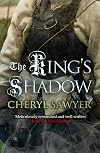
The King's Shadow, is the perfect ending to the Civil War trilogy, although it is a good enough story to be read as a stand alone novel. Anyone who reads this novel first will be greedy to read the previous two (Winter Prince and Farewell Cavaliers) The previous two novels had ultimately tragically unfulfilled love stories but here Lucinda, a very engaging and believable heroine finds a perfect match in the hero, Mark. They deserve each other and their hard won happiness together.
It is show more another excellent portrayal of life in 17th century life and the uncertainty of General Monck's intentions on his march to London is vividly portrayed. Having lived in Nottingham for many years and grown up close to York I was particularly delighted by the depiction of both cities.
It was also a joy to be reacquainted with the vivacious Mary Villiers and reassuring to discover how well Alice Hull had managed her business and coped without Thomas. It was satisfying to see Willys' shifting loyalties finally receive their fitting recompense.
The style is clear and well paced, a fascinating portrayal of intriguing and loveable characters show less
It is show more another excellent portrayal of life in 17th century life and the uncertainty of General Monck's intentions on his march to London is vividly portrayed. Having lived in Nottingham for many years and grown up close to York I was particularly delighted by the depiction of both cities.
It was also a joy to be reacquainted with the vivacious Mary Villiers and reassuring to discover how well Alice Hull had managed her business and coped without Thomas. It was satisfying to see Willys' shifting loyalties finally receive their fitting recompense.
The style is clear and well paced, a fascinating portrayal of intriguing and loveable characters show less
Awards

You May Also Like


Associated Authors
Statistics
- Works
- 11
- Also by
- 1
- Members
- 203
- Popularity
- #108,638
- Rating
- 3.5
- Reviews
- 8
- ISBNs
- 18
- Languages
- 2