
Hannah Barnaby
Author of Wonder Show
About the Author
Works by Hannah Barnaby
Tagged
Common Knowledge
- Gender
- female
- Agent
- Linda Pratt
Members
Reviews
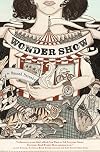
Set in the Depression era American Midwest, ‘The Wonder Show’ is a young adult novel of loss, identity, and family. I chose this book on a whim because the cover and the theme made me think of ‘The Night Circus’, a book I loved. It turned out that the two books have almost nothing in common, but I loved ‘The Wonder Show’ on its own merits.
Teenaged Portia Remini, who has a gift for story telling, is left behind by her family, which scatters to try to find work in the Depression. show more Left with her very unmaternal aunt, she watches every day for her father to return for her. He doesn’t; the aunt decides she can’t deal with her any more; and she is sent to McGreavey’s Home for Wayward Girls. This home, which is supposed to reform the misbehaving girls, turns out to be nothing more than a creepy slave camp. The girls labor for the owner, a bachelor called ‘Mister’- a name that constantly put me in mind of ‘The Color Purple’ and the abuse the women went through in that book. No one has ever escaped this man. But when a tragedy occurs, Portia decides she has to try.
She flees to the traveling circus and carnival, thinking she’ll find her circus loving father that way. In a sideshow, Portia, the ‘normal’ one, has little to offer. She stands out. But she has her gift of telling stories, and that is what the sideshow is really all about.
There is a constant creepy tension in the book, as we wait to see if Portia will find her father or if Mister will find her. She’s a resilient person, but loss after loss befalls her. You can’t help but fear for Portia: Will she break? Will Mister catch up with her? Will she find family?
The author took a chance and wrote the book from several points of view, and in both first and third person. It sounds jolting, but it works seamlessly. Barnaby has avoided the problem that many first time authors have, of having a novel that seems only partly there. The dialogue flows well and the characters have depth. This little book is a gem. show less
Teenaged Portia Remini, who has a gift for story telling, is left behind by her family, which scatters to try to find work in the Depression. show more Left with her very unmaternal aunt, she watches every day for her father to return for her. He doesn’t; the aunt decides she can’t deal with her any more; and she is sent to McGreavey’s Home for Wayward Girls. This home, which is supposed to reform the misbehaving girls, turns out to be nothing more than a creepy slave camp. The girls labor for the owner, a bachelor called ‘Mister’- a name that constantly put me in mind of ‘The Color Purple’ and the abuse the women went through in that book. No one has ever escaped this man. But when a tragedy occurs, Portia decides she has to try.
She flees to the traveling circus and carnival, thinking she’ll find her circus loving father that way. In a sideshow, Portia, the ‘normal’ one, has little to offer. She stands out. But she has her gift of telling stories, and that is what the sideshow is really all about.
There is a constant creepy tension in the book, as we wait to see if Portia will find her father or if Mister will find her. She’s a resilient person, but loss after loss befalls her. You can’t help but fear for Portia: Will she break? Will Mister catch up with her? Will she find family?
The author took a chance and wrote the book from several points of view, and in both first and third person. It sounds jolting, but it works seamlessly. Barnaby has avoided the problem that many first time authors have, of having a novel that seems only partly there. The dialogue flows well and the characters have depth. This little book is a gem. show less
Portia Remini is essentially an orphan. Her father ran off to follow a circus and her mother abandoned her long ago. Her distant, disapproving aunt eventually foists her off into a home for "wayward girls" run by a man known as Mister. He treats the girls as slave labor while looking like he's saving them. After a tragic accident and randomly finding the schedule card for it, Portia escapes on a stolen red bicycle to Mosco's Travelling Wonder Show, where she may find her father or be found show more by Mister, or find something else entirely.
I was immediately drawn in my the cover and the fact that it's about a circus. Wonder Show was a quick, fun read that touched on some deep and universal subjects. The characters were all amazing. It would be easy to demonize the sideshow "freaks" and make them into the monsters the crowd believes them to be. Although they don't mix well with the other circus performers, they were just regular people who want the same things as everyone else. They are neither perfectly good nor perfectly evil, but flawed. These characters were very often sad or angry, which I felt was realistic. Many of them couldn't do anything else because of their physical disabilities, so they were pretty much forced into a circus sideshow to make their living. I liked that the perspective would pass between characters every so often to provide to a glimpse into their mind.
Portia was a wonderful character who loved to tell stories and fairy tales, mixing and matching existing ones to make new ones or making her own entirely. Her imagination and creativity were amazing, but those around her didn't understand it and wanted her to rid herself of them and become a shell of herself. She saw the world through her own lens of fantasy and I enjoyed seeing her world through that lens. She also stood up for herself and had a firecracker of personality.
Wonder Show was hard to classify into one genre. It was a quest story mixed with gothic mystery, coming of age, Depression-era, and self discovery. Its only real flaw was that the ending felt a little rushed and I wanted it to be longer to more fully capture these characters and their relationships. I would definitely look for more releases by Hannah Barnaby. show less
I was immediately drawn in my the cover and the fact that it's about a circus. Wonder Show was a quick, fun read that touched on some deep and universal subjects. The characters were all amazing. It would be easy to demonize the sideshow "freaks" and make them into the monsters the crowd believes them to be. Although they don't mix well with the other circus performers, they were just regular people who want the same things as everyone else. They are neither perfectly good nor perfectly evil, but flawed. These characters were very often sad or angry, which I felt was realistic. Many of them couldn't do anything else because of their physical disabilities, so they were pretty much forced into a circus sideshow to make their living. I liked that the perspective would pass between characters every so often to provide to a glimpse into their mind.
Portia was a wonderful character who loved to tell stories and fairy tales, mixing and matching existing ones to make new ones or making her own entirely. Her imagination and creativity were amazing, but those around her didn't understand it and wanted her to rid herself of them and become a shell of herself. She saw the world through her own lens of fantasy and I enjoyed seeing her world through that lens. She also stood up for herself and had a firecracker of personality.
Wonder Show was hard to classify into one genre. It was a quest story mixed with gothic mystery, coming of age, Depression-era, and self discovery. Its only real flaw was that the ending felt a little rushed and I wanted it to be longer to more fully capture these characters and their relationships. I would definitely look for more releases by Hannah Barnaby. show less
1930's carnival side show, creepy authoritarian dude, a sweet maybe love story, this book is like a YA version of HBO's Carnivale and I like it. Alot. I thought the writing was very strong and had a folktale vibe that went along with the main theme of stories that we create about our lives and who we are. The romance was light and very sweet. I also found the world building really strong and the setting very vivid from the sinister Mister's house to the traveling show. Really liked this show more book.
pg. 152 "How's that for irony? I can reach just about anything, except the ground. Life sure is strange." - Jim the Human Giant
pg. 171 "...she thought she could feel something - a buoyancy, a lifting of the ground under her feet, keeping her upright. Perhaps this was the physics of faith, the knowledge that the earth was moving and so was she."
pg. 191 "I will never be free. Unless I'm alone." - Violet, a "normal" show less
pg. 152 "How's that for irony? I can reach just about anything, except the ground. Life sure is strange." - Jim the Human Giant
pg. 171 "...she thought she could feel something - a buoyancy, a lifting of the ground under her feet, keeping her upright. Perhaps this was the physics of faith, the knowledge that the earth was moving and so was she."
pg. 191 "I will never be free. Unless I'm alone." - Violet, a "normal" show less
I knew pretty early on that I was really going to enjoy this fairly short novel - and I was repeatedly proven right while reading this charming debut. Though Hannah Barnaby and therefore Portia's tale is a bit short on action and long on character (like another recently released circus themed novel...), I was hooked from chapter one and Portia herself. I felt that the final conflict lacked a bit of emotional pull or immediacy but nearly everything else from this look into Mosco's Traveling show more Wonder Show was pure fun to read. I'm happy to say that Hannah Barnaby emerges from her first novel as a solid and compelling storyteller with a flair for the dramatic and the unique - just like her indomitable lead.
Portia is a flawed but very likeable protagonist; though her story is mostly told in third-person omniscient and occasionally oddly features other first-person perspective important characters, Portia is the strongest, most developed character of the lot. While I truly disliked the shifts between first and third perspectives it's easy to fall into any narrative in the story, be it P's or the Jackal, or Gideon or even Mosco. Portia made me laugh, but mostly and most importantly, Portia made me care about her story; made me invest in her happiness and actively cheer for her success and lament over her losses. Her inquisitive nature and love of words ("Stories came easily to Portia. Lies came even more easily and more often." - p. 13 ARC) endeared her to me rather quickly and her adventures with Aunt Sophie and subsequent misadventures at the McGreavey Home for Wayward Girls only impressed me with her spirit and liveliness.
While the 'freaks' advertised for the Gallery of Human Oddities didn't quite live up to the hype of the synopsis and blurb, I am not disappointed; rather instead, I believe that is the whole point of Wonder Show - that those who society considers freaks are really just people like us, living the hand they are dealt. In fact, the only truly freakish character within the entirety of Wonder Show is The Mister - someone not hidden away and hated on principle but someone trusted with power and the futures of young girls. The other characters, thoguh they don't compel like Portia or creep you out like Mister, each have believable and distinct voices. Like Portia, the population of the Wonder Show is at large on the run from something/time/one they'd like to forget, or change. While no two characters plot was the same outside of Portia I found the Jackal and the deteriorating Marvel family to be the most accessible. In fact, while I was far from a fan of the weirdly switching POV's used to alternate character inner monologues (not person to person but 3rd omniscient to 1st), I wouldn't have hated an even longer look into those characters.
Though I was expecting to be more involved and invested in the ending, I felt it was solid but very much not the climactic, epic tête-à-tête I had been craving because Mister needed his ass kicked anticipating. And I have to admit that though this is a middle-grade novel, it doesn't read like one and I feel that people of all ages would enjoy the adventures and marvels that make Wonder Show so fun to read in the first place. This is a quick read with a large reward for your minimal efforts; full of charm and adventures, Wonder Show is welll... quite wonderful indeed. show less
Portia is a flawed but very likeable protagonist; though her story is mostly told in third-person omniscient and occasionally oddly features other first-person perspective important characters, Portia is the strongest, most developed character of the lot. While I truly disliked the shifts between first and third perspectives it's easy to fall into any narrative in the story, be it P's or the Jackal, or Gideon or even Mosco. Portia made me laugh, but mostly and most importantly, Portia made me care about her story; made me invest in her happiness and actively cheer for her success and lament over her losses. Her inquisitive nature and love of words ("Stories came easily to Portia. Lies came even more easily and more often." - p. 13 ARC) endeared her to me rather quickly and her adventures with Aunt Sophie and subsequent misadventures at the McGreavey Home for Wayward Girls only impressed me with her spirit and liveliness.
While the 'freaks' advertised for the Gallery of Human Oddities didn't quite live up to the hype of the synopsis and blurb, I am not disappointed; rather instead, I believe that is the whole point of Wonder Show - that those who society considers freaks are really just people like us, living the hand they are dealt. In fact, the only truly freakish character within the entirety of Wonder Show is The Mister - someone not hidden away and hated on principle but someone trusted with power and the futures of young girls. The other characters, thoguh they don't compel like Portia or creep you out like Mister, each have believable and distinct voices. Like Portia, the population of the Wonder Show is at large on the run from something/time/one they'd like to forget, or change. While no two characters plot was the same outside of Portia I found the Jackal and the deteriorating Marvel family to be the most accessible. In fact, while I was far from a fan of the weirdly switching POV's used to alternate character inner monologues (not person to person but 3rd omniscient to 1st), I wouldn't have hated an even longer look into those characters.
Though I was expecting to be more involved and invested in the ending, I felt it was solid but very much not the climactic, epic tête-à-tête I had been craving because Mister needed his ass kicked anticipating. And I have to admit that though this is a middle-grade novel, it doesn't read like one and I feel that people of all ages would enjoy the adventures and marvels that make Wonder Show so fun to read in the first place. This is a quick read with a large reward for your minimal efforts; full of charm and adventures, Wonder Show is welll... quite wonderful indeed. show less
Lists
Awards


You May Also Like


Associated Authors
Statistics
- Works
- 14
- Members
- 553
- Popularity
- #45,137
- Rating
- 3.8
- Reviews
- 33
- ISBNs
- 49