
Joyce Chng
Author of The Sea Is Ours: Tales from Steampunk Southeast Asia
Series
Works by Joyce Chng
Star Pattern Traveller 4 copies
Hearts of Wulin 2 copies
"Amber" 2 copies
A Basketful of Figs 2 copies
Ming Zhu And The Pearl That Shines: A Dragon Sisters novella (Dragon Sisters: The Stories of Xiao Xiao and Ming Zhu) (2015) 1 copy
The Sound of Breaking Glass 1 copy
Light of the Song 1 copy
Ark 1 copy
Associated Works
We See a Different Frontier: A Postcolonial Speculative Fiction Anthology (2013) — Contributor — 76 copies, 3 reviews
Multispecies Cities: Solarpunk Urban Futures (2021) — Author, some editions; Contributor — 53 copies, 7 reviews
Uncanny Magazine Issue 24: September/October 2018 (Disabled People Destroy Science Fiction) (2018) — Contributor — 52 copies
Sunspot Jungle: The Ever Expanding Universe of Fantasy and Science Fiction (2018) — Contributor — 38 copies, 1 review
Multiverse: An International Anthology of Science Fiction Poetry (2018) — Contributor — 6 copies, 1 review
TFF-X: Ten years of The Future Fire: A speculative fiction anthology (2015) — Contributor — 3 copies
A Day at the Dragon Shelter — Contributor — 3 copies
Tagged
Common Knowledge
- Canonical name
- Chng, Joyce
- Gender
- female
- Occupations
- author
- Map Location
- Singapore
Members
Reviews
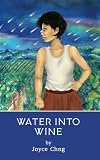
This is a novella about what remains of a family and their identity, the refugee flotsam of a previous traumatic war, who inherit a vineyard on a distant planet and move there to start again and spark their renewal. The vineyard is a haven but also a place where they can lose themselves in work and, like true migrant pioneers, take their future into their own hands, just them versus the soil, a sense of control, of peace and continuity, finally.
The vineyard is an island of green leaves in a show more sea of troubles, around which rival races or colonists soon begin a new conflict, over nothing, in which the family shows very little partisan interest. They hope the fighting doesn’t apply to them, even when the sky lights up with broken ships and burning debris. Leave us alone, they seem to say to the Universe, let us grow, we’ve been through enough. The merlot grapes swell and ripen, uncaring of the soldiers and unfairness that are swirling around the family, encompassing the land and sky, disturbing the peace, distant thunder. The heavy boots of war have not yet crossed the threshold of the vineyard, not yet pressed their carefully tended grapes into the dust but wars and rumours of wars, the ebb and flow of armies like tides wash past them. How long do they have before the unwanted arrive on their doorstep? The external forces, other national identities if you consider yourself neutral, are so numerous and strong by comparison. It’s a story of the growers and the wreckers, but identity too.
The author is Singaporean and it is very difficult to discuss the book without returning to the influence of that island.
Singapore has a national identity composed of four cultural groups (quarters) that have all at one time or another asserted themselves on South East Asia but have now settled into domestic acceptance, cooperate very well and celebrate each other’s festivals. In Singapore, there are so many festivals, sights and hints of incense yet it’s also modern with a crossroads trade port. Co-operation was not always the case in Singapore, at an important strategic position, and it has always been vulnerable and threatened by colossal neighbouring empires. Its independence and post-war success is miraculous. The Straits Chinese are the most numerous settled population (correct me if I’m wrong) but an extraordinary share of Malaysian workers cross over the causeway every day and “invade” the city to work, just as those neighbouring cultures “invade” the Island with their many cuisines. These subconscious suggestions that this beautiful, tropical home could suddenly be taken away from its hard-working families, everything they’d built up could be struck down by a wave, resonates in this book. This is where displaced people have come to be safe and work hard, to make it all better, a shining light that refuses to be just a point on a map in the great game played by external empires. The vineyard in this story is a metaphor.
The islanders adore food more than any place I’ve ever seen, so this is perhaps the best place in the world to find wonderful dishes from multiple cultures, drawing on established trade routes for a myriad of ingredients. Singaporeans are work and family oriented too, very aware of their duties to the older generation. These traits all come through in the book, in which the kitchen is the heart of the home and no weapon can enter it because that would mean something external, foreign and wrong has entered the soul of the family.
Despite the strong cultural identity that the family have brought off-world with them, experiences have taken their toll and Xin, the matriarch, considers herself a patriarch instead. Is that what she is or what the family needs to improve their chances of survival? I was surprised when the story brought out that her gender had been displaced, as I wasn’t expecting this twist and that probably suggests I think in a binary, confined way. Gender change happens to some people whether they have been traumatised or not, some people know from an early age, yet look up Resignation Syndrome in Sweden (currently over 160 cases of inertia and mental withdrawal amongst child migrants) and you can appreciate the psychological impact that stress and trauma has. Xin was pressed harder than she/he ever should have experienced and that leads to consequences.
The imagery works well, with a finger-like tornado spouting out of the sky to pluck people up. When unexpected skills are shown or reactions are disproportionate, adding to the confusion surrounding who people really are and what they did in the past, before they got here. Have they walked away from awful places, cruel allegiances, taken the trail through the cracks in the mountains and entered Shangri-La to start again… yet been followed? What happens when their past catches up? Will anyone in this, truly, be left in peace?
This isn’t your usual piece of military sci-fi, which isn’t a field I’m usually impressed by. It makes you think about family, values and disassociation with what the world external to your family thinks is worth dying for. Growth and renewal is a side in this and it has a quiet strength of its own. This story is a unique outlier, quite unlike other science fiction. In the reviewing margins between four and five stars for writing craft, it deserves recognition for originality and the way in which it has drawn on deeper roots to give the household credibility. If you want to read something different in science fiction, a discovery, this surely is it. show less
The vineyard is an island of green leaves in a show more sea of troubles, around which rival races or colonists soon begin a new conflict, over nothing, in which the family shows very little partisan interest. They hope the fighting doesn’t apply to them, even when the sky lights up with broken ships and burning debris. Leave us alone, they seem to say to the Universe, let us grow, we’ve been through enough. The merlot grapes swell and ripen, uncaring of the soldiers and unfairness that are swirling around the family, encompassing the land and sky, disturbing the peace, distant thunder. The heavy boots of war have not yet crossed the threshold of the vineyard, not yet pressed their carefully tended grapes into the dust but wars and rumours of wars, the ebb and flow of armies like tides wash past them. How long do they have before the unwanted arrive on their doorstep? The external forces, other national identities if you consider yourself neutral, are so numerous and strong by comparison. It’s a story of the growers and the wreckers, but identity too.
The author is Singaporean and it is very difficult to discuss the book without returning to the influence of that island.
Singapore has a national identity composed of four cultural groups (quarters) that have all at one time or another asserted themselves on South East Asia but have now settled into domestic acceptance, cooperate very well and celebrate each other’s festivals. In Singapore, there are so many festivals, sights and hints of incense yet it’s also modern with a crossroads trade port. Co-operation was not always the case in Singapore, at an important strategic position, and it has always been vulnerable and threatened by colossal neighbouring empires. Its independence and post-war success is miraculous. The Straits Chinese are the most numerous settled population (correct me if I’m wrong) but an extraordinary share of Malaysian workers cross over the causeway every day and “invade” the city to work, just as those neighbouring cultures “invade” the Island with their many cuisines. These subconscious suggestions that this beautiful, tropical home could suddenly be taken away from its hard-working families, everything they’d built up could be struck down by a wave, resonates in this book. This is where displaced people have come to be safe and work hard, to make it all better, a shining light that refuses to be just a point on a map in the great game played by external empires. The vineyard in this story is a metaphor.
The islanders adore food more than any place I’ve ever seen, so this is perhaps the best place in the world to find wonderful dishes from multiple cultures, drawing on established trade routes for a myriad of ingredients. Singaporeans are work and family oriented too, very aware of their duties to the older generation. These traits all come through in the book, in which the kitchen is the heart of the home and no weapon can enter it because that would mean something external, foreign and wrong has entered the soul of the family.
Despite the strong cultural identity that the family have brought off-world with them, experiences have taken their toll and Xin, the matriarch, considers herself a patriarch instead. Is that what she is or what the family needs to improve their chances of survival? I was surprised when the story brought out that her gender had been displaced, as I wasn’t expecting this twist and that probably suggests I think in a binary, confined way. Gender change happens to some people whether they have been traumatised or not, some people know from an early age, yet look up Resignation Syndrome in Sweden (currently over 160 cases of inertia and mental withdrawal amongst child migrants) and you can appreciate the psychological impact that stress and trauma has. Xin was pressed harder than she/he ever should have experienced and that leads to consequences.
The imagery works well, with a finger-like tornado spouting out of the sky to pluck people up. When unexpected skills are shown or reactions are disproportionate, adding to the confusion surrounding who people really are and what they did in the past, before they got here. Have they walked away from awful places, cruel allegiances, taken the trail through the cracks in the mountains and entered Shangri-La to start again… yet been followed? What happens when their past catches up? Will anyone in this, truly, be left in peace?
This isn’t your usual piece of military sci-fi, which isn’t a field I’m usually impressed by. It makes you think about family, values and disassociation with what the world external to your family thinks is worth dying for. Growth and renewal is a side in this and it has a quiet strength of its own. This story is a unique outlier, quite unlike other science fiction. In the reviewing margins between four and five stars for writing craft, it deserves recognition for originality and the way in which it has drawn on deeper roots to give the household credibility. If you want to read something different in science fiction, a discovery, this surely is it. show less
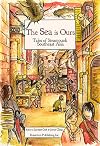
An early copy of the book was sent to me via NetGalley. It won't be released until November 1st 2015.
The Sea Is Ours is a refreshing steampunk anthology. The settings are fascinating, from cramped cities to rural villages to airborne whales, and the voices were most profound at all. So much steampunk is from an English or American vantage point, and even if it doesn't glorify the imperial perspective, it can still become a stale setting. I loved reading stories that drew from the show more Philippines, Malaysia, and other locations across such a wide swath of the world that is too ignored in the genre. Some focused on the industrial side of steampunk, such as the mechanized fighting spiders in Robert Low's "Spider Here," while others drew on mythology such as Alessa Hinlo's "The Last Aswang." There is fabulous representation here--hooray for strong, independent women!
I really hope this anthology inspires more diversity in steampunk anthologies--more from southeast Asia, and so many other places (Hawaii? South America? Australia? Please!). Kudos to Jaymee Goh and Joyce Chng for assembling such a fun book! show less
The Sea Is Ours is a refreshing steampunk anthology. The settings are fascinating, from cramped cities to rural villages to airborne whales, and the voices were most profound at all. So much steampunk is from an English or American vantage point, and even if it doesn't glorify the imperial perspective, it can still become a stale setting. I loved reading stories that drew from the show more Philippines, Malaysia, and other locations across such a wide swath of the world that is too ignored in the genre. Some focused on the industrial side of steampunk, such as the mechanized fighting spiders in Robert Low's "Spider Here," while others drew on mythology such as Alessa Hinlo's "The Last Aswang." There is fabulous representation here--hooray for strong, independent women!
I really hope this anthology inspires more diversity in steampunk anthologies--more from southeast Asia, and so many other places (Hawaii? South America? Australia? Please!). Kudos to Jaymee Goh and Joyce Chng for assembling such a fun book! show less
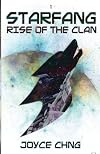
Werewolves in space! I picked this up based on that premise, knowing nothing else about it. I liked the main character and her relationship with her pack/crew, although I wish we had gotten to see more of them. Aunt Gertrude is well done and I liked her surprise reappearance later on. I'm so intrigued by the worldbuilding, and I wish we had gotten more of it too. The plot was unfortunately a little thin, or maybe I just don't care for "we have to stop the drug trade with random violence!" show more plots. There's some intriguing development for the protagonist, but this is very much just the beginning of a series. show less
Steampunk as a genre is best described by "p-words": privileged, problematic, preposterous. Much of it is about sticking brass gears on a top hat and having rollicking anachronistic adventurers that recapitulate and glorify the worst excesses of Victorian imperialism, when men had mustaches, women wore corsets, and the "lesser races" knew their place. It's fantasy, not science fiction, and mostly set dressing to replace magic with Babbage engines, knights with engineers, and give everybody show more an excuse for a hot water show. I don't like it much.
But I'm also interested in other visions of how the world could be, and The Sea is Ours asks authors from South East Asia to mash up their own culture and mythology with Steampunk set sressing. In this case it works, as a fantasy of much more successful resistance to colonialism, as a way to honor craftsmanship and natural spirits. I can't say that any of the stories stuck out as me, but this is a richly textured collection that scores above its genre, and is exactly what it says on the tin. show less
But I'm also interested in other visions of how the world could be, and The Sea is Ours asks authors from South East Asia to mash up their own culture and mythology with Steampunk set sressing. In this case it works, as a fantasy of much more successful resistance to colonialism, as a way to honor craftsmanship and natural spirits. I can't say that any of the stories stuck out as me, but this is a richly textured collection that scores above its genre, and is exactly what it says on the tin. show less
Lists
Awards


You May Also Like


Associated Authors
Statistics
- Works
- 37
- Also by
- 28
- Members
- 278
- Popularity
- #83,542
- Rating
- 3.8
- Reviews
- 16
- ISBNs
- 34
- Languages
- 1