
About the Author
Image credit: via Amazon.com
Series
Works by David S. Kidder
The Intellectual Devotional: Revive Your Mind, Complete Your Education, and Roam Confidently with the Cultured Class (2006) 1,911 copies, 30 reviews
The Intellectual Devotional: American History: Revive Your Mind, Complete Your Education, and Converse Confidently about Our Nation's Past (2007) 712 copies, 8 reviews
The Intellectual Devotional Modern Culture: Revive Your Mind, Complete Your Education, and Converse Confidently with the Culturati (2008) 343 copies, 3 reviews
The Intellectual Devotional Health: Revive Your Mind, Complete Your Education, and Digest a Daily Dose of Wellness Wisdom (2009) 116 copies, 1 review
The Startup Playbook: Secrets of the Fastest-Growing Startups from Their Founding Entrepreneurs (2012) 85 copies
New to Big: How Companies Can Create Like Entrepreneurs, Invest Like VCs, and Install a Permanent Operating System for Growth (2019) 25 copies
Todos los personajes de la historia que debes conocer. 365 días para ser más cul: 1 (Diversos) (2016) 2 copies
1日1ページ、読むだけで身につく世界の教養365 人物編 2 copies
Tagged
Common Knowledge
- Birthdate
- 20th Century
- Gender
- male
- Education
- Rochester Institute of Technology
- Occupations
- businessman
- Organizations
- Net-X
SmartRay Network
Clickable - Nationality
- USA
- Birthplace
- New York, New York, USA
- Places of residence
- New York, New York, USA
Westchester County, New York, USA - Associated Place (for map)
- New York, USA
Members
Reviews
The Intellectual Devotional: Revive Your Mind, Complete Your Education, and Roam Confidently with the Cultured Class by David S. Kidder
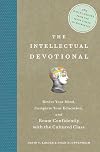
After one year, I have finished this book. I am truly going to miss sitting down with it each day and learning something (mostly) new. Instead of inspirational verses, this book teaches you something about History on Monday, Literature on Tuesday, Visual Arts on Wednesday, Science on Thursday, Music on Friday, Philosophy on Saturday, and Religion on Sunday, 52 weeks' worth. I learned a lot, and had something to look forward to each day. I think he has published additional books, and I'll show more have to get one for myself! show less
The intellectual devotional : revive your mind, complete your education, and roam confidently with the cultured class by David S. Kidder
Even as a child I've felt that my education was missing something -- focus, organization, continuity... I'm not really sure what, but I seem to always be looking for a way to fill in the gaps. "The Intellectual Devotional" is one of many books I've acquired that claim to do just that -- and so far, it is pretty disappointing. The back cover says it will "keep your mind sharp and refresh your spirit", but I don't think it does either of those things. For one thing, each subject is very short. show more One page per subject -- so one can expect only superficial knowledge. Another thing is that I don't think there were more than maybe 3 or 4 subjects (in the 365 lessons) that I didn't already know something about. This isn't to brag, it's just that the subjects are so broad and well-known, that you aren't learning much more than you already knew about say, Louis XIV of France, or "Waiting for Godot". It covers 7 field of study (you read one page a day, and in a week you've covered 7 subjects--I decided to read 7 pages a day instead just to finish the book), but the readings are not placed in any order as far as chronology or development or themes go. So, for example, the first week you read about 1) the Alphabet, 2) "Ulysses", 3) Lascaux Cave Paintings, 4) Cloning, 5) The Basics of Music, 6) Appearance and Reality, and 7) Torah. There is no connection between the subjects. If you take one subject, say, Science, and read just that subject each day, you get: Cloning, Eratosthenes, The Solar System, The Greenhouse Effect, and so on. You see what I mean? I think this book is best used as a way to review for a game of "Jeopardy". show less
The Intellectual Devotional: Revive Your Mind, Complete Your Education, and Roam Confidently with the Cultured Class by David S. Kidder
Devotionals don't usually appeal to me since I'm not religious, but this is a devotional of a different sort. This collection has a page for each day, loaded with information about influential authors, books, works of art, artists, religion, math, and science. Even the educated can learn something in this handy tome...the true story of the strange circumstances leading to Mozart's death, what makes Ulysses such a special book, why religions treasure certain places and things, and what lead show more to now-common mathematical equations we all had to learn in high school. This book can pique interest in subjects you've never read about, and can inspire you to reread a beloved book. I myself had such fun with this book that I used it as inspiration to jot down some ideas for short stories and books. The only thing that disappointed me is that the music section was devoted to classical music only (I was hoping to read a passage on the Beatles, even though I'm pretty well versed in their history [huge fan!]), but luckily a second edition will be making its way to bookshelves soon. This is a wonderful read that can be enjoyed one bit at a time, and you can even skip through and/or use the index if you want to read about certain things. I really loved this book - a combination of educational and fun! show less
The Intellectual Devotional: Revive Your Mind, Complete Your Education, and Roam Confidently with the Cultured Class by David S. Kidder
Link to my 'Mostly NF' blog review to read and comment OR read the text right here:
I did this all wrong.
David S. Kidder and Noah D. Oppenheim put together a well-intentioned, self-teaching excursion into the humanities and I couldn't do it. The autodidactic* part of the exercise was no problem. It was the pace that didn't sit well with me. The authors designed The Intellectual Devotional as a page-a-day book patterned after Christian devotionals. The reader is supposed to absorb one passage show more each day, meditate on its meaning, and let it sink in. Each day of the week is devoted to a different topic. Monday is history, for example, followed the next six days by literature, the visual arts, science, music, philosophy, and religion.
The authors hoped to foster an education in the humanities over the course of a year. Each day: one page, one topic. Like its religious counterparts, this devotional even has a bound silk tassle bookmark. Good plan. The problem is that I can never stick to a page-a-day plan. Oh, I've tried: a "year in nature" book; a few "365 photographs" samplers, etc. I usually doze off after a few weeks when boredom sets in and other distractions appear.
I was determined to get through The Intellectual Devotional, though, so I devised a cunning plan. The library's loan was good for three weeks, so -- doing a little division -- I figured I could read 17 pages each day and cover the entire year before the book started setting off the overdue alarms. This was NOT what the authors had in mind, of course, but I was faithful to their single-subject per day idea. I read 17 Monday entries the first day, 17 Tuesday entries the next, and so on. Each topic's article stream progressed in a logical order so nothing seemed disjointed. Just faster.
This plan got me through the book. I surely would have stalled out before making it to Plato's cave allegory (Day 34) had I gone the page-per-day route. I think it was more enjoyable, too. The only thing that didn't work was the silky bookmark. I ended up with seven paper bookmarks: one for each day's place.
I learned quite a bit, too. A lot was trivia. Example: There exists a gravestone marked "Here Rests Mozart's Widow's Second Spouse." But many lessons had some depth -- as much depth as a single page can handle. Philosophy is a subject I endured in college but find that I can relate to better now that I'm older (my kids agree) and wiser (they disagree). I wish the book's topics weren't so lopsided toward the arts -- I mean, all human history in 52 pages? That's the same space devoted to classical music -- but the authors don't pretend to include everything. Perhaps the planned sequel will cover new ground next year.
* Great word, by the way: autodidact.
Find more of my reviews at Mostly NF show less
I did this all wrong.
David S. Kidder and Noah D. Oppenheim put together a well-intentioned, self-teaching excursion into the humanities and I couldn't do it. The autodidactic* part of the exercise was no problem. It was the pace that didn't sit well with me. The authors designed The Intellectual Devotional as a page-a-day book patterned after Christian devotionals. The reader is supposed to absorb one passage show more each day, meditate on its meaning, and let it sink in. Each day of the week is devoted to a different topic. Monday is history, for example, followed the next six days by literature, the visual arts, science, music, philosophy, and religion.
The authors hoped to foster an education in the humanities over the course of a year. Each day: one page, one topic. Like its religious counterparts, this devotional even has a bound silk tassle bookmark. Good plan. The problem is that I can never stick to a page-a-day plan. Oh, I've tried: a "year in nature" book; a few "365 photographs" samplers, etc. I usually doze off after a few weeks when boredom sets in and other distractions appear.
I was determined to get through The Intellectual Devotional, though, so I devised a cunning plan. The library's loan was good for three weeks, so -- doing a little division -- I figured I could read 17 pages each day and cover the entire year before the book started setting off the overdue alarms. This was NOT what the authors had in mind, of course, but I was faithful to their single-subject per day idea. I read 17 Monday entries the first day, 17 Tuesday entries the next, and so on. Each topic's article stream progressed in a logical order so nothing seemed disjointed. Just faster.
This plan got me through the book. I surely would have stalled out before making it to Plato's cave allegory (Day 34) had I gone the page-per-day route. I think it was more enjoyable, too. The only thing that didn't work was the silky bookmark. I ended up with seven paper bookmarks: one for each day's place.
I learned quite a bit, too. A lot was trivia. Example: There exists a gravestone marked "Here Rests Mozart's Widow's Second Spouse." But many lessons had some depth -- as much depth as a single page can handle. Philosophy is a subject I endured in college but find that I can relate to better now that I'm older (my kids agree) and wiser (they disagree). I wish the book's topics weren't so lopsided toward the arts -- I mean, all human history in 52 pages? That's the same space devoted to classical music -- but the authors don't pretend to include everything. Perhaps the planned sequel will cover new ground next year.
* Great word, by the way: autodidact.
Find more of my reviews at Mostly NF show less
Lists
Awards


You May Also Like


Associated Authors
Statistics
- Works
- 20
- Members
- 3,466
- Popularity
- #7,335
- Rating
- 3.9
- Reviews
- 47
- ISBNs
- 61
- Languages
- 4