
James Hynes (1) (1955–)
Author of The Lecturer's Tale
For other authors named James Hynes, see the disambiguation page.
About the Author
Writer James Hynes loves cats and has worked them into several of his publications, including his collection of three novellas entitled Publish and Perish: Three Tales of Tenure and Terror. A combination of horror story and academic satire, Publish and Perish was the result of Hynes yearning to show more create horror stories in the vein of Edgar Allen Poe and M.R. James. Hynes first gained national attention in 1990 with the publication of The Wild Colonial Boy. In addition, his essays on television criticism have appeared in Mother Jones and Utne Reader. (Bowker Author Biography) show less
Works by James Hynes
Associated Works
Tagged
Common Knowledge
- Birthdate
- 1955-08-23
- Gender
- male
- Education
- University of Michigan (BA|1977)
University of Iowa (MFA|1989) - Occupations
- teacher
writer
literary critic - Organizations
- University of Michigan, Ann Arbor (taught creative writing)
Miami University (taught creative writing)
University of Texas at Austin (taught creative writing) - Awards and honors
- Hopwood Award, University of Michigan, 1976
Michener fellowship
first prize Adult Literature Award from the Friends of American Writers, 1991, for The Wild Colonial Boy - Nationality
- USA
- Birthplace
- Okemos, Michigan, USA
- Places of residence
- Austin, Texas, USA
- Associated Place (for map)
- USA
Members
Reviews

I love and admire this book; it is wickedly funny, and one of only two books in my collection that I have read three times. Its three tales offer brilliant satires of life in American academia -- ones that could only have been written by someone who has spent years in academic positions in the US. As academic satire, it is much better than such works as Jane Smiley's Moo and Richard Russo's Straight Man. As for the element of "horror" (given the book's subtitle: Tales of Tenure and Terror), show more it's all in good fun -- the tone of the stories is not one of horror, but comedic entertainment.
In "Queen of the Jungle," an academic couple faces complications and jealousy caused by their differential success. Elizabeth is a rising star on her way to tenure at "Chicago University", whereas Paul is stuck in a dead-end position in Iowa and unable to find the inspiration to finish his book manuscript. Paul is cheating on his wife with a flighty grad student named Kymberly. In response, Charlotte the cat has taken to urinating every place where they have coupled, and to collecting evidence of their affair to present to Elizabeth. Paul and Kym take to tormenting Charlotte with a squirt gun whenever Elizabeth is absent. This leads to all-out war between the cheating couple and the cat. It is a war that Paul is not destined to win. The cleverly evil cat manages to expose him in the worst possible way....
The second story, "99," features Prof. Gregory Eyck, a vain and ambitious archeologist who -- under the influence of the latest in post- modernist ideology -- seeks to build a career out of verbally "deconstructing" famous archeological sites. In his visit to Silbury (an alternative to Stonehenge), he decides to turn cultural anthropologist in order to document a local ceremonial ritual -- and becomes "deconstructed" himself in a denouement both terrible and terribly amusing.
The third story, "Casting the Runes" pits Virginia Dunning, an untenured professor, against Victor Karswell, a vicious senior colleague who steals her work and presents it as his own. She achieves victory, but only by summoning supernatural elements to her assistance. The climax is rather overdone, but it's funny nonetheless, and justice is meted out appropriately.
Aside from plot, each of the stories presents a satirical view of fashionable academic ideologies. In the first tale, Paul patiently rationalizes their affair to young Kimberley: ''Marriage has always been more of an economic relationship than anything else." he explains. "The idea that love has anything to do with it is a fairly recent construction, dating from the Romantic era. Elizabeth and I have a kind of . . . affectionate professional partnership.'' (Reader's can easily guess Elizabeth's view of the matter). In the second tale, Gregory Eyck has overturned the field of anthropology with his brilliant epigram, that "the notion that 'the proper study of mankind is man' is a bankrupt formulation... The proper study of anthropology is anthropologists." An academic symposium organized by Eyck (which figures in the 2nd and 3rd tales) is entitled '' 'Captains' and 'Cannibals': The Cultural Constructions of the Death of Captain Cook.'' The title reflects an actual ongoing controversy over whether Cook was killed by superstitious natives who mistook him for a god -- or whether they recognized him as a vanguard of imperialistic colonialists. No matter-- the conference explodes into violent argument over whether the poster constructed to advertise the conference (juxtaposing a cannibalistic dark-skinned native with a "pure white" European skull) was cleverly ironic or culturally insensitive. This is satire, but it hits very close to the mark.
Whether readers in general will enjoy this book as much as I did is an open question. Certainly individuals who have made a career in academia will find much that is recognizable, if not much too close for comfort. show less
In "Queen of the Jungle," an academic couple faces complications and jealousy caused by their differential success. Elizabeth is a rising star on her way to tenure at "Chicago University", whereas Paul is stuck in a dead-end position in Iowa and unable to find the inspiration to finish his book manuscript. Paul is cheating on his wife with a flighty grad student named Kymberly. In response, Charlotte the cat has taken to urinating every place where they have coupled, and to collecting evidence of their affair to present to Elizabeth. Paul and Kym take to tormenting Charlotte with a squirt gun whenever Elizabeth is absent. This leads to all-out war between the cheating couple and the cat. It is a war that Paul is not destined to win.
The second story, "99," features Prof. Gregory Eyck, a vain and ambitious archeologist who -- under the influence of the latest in post- modernist ideology -- seeks to build a career out of verbally "deconstructing" famous archeological sites. In his visit to Silbury (an alternative to Stonehenge), he decides to turn cultural anthropologist in order to document a local ceremonial ritual -- and becomes "deconstructed" himself in a denouement both terrible and terribly amusing.
The third story, "Casting the Runes" pits Virginia Dunning, an untenured professor, against Victor Karswell, a vicious senior colleague who steals her work and presents it as his own. She achieves victory, but only by summoning supernatural elements to her assistance. The climax is rather overdone, but it's funny nonetheless, and justice is meted out appropriately.
Aside from plot, each of the stories presents a satirical view of fashionable academic ideologies. In the first tale, Paul patiently rationalizes their affair to young Kimberley: ''Marriage has always been more of an economic relationship than anything else." he explains. "The idea that love has anything to do with it is a fairly recent construction, dating from the Romantic era. Elizabeth and I have a kind of . . . affectionate professional partnership.'' (Reader's can easily guess Elizabeth's view of the matter). In the second tale, Gregory Eyck has overturned the field of anthropology with his brilliant epigram, that "the notion that 'the proper study of mankind is man' is a bankrupt formulation... The proper study of anthropology is anthropologists." An academic symposium organized by Eyck (which figures in the 2nd and 3rd tales) is entitled '' 'Captains' and 'Cannibals': The Cultural Constructions of the Death of Captain Cook.'' The title reflects an actual ongoing controversy over whether Cook was killed by superstitious natives who mistook him for a god -- or whether they recognized him as a vanguard of imperialistic colonialists. No matter-- the conference explodes into violent argument over whether the poster constructed to advertise the conference (juxtaposing a cannibalistic dark-skinned native with a "pure white" European skull) was cleverly ironic or culturally insensitive. This is satire, but it hits very close to the mark.
Whether readers in general will enjoy this book as much as I did is an open question. Certainly individuals who have made a career in academia will find much that is recognizable, if not much too close for comfort. show less
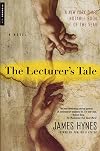
James Hynes's THE LECTURER'S TALE (2000) is a very strange book indeed. What to call it? A Gothic-tinged novel of academia perhaps. Because it is such a phantasmagorical stew of odd characters, plot twists and, finally, horror (a touch of Dante's INFERNO even). I'm not sure there is any way to accurately categorize it. Think, say, the academic novels of John Barth, i.e. THE END OF THE ROAD or GILES GOAT BOY. Then throw in some of Gore Vidal's MYRA BRECKENRIDGE, and maybe some generous show more helpings of Chaucer and Shakespeare, and bits and pieces of so many other 'old white male' authors of the traditional canon. Then mix into the stew lots of today's political correctness about gender and equality, a mythical sort of Midas touch, as well as some kinky sex and none-too-subtle nods to THE STEPFORD WIVES and the porn classic, THE STORY OF O. Then give it a central character named Nelson Humboldt. Yeah, me too. Saul Bellow's HUMBOLDT'S GIFT, another academic novel, if a bit - actually a LOT - more traditional. And it fits.
The book runs close to 400 pages, and it takes a good 100-plus pages just to introduce all of the cast and try to get them straight. But ultimately it is worth the investment of the time it all takes. Because once it gets going, the story barrels along at a breakneck pace that keeps you turning pages and reading faster and faster. Yeah, it's pretty damn good.
I picked this book up at a library sale a few months ago in Big Rapids, the town where author James Hynes grew up, the son of a Sociology professor at Ferris State University. (I had a couple classes from Glen Hynes back in 1966-67.) In fact the book is dedicated to his father, "my first and best teacher." James Hynes attended university at Michigan and Iowa and has bounced around between various college teaching jobs, so he knows about office politics, departmental intrigues and gossip, and he uses that knowledge in an alternately horrific and hilarious manner here in THE LECTURER'S TALE, giving the reader an inside look at the lowly world of adjunct professors and composition teachers, the pressures to publish AND teach, as well as the hallowed hierarchy of department heads and their trusted Sancho Panzas. And what a department chairman Hynes gives us in Anthony Pescecane, who conducts himself like the 'shark' his name indicates, and like a mafia don who professes to value 'street cred' over scholarship.
And then there's our 'hero' - or maybe antihero - Nelson Humboldt, who progresses from untenured lecturer steadily up through the ranks after suffering a freak accident that leaves him with a strange power to get people to do what he wants. And power corrupts, of course. So ...
I've read only one other James Hynes book, NEXT (2010), also a novel of publishing and academia as well as some of the horror of 9/11 mixed in. It was not quite as ambitious and complex as this one, but a very good read. This one got off to a rather ponderous start, but, as I've already said, it gets better and better, so hang in there. Very highly recommended.
- Tim Bazzett, author of the memoir, BOOKLOVER show less
The book runs close to 400 pages, and it takes a good 100-plus pages just to introduce all of the cast and try to get them straight. But ultimately it is worth the investment of the time it all takes. Because once it gets going, the story barrels along at a breakneck pace that keeps you turning pages and reading faster and faster. Yeah, it's pretty damn good.
I picked this book up at a library sale a few months ago in Big Rapids, the town where author James Hynes grew up, the son of a Sociology professor at Ferris State University. (I had a couple classes from Glen Hynes back in 1966-67.) In fact the book is dedicated to his father, "my first and best teacher." James Hynes attended university at Michigan and Iowa and has bounced around between various college teaching jobs, so he knows about office politics, departmental intrigues and gossip, and he uses that knowledge in an alternately horrific and hilarious manner here in THE LECTURER'S TALE, giving the reader an inside look at the lowly world of adjunct professors and composition teachers, the pressures to publish AND teach, as well as the hallowed hierarchy of department heads and their trusted Sancho Panzas. And what a department chairman Hynes gives us in Anthony Pescecane, who conducts himself like the 'shark' his name indicates, and like a mafia don who professes to value 'street cred' over scholarship.
And then there's our 'hero' - or maybe antihero - Nelson Humboldt, who progresses from untenured lecturer steadily up through the ranks after suffering a freak accident that leaves him with a strange power to get people to do what he wants. And power corrupts, of course. So ...
I've read only one other James Hynes book, NEXT (2010), also a novel of publishing and academia as well as some of the horror of 9/11 mixed in. It was not quite as ambitious and complex as this one, but a very good read. This one got off to a rather ponderous start, but, as I've already said, it gets better and better, so hang in there. Very highly recommended.
- Tim Bazzett, author of the memoir, BOOKLOVER show less
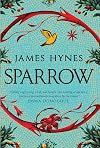
More like 4.5 stars. Sparrow isn't really a literary or artistic masterpiece—honestly, far from it. But Hynes is a true master of the construction of a novel, and a difficult one at that, as this story is truly the definition of a "slow burn". Very few things happen in the first quarter of the novel, and the author has a lust for description that can get a bit plodding ("Can he just come already? incarnate; not Anne Rice level but just about.). I found Sparrow's greatest strength in its show more worldbuilding and characterization.
Sparrow is the story of a young (potentially Syrian, potentially Jewish) boy sold into slavery as a baby and raised with the "wolves" of Helicon, one of the last brothels left in Roman Spain in the waning days of the Empire. Unnamed and often beaten, Sparrow (as he calls himself) is quickly forced to grow up beyond his years. Eventually made to work upstairs with the women who raised him, Sparrow quickly begins to break down, beaten by the institutions of slavery, sex, and physical labour.
If you couldn't tell, this story is uncomfortable. Deeply. It's in some ways what makes it such a compelling read. In what world would being a sex slave not be horrific? With a similar premise and setting to The Wolf Den trilogy, Sparrow is the grittier, more realistic, and more heartbreaking twin of the pair. I read this book continuously for several days, pushing myself through it despite the many times I thought it'd be better to just shelve it for the night. The novel does an excellent (maybe even too excellent) exploration of the violence of being entered against your will, describing the breaking down of the psyche and constant dissociation that must occur to survive these inhuman practices.
I don't get squeamish easily and that extends to sex, but Jesus Christ. It felt as if sometimes the story veered into the trauma porn for the amount of bullshit and level of graphic description, but God, that's just life, right? I will concede my own history of PTSD and sexual assault are involved in my unease, so if that sounds like you just be aware it's a bit intense. Yugh.
Perhaps (okay definitely) showing my biases, I was often surprised that it was a man who wrote this; the story is so much about the psyche of women under some of the cruelest uses of their body by men that I've definitely been changed for the better. Hynes writes as I would expect a woman to, and I guess I must relinquish my expectation of writing by gender. Hynes is brilliant at it, and all the ugly sex-specific gunk that makes women's psyche so raw is included. Great great additions all around.
Lastly, contrary to the tagging on this site, this novel is not what I would characterize as LGBT or even maybe a queer story. There are definitely themes granted the premise, but they are dark and small compared to the greater story of systematic dehumanization in slavery and what it meant to be a male prostitute at the time. Our titular character is what people would describe today as bisexual, but—I can't iterate this enough—this is not a romance, and there are very few scenes of "self-discovery." The novel ends with the character at around the age of 13 after years of forced prostitution... It's realistic, which makes it so uncomfortable, but sexuality is not the backbone of this story in any meaningful way.
Anyway, I loved this book. LOVED it. It didn't make me think too hard and instead was just a captivating, moving, (eventually) thrilling story. Because of how much I loved it, I'm worried the marketing for it is really failing to capture the usual audience I think would love this—unfortunately, I think the book having an author with such a masculine name like James will turn the usual feminist readers of this sort of story away. It sounds insane but the industry is wild. show less
Sparrow is the story of a young (potentially Syrian, potentially Jewish) boy sold into slavery as a baby and raised with the "wolves" of Helicon, one of the last brothels left in Roman Spain in the waning days of the Empire. Unnamed and often beaten, Sparrow (as he calls himself) is quickly forced to grow up beyond his years. Eventually made to work upstairs with the women who raised him, Sparrow quickly begins to break down, beaten by the institutions of slavery, sex, and physical labour.
If you couldn't tell, this story is uncomfortable. Deeply. It's in some ways what makes it such a compelling read. In what world would being a sex slave not be horrific? With a similar premise and setting to The Wolf Den trilogy, Sparrow is the grittier, more realistic, and more heartbreaking twin of the pair. I read this book continuously for several days, pushing myself through it despite the many times I thought it'd be better to just shelve it for the night. The novel does an excellent (maybe even too excellent) exploration of the violence of being entered against your will, describing the breaking down of the psyche and constant dissociation that must occur to survive these inhuman practices.
I don't get squeamish easily and that extends to sex, but Jesus Christ. It felt as if sometimes the story veered into the trauma porn for the amount of bullshit and level of graphic description, but God, that's just life, right? I will concede my own history of PTSD and sexual assault are involved in my unease, so if that sounds like you just be aware it's a bit intense. Yugh.
Perhaps (okay definitely) showing my biases, I was often surprised that it was a man who wrote this; the story is so much about the psyche of women under some of the cruelest uses of their body by men that I've definitely been changed for the better. Hynes writes as I would expect a woman to, and I guess I must relinquish my expectation of writing by gender. Hynes is brilliant at it, and all the ugly sex-specific gunk that makes women's psyche so raw is included. Great great additions all around.
Lastly, contrary to the tagging on this site, this novel is not what I would characterize as LGBT or even maybe a queer story. There are definitely themes granted the premise, but they are dark and small compared to the greater story of systematic dehumanization in slavery and what it meant to be a male prostitute at the time. Our titular character is what people would describe today as bisexual, but—I can't iterate this enough—this is not a romance, and there are very few scenes of "self-discovery." The novel ends with the character at around the age of 13 after years of forced prostitution... It's realistic, which makes it so uncomfortable, but sexuality is not the backbone of this story in any meaningful way.
Anyway, I loved this book. LOVED it. It didn't make me think too hard and instead was just a captivating, moving, (eventually) thrilling story. Because of how much I loved it, I'm worried the marketing for it is really failing to capture the usual audience I think would love this—unfortunately, I think the book having an author with such a masculine name like James will turn the usual feminist readers of this sort of story away. It sounds insane but the industry is wild. show less
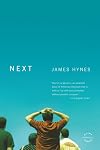
If ever a book was "A Day in the Life," this is it. At first I only wanted to read James Hynes' NEXT because he grew up about 15 miles from where I grew up, although he's about a dozen years younger. But his day-in-the-life of fifty-ish, commitment-phobic Kevin Quinn, the dissatisfied editor of a university publication in Ann Arbor, quickly sucked me in. Yeah, just one day, but we pretty much get Kevin's whole libidinous, screwed-up life by way of his inner monologue, stream-of-consciousness show more patter. The events of his day in Austin - where he has flown to interview for a job - is sort of summed up by Kevin in a single sentence: "... his seminostalgic, semihorndog stalking of Joy Luck; his fateful fall on the bridge; his emotionally tumultuous lunch with Dr. Barrientos; his epiphanic sponge bath in the men's room in Wohl's; his erotic reverie in the cab; his apocalyptic aural fantasy in the elevator just now …" Yes, this is a story rich in detail and 'location.' Ann Arbor and Austin are almost characters in the novel. I already knew something of the former city, and came away knowing plenty about the latter [where the author has resided for many years]. The story builds slowly - patience is required - but inexorably to a shattering conclusion that will leave you breathless and, well, shattered. (And you'll also suddenly 'get' the significance of the cover photo.) This is fiction of the first order. Bravo, Mr Hynes. My highest recommendation.
- Tim Bazzett, author of the memoir, BOOKLOVER show less
- Tim Bazzett, author of the memoir, BOOKLOVER show less
Lists
Best Satire (2)
to get (1)
Awards


You May Also Like


Associated Authors
Statistics
- Works
- 10
- Also by
- 2
- Members
- 2,034
- Popularity
- #12,635
- Rating
- 3.8
- Reviews
- 57
- ISBNs
- 50
- Languages
- 1
- Favorited
- 3