
Linda Urban
Author of A Crooked Kind of Perfect
About the Author
Works by Linda Urban
Mabel and Sam at Home: (Imagination Books for Kids, Children's Books about Creative Play) (2018) 45 copies, 2 reviews
Associated Works
The Creativity Project: An Awesometastic Story Collection (2018) — Contributor — 114 copies, 3 reviews
Tagged
Common Knowledge
- Birthdate
- 1966-06-18
- Gender
- female
- Occupations
- Marketing Director
- Nationality
- USA
- Birthplace
- Detroit, Michigan, USA
- Associated Place (for map)
- Michigan, USA
Members
Reviews

"Mouse was mad. Hopping mad," begins Linda Urban's delightful tale of a little mouse struggling to find a way to express his feelings. Unfortunately, Hare happens along, and seeing Mouse's rather small hop, informs him that he looks ridiculous. Discovering that he cannot match Bear's earth-shaking stomp, Bobcat's echoing scream, or Hedgehog's smooth roll, Mouse becomes progressively more angry (and muddy, as his efforts land him in a succession of puddles). Finally, at the end of his rope, show more he finds his own means of expressing his fury - something none of his animal companions can match!
With a narrative that perfectly expresses the frustration of a young child, struggling to find a satisfactory way of enacting a difficult feeling, and adorable illustrations that capture the perverse humor of a temper-tantrum, Mouse Was Mad is a wonderful affirmation of the child's emotional world. Many adults seem to forget how much more intense emotions seem, when we lack the vocabulary and skills to express them, but Urban clearly has not. Thanks to Kathryn, Lisa and Ann, for pointing me towards this one! show less
With a narrative that perfectly expresses the frustration of a young child, struggling to find a satisfactory way of enacting a difficult feeling, and adorable illustrations that capture the perverse humor of a temper-tantrum, Mouse Was Mad is a wonderful affirmation of the child's emotional world. Many adults seem to forget how much more intense emotions seem, when we lack the vocabulary and skills to express them, but Urban clearly has not. Thanks to Kathryn, Lisa and Ann, for pointing me towards this one! show less
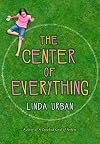
It’s possible to write a quiet, sweet book about pre-teens’ exploration of big ideas that will be fun and engaging for actual pre-teens. Wendy Mass does it fairly consistently. This, sadly, felt like it was more effective as an adult comfort read. Of course, I could be wrong! If you know kids who loved it, please tell me; it’s certainly a well-written, wholesome read that would be a good addition to libraries if students like it more than I predict. - See more at: show more target="_top">http://www.parenthetical.net/2013/10/26/review-the-center-of-everything-by-linda... show less
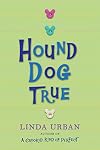
I love Linda Urban. [b:A Crooked Kind of Perfect|1535111|A Crooked Kind of Perfect|Linda Urban|http://photo.goodreads.com/books/1184859587s/1535111.jpg|1527227] is such a gem of a book, and Hound Dog True is not far behind. The plot is good but not unique - girl can't make friends because her mother moves them every time the "going gets tough". But the writing is so, so good. Urban doesn't write down to kids. In fact, there's subtlety in story that she trusts kids will pick up on. I'd hand show more her books to every fifth grade girl coming out of the nearby elementary school if I could afford it. show less
First line:
"In the beginning, there was the donut."
Regret is a curious thing. Adults often harbor regrets, but in the short life of a young child, regret is a foreign feeling; and so, when Ruby Pepperdine's 12-year-old life is peppered with both loss and regret, she does not feel the sad and wistful feeling that adults know and understand; she feels a topsy-turvy feeling - a feeling that something has thrown off the balance in her circle of life. Circles are something that Ruby knows a bit show more about, living as she does in Bunning, New Hampshire, the one-time home of Captain Bunning, inventor of the hole in the donut.
Set entirely within one day and employing flashbacks to fill in the back story, The Center of Everything is a short and quirky, middle-grade novel that deals with the sensitive topics of death and regret in an entertaining, hopeful and even humorous manner,
"Ruby should move on to the math books. She really should. But she can't help but be a little curious. "Who decided?"
"Nobody knows for sure. That's what bugs me. Some medieval guys discovered this list and said was based on a bunch of other lists from some ancient guys, including ..." Nero flips to the introduction. "Including a historian dude called Herodotus and another guy name Callimachus, but nobody knows who really decided what the Seven Wonders are. So how come we're all supposed to just say, 'Yeah, okay. Those are the Seven Wonders.' What if there was something else around that Callimachus just didn't like? Some kind of awesome tomb or statue or something that was made by one of his enemies, so he left it off the list?"
This is exactly the kind of questions that gets Nero DeNiro in so much trouble at school -- the kind of questions that teachers can't answer.
...
"Also, says Nero, "how come nobody gets named Callimachus anymore?""
Ruby tries to make sense of her new world - without her grandmother, with a possible new friend named Nero, a possibly angry, old friend named Lucy, and a wish scheduled to come true today, on Bunning Day at the Bunning Day Parade where Ruby, the Bunning Day Essay Girl, is scheduled to read her prize-winning essay from a float in the parade. Ever since her quarter sailed through the donut hole in the Captain Cornelius Bunning bronze statue, Ruby has been waiting for this day. According to tradition, if her quarter went through the hole on her birthday, and she said her wish the proper number of times, it should come true on Bunning Day. It should. It's fate. It's destiny. But can it come true? Has she done it correctly? What if she wished for the wrong thing?
more at http://shelf-employed.blogspot.com show less
"In the beginning, there was the donut."
Regret is a curious thing. Adults often harbor regrets, but in the short life of a young child, regret is a foreign feeling; and so, when Ruby Pepperdine's 12-year-old life is peppered with both loss and regret, she does not feel the sad and wistful feeling that adults know and understand; she feels a topsy-turvy feeling - a feeling that something has thrown off the balance in her circle of life. Circles are something that Ruby knows a bit show more about, living as she does in Bunning, New Hampshire, the one-time home of Captain Bunning, inventor of the hole in the donut.
Set entirely within one day and employing flashbacks to fill in the back story, The Center of Everything is a short and quirky, middle-grade novel that deals with the sensitive topics of death and regret in an entertaining, hopeful and even humorous manner,
"Ruby should move on to the math books. She really should. But she can't help but be a little curious. "Who decided?"
"Nobody knows for sure. That's what bugs me. Some medieval guys discovered this list and said was based on a bunch of other lists from some ancient guys, including ..." Nero flips to the introduction. "Including a historian dude called Herodotus and another guy name Callimachus, but nobody knows who really decided what the Seven Wonders are. So how come we're all supposed to just say, 'Yeah, okay. Those are the Seven Wonders.' What if there was something else around that Callimachus just didn't like? Some kind of awesome tomb or statue or something that was made by one of his enemies, so he left it off the list?"
This is exactly the kind of questions that gets Nero DeNiro in so much trouble at school -- the kind of questions that teachers can't answer.
...
"Also, says Nero, "how come nobody gets named Callimachus anymore?""
Ruby tries to make sense of her new world - without her grandmother, with a possible new friend named Nero, a possibly angry, old friend named Lucy, and a wish scheduled to come true today, on Bunning Day at the Bunning Day Parade where Ruby, the Bunning Day Essay Girl, is scheduled to read her prize-winning essay from a float in the parade. Ever since her quarter sailed through the donut hole in the Captain Cornelius Bunning bronze statue, Ruby has been waiting for this day. According to tradition, if her quarter went through the hole on her birthday, and she said her wish the proper number of times, it should come true on Bunning Day. It should. It's fate. It's destiny. But can it come true? Has she done it correctly? What if she wished for the wrong thing?
more at http://shelf-employed.blogspot.com show less
Lists
Awards


You May Also Like


Associated Authors
Statistics
- Works
- 15
- Also by
- 1
- Members
- 3,609
- Popularity
- #7,014
- Rating
- 3.9
- Reviews
- 119
- ISBNs
- 115
- Languages
- 5
- Favorited
- 1