
Leo Bruce (1903–1979)
Author of Case for Three Detectives
About the Author
Series
Works by Leo Bruce
Death in the Middle Watch: A Carolus Deene Mystery (Carolus Deene Series) (1974) 21 copies, 1 review
The last of spring 2 copies
The blood-red island 2 copies
The Sawdust Ring 2 copies
Darts 2 copies
Brass Farthing 1 copy
Seven thunders 1 copy
The sawdust king : the romantic story of the English circuc, its great showmen and performers 1 copy
Wilkie 1 copy
The circus has no home 1 copy
The Viking 1 copy
Banquo's Chair 1 copy
Barbary Night 1 copy
Kingdom Come 1 copy
Associated Works
Obsolete Spells: Poems & Prose from Victor Neuburg & the Vine Press (2022) — Contributor — 16 copies
Furious Old Women | A Stranger and Afraid | The Dark One | Tipsy and the Board of Health (2002) — Contributor — 1 copy
Tagged
Common Knowledge
- Canonical name
- Bruce, Leo
- Legal name
- Croft-Cooke, Rupert
- Other names
- Bruce, Leo (pseudonym)
- Birthdate
- 1903-06-20
- Date of death
- 1979-06-10
- Gender
- male
- Education
- Tonbridge School, Kent, England
Wellington College - Occupations
- antiquarian bookseller (1929-1931)
intelligence officer (Bombay | WWII )
book critic (The Sketch) - Nationality
- UK
- Birthplace
- Edenbridge, Kent, England, UK
- Places of residence
- Edenbridge, Kent, UK
France
Argentina
Germany
Switzerland
Spain - Place of death
- Bournemouth, England
- Associated Place (for map)
- Edenbridge, Kent, UK
Members
Reviews
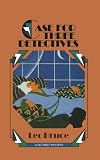
In any murder mystery featuring an amateur sleuth, members of the police force are almost always too quick to jump to the wrong conclusions, if they aren't portrayed as being downright stupid. This cliche gets turned on its ear in “Case for Three Detectives” (1936) by Leo Bruce.
Bruce gives us a classic locked-room mystery, so common at that time. A group of people are guests at the home of Dr. Thurston and his wife. Soon after Mrs. Thurston goes up to bed, the others hear a scream. After show more her securely locked bedroom door is broken open, she is found with her throat cut. There is an open window behind her, and a knife is found in the yard. How did the murder happen? How did the killer get away? Who could have done it when the others were gathered in a room below?
The next day three famous amateur detectives show up: Lord Simon Plimsoll (patterned after Lord Peter Wimsey), Monsieur Amer Picon (Hercule Poirot) and Monsignor Smith (Father Brown). Also present is Sergeant Beef, the local police officer, who immediately declares that he knows who the murderer is and how the crime was committed. Nobody believes him, however, or even asks him to explain. He has been told by his superiors to allow the three distinguished detective to complete their investigations before making an arrest, and so Beef sits in the background while Plimsoll, Picon and Smith do their thing in the manner fans of Dorothy L. Sayers, Agatha Christie and G.K. Chesterton will be familiar with.
In the end, each of the three detectives names a different murderer and explains a totally different manner in which the crime was committed. And each brilliant deduction seems entirely convincing. But then Sgt. Beef tells what really happened, and offers the proof that the other three lacked.
Bruce gives us four -- make that five -- possible solutions to a crime that seems to have no solution at all. His novel is a treat for any fan of classic mysteries, and especially for fans of Wimsey, Poirot and/or Brown. show less
Bruce gives us a classic locked-room mystery, so common at that time. A group of people are guests at the home of Dr. Thurston and his wife. Soon after Mrs. Thurston goes up to bed, the others hear a scream. After show more her securely locked bedroom door is broken open, she is found with her throat cut. There is an open window behind her, and a knife is found in the yard. How did the murder happen? How did the killer get away? Who could have done it when the others were gathered in a room below?
The next day three famous amateur detectives show up: Lord Simon Plimsoll (patterned after Lord Peter Wimsey), Monsieur Amer Picon (Hercule Poirot) and Monsignor Smith (Father Brown). Also present is Sergeant Beef, the local police officer, who immediately declares that he knows who the murderer is and how the crime was committed. Nobody believes him, however, or even asks him to explain. He has been told by his superiors to allow the three distinguished detective to complete their investigations before making an arrest, and so Beef sits in the background while Plimsoll, Picon and Smith do their thing in the manner fans of Dorothy L. Sayers, Agatha Christie and G.K. Chesterton will be familiar with.
In the end, each of the three detectives names a different murderer and explains a totally different manner in which the crime was committed. And each brilliant deduction seems entirely convincing. But then Sgt. Beef tells what really happened, and offers the proof that the other three lacked.
Bruce gives us four -- make that five -- possible solutions to a crime that seems to have no solution at all. His novel is a treat for any fan of classic mysteries, and especially for fans of Wimsey, Poirot and/or Brown. show less
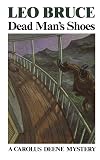
This is my second Leo Bruce, and my first read in the Carolus Deene series.
Here, a man is murdered (off stage) in England. Another man apparently confesses to the crime and jumps overboard from a boat traveling from Tangier to Britain. Case closed.
But of course it isn’t. When a friend from childhood tells Deene that it’s murder instead of suicide, he enters into the investigation. When he finds an over abundance of evidence in one direction, he realizes that it is in fact misdirection, show more and sets about solving a fairly complicated case.
Bruce writes well; the plot is tight and the characters are well-developed without too much of the caricature. Subtle and obvious humor is scattered throughout the book. The author lived in Tangier for a time, and his picture of it is fascinating.
There’s a tiny subplot inserted, I think, as a sly yet sad commentary on events from the author’s life.
Highly recommended to those who like private detectives in the Golden Age manner. I really enjoyed this one. show less
Here, a man is murdered (off stage) in England. Another man apparently confesses to the crime and jumps overboard from a boat traveling from Tangier to Britain. Case closed.
But of course it isn’t. When a friend from childhood tells Deene that it’s murder instead of suicide, he enters into the investigation. When he finds an over abundance of evidence in one direction, he realizes that it is in fact misdirection, show more and sets about solving a fairly complicated case.
Bruce writes well; the plot is tight and the characters are well-developed without too much of the caricature. Subtle and obvious humor is scattered throughout the book. The author lived in Tangier for a time, and his picture of it is fascinating.
There’s a tiny subplot inserted, I think, as a sly yet sad commentary on events from the author’s life.
Highly recommended to those who like private detectives in the Golden Age manner. I really enjoyed this one. show less
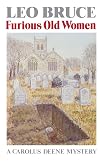
I do love wit and comedy with my murders.
Leo Bruce is a marvelous addition to my collection of go-to mystery authors. His plotting is often ingenious, and his ability to create comic characters is unsurpassed.
This entry in his Carolus Deene series is an engaging and fast read. As the story opens we’re introduced to Mrs. Bobbin, one of the furious women of the title. She approaches Deene because she doesn’t trust the police to solve the extremely annoying murder of her sister Millicent. show more
Mrs. Bobbin rather disliked her sister, but she was family. It turns out that everyone in the village hated Millicent, as she was nosy, nasty, and not nice. Soon another death occurs; this time it’s Millicent’s chief rival in the high church, low church battle in the village.
This village murder mystery was written in the 1960’s, but it could have come straight from the Golden Age of British mysteries.
Highly recommended to any fan of old mysteries. show less
Leo Bruce is a marvelous addition to my collection of go-to mystery authors. His plotting is often ingenious, and his ability to create comic characters is unsurpassed.
This entry in his Carolus Deene series is an engaging and fast read. As the story opens we’re introduced to Mrs. Bobbin, one of the furious women of the title. She approaches Deene because she doesn’t trust the police to solve the extremely annoying murder of her sister Millicent. show more
Mrs. Bobbin rather disliked her sister, but she was family. It turns out that everyone in the village hated Millicent, as she was nosy, nasty, and not nice. Soon another death occurs; this time it’s Millicent’s chief rival in the high church, low church battle in the village.
This village murder mystery was written in the 1960’s, but it could have come straight from the Golden Age of British mysteries.
Highly recommended to any fan of old mysteries. show less
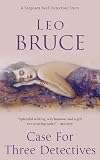
Dr and Mrs Thurston are hosting a country house party, attended by a neurotic novelist, a lawyer, a hard-drinking sportsman and the narrator. There is crowd of servants with unusually murky pasts, and a very peculiar vicar, so when Mrs Thurston is found murdered there are plenty of suspects. Shortly following the murder, three famous detectives descend on the Thurston house: the Lord Peter Wimsey stand-in, Lord Simon Plimsoll; Amer Picon, who bears a strong resemblance to Hercule Poirot; show more Monsignor Smith, who shares many characteristics with Father Brown. Our narrator Townsend, well-versed in the rules of detective fiction, conscientiously acts as Watson (or Hastings) to all three, as they apply their giant intellects to the murder. Also investigating is the red-faced, beer-drinking, dart-playing plebian, Sergeant Beef, who is sadly underrated by the other investigators.
This is an amusing locked-room mystery, particularly for fans of Golden Age detective stories. The story sags slightly when the four detectives produce their theories, but overall it's an entertaining read. show less
This is an amusing locked-room mystery, particularly for fans of Golden Age detective stories. The story sags slightly when the four detectives produce their theories, but overall it's an entertaining read. show less
Lists
Awards


You May Also Like


Associated Authors
Statistics
- Works
- 98
- Also by
- 15
- Members
- 1,551
- Popularity
- #16,609
- Rating
- 3.8
- Reviews
- 51
- ISBNs
- 205
- Languages
- 8
- Favorited
- 2