
Paul Karasik (2) (1956–)
Author of City of Glass: The Graphic Novel
For other authors named Paul Karasik, see the disambiguation page.
About the Author
Paul Karasik lives on Martha's Vineyard.
Works by Paul Karasik
The Ride Together: A Brother and Sister's Memoir of Autism in the Family (2003) 69 copies, 2 reviews
Paul Auster's The New York Trilogy: City of Glass, Ghosts, The Locked Room -- The Graphic Adaptation (2025) — Adapter; Illustrator — 62 copies, 1 review
Associated Works
I Shall Destroy All Civilized Planets! (2007) — Afterword, some editions; Editor, some editions — 249 copies, 10 reviews
You Shall Die By Your Own Evil Creation! (2009) — Editor, some editions; Introduction, some editions — 109 copies
Turn Loose Our Death Rays And Kill Them All!: The Complete Works Of Fletcher Hanks (2016) — Editor; Afterword; Introduction, some editions — 45 copies, 1 review
Pretty Conan, Volume Two — Contributor — 1 copy
Tagged
Common Knowledge
- Canonical name
- Karasik, Paul
- Birthdate
- 1956
- Gender
- male
- Education
- Pratt Institute
- Occupations
- cartoonist
instructor (in cartooning at School of Visual Arts, New York, NY, Packer Collegiate, Brooklyn, NY, and Scuola de Comics, Florence, Italy)
publisher (Bad News) - Awards and honors
- Best Foreign Comic of the Year citation (Spain), 1999, and included among best 100 comics of the century by Comics Journal, both for City of Glass; best books of 2004 citation, Comics Journal, for The Ride Together
- Nationality
- USA
- Birthplace
- Washington, D.C., USA
- Associated Place (for map)
- D.C., USA
Members
Reviews
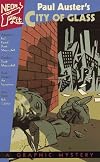
A wrong number starts everything in this adaptation of Paul Auster's novel into graphic form...and from the moment Daniel Quinn who has been hiding behind his William Wilson identity decides to adopt the identity of Paul Auster, things take a turn for the strange. In a story that manages to effortlessly weave the Tower of Babel, Don Quixote and pulp fiction books, this graphic novel also manages to play with the prose and add depth to the questions of language, identity and obsessive meaning show more in the meaningless in ways that are limited by mere words. The illustrations do more than merely illustrate - they become integral pieces to solving the unsolvable puzzle. show less
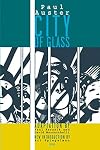
[magyarul lentebb]
On my journey of discovering graphic novels... just kidding, I have no intention of doing that. But I really liked this one. With a foreword by Maus's Art Spiegelman, City of Glass has a great story written amazingly (that should not come as a surprise, it's Auster after all), so it had a strong skeleton. But the graphics were not just illustrations either, they helped the story transform into something new. I found an original idea on every page, in the creative use of the show more grid, showing the character of a voice, the disintegration of a mind in pictures instead of words while still keeping the importance of language, and it was fun to see the drawn versions of Auster and his family, too. My attention never faltered for a second, this graphic novel had a firm grip on it. Very well done.
-------------------------------------------
A kép(es?)regények világában tett felfedezéseim következő állomása Paul Auster New York trilógiájának átdolgozása. Valójában nincs szó semmiféle műfajfelfedezésről, csak ez a kettő* érdekelt, de az Üvegváros alapján nem tennék le a formáról. A Maust elkövető Art Spiegelman előszavával megjelent kötetnek persze őrülten erős alapja volt, hiszen Auster írta. Az előszó szerint figyelmeztette is a projekt mögött álló Spiegelmant, miszerint már többször próbáltak filmforgatókönyvet varázsolni ebből a szövegből, mindhiába. Karasik és Mazzucchelli párosának végül mégis fantasztikusan sikerült az adaptáció. Nem csupán illusztrálták a történetet, egy egészen új művet hoztak létre. Minden oldalon újabb eredeti ötlettel találkoztam, a képregény rácsainak kreatív használatától az írott jellemzések képi megjelenítésre cserélésén át (miközben a nyelv semmit nem veszít jelentőségéből) a rajzolt Auster-családig. Egy pillanatra sem eresztette a figyelmem, remek munka.
*a másik a Cheshire Crossing volt, sóhaj show less
On my journey of discovering graphic novels... just kidding, I have no intention of doing that. But I really liked this one. With a foreword by Maus's Art Spiegelman, City of Glass has a great story written amazingly (that should not come as a surprise, it's Auster after all), so it had a strong skeleton. But the graphics were not just illustrations either, they helped the story transform into something new. I found an original idea on every page, in the creative use of the show more grid, showing the character of a voice, the disintegration of a mind in pictures instead of words while still keeping the importance of language, and it was fun to see the drawn versions of Auster and his family, too. My attention never faltered for a second, this graphic novel had a firm grip on it. Very well done.
-------------------------------------------
A kép(es?)regények világában tett felfedezéseim következő állomása Paul Auster New York trilógiájának átdolgozása. Valójában nincs szó semmiféle műfajfelfedezésről, csak ez a kettő* érdekelt, de az Üvegváros alapján nem tennék le a formáról. A Maust elkövető Art Spiegelman előszavával megjelent kötetnek persze őrülten erős alapja volt, hiszen Auster írta. Az előszó szerint figyelmeztette is a projekt mögött álló Spiegelmant, miszerint már többször próbáltak filmforgatókönyvet varázsolni ebből a szövegből, mindhiába. Karasik és Mazzucchelli párosának végül mégis fantasztikusan sikerült az adaptáció. Nem csupán illusztrálták a történetet, egy egészen új művet hoztak létre. Minden oldalon újabb eredeti ötlettel találkoztam, a képregény rácsainak kreatív használatától az írott jellemzések képi megjelenítésre cserélésén át (miközben a nyelv semmit nem veszít jelentőségéből) a rajzolt Auster-családig. Egy pillanatra sem eresztette a figyelmem, remek munka.
*a másik a Cheshire Crossing volt, sóhaj show less

I like Paul Auster, but I find his brilliance difficult to put into words; with this graphic adaptation of the first volume of The New York Trilogy, the problem is even more difficult. All of this is appropriate, of course, for a story where the main theme is the inability (or unreliability) of language to capture truth. When I first read this comic back in 2006, I hadn't yet read the prose novel; upon reading the prose novel some months later, I could not find anything in it that had show more been subtracted for the comic. Furthermore, the addition of a visual dimension meant that there was a whole new layer of meaning.
All I can do, then, is praise Paul Karasik and David Mazzucchelli's artwork; their simple, stark style suits the narrative perfectly, and their use of transitions between panels is astounding, showing a complete mastery of the comics medium. City of Glass is heavy with meaning in the best of ways. show less
All I can do, then, is praise Paul Karasik and David Mazzucchelli's artwork; their simple, stark style suits the narrative perfectly, and their use of transitions between panels is astounding, showing a complete mastery of the comics medium. City of Glass is heavy with meaning in the best of ways. show less
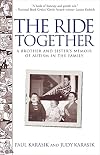
This is a strange book, 1/2 straight memoir by Judy Karasik and 1/2 graphic memoir by Paul Karasik about the family of a man on the more incapacitated side of the autism spectrum and the difficulty in finding a place for him where he can grow and contribute to his community. It's definitely not a feel good book; the ever present possibility of abuse in institutions that care for people who can't speak for themselves is examined. David, the autistic brother, who is in his 50's now spends a show more small part of the book in his pajamas, but for the most part he dresses in a suit and tie. He has a very strong need for routine and reminds even his sister of the Dustin Hoffman character in Rainman but without, as she puts it, the "plot devise" of savant mathematics. He is held hostage to frustration which sometimes leads to violence against himself or others. In describing the aftermath of a meltdown, Judy writes He was calming down. Slowly, the autism let go of the frustration. The autism stopped battering my brother with frustration and went back to its usual habit, which was fascinating David with the patterns and images and ideas inside his head. What a perfect description of his condition.
I recommend this book to anyone interested in reading about people on the more severe side of the autism spectrum. show less
I recommend this book to anyone interested in reading about people on the more severe side of the autism spectrum. show less
Lists
Awards

You May Also Like


Associated Authors
Statistics
- Works
- 6
- Also by
- 4
- Members
- 1,577
- Popularity
- #16,364
- Rating
- 3.8
- Reviews
- 34
- ISBNs
- 45
- Languages
- 10