

Giovanni Battista Piranesi (1720–1778)
Author of The Prisons (Le Carceri : the Complete First and Second States)
About the Author
Image credit: Giovanni Battista Piranesi
Works by Giovanni Battista Piranesi
Antichi Romane 4 copies
Selected etchings by Piranesi 4 copies
Piranesi una visió de l'artista a través de la col·lecció de gravats de la Reial Acadèmia de Belles Arts de Sant Carles = una visión del artista a través de la colección… (1996) 3 copies, 1 review
Associated Works
History of the Decline and Fall of Roman Empire [complete] (1788) — Illustrator, some editions — 3,649 copies, 43 reviews
The History of the Decline and Fall of the Roman Empire, Vol. 1 [Penguin Classics] (1996) — Cover artist, some editions — 568 copies, 8 reviews
Architectural Theory: From the Renaissance to the Present (2003) — Contributor — 330 copies, 3 reviews
The History of the Decline and Fall of the Roman Empire: v. 2 (Penguin Classics) (1996) — Cover artist, some editions — 246 copies, 5 reviews
Neoclassicism and Romanticism, 1750-1850, Vol. 1: Enlightenment/Revolution (1970) — Contributor — 28 copies
Tagged
Common Knowledge
- Legal name
- Piranesi, Giovanni Battista
- Other names
- Piranesi, Giambattista
- Birthdate
- 1720
- Date of death
- 1778
- Occupations
- artist
architect - Relationships
- Piranesi, Francesco (son)
- Nationality
- Italy (Republic of Venice)
- Associated Place (for map)
- Italy
Members
Reviews
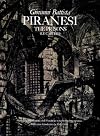
A fascinating artist. The differences between the First and Second States are very interesting to observe; the First State is much rougher and lighter, the Second darker and more detailed. The fantastical quality of his work is amazing--very surreal and quite Gothic (appropriate for his time). I'm surprised I hadn't heard of him before; it would have been really nice to know about him as a Gothic Fiction student. If I were to ever teach anything on Gothic Fiction, I would definitely bring show more him in as an example of an artist contemporary to the genre's beginnings who completely understood the role of the enclosure as a construct of the character. His work is amazing. show less
This was an unexpected find at the Goodwill Bookstore and in excellent condition, too. The prints are large size (60% of the original), print quality is excellent, and the first and second states are printed on facing pages so you can compare them.
If you are interested in Piranesi's work there is another Dover book, "Views of Rome then and now", which has 48 Piranesi plates and current photographs of the same site in Rome. Taschen books has a 2-volume set of all thousand or so prints, show more although many prints are a lot smaller. There is also a Vimeo animation that will take you through the Carceri to the accompaniment of music by J S Bach. show less
If you are interested in Piranesi's work there is another Dover book, "Views of Rome then and now", which has 48 Piranesi plates and current photographs of the same site in Rome. Taschen books has a 2-volume set of all thousand or so prints, show more although many prints are a lot smaller. There is also a Vimeo animation that will take you through the Carceri to the accompaniment of music by J S Bach. show less

from "Preface" by John Howe
"Piranese's CARCERI are like nothing else of the time [1st stage 1750 & 2nd stage 1761], like nothing done before. Gigantic, monolithic, they seem as though built by giants, but house only puny humans, dwarfed by the excessive scale of an infinitude of vaults and ceilings. They are not so much prisons in a world we might recognize, but views of a world that is itself a prison. Chillingly, it is not even Hell, convention that would offer some comfort, since we would show more know where to situate it, but Piranesi chooses not to allow us to remove these prisons from our own sphere. Even in those engravings where a sky is visible, it holds no promise of freedom (and what was once a hint of open sky in the First State is often occluded by more arches and walls in the Second). To crawl to the top, to scale the highest wall would afford no view of the outside, only of a vaster prison. His visions do not promise a world beyond which one might flee, only more of the same. No escape." show less
"Piranese's CARCERI are like nothing else of the time [1st stage 1750 & 2nd stage 1761], like nothing done before. Gigantic, monolithic, they seem as though built by giants, but house only puny humans, dwarfed by the excessive scale of an infinitude of vaults and ceilings. They are not so much prisons in a world we might recognize, but views of a world that is itself a prison. Chillingly, it is not even Hell, convention that would offer some comfort, since we would show more know where to situate it, but Piranesi chooses not to allow us to remove these prisons from our own sphere. Even in those engravings where a sky is visible, it holds no promise of freedom (and what was once a hint of open sky in the First State is often occluded by more arches and walls in the Second). To crawl to the top, to scale the highest wall would afford no view of the outside, only of a vaster prison. His visions do not promise a world beyond which one might flee, only more of the same. No escape." show less
You May Also Like


Associated Authors
Statistics
- Works
- 44
- Also by
- 11
- Members
- 278
- Popularity
- #83,542
- Rating
- 4.3
- Reviews
- 6
- ISBNs
- 28
- Languages
- 3
- Favorited
- 1