
Nancy R. Pearcey
Author of Total Truth: Liberating Christianity from its Cultural Captivity
About the Author
Nancy Pearcey is a bestselling, award-winning author who serves as professor of apologetics and scholar in residence at Houston Baptist University. She is also editor at large of The Pearcey Report and a fellow at Discovery Institute's Center for Science and Culture. She is the author of several show more books, including the 2005 ECPA Gold Medallion Award-winner Total Truth and most recently Finding Truth. show less
Works by Nancy R. Pearcey
The Soul of Science: Christian Faith and Natural Philosophy (Turning Point Christian Worldview Series) (1994) 712 copies, 3 reviews
Saving Leonardo: A Call to Resist the Secular Assault on Mind, Morals, and Meaning (2010) 657 copies, 4 reviews
Finding Truth: 5 Principles for Unmasking Atheism, Secularism, and Other God Substitutes (2015) 435 copies, 2 reviews
Verdade Absoluta 2 copies
科學的靈魂-是誰綁架了牛頓 1 copy
E agora, como viveremos? 1 copy
Associated Works
The Story of Reality: How the World Began, How It Ends, and Everything Important that Happens in Between (2017) — Foreword — 408 copies, 3 reviews
Evidence for God: 50 Arguments for Faith from the Bible, History, Philosophy, and Science (2010) — Contributor — 213 copies, 1 review
Uncommon Dissent: Intellectuals Who Find Darwinism Unconvincing (2004) — Contributor — 169 copies, 1 review
The Household and the War for the Cosmos: Recovering a Christian Vision for the Family (2019) — Foreword — 150 copies, 1 review
Tagged
Common Knowledge
- Birthdate
- 1952-06-28
- Gender
- female
- Map Location
- USA
Members
Reviews
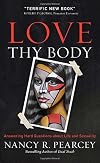
Very thought provoking. Also reveals what lies behind the culture wars in USA.
One niggle, she cites Eagleton, implying that he was a Marxist and is now Catholic, whilst I suspect the opposite is true; but that does not make the citation wrong.
Another irritation is her talking about Intelligent Design and resistance to Darwin. I don't think ID is central to her argument, and it is not accepted by a large number of influential Christian scientists on this side of the Atlantic. I do not think show more her theology of creation requires a seven day earth and she could do with making that clear.
And in all the concern for the unborn fetus by these Americans I wonder whether they ever give as much concern for the living people who are enemies and criminals. They seem happy to see them killed with their guns and capital punishment. And these policies are associated with the right wing, who previously showed no concern for the rights of the poor and oppressed. I remember that when abortion was legalised in this country the main argument was the prevention of the 20 annual deaths resulting from criminal abortion. Some consistency of concern for the living should be emphasised.
Nevertheless her basic argument seems true, that the bodies we are given come with a natural bundle of implications about the way we and our societies should operate, and she interacts very helpfully with the philosophers who were behind the development of modern thought. show less
One niggle, she cites Eagleton, implying that he was a Marxist and is now Catholic, whilst I suspect the opposite is true; but that does not make the citation wrong.
Another irritation is her talking about Intelligent Design and resistance to Darwin. I don't think ID is central to her argument, and it is not accepted by a large number of influential Christian scientists on this side of the Atlantic. I do not think show more her theology of creation requires a seven day earth and she could do with making that clear.
And in all the concern for the unborn fetus by these Americans I wonder whether they ever give as much concern for the living people who are enemies and criminals. They seem happy to see them killed with their guns and capital punishment. And these policies are associated with the right wing, who previously showed no concern for the rights of the poor and oppressed. I remember that when abortion was legalised in this country the main argument was the prevention of the 20 annual deaths resulting from criminal abortion. Some consistency of concern for the living should be emphasised.
Nevertheless her basic argument seems true, that the bodies we are given come with a natural bundle of implications about the way we and our societies should operate, and she interacts very helpfully with the philosophers who were behind the development of modern thought. show less
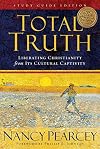
Published 20 years ago, it was thought of as an instant classic then: I heartily agree with that assessment. Pearcey is a trenchant thinker and writer. Total Truth is filled with piercing analyses, exhibits wide reading and study, and is worth re-reading on a regular basis until the subject has enabled you to develop your own worldview. She is an evangelical but does not hesitate to refer to atheists, agnostics, Catholics and others from a wide variety of backgrounds. Whether she is show more commending or critiquing, her ideas have weight and substance.
As a Christian philosopher, she takes pains to integrate theology into her work...and it is a practical theology that should make a difference in how one leads one's life. She is unsparing in her denunciation of the fact-value split in modern thought and shows how Christians have contributed to this false kind of dichotomy that ultimately relegates our faith to a secondary, pious role in a second storey that is irrelevant to "the real world" when it is factually, provably, the ground of all truth.
Yes, I am convinced of her thesis and believe that this book will change the direction of your life, if you will apply it appropriately, carefully, thoughtfully. That is my personal intention.
Oh, I do not agree with every word she writes, but the overall direction is solid, sound and unimpeachable. show less
As a Christian philosopher, she takes pains to integrate theology into her work...and it is a practical theology that should make a difference in how one leads one's life. She is unsparing in her denunciation of the fact-value split in modern thought and shows how Christians have contributed to this false kind of dichotomy that ultimately relegates our faith to a secondary, pious role in a second storey that is irrelevant to "the real world" when it is factually, provably, the ground of all truth.
Yes, I am convinced of her thesis and believe that this book will change the direction of your life, if you will apply it appropriately, carefully, thoughtfully. That is my personal intention.
Oh, I do not agree with every word she writes, but the overall direction is solid, sound and unimpeachable. show less
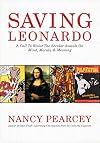
Nancy Pearcey begins her book Saving Leonardo: A Call To Resist the Secular Assault on Mind, Morals, & Meaning with an introduction discussing why Americans are disillusioned with politics. I almost abandoned the book. I’m glad I didn’t. Pearcey examines competing secular worldviews throughout history looking at science, philosophy, and the humanities. She explains how these secular worldviews ultimately commit logical suicide and how “the only hope lies in a worldview that is show more rationally defensible, life-affirming, and rooted in creation itself.”
Pearcey states that some Christians ask, “Isn’t it better to just preach the simple gospel?” She responds that to people lost in the maze of global secular worldviews supported by every aspect of culture the gospel is not simple. She writes:
"Christians are called to tear down mental fortresses [the Apostle Paul’s metaphor in 2 Corinthians] and liberate people from the power of false ideas… Once the walls are torn down, then the message of salvation is the same for everyone—scientist or artist, educated or uneducated, city or rural.
Traditionally, churches have responded to fortresses not by demolishing them but by building counter-fortresses—with thick, high walls to shut out the world. They adopted an isolationist strategy to shield people from false ideas."
Pearcey explains that the isolationist strategy ultimately backfires, and young Christians do not have the ability to answer deep personal questions or wrestle with doubt before being confronted with conflicting secular worldviews. She quotes a study that found young Christians grew more confident in their faith when adults served as guides in exploring difficult questions and challenges in life and secular worldviews. Pearcey suggests Christians must learn how to practice what Apostle Paul taught: “Test everything; hold fast to what is good” (1 Thess. 5:21). To do that, Christians must understand and decode worldviews in order to “demonstrate love for others… and find ways to connect God’s truth with their innermost concerns and questions.”
After laying the groundwork for why Christians need to examine worldviews, Pearcey begins discussing how the concept of truth about the world has been changed throughout history. The concept of truth has been split into two essential elements by secular worldviews: facts (public, objective, universal) and values (private, subjective, relative). Pearcey examines how the fact /value split plays out in empiricism, rationalism, romanticism, realism, naturalism, modernism, postmodernism, and just about every –ism you can name. She uses art, philosophy, science, music, literature, and film from the various time periods and movements as examples. It really is a crash course in science and the humanities.
Ultimately, the fact/value dualism split in all its incarnations fails.
"The consequence of those secular views is inevitably dehumanizing. The reason is that secularism in all its forms is reductionist. A worldview that does not start with God must start with something less than God—something within creation—which then becomes the category to explain all of reality. Think back to Walker Percy’s metaphor of a box. Empiricism puts everything in the box of the senses. Rationalism puts everything into the box of human reason. Anything that does not fit into the box is denied, denigrated, or declared to be unreal. The diverse and multi-faceted world God created is reduced to a single category.
Humans, too, are stuffed into the box. Thus every idol is ultimately dehumanizing, leaving a wreckage of pain and alienation in its wake… A biblically based worldview is capable of affirming the best insights of secular philosophies without ever falling into reductionism. That’s because it does not start with anything in creation but with the transcendent Creator. It does not deify any part of creation—and therefore it is not compelled to deny the other parts of creation. It recognizes and rejoices in the vast diversity and complexity of created reality."
I particularly found the discussions of art and music interesting. Western culture loves science, which falls on the “fact” side of the dualism split. Since art and religion fall on the “value” side of dualism, Western culture has marginalized them. It would make sense that Christians would embrace the arts, but the reality is they do the exact opposite. Pearcey states that most Christians build their counter-fortresses, condemn immoral content in the arts, and isolate themselves from it. Or they try to be liberal Christians and find something redemptive in everything, without any rationale or scriptural basis.
Pearcey writes, “Biblical truth is so rich and multi-dimensional that it can affirm what is true in every worldview, while at the same time critiquing its errors and transcending it limitations. In this way, Christianity makes possible the greatest intellectual and artistic freedom.” Christians should evaluate everything against the truth of a biblical worldview. The problem is Christians have to have the tools for critical analysis and come out of their isolation to engage in the conversation. Too often Christians accept their own version of the dualism split and settle for the equivalent of “spiritual junk food.” Pearcey uses the “Jesus-is-my-girlfriend” genre of praise music that is now popular as an example. Worship is moved to the “value” side of the split and becomes nothing more than an egocentric emotional buzz separate from the reality of life. She writes:
"A full-orbed work of Christian art should include all three elements of the biblical worldview: Creation, Fall, Redemption. It should allude to the beauty and dignity of the original creation. But it should also be transparently honest about the reality of sin and suffering. Finally, it should always give hints of redemption… Some ray of hope should penetrate the darkness."
C.S. Lewis stated that Christians should be the most creative and deepest thinkers in all subject areas, until people wonder why the best art, books, music, and movies are by Christians. Christians have to recognize their own version of dualism and adapt a truly biblical worldview that embraces the beauty and aesthetics of art in order to do that. The last two chapters focus on practical application.
Saving Leonardo covers a tremendous amount of information and territory in roughly 320 pages. It is not the easiest read, but it is worth it. Any time a book goes from children’s cartoons to quantum physics to abstract expressionism, the reader has to put in some work. Pearcey’s tremendous intelligence and insight makes this book an education in itself. show less
Pearcey states that some Christians ask, “Isn’t it better to just preach the simple gospel?” She responds that to people lost in the maze of global secular worldviews supported by every aspect of culture the gospel is not simple. She writes:
"Christians are called to tear down mental fortresses [the Apostle Paul’s metaphor in 2 Corinthians] and liberate people from the power of false ideas… Once the walls are torn down, then the message of salvation is the same for everyone—scientist or artist, educated or uneducated, city or rural.
Traditionally, churches have responded to fortresses not by demolishing them but by building counter-fortresses—with thick, high walls to shut out the world. They adopted an isolationist strategy to shield people from false ideas."
Pearcey explains that the isolationist strategy ultimately backfires, and young Christians do not have the ability to answer deep personal questions or wrestle with doubt before being confronted with conflicting secular worldviews. She quotes a study that found young Christians grew more confident in their faith when adults served as guides in exploring difficult questions and challenges in life and secular worldviews. Pearcey suggests Christians must learn how to practice what Apostle Paul taught: “Test everything; hold fast to what is good” (1 Thess. 5:21). To do that, Christians must understand and decode worldviews in order to “demonstrate love for others… and find ways to connect God’s truth with their innermost concerns and questions.”
After laying the groundwork for why Christians need to examine worldviews, Pearcey begins discussing how the concept of truth about the world has been changed throughout history. The concept of truth has been split into two essential elements by secular worldviews: facts (public, objective, universal) and values (private, subjective, relative). Pearcey examines how the fact /value split plays out in empiricism, rationalism, romanticism, realism, naturalism, modernism, postmodernism, and just about every –ism you can name. She uses art, philosophy, science, music, literature, and film from the various time periods and movements as examples. It really is a crash course in science and the humanities.
Ultimately, the fact/value dualism split in all its incarnations fails.
"The consequence of those secular views is inevitably dehumanizing. The reason is that secularism in all its forms is reductionist. A worldview that does not start with God must start with something less than God—something within creation—which then becomes the category to explain all of reality. Think back to Walker Percy’s metaphor of a box. Empiricism puts everything in the box of the senses. Rationalism puts everything into the box of human reason. Anything that does not fit into the box is denied, denigrated, or declared to be unreal. The diverse and multi-faceted world God created is reduced to a single category.
Humans, too, are stuffed into the box. Thus every idol is ultimately dehumanizing, leaving a wreckage of pain and alienation in its wake… A biblically based worldview is capable of affirming the best insights of secular philosophies without ever falling into reductionism. That’s because it does not start with anything in creation but with the transcendent Creator. It does not deify any part of creation—and therefore it is not compelled to deny the other parts of creation. It recognizes and rejoices in the vast diversity and complexity of created reality."
I particularly found the discussions of art and music interesting. Western culture loves science, which falls on the “fact” side of the dualism split. Since art and religion fall on the “value” side of dualism, Western culture has marginalized them. It would make sense that Christians would embrace the arts, but the reality is they do the exact opposite. Pearcey states that most Christians build their counter-fortresses, condemn immoral content in the arts, and isolate themselves from it. Or they try to be liberal Christians and find something redemptive in everything, without any rationale or scriptural basis.
Pearcey writes, “Biblical truth is so rich and multi-dimensional that it can affirm what is true in every worldview, while at the same time critiquing its errors and transcending it limitations. In this way, Christianity makes possible the greatest intellectual and artistic freedom.” Christians should evaluate everything against the truth of a biblical worldview. The problem is Christians have to have the tools for critical analysis and come out of their isolation to engage in the conversation. Too often Christians accept their own version of the dualism split and settle for the equivalent of “spiritual junk food.” Pearcey uses the “Jesus-is-my-girlfriend” genre of praise music that is now popular as an example. Worship is moved to the “value” side of the split and becomes nothing more than an egocentric emotional buzz separate from the reality of life. She writes:
"A full-orbed work of Christian art should include all three elements of the biblical worldview: Creation, Fall, Redemption. It should allude to the beauty and dignity of the original creation. But it should also be transparently honest about the reality of sin and suffering. Finally, it should always give hints of redemption… Some ray of hope should penetrate the darkness."
C.S. Lewis stated that Christians should be the most creative and deepest thinkers in all subject areas, until people wonder why the best art, books, music, and movies are by Christians. Christians have to recognize their own version of dualism and adapt a truly biblical worldview that embraces the beauty and aesthetics of art in order to do that. The last two chapters focus on practical application.
Saving Leonardo covers a tremendous amount of information and territory in roughly 320 pages. It is not the easiest read, but it is worth it. Any time a book goes from children’s cartoons to quantum physics to abstract expressionism, the reader has to put in some work. Pearcey’s tremendous intelligence and insight makes this book an education in itself. show less
Summary: Traces how a two story view of reality has led to a dualistic way of viewing human beings, splitting body and person, and traces the working out of this around our understanding of human life, sexuality, orientation, gender, and marriage.
Often Christianity has been accused of prudish attitudes with regard to the body and its functions in contrast with the wider culture's celebration of the body. What if the truth were just the opposite and Christians, in fact, had a truly high view show more of our embodied life, and the secular world in fact denigrated and reinforced a fallen alienation from our bodies? This is part of what Nancy R. Pearcey means in the title to her new book, Love Thy Body.
Pearcey, who was strongly influenced by the work of Francis Schaeffer, believes one of his most valid insights was the two storied view of truth and reality that prevails in the modern world which might be portrayed as follows:
THEOLOGY, MORALITY, VALUES
Private, Subjective, Relativistic
---------------------------------------------------------------
SCIENCE, FACTS
Public, Objective, Valid for Everyone
Pearcey contends that this bifurcated view of reality has extended to our concept of the body, where instead of a Christian view of embodied persons, we separate the idea of the person and the body, whereby our understanding of what it means to be human is separated from our biological existence. For example, life is defined not when an ovum is fertilized by sperm but by when the fetus becomes a person. The trouble with this is it is not clear when this happens, either before or after birth, or what level of genetic fitness qualifies one to be a person and thus worthy of life. The issue arises at the other end of life as well, where personhood, rather than embodied life define when life should be ended.
Then in successive chapters Pearcey shows how this divided view of reality works out in our understanding of sexuality, orientation, and gender. A hookup culture divorces physical pleasure from mental and emotional bonding (often resulting in great pain when we cannot carry this off). Strangely, at the same time, sex becomes divorced from the body in its obviously procreative function. Sexual orientation becomes an instance where a psychological, autonomous self imposes its own interpretation upon the body, denying the telos of one's biology. Likewise gender is a fluid product of social forces rather than the physical constitution of the body. Furthermore, marriage is reduced to a contract rather than a covenantal relationship where the union of our bodies expresses the union of our lives and the formation of new families.
In the course of her discussion, Pearcey chronicles leading thinkers from Freud to Foucault, and various educational and governmental policies that have supported the divorce of persons and bodies. At the same time, she writes as a professor who has counselled students and her own children as they wrestle with these realities. So she writes with both conviction and compassion. In her chapter on transgenderism, she writes of Brandon, who still considers himself a girl on the inside, and yet recognizes that surgery will not change who he is, and that much of the problem has to do with how gender is defined.
The breadth spanned by this book to underscore its central thesis means that there is much left to be worked out, and many particular situations that only are cursorily addressed. Yet the common origin of all these issues in a bifurcated view of truth is worth noting for understanding where the real difference lies.
Pearcey's argument for the unity of the human being and the value of the body will not satisfy those for whom the social construction of personhood, gender, and orientation are defining. What Pearcey does is articulate a theology of the body as good and that our biology must not be denied in our understanding of the person, but truly celebrated. She articulates compassion and conviction held in tension, something rare in today's discussions. She also suggests a vision of truth as a seamless garment and a life where what we do as embodied beings shapes the persons we are becoming. In a climate where Christians often are accused of hatefulness, she poses a most challenging question in asking, "who really loves the body?"
____________________________
Disclosure of Material Connection: I received a complimentary review copy of this book from the publisher in exchange for an honest review. The opinions I have expressed are my own. show less
Often Christianity has been accused of prudish attitudes with regard to the body and its functions in contrast with the wider culture's celebration of the body. What if the truth were just the opposite and Christians, in fact, had a truly high view show more of our embodied life, and the secular world in fact denigrated and reinforced a fallen alienation from our bodies? This is part of what Nancy R. Pearcey means in the title to her new book, Love Thy Body.
Pearcey, who was strongly influenced by the work of Francis Schaeffer, believes one of his most valid insights was the two storied view of truth and reality that prevails in the modern world which might be portrayed as follows:
THEOLOGY, MORALITY, VALUES
Private, Subjective, Relativistic
---------------------------------------------------------------
SCIENCE, FACTS
Public, Objective, Valid for Everyone
Pearcey contends that this bifurcated view of reality has extended to our concept of the body, where instead of a Christian view of embodied persons, we separate the idea of the person and the body, whereby our understanding of what it means to be human is separated from our biological existence. For example, life is defined not when an ovum is fertilized by sperm but by when the fetus becomes a person. The trouble with this is it is not clear when this happens, either before or after birth, or what level of genetic fitness qualifies one to be a person and thus worthy of life. The issue arises at the other end of life as well, where personhood, rather than embodied life define when life should be ended.
Then in successive chapters Pearcey shows how this divided view of reality works out in our understanding of sexuality, orientation, and gender. A hookup culture divorces physical pleasure from mental and emotional bonding (often resulting in great pain when we cannot carry this off). Strangely, at the same time, sex becomes divorced from the body in its obviously procreative function. Sexual orientation becomes an instance where a psychological, autonomous self imposes its own interpretation upon the body, denying the telos of one's biology. Likewise gender is a fluid product of social forces rather than the physical constitution of the body. Furthermore, marriage is reduced to a contract rather than a covenantal relationship where the union of our bodies expresses the union of our lives and the formation of new families.
In the course of her discussion, Pearcey chronicles leading thinkers from Freud to Foucault, and various educational and governmental policies that have supported the divorce of persons and bodies. At the same time, she writes as a professor who has counselled students and her own children as they wrestle with these realities. So she writes with both conviction and compassion. In her chapter on transgenderism, she writes of Brandon, who still considers himself a girl on the inside, and yet recognizes that surgery will not change who he is, and that much of the problem has to do with how gender is defined.
The breadth spanned by this book to underscore its central thesis means that there is much left to be worked out, and many particular situations that only are cursorily addressed. Yet the common origin of all these issues in a bifurcated view of truth is worth noting for understanding where the real difference lies.
Pearcey's argument for the unity of the human being and the value of the body will not satisfy those for whom the social construction of personhood, gender, and orientation are defining. What Pearcey does is articulate a theology of the body as good and that our biology must not be denied in our understanding of the person, but truly celebrated. She articulates compassion and conviction held in tension, something rare in today's discussions. She also suggests a vision of truth as a seamless garment and a life where what we do as embodied beings shapes the persons we are becoming. In a climate where Christians often are accused of hatefulness, she poses a most challenging question in asking, "who really loves the body?"
____________________________
Disclosure of Material Connection: I received a complimentary review copy of this book from the publisher in exchange for an honest review. The opinions I have expressed are my own. show less
Lists
Awards


You May Also Like


Associated Authors
Statistics
- Works
- 16
- Also by
- 5
- Members
- 5,454
- Popularity
- #4,563
- Rating
- 4.2
- Reviews
- 38
- ISBNs
- 55
- Languages
- 6
- Favorited
- 2