
Lisa Taddeo
Author of Three Women
About the Author
Image credit: Lisa Taddeo
Works by Lisa Taddeo
Grace 1 copy
Associated Works
Conversations on Love: Lovers, Strangers, Parents, Friends, Endings, Beginnings (2021) — Contributor — 286 copies, 2 reviews
Tagged
Common Knowledge
- Birthdate
- 1980
- Gender
- female
- Education
- Rutgers University (BA), Boston University (MFA)
- Occupations
- journalist
non-fiction author - Nationality
- USA
- Places of residence
- New York, New York, USA
- Associated Place (for map)
- New York, USA
Members
Reviews
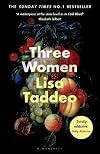
So much of what I liked about Three Women is bound up in recognising aspects of my own life in those depicted. Lisa Taddeo articulated some things that in almost 50 years of living, I've never found words for. A terrible unifying thread across the three women's stories was the myriad betrayals of trust, big and small, all of them endured. And yet there is great joy in their stories. The incandescent joy of being given the gift of pleasure. The painful joy of loving. The big problem I have show more with this book is its lack of diversity. The women are all cis, white, able-bodied and (mostly) straight. There are some queer elements with one woman engaging in sex with other women as well as men, but those occasions felt performative. That woman presents outwardly as straight, she doesn't really inhabit a bi identity. So it was all very hetero-normative for me. Overall, I think it's an important contemporary portrait of female desire, but readers should bear in mind that three women cannot ever be truly representative of half of the planet. show less
I mean, it's good if you like agony. Maybe you feel better about your own life when you read about people who are so flamboyantly messed up. I feel for Maggie. She got in over her head with a dirtbag. I liked Lena. She was trying to make the best of a bad situation and she had agency even if she didn't have great options. Sloane? Ugh. Taddeo told these womens' stories with empathy and detail. A lot of detail. There is an element of voyeurism to this book. It's definitely emotionally gut show more wrenching stuff. show less
These are words on the lives of three women. The author spent, she says in the introduction of this book, thousands of hours with the women over eight years.
The book is airy, not a dense mass of words, which is what working on something closely for a long period of time can do to you; many authors seem quite easily content with placating their own desires, but when adjusting to the fact that one has to write truthfully—which this book does, I believe—about three different persons, it show more takes a special author who can exalt itself to virtue and zen-y bypass the self.
Still, it'd be brutal to suggest that a human author can separate itself completely from its subjects, and, to an even greater extent, from injecting itself into a book about others.
The rhythm of the book is what pulled me into it; you know the feeling of being lulled into security by a talented and veteran writer? That is what happened to me with this book.
There's succinct curtness at the base of the book. Even the quotes are quite sparse. It creates a kind of ballet feeling where the dancers move around much by the use of small and quick steps. The rhythm is nearly poetic.
Most people can probably relate quite well to this book. Much time, patience, and—I guess—revision and editing have gone into this book, to make it this readable and interesting.
The book holds out well throughout and is often enthralling, mainly because of how Taddeo has mixed the everyday, the mundane, and the extraordinary into one, thus formulating the sort of text that Marcel Proust and Maria Stepanova mastered.
It's a quite visceral book, keenly atoned to its subjects; the women aren't stereotypically written in any sense. Sure, one might be critical of some of their at-time leans, for example, "The Scorned Woman", but that's not stereotypical, but happens. A lot. And that's it, really. Taddeo has done away with the atypical and simply opted, it seems, for portraying women as women.
The stories are often of the sensual with humans in a modern age, although, as always, trapped in our past, unable to move away from headlights that are rushing towards us, Bambi in traffic. And it's thrilling. Taddeo's style is made for humanising sexuality, as opposed to the tripe that drips off Sex and The City, Fifty Shades of Gray, et al, which plagues much of current literature. This book does away with that and is lifted beyond. Thank Bog.
The book seemed a bit dull for a short time but quickly picked up again. That's the harshest critique I can give it.
The best thing about this book is that it revives a sense of honesty without shock, which hopefully will revitalise any lovelorn reader who has missed terse literature that brings to life that which many other authors have abused. Every paragraph can be separated from its chapter, and still be of use; it takes a special author to manage that. show less
The book is airy, not a dense mass of words, which is what working on something closely for a long period of time can do to you; many authors seem quite easily content with placating their own desires, but when adjusting to the fact that one has to write truthfully—which this book does, I believe—about three different persons, it show more takes a special author who can exalt itself to virtue and zen-y bypass the self.
Still, it'd be brutal to suggest that a human author can separate itself completely from its subjects, and, to an even greater extent, from injecting itself into a book about others.
The rhythm of the book is what pulled me into it; you know the feeling of being lulled into security by a talented and veteran writer? That is what happened to me with this book.
While I never had occasion to wonder about my father’s desire, something in the force of it, in the force of all male desire, captivated me. Men did not merely want. Men needed. The man who followed my mother to and from work every day needed to do so. Presidents forfeit glory for blow jobs. Everything a man takes a lifetime to build he may gamble for a moment. I have never entirely subscribed to the theory that powerful men have such outsize egos that they cannot suppose they will ever be caught; rather, I think that the desire is so strong in the instant that everything else—family, home, career—melts down into a little liquid cooler and thinner than semen. Into nothing.
There's succinct curtness at the base of the book. Even the quotes are quite sparse. It creates a kind of ballet feeling where the dancers move around much by the use of small and quick steps. The rhythm is nearly poetic.
Because most people will agree—when a lover shuts down, refuses to meet you, doesn’t want his Oral-B back, doesn’t need his trail shoes, doesn’t return an email, goes out to buy another pair of trail shoes, for example, because that’s better than dealing with your mousetrap pain, it’s as though someone is freezing your organs. It’s so cold you can’t breathe.
Most people can probably relate quite well to this book. Much time, patience, and—I guess—revision and editing have gone into this book, to make it this readable and interesting.
The book holds out well throughout and is often enthralling, mainly because of how Taddeo has mixed the everyday, the mundane, and the extraordinary into one, thus formulating the sort of text that Marcel Proust and Maria Stepanova mastered.
For the briefest of moments you want to reach across with your small hands that he loved—Does he still love them now? Where does the love of hands go when it dies?—and hold his face in them and say, Oh fuck I’m sorry for betraying you. I was terrifically hurt and angry, and you stole several years from my life. It wasn’t regular, what you did, and now here I am. Look at me. I put this war paint on, but underneath I’m scarred and scared and horny and tired and love you. I’ve gained thirty pounds. I’ve been kicked out of school a few times. My father has just killed himself. I take all these medications, look in my bag, there’s a shitload of them. I’m a girl with the pills of an old woman. I should be dating boys with weed breath but instead I fully personified my victim costume. I’m hanging by a fawn hanger at Party City. You never wrote back.
It's a quite visceral book, keenly atoned to its subjects; the women aren't stereotypically written in any sense. Sure, one might be critical of some of their at-time leans, for example, "The Scorned Woman", but that's not stereotypical, but happens. A lot. And that's it, really. Taddeo has done away with the atypical and simply opted, it seems, for portraying women as women.
His eyes come up off the table to meet yours. They are cold and black and dead. Little agates, gleaming and stern, and older than you remember. In fact, you don’t remember these eyes at all. They used to be filled with love, lust. He used to suck your tongue into his mouth as if he wanted another tongue.
The stories are often of the sensual with humans in a modern age, although, as always, trapped in our past, unable to move away from headlights that are rushing towards us, Bambi in traffic. And it's thrilling. Taddeo's style is made for humanising sexuality, as opposed to the tripe that drips off Sex and The City, Fifty Shades of Gray, et al, which plagues much of current literature. This book does away with that and is lifted beyond. Thank Bog.
She wasn’t quite sure there was no better partner, but she was willing to find out.
The book seemed a bit dull for a short time but quickly picked up again. That's the harshest critique I can give it.
The best thing about this book is that it revives a sense of honesty without shock, which hopefully will revitalise any lovelorn reader who has missed terse literature that brings to life that which many other authors have abused. Every paragraph can be separated from its chapter, and still be of use; it takes a special author to manage that. show less
This was a difficult read for me and during the first half of the book, the actions of Lina, Maggie and Sloane frustrated me- I did not like any of these women and the choices they were making. But as I read on, I realized that my own prejudices were affecting my reactions and I started to think about all the ways I, and women I have loved, or love, have made choices that place the needs of men above ours. And I was judging these women by the very same misogynist views that so many men, and show more women too, hold about other women. It was at the end a very thought provoking book - well done! show less
Lists
Awards


You May Also Like


Associated Authors
Statistics
- Works
- 14
- Also by
- 4
- Members
- 2,887
- Popularity
- #8,874
- Rating
- 3.6
- Reviews
- 89
- ISBNs
- 80
- Languages
- 16