
J. Keith Miller (1927–2012)
Author of The Taste of New Wine
About the Author
Works by J. Keith Miller
Facing Codependence: What It Is, Where It Comes from, How It Sabotages Our Lives (1991) 481 copies, 5 reviews
A Hunger for Healing: The Twelve Steps as a Classic Model for Christian Spiritual Growth (1991) 255 copies
Facing Love Addiction: Giving Yourself the Power to Change the Way You Love (1992) 191 copies, 2 reviews
Surrender to the Spirit: The Limitless Possibilities of Yielding to the Holy Spirit (2006) 20 copies
THE TABLE OF NEW WINE 2 copies
A Hunger for Healing [VHS] 1 copy
Tagged
Common Knowledge
- Legal name
- Miller, John Keith
- Birthdate
- 1927-04-19
- Date of death
- 2012-01-22
- Gender
- male
- Education
- University of Oklahoma (BA, Business)
Berkeley Divinity School
Earlham School of Religion (MDiv) - Organizations
- U.S. Navy
Beta Theta Pi - Awards and honors
- Episcopal Seminary of the Southwest (DHL, honorary)
Peacemaker's Award for International Dialogue (Dispute Resolution Center of Austin) - Birthplace
- Tulsa, Oklahoma, USA
- Places of residence
- Madison, Wisconsin, USA
- Associated Place (for map)
- USA
Members
Reviews
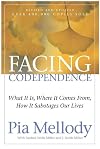
Another book that was required reading for grad courses in a LPC/LADC program. While better, and definitely less 'self-helpy' that other similar books, it shares some of the same failings as a lot of non-clinical work in this area. Namely, falling back heavily (though less so than some) on the 12 Step model (even though it seems misapplied to codependence in general), a tendency to exclude atheists from the treatment model, etc. Strengths in comparison to some similar works would be Mellody show more at has at least conceptualized a clear structure within the disease model with core symptoms, origins of disease, differentiation within the model, and specific approaches to treatment. I think it could be refined for actual clinical application, but in this case there's enough self-help aspects to this that it is still probably not of much use to actual professionals in the field. But enough structure that I would feel *more* comfortable recommending it as self-help than other similar works (though still not as comfortable as recommending an actual clinical skills workbook). show less
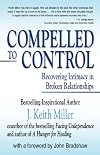
The exciting book breaks new ground in identifying the major cause of relationship failure as the need to control--in marriages and families, with friends and within organizations. Compelled to Control reflects Miller's sweeping knowledge as a thinker, a speaker and a writer. Going far beyond "how to control a controller, " Miller speaks from the perspective of experience and personal change.
"When a controller has the sense of life being out of control," he says, "he or she reacts with an show more even stronger need to 'get things under control'...usually with the negative result of alienating the people who matter the most." Miller tackles this deeply denied, seemingly universal phenomenon with compassion and offers a way out of the dilemma. He tells how to approach broken relationships in new ways, leaving behind destructive patterns of perfectionism and self-justification. show less
"When a controller has the sense of life being out of control," he says, "he or she reacts with an show more even stronger need to 'get things under control'...usually with the negative result of alienating the people who matter the most." Miller tackles this deeply denied, seemingly universal phenomenon with compassion and offers a way out of the dilemma. He tells how to approach broken relationships in new ways, leaving behind destructive patterns of perfectionism and self-justification. show less

Written in the mid-sixties, this charts a 'layman' discovering what the Christian life really means; something that apparently was rare in that period. Well-written and interesting, even from a 21st century perspective, if a little dated.
6 stars: Enjoyed Parts of it. Overall there were parts of this book I appreciated and not others. However it certainly gave me ample insight into my sister's very complicated psychology.
---------------
In Facing Codependence, Pia Mellody creates a framework for identifying codependent thinking, emotions, and behavior and provides an effective approach to recovery. Mellody sets forth five primary adult symptoms of this crippling condition, then traces their origin to emotional, spiritual, show more intellectual, physical, and sexual abuses that occur in childhood. Central to Mellody's approach is the concept that the codependent adult's injured inner child needs healing. Recovery from codependence, therefore, involves clearing up the toxic emotions left over from these painful childhood experiences.
------------
Chemically dependent people die from the chemicals if there is no intervention. Codependents die from suicide, "accidents", physical or medical self neglect, or the dreadful experience of never really living their own lives, which is a form of living death. Depressed codependents do not take care of themselves when symptoms of physical illness appear or get "careless" and have accidents that can be fatal.
One of the benchmark criteria for distinguishing a dysfunctional family system from a functional one is that within a functional family system, the adults are there as parents to meet the needs of the children. In a dysfunctional family, the children are there to meet the needs of the adults. In a functional family there is a boundary between the two parents on one hand and all the children on the other. Emotional sexual abuse occurs when one parent has a relationship with a child that is more important to that parent than the relationship with the spouse. The parent who has entered such a relationship with a child is consciously or unconsciously asking the child to meet the parent's emotional needs either for affection or for a romantic relationship with someone of the opposite sex; in a functional family these needs would be met by the spouse.
...When inappropriate mother/daughter relationships: [the daughter's] emotional abuse issues might make her prefer to get non sexual physical nurturing only from women. The daughter is cut off from the love that should be coming to her from her father and this can affect her adult relationships with men. ... When I grew up, I could not demonstrate my own femininity. I dressed in a drab way and had a hairstyle with nothing feminine about it at all that made me blend into the wlls. Later on I had trouble learning how to dress and be feminine. I thought exhibiting feminine traits was stupid and that I was smarter than to want to dress in a feminine way. I had no idea that I was being very dysfunctional.
Without some sort of painful consequences resulting from our dysfunctional behaviours, it doesn't usually occur to us that we need to change. Codependents don't just wake up one day saying "I think I'll move over into maturity and mental health." For example, it may not hurt to be in the arrogant, isolated position, and such people may see no reason to change. If their families are going crazy trying to live with them, or they have no close intimate relationships, arrogant ones usually assume the problems in the family or in any relationship are about the other people and they consider themselves to be "fine". show less
---------------
In Facing Codependence, Pia Mellody creates a framework for identifying codependent thinking, emotions, and behavior and provides an effective approach to recovery. Mellody sets forth five primary adult symptoms of this crippling condition, then traces their origin to emotional, spiritual, show more intellectual, physical, and sexual abuses that occur in childhood. Central to Mellody's approach is the concept that the codependent adult's injured inner child needs healing. Recovery from codependence, therefore, involves clearing up the toxic emotions left over from these painful childhood experiences.
------------
Chemically dependent people die from the chemicals if there is no intervention. Codependents die from suicide, "accidents", physical or medical self neglect, or the dreadful experience of never really living their own lives, which is a form of living death. Depressed codependents do not take care of themselves when symptoms of physical illness appear or get "careless" and have accidents that can be fatal.
One of the benchmark criteria for distinguishing a dysfunctional family system from a functional one is that within a functional family system, the adults are there as parents to meet the needs of the children. In a dysfunctional family, the children are there to meet the needs of the adults. In a functional family there is a boundary between the two parents on one hand and all the children on the other. Emotional sexual abuse occurs when one parent has a relationship with a child that is more important to that parent than the relationship with the spouse. The parent who has entered such a relationship with a child is consciously or unconsciously asking the child to meet the parent's emotional needs either for affection or for a romantic relationship with someone of the opposite sex; in a functional family these needs would be met by the spouse.
...When inappropriate mother/daughter relationships: [the daughter's] emotional abuse issues might make her prefer to get non sexual physical nurturing only from women. The daughter is cut off from the love that should be coming to her from her father and this can affect her adult relationships with men. ... When I grew up, I could not demonstrate my own femininity. I dressed in a drab way and had a hairstyle with nothing feminine about it at all that made me blend into the wlls. Later on I had trouble learning how to dress and be feminine. I thought exhibiting feminine traits was stupid and that I was smarter than to want to dress in a feminine way. I had no idea that I was being very dysfunctional.
Without some sort of painful consequences resulting from our dysfunctional behaviours, it doesn't usually occur to us that we need to change. Codependents don't just wake up one day saying "I think I'll move over into maturity and mental health." For example, it may not hurt to be in the arrogant, isolated position, and such people may see no reason to change. If their families are going crazy trying to live with them, or they have no close intimate relationships, arrogant ones usually assume the problems in the family or in any relationship are about the other people and they consider themselves to be "fine". show less
Lists
You May Also Like


Associated Authors
Statistics
- Works
- 41
- Members
- 3,754
- Popularity
- #6,749
- Rating
- 3.8
- Reviews
- 22
- ISBNs
- 82
- Languages
- 5
