
Al Siebert
Author of Survivor Personality
About the Author
A leading researcher in the area of survivorship, Al Siebert, PhD, was the founder of the Resiliency Center.
Works by Al Siebert
The Resiliency Advantage: Master Change, Thrive Under Pressure, and Bounce Back from Setbacks (2005) 88 copies, 1 review
Survivor Personality: Why Some People Are Stronger, Smarter, and More Skillful at Handling Life's Difficulties...and How You Can Be, Too (2010) 2 copies
Resiliencia, construir en la adversidad cómo dominar el cambio, sobrevivir a la presión y recuperarse de los contratiempos (2007) 2 copies, 1 review
Tagged
Common Knowledge
- Gender
- male
Members
Reviews
The Resiliency Advantage: Master Change, Thrive Under Pressure, and Bounce Back from Setbacks by Al Siebert
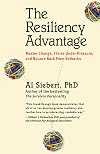
What differentiates this text from so many other self-help-type books is the author’s focus on mental health as opposed to mental illness. Al Siebert focuses not on what people do poorly, but on what they do well, and how they succeed. Resiliency, after all, is about finding one’s strengths to overcome challenges; focusing on weaknesses will not allow that to occur. This is a marked shift in perspective from many other texts I have read, and a significant deviation from prevailing show more psychology theory. Frankly, I find the change refreshing, and far more helpful than what I’ve read elsewhere.
The book provides ample background material to support Seibert’s conception of human resiliency, and then delves into specific methods and exercises for increasing one’s own resiliency. In that sense, the reader is likely to get out of this book what he/she puts in -- this is a teaching text, and is best suited to the eager learner. As with any psychological development, there is no quick fix, but Seibert lays the groundwork for a lifetime’s developmental journey in a series of chapters that describe specific concepts and steps.
While Siebert won’t be winning any awards for his writing technique, the text is sufficiently approachable, and complex theories are explained at an introductory level. Siebert makes one of the classic rhetorical mistakes that my students used to make: he includes a wealth of outside research, anecdotes, and evidence to substantiate his claims, but he is not consistent in immediately or fully explaining the relevance of that outside material to the point he wishes to make. The result is that his readers are left, at times, to make their own connections and arrive at their own conclusions -- which may or may not accord with the author’s intended message. Nevertheless, while the prose is not artistic, the text is laid out well for the most part, and the subject matter and research are clear and thorough.
Would I recommend the book? Perhaps to a friend facing significant setbacks or challenges, but in general, no. The book is interesting but not compelling, and really warrants being read at the right time and in the right circumstances for full effect. show less
The book provides ample background material to support Seibert’s conception of human resiliency, and then delves into specific methods and exercises for increasing one’s own resiliency. In that sense, the reader is likely to get out of this book what he/she puts in -- this is a teaching text, and is best suited to the eager learner. As with any psychological development, there is no quick fix, but Seibert lays the groundwork for a lifetime’s developmental journey in a series of chapters that describe specific concepts and steps.
While Siebert won’t be winning any awards for his writing technique, the text is sufficiently approachable, and complex theories are explained at an introductory level. Siebert makes one of the classic rhetorical mistakes that my students used to make: he includes a wealth of outside research, anecdotes, and evidence to substantiate his claims, but he is not consistent in immediately or fully explaining the relevance of that outside material to the point he wishes to make. The result is that his readers are left, at times, to make their own connections and arrive at their own conclusions -- which may or may not accord with the author’s intended message. Nevertheless, while the prose is not artistic, the text is laid out well for the most part, and the subject matter and research are clear and thorough.
Would I recommend the book? Perhaps to a friend facing significant setbacks or challenges, but in general, no. The book is interesting but not compelling, and really warrants being read at the right time and in the right circumstances for full effect. show less

Awards

You May Also Like


Statistics
- Works
- 16
- Members
- 292
- Popularity
- #80,151
- Rating
- 3.8
- Reviews
- 5
- ISBNs
- 42
- Languages
- 4