
Frank M. Robinson (1926–2014)
Author of The Dark Beyond the Stars
About the Author
Frank Malcolm Robinson was born in Chicago, Illinois on August 9, 1926. After a tour of duty in the Navy during World War II, he graduated from Beloit College in Wisconsin and then was drafted again to serve in the Korean War. He received a master's degree in journalism from Northwestern show more University. He was a writer and editor for men's magazines including Rogue, Gallery, and Playboy. At Playboy, where he worked from 1969 to 1973, he was the ghostwriter for the Playboy Advisor column, a colloquium of sex and lifestyle advice for men. During this time, he also wrote science-fiction books including The Power, which was made into a television special in 1956 and a film in 1968. He wrote several books with Thomas N. Scortia including The Glass Inferno, The Prometheus Crisis, The Nightmare Factor, and The Gold Crew. Parts of The Glass Inferno were mined in creating the final script for The Towering Inferno and the authors earned a screen credit. His 1991 novel, The Dark Beyond the Stars, was selected as one of The New York Times' notable books of the year. He worked as a speechwriter and adviser to San Francisco city supervisor Harvey Milk, who was assassinated on November 27, 1978 by a disgruntled political rival, Dan White. Robinson had a small role in 2008 film Milk. He died of heart disease and pneumonia on June 30, 2014 at the age of 87. (Bowker Author Biography) show less
Image credit: Imagination Magazine Cover Circa 1955
Works by Frank M. Robinson
Art of imagination : 20th century visions of science fiction, horror, and fantasy (2002) — Author — 119 copies, 1 review
Two Weeks in August 6 copies
The Santa Claus Planet 5 copies
The Dark Beyond the Stars, vol. 2 4 copies
The Hunting Season 3 copies
Guaranteed—Forever! 2 copies
Beyond the Ultra-Violet 2 copies
Dream Street 2 copies
Short Science Fiction Collection 057 2 copies
The Oceans Are Wide 2 copies
One Thousand Miles Up 2 copies
Short Science Fiction Collection 059 2 copies
Wanted: One Sane Man 1 copy
Untitled Story 1 copy
You Don't Walk Alone 1 copy
הכוח 1 copy
Cosmic Saboteur 1 copy
Short Fiction Collection 1 copy
Troppo poco 1 copy
2000x: The Hunting Season 1 copy
The Errand Boy 1 copy
Heartstopper 1 copy
Merry Christmas No. 30267 1 copy
Associated Works
The Mammoth Book of Locked-Room Mysteries and Impossible Crimes (2000) — Contributor — 134 copies, 1 review
Gateways: A Feast of Great New Science Fiction Honoring Grand Master Frederik Pohl (2010) — Contributor — 113 copies, 2 reviews
Nebula Awards 30: SFWA's Choices For The Best Science Fiction And Fantasy Of The Year (Nebula Awards Showcase) (1996) — Contributor — 89 copies, 2 reviews
Nebula Awards 24: SFWA's Choices for the Best Science Fiction and Fantasy 1988 (1990) — Contributor — 61 copies
Kong Unbound: The Cultural Impact, Pop Mythos, and Scientific Plausibility of a Cinematic Legend (2005) — Contributor — 21 copies
Savage art : 20th century genre and the artists that defined it / Introduction by Frank M. Robinson (2010) — Introduction, some editions — 3 copies
Imagination, February 1955 (Vol. 6 ∙ No. 2) — Contributor — 3 copies
Tagged
Common Knowledge
- Legal name
- Robinson, Frank Malcolm
- Birthdate
- 1926-08-09
- Date of death
- 2014-06-30
- Gender
- male
- Education
- Beloit College (BA|1950)
Northwestern University (MA) - Occupations
- magazine editor
author
speech writer
collector, pulp magazines
novelist - Organizations
- Playboy
US Navy - Awards and honors
- Lambda Literary Award (1991)
Lamont Award (2000)
Chicago Gay and Lesbian Hall of Fame (2009)
Nebula Award Special Honoree (2013)
Cordwainer Smith Rediscovery Award (2018) - Nationality
- USA
- Birthplace
- Chicago, Illinois, USA
- Places of residence
- Los Angeles, California, USA
San Francisco, California, USA
Chicago, Illinois, USA - Place of death
- San Francisco, California, USA
- Associated Place (for map)
- California, USA
Members
Discussions
Science Fiction Novel in Name that Book (May 2013)
Reviews

Spectacular. The main plot of this novel centers on a skyscraper that catches fire, but the book is remarkably character-driven. There is no one single narrative voice, there is no heavy-handed denouncement of technology or greed, and there is no saccharine commentary overlaying the story. Instead, the chapters focus, in great detail, on interesting, flawed, delightfully human characters. The cast is also quite diverse, featuring people of different ages, skin color, gender, sexual show more orientation, ability, religion, and mental health. The story doesn’t center on a single “hero”; rather, the ensemble of protagonists share the stage in a story big enough for many main characters. What follows is an intensely personal story of ordinary people who find themselves in an extraordinary situation.
The writing style is wonderful, with the tension building slowly throughout the story, and with an ending that feels, if not happy, at least resolved. Characters grow and become strong, or they cower and become weak, and they die (or not), and by the end, I felt as though I had been on the journey with them. The authors have an incredibly powerful style, and as they bring together the different story threads of the many different characters, they weave an elaborate work of art.
What has stayed most strongly in my mind in the days since I’ve finished this has been the myriad ways this book is ahead of its time in terms of prejudice and social conscience. I’d go as far as to say that it’s even ahead of our time. One of the main characters is a drug addict suffering from heroin withdrawal—a side of life not often shown in novels like this. There is a gay man, but his story has no trace of tokenism; rather, he is a fully developed and nuanced character. His sexual orientation is part of who he is, and even while he faces judgment and criticism from strangers, he rises above it all with a grace and dignity that is a marvel to behold. There is a black man, surrounded by racism, whose courage leads him to action; there is a woman whose strength and tenacity outshine many men. Even ageism is examined here. I don’t want to say too much because I don’t want to spoil anything, but two women—one in her 30s and one in her 60s—are treated much differently by their acquaintances. In this case, however, the woman who is 10 years “over the hill” is the 31-year-old, while the woman whose vitality still enriches her and delights others is in her 60s. The contrast between them is stark and unexpected, and it speaks to prejudices and pressures that still exist today.
This is one of the most compelling novels I’ve read, and it’s still relevant today. A phenomenal read. show less
The writing style is wonderful, with the tension building slowly throughout the story, and with an ending that feels, if not happy, at least resolved. Characters grow and become strong, or they cower and become weak, and they die (or not), and by the end, I felt as though I had been on the journey with them. The authors have an incredibly powerful style, and as they bring together the different story threads of the many different characters, they weave an elaborate work of art.
What has stayed most strongly in my mind in the days since I’ve finished this has been the myriad ways this book is ahead of its time in terms of prejudice and social conscience. I’d go as far as to say that it’s even ahead of our time. One of the main characters is a drug addict suffering from heroin withdrawal—a side of life not often shown in novels like this. There is a gay man, but his story has no trace of tokenism; rather, he is a fully developed and nuanced character. His sexual orientation is part of who he is, and even while he faces judgment and criticism from strangers, he rises above it all with a grace and dignity that is a marvel to behold. There is a black man, surrounded by racism, whose courage leads him to action; there is a woman whose strength and tenacity outshine many men. Even ageism is examined here. I don’t want to say too much because I don’t want to spoil anything, but two women—one in her 30s and one in her 60s—are treated much differently by their acquaintances. In this case, however, the woman who is 10 years “over the hill” is the 31-year-old, while the woman whose vitality still enriches her and delights others is in her 60s. The contrast between them is stark and unexpected, and it speaks to prejudices and pressures that still exist today.
This is one of the most compelling novels I’ve read, and it’s still relevant today. A phenomenal read. show less
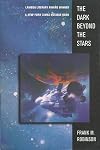
A truly excellent sci-fi book in my estimation.
This is a sci-fi novel in the spirit of the best and reminded me in a few ways of Frank Herbert's Dune. The story is good, but the underlying discussion of loneliness, humanity, the mind, morality and evolution make this one of the best books I've read.
I'd seen some reports that this book is full of gay sex. It's not. Not all of the characters are entirely heterosexual, and it is clear that Robinson has created a future where sexuality isn't the show more issue that it can be today.
It's unforunately not so easy to get hold of this book now. It seems to be out of print, not in many/any libraries and unavailable in eBook form. I bought a used copy from a well known online marketplace. show less
This is a sci-fi novel in the spirit of the best and reminded me in a few ways of Frank Herbert's Dune. The story is good, but the underlying discussion of loneliness, humanity, the mind, morality and evolution make this one of the best books I've read.
I'd seen some reports that this book is full of gay sex. It's not. Not all of the characters are entirely heterosexual, and it is clear that Robinson has created a future where sexuality isn't the show more issue that it can be today.
It's unforunately not so easy to get hold of this book now. It seems to be out of print, not in many/any libraries and unavailable in eBook form. I bought a used copy from a well known online marketplace. show less
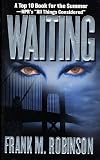
Casual misogyny, unnecessary and continuous infodumps, preachy tone, lousy wordcraft, and a truly hackneyed, telegraphed plot with stale, one-dimensional characters and foreshadowing you can see from Alpha Centauri.It all adds up to a truly AWFUL book. I only kept reading because it's what I had at the gym, and I was honestly hoping someone would kill the main character in a particularly squishy way.No, really, this book was awful. The women were all either heartless bitches, sex toys, or show more nags - or a combination of the above - and seemed only to be there to be toys for the men in one way or another. The central mystery was...not a mystery. You could tell exactly what was going to happen starting on page, oh, 35 or so. The writing was slipshod and clumsy. The continual infodumps about ecological problems were poorly integrated, and quite grating. Did I mention the random appearance of a Saviour Figure at the end, with no lead-up and no explanation? Just...random saviour tossed in there, as though to make up for the cliched and/or offensive characterizations elsewhere in the book.Yeah.Simply awful. Save yourself the pain and do not bother reading this. show less

A fantastic read. The whole idea of mult-generational spaceflight has always grabbed me, and this is a doozy of a story. A massive ship launched many generation ago, now steadily breaking down, a crew who have no real idea what their purpose is, performing routine and to them seemingly meaningless actions repeatedly and seeking escape in sex, and a captain reminiscent of Ahab, driven, determined and who will stop at nothing to conceal his darkest secret. Opposed to him is the likeable show more Sparrow, who is unique among the ships' crew in apparently being as immortal as the captain. How Sparrow breaks the captain's iron grip, reveals the real secret of the Astron, and his own true identity is skilfully handled. The resolution between Kusaka and Sparrow is beautifully done, and the final few pages where Sparrow presides over succeeding generations, who remind him of former crewmen he knew, and then reaches Earth to find that while they were searching for aline life, but alien life has finally discovered them is wisttful, thought-provoking and absorbing. Love this book. show less
Lists
Awards


You May Also Like


Associated Authors
Statistics
- Works
- 61
- Also by
- 44
- Members
- 2,137
- Popularity
- #12,039
- Rating
- 3.6
- Reviews
- 29
- ISBNs
- 105
- Languages
- 8
- Favorited
- 1