
Charles A. Siringo (1855–1928)
Author of A Texas Cowboy: or, Fifteen Years on the Hurricane Deck of a Spanish Pony
About the Author
Image credit: Image from A Cowboy Detective: A True Story of Twenty-two Years with a World-Famous Detective Agency (1912) by Charles A. Siringo
Works by Charles A. Siringo
A Texas Cowboy: or, Fifteen Years on the Hurricane Deck of a Spanish Pony (1979) 219 copies, 3 reviews
A Cowboy Detective: A True Story of Twenty-two Years with a World-Famous Detective Agency (1988) 62 copies, 1 review
Riata and spurs: the story of a lifetime spent in the saddle as cowboy and detective (2007) 11 copies
Two evil isms, Pinkertonism and anarchism, by a cowboy detective who knows, as he spent twenty-two years in the inner ci (2004) 5 copies, 1 review
HISTORY OF BILLY THE KID 1 copy
Associated Works
Major Problems in the History of the American West: Documents and Essays (1989) — Contributor — 67 copies
Tagged
Common Knowledge
- Legal name
- Siringo, Charles Angelo
- Birthdate
- 1855-02-07
- Date of death
- 1928-10-18
- Gender
- male
- Occupations
- cowboy
author
lawman
detective - Organizations
- Pinkerton National Detective Agency
- Nationality
- USA
- Birthplace
- Matagorda County, Texas
- Place of death
- Altadena, California, USA
- Burial location
- Inglewood Cemetery, Inglewood, California, USA
- Associated Place (for map)
- California, USA
Members
Reviews
A Cowboy Detective: A True Story of Twenty-two Years with a World-Famous Detective Agency by Charles A. Siringo
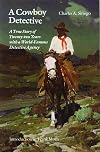
Charles Siringo grew up as a South Texas cowboy before applying for a job as a Pinkerton detective after seeing the Chicago Haymarket riots. (Because Pinkerton threatened lawsuits, it’s the “Dickenson” agency here, and Pinkerton operative and convicted murderer Tom Horn is named as “Tim Corn”). Siringo specialized in undercover work, convincing cattle rustlers, gold mine swindlers, moonshiners, and bank robbers that he was an outlaw fleeing from Texas. Although Pinkertons show more repeatedly sought to reward him with a desk job at the Denver office, he always refused, preferring work as a field agent.
Siringo notes that he was sympathetic to the nascent labor movement and was reluctant to get involved in the famous Coeur d’Alene miner’s strike, but changed his mind when the miners began attacking mine owners with dynamite. When his cover story was broken, he narrowly escaped being lynched by miners by sawing through a bedroom floor and crawling away undetected. Siringo, in turn, prevented a plan to lynch Bill Haywood, Clarence Darrow, and other union members and sympathizers.
His writing style is straightforward, and, unfortunately, not politically correct; Irish immigrants and black people he encounters are always quoted in dialect, usually not favorably. Siringo knew just about every famous name from Western history – Billy the Kid, Wyatt Earp, Bat Masterson, and Butch Cassidy and the Wild Bunch (he expresses some admiration for Cassidy, calling him one of the shrewdest and most honorable criminals he had to deal with). Illustrated with a few contemporary photographs. No notes, bibliography, or index. show less
Siringo notes that he was sympathetic to the nascent labor movement and was reluctant to get involved in the famous Coeur d’Alene miner’s strike, but changed his mind when the miners began attacking mine owners with dynamite. When his cover story was broken, he narrowly escaped being lynched by miners by sawing through a bedroom floor and crawling away undetected. Siringo, in turn, prevented a plan to lynch Bill Haywood, Clarence Darrow, and other union members and sympathizers.
His writing style is straightforward, and, unfortunately, not politically correct; Irish immigrants and black people he encounters are always quoted in dialect, usually not favorably. Siringo knew just about every famous name from Western history – Billy the Kid, Wyatt Earp, Bat Masterson, and Butch Cassidy and the Wild Bunch (he expresses some admiration for Cassidy, calling him one of the shrewdest and most honorable criminals he had to deal with). Illustrated with a few contemporary photographs. No notes, bibliography, or index. show less
Two evil isms, Pinkertonism and anarchism, by a cowboy detective who knows, as he spent twenty-two years in the inner cirlce of Pinkerton's National Detective Agency by Charles A. Siringo

This book is one of the first books written in the USA warning of the abuses of power by private Security forces. Charlie Siringo was a real old-west lawman who took a job to chase down rustlers and other low-lifes and ended up plotting to blow up labour organizers. Eventually he couldn't take that element of the task, the defence of unrestricted capitalism by violence, and retired to Hollywood where he found employment as a technical adviser to the William S. Hart Western movies. it is show more interesting to note that only after Siringo's death was the ground clear for the creation of the more mythic parts of the Wyatt Earp legend. I read the 1977 reprint. show less

A simplistic and dated but charming biography of Billy the Kid. Not for the politically correct, the author clearly writes with a positive bias sometimes bordering on the absurd. Nonetheless, the book also contains nuggets of information about the Kid not contained in any other accounts. An easy and enjoyable read.

It has been said that A Texas Cowboy was the original western. Will Rogers said it was "the Cowboy's Bible" when he was growing up. An historian said it was the first authentic memoir by a real cowboy. It contains a gold mine of names, cowboy lingo, places and events such as "Whiskey Pete", Billy the Kid's secret hideout, and "grub". I felt a constant déjà vu since so many later books and movies drew from things described here (though not only here). It's not a romanticized account, it show more reads like non-fiction and is unflinching - children beat up and generally very harsh times in particular during the 1860s when Siringo left home a young teenager. It seemed Siringo initially became a cowboy because he could at least obtain meat on the prairie since there were so many cattle around for the taking, he was otherwise a starving homeless kid. The story of Billy the Kid is the most famous and attracted much attention, then and now, but there is a lot of incident of the regular cowboy life that I found interesting. (Via the excellent David Wales narration at LibriVox). show less
You May Also Like


Associated Authors
Statistics
- Works
- 10
- Also by
- 3
- Members
- 322
- Popularity
- #73,504
- Rating
- 3.3
- Reviews
- 6
- ISBNs
- 49
- Languages
- 1