
Boris Vian (1920–1959)
Author of Froth on the Daydream
About the Author
Boris Vian (1920-59) was an engineer, inventor, jazz trumpeter, actor, recording artist, and prolific writer
Series
Works by Boris Vian
Theatre 1 : le dernier des métiers- l'équarissage pour tous- le goûter des généraux (1998) 21 copies
Je voudrais pas crever ; Lettres au collège de pataphysique ; Textes sur la littérature (1972) 18 copies
Théâtre : Les Bâtisseurs d'Empire - Le Goûter de Généraux - L'Equarrissage pour tous - Le Dernier des métiers (1965) 13 copies
De figurant — Author — 9 copies
Die Krimis: Ich werde auf eure Gräber spucken, Die kapieren nicht, Tote haben alle dieselbe Haut, Aufruhr in den Andennen, Wir werden alle Fiesen killen (2009) 8 copies, 1 review
Teatro 6 copies
J'irai cracher sur vos tombes, Les morts ont tous la même peau, Et on tuera tous les affreux (1989) 6 copies
Werke in Einzelausgaben / Der Kommissar und die grüne Pantherin: Gesammelte Schriften über Film, Jazz, Literatur, Science Fiction und Pataphysik (1994) 5 copies
Poesie 5 copies
Die Romane: Der Schaum der Tage, Herbst in Peking, Der Herzausreißer, Das rote Gras, Drehwurm, Swing und das Plankton (2009) 4 copies
The Dead Fish [short story] 4 copies
De cowboy van Normandië 3 copies
Opéras : Le Marquis de Lejanes ; Fiesta ; Arne Saknussem ; Lily Strada ; Le Mercenaire (1982) 3 copies
Tête de Méduse 2 copies
DASHURIA ËSHTË E VERBËR 2 copies
Ο ΕΡΩΣ ΕΙΝΑΙ ΤΥΦΛΟΣ 2 copies
L'arrache-coeur -l'herbe rouge roman. les lurettes fourrées nouvelles inédites. présenté par pierre kant et caradec. (1962) 2 copies
Boris Vian de A à Z 1 copy
Théatre 2 1 copy
L'arrache-cœur 1 copy
L'automne a pekin 1 copy
Ma chansonette (Sam's song) 1 copy
'Je voudrais pas crever' 1 copy
Шумовиння днів 1 copy
DERİLERİNİZİ YÜZECEĞİM 1 copy
El otoño en Pekin 1956 1 copy
Chansons et Poèmes 1 copy
Pena dney i drugie istorii 1 copy
O Outono em Pequim 1 copy
Derilerinizi Yüzeceğim 1 copy
Cantilènes en gelée 1 copy
I Spit On Your grve 1 copy
Et on tuera tous les affreux [Illustrated] — Author — 1 copy
Пази се от оркестъра 1 copy
L'ECUME DES JOURS - BORIS VIAN - SUIVI DE UN LANGAGE UNIVERS - JACQUES BENS - 10/18 1965 (1965) 1 copy
Женщинам не понять 1 copy
Trouble dans les Andins 1 copy
Over jazz teksten 1946-1958 1 copy
Constructor d'imperis 1 copy
Uccidere i mostri 1 copy
Заблудени мацки 1 copy
Jag står här på ett torg 1 copy
Le dernier des métiers 1 copy
Poemas ilustrados 1 copy
Mezarlaınıza Tüküreceğim 1 copy
Psi želja i smrt 1 copy
Pěna dní ; Červená tráva 1 copy
צל הימים : רומאן 1 copy
Gesammelte Theaterstücke 1 copy
L'Arache Coeur 1 copy
Cha Cha Cha du loup 1 copy
J'irai cracher sur vos tombes. Illustrations de Jean-Claude Leboucher. Editions Famot. 1978. Reliure de l'éditeur. 252 pages. (1978) 1 copy
Žmarci 1 copy
La Hierba Roja 1 copy
Die Ameisen : 7 Erzählungen 1 copy
Jazz 1 copy
L'Arrache-coeur de Boris Vian (fiche de lecture et analyse complète de l'oeuvre) (French Edition) (2021) 1 copy
My Universal Joints 1 copy
Femeile nu-si dau seama 1 copy
VIAN, Boris 1 copy
Associated Works
J'irai cracher sur vos tombes (d'après les travaux cinématographiques de Boris Vian et Jacques Dopagne) (1971) — Contributor — 3 copies
Tagged
Common Knowledge
- Canonical name
- Vian, Boris
- Legal name
- Vian, Boris Paul
- Other names
- Sullivan, Vernon (pseudonym)
- Birthdate
- 1920-03-10
- Date of death
- 1959-06-23
- Gender
- male
- Education
- Lycée de Sèvres (1927-32 ∙ 1932-36 ∙ 1936-37 ∙ 1937-39 ∙ 1939-1942)
Lycée Condorcet - Occupations
- writer
poet
musician
engineer
translator - Organizations
- Collège de Pataphysique
Club des Savanturiers (fans de SF)
Ingénieur auprès de l'Association Française de Normalisation ( [1942, 1946]) - Awards and honors
- "Equarisseur de 1ère classe" du Collège de Pataphysique (1952).
- Relationships
- Vian, Patrick (son)
- Short biography
- Boris Vian (1920-1959) est un écrivain, poète, parolier, chanteur, critique musical, musicien de jazz (trompettiste) et directeur artistique français. Ingénieur formé à l'École centrale
Victime d'un rhumatisme articulaire aigu à l'âge de 12 ans, il en garde une insuffisance aortique et le désir de vivre intensément chaque instant. Passionné de musique, il apprend la trompette et en joue dès que l'occasion se présente.
Après avoir obtenu son baccalauréat en 1937, il intégré le lycée Condorcet en classe préparatoire puis l'Ecole Centrale des arts et manufactures (1939-1942)
Il est ingénieur à l'AFNOR (Association française de normalisation) en 1942 puis à l'Office du papier et carton en 1946/1947. Il abandonne l'inginierie en 1947 pour se consacrer à l'écriture et à la musique de jazz. Il fréquente alors les cafés de Saint-Germain-des-Prés.
Boris Vian publie des romans, noirs et sarcastiques, qui lui permettent de vivre, sous le pseudonyme de Vernon Sullivan. Le plus célèbre et controversé est "J'irai cracher sur vos tombes", écrit en 1946 qui traite du racisme, de la violence et de la sexualité. Les œuvres écrites sous son vrai nom rencontrent moins de succès, bien que Boris Vian les considère comme plus importantes sur le plan littéraire. L'échec de "L'Arrache-cœur" le convainc d'abandonner la littérature.
Boris Vian est un passionné de jazz et joue de la trompette de poche dans un club de Saint-Germain-des-Prés. Il est également directeur artistique chez Philips et chroniqueur dans Jazz Hot. Il s'intéresse à la "Pataphysique" sous l'influence d'Alfred Jarry (1873-1907). Après son divorce, il vit difficilement de traductions et habite une chambre de bonne avant de se remarier en 1954.
Boris Vian compose aussi de nombreuses chansons notamment pour Serge Reggiani ou Juliette Gréco, écrit des nouvelles, des pièces de théâtre ou des poèmes. Il s'essaie au théâtre et joue dans quelques films.
Boris Vian meurt d'une crise cardiaque en assistant à la première du film inspiré de son roman "J'irai cracher sur vos tombes". Il laisse derrière lui une oeuvre très variée, sombre, restée à ce jour inimitable, où s'exprime le caractère désespéré de l'existence humaine. - Cause of death
- cardiac arrest
- Nationality
- France
- Birthplace
- Ville-d'Avray, Hauts-de-Seine, ïle-de-France, France
- Places of residence
- Ville d'Avray (Hauts-de-Seine ∙ mais alors en Seine-et-Oise ∙ Manche ∙ Landes ∙ notamment au 6 bis ∙ [1953])
Paris, Île-de-France, France - Place of death
- Paris, ïle-de-France, France
- Burial location
- Ville d'Avray, Hauts-de-Seine, ïle-de-France, France
- Associated Place (for map)
- ïle-de-France, France
Members
Reviews

Az elején teljesen odavoltam a gyönyörűségtől, az abszurd határozottan az én műfajom (a nonszenszet is imádom). Iszonyúan élveztem a szöveget, a Gouffé-féle recepteket, vagy az olyan leírásokat, mint „[a] látás feladatát nyitott kék szem segítségével végezte [...]” vagy „Kettejük teste közt a távolságot jobb bicepszének megfeszítésével csökkentette, amit két okosan megválasztott, koponyából kifutó idegpálya vezérelt.”.
Az esküvőre show more készülődésnél kezdett túl normális lenni minden, persze, volt egy-egy furcsa rész, de már elveszett a játék. Aztán egyre sötétebb lett, szürreális, de a szórakoztatást teljesen elhagytuk.
A lótusz nem újjászületést, a mocsárból, sárból minden reggel tisztán kiemelkedő szépséget szimbolizált, hanem a láthatatlan, halálos kórt, ami lassan felemésztett mindenkit. De mi volt az, ami kiölt minden fényt, tágasságot és reményt? A két barát minden pénzét a szenvedélyére költötte: az egyik az istenített szellem minden tárgyára, a másik az istenített szerelem eszméjére (úgy tűnt, nagyjából mindegy, ki jön vele szembe, mindenáron nagyon szerelmes akart lenni). Miközben anyagilag tönkrementek bele, a hozzájuk legközelebb állók is tönkrementek, lelkileg és testileg is. Az állítólag szeretett nők (mert mindkét férfi azt állította, szerelmes a hozzá tartozó nőbe) valójában nem érhettek fel a szenvedélyük tárgyához. Szépen sorban bele is pusztult mindenki: az istenítettek, a szenvedélybetegek, és azok is, akik nem értek nekik annyit, hogy változtassanak értük. show less
Az esküvőre show more készülődésnél kezdett túl normális lenni minden, persze, volt egy-egy furcsa rész, de már elveszett a játék. Aztán egyre sötétebb lett, szürreális, de a szórakoztatást teljesen elhagytuk.

By Vian's standards, this is a surprisingly simple story: Colin and Chloe are destroyed by a universe that can't stand to see anyone that happy; Chick and Alise by Chick's uncontrollable addiction to collecting artefacts connected with megastar-philosopher Jean-Sol Partre (author of Le vomi, La lettre et le néon, and hundreds of other immortal texts). Sophocles would already have known what to do with a plot like that, but of course it wouldn't have turned out anything like as bizarre in show more his hands.
With Vian in charge, Colin and Chick start off with the blissful innocence of Bertie Wooster and Bingo Little, generating harmonious mixed drinks by inputting Duke Ellington tunes into Colin's pianocktail machine and being served superb meals by his impeccable manservant Nicolas, but by the end of the book they have moved into something more like Kafka's version of The picture of Dorian Gray. Medics, priests, a pharmacist, employers, booksellers and an avant-la-lettre SWAT team have all taken what they can get; even Colin's wonderful modernist apartment has developed a weird malaise that makes it turn slowly into a crumbling garret.
The whole thing is peppered with Vian's unforgettable twists of logic — even the ones we'd prefer to forget, like the trained cyber-rabbits in the pharmacy that produce those wonderfully even round pills, as rabbits do... But, under the comedy, there's real anger and sadness about the arbitrary cruelty of the world we live in, some of it avoidable and man-made, most not. show less
With Vian in charge, Colin and Chick start off with the blissful innocence of Bertie Wooster and Bingo Little, generating harmonious mixed drinks by inputting Duke Ellington tunes into Colin's pianocktail machine and being served superb meals by his impeccable manservant Nicolas, but by the end of the book they have moved into something more like Kafka's version of The picture of Dorian Gray. Medics, priests, a pharmacist, employers, booksellers and an avant-la-lettre SWAT team have all taken what they can get; even Colin's wonderful modernist apartment has developed a weird malaise that makes it turn slowly into a crumbling garret.
The whole thing is peppered with Vian's unforgettable twists of logic — even the ones we'd prefer to forget, like the trained cyber-rabbits in the pharmacy that produce those wonderfully even round pills, as rabbits do... But, under the comedy, there's real anger and sadness about the arbitrary cruelty of the world we live in, some of it avoidable and man-made, most not. show less
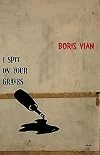
When Jean d’ Halluin first published I Spit On Your Graves in 1946, he was looking for a bestseller to kickstart his new imprint, Editions du Scorpion. Written by an African-American writer named Vernon Sullivan, the book was a visceral, often misogynistic, and (once it gets rolling) violent pulp novel offering a gritty commentary on racial injustice in the United States.
The plot centered on Lee Anderson, a light skinned black man seeking revenge for the murder of his brother at the hands show more of whites. Anderson, takes his revenge by infiltrating southern society as a white man (he has light skin and blond hair), bedding every white woman he can, and ultimately selecting two of those women to murder as payback for his brother’s death. Despite being considered too controversial and subversive for U.S. publishers, the French public devoured the novel. By 1947, it outsold work by Sartre and Camus, giving d’ Halluin the bestseller he craved.
That alone would’ve made for interesting literary history. But there was more to the story…
Vernon Sullivan never tried to have the book published in the United States.
Vernon Sullivan did not exist. I Spit On Your Graves was in fact written by a Frenchman. A white Frenchman. Said Frenchman had never actually visited the United States.
Then there was the law suit filed against the author by Cartel d’action sociale et morale, the same right wing organization that tried to censor the work of Henry Miller.
Last but not least, there was the grisly murder committed by a Parisian man who strangled his mistress. The authorities discovered a copy of I Spit On Your Graves at the scene of the crime with a part where Lee Anderson dispatches one of his victims circled.
Hence its bestseller status. Who didn’t want to read the “murder book,” as the introduction Marc Lapprand calls it?
And then of course, there was the bigger question: what if the book was not about racial injustice at all?
On the surface, I Spit On Your Graves is a pulpy, not expertly written tale of murder and sex. And upon first reading, I Spit On Your Graves comes across as that – a cheap pulp mystery, lacking only the cover illustration of a woman screaming, hands raised against her face, as an unseen stalker comes at her with a knife.
It is overflowing with graphic sex (for it’s time) where Lee takes the female characters in every scenario imaginable (barring midgets and donkeys). At first one would take it as a sub-par Tropic of Cancer, except that the reader’s knowledge of Lee’s racial identity gives the book a taboo that is non-existent in Miller’s novels. Lee gets his hands on every white woman he possibly can, and they are all to willing to be taken, even if they don’t admit it at first (as is the case with Lou Asquith). As Lee relates early on in the story, “I had all the girls, one after the other, but it was a bit too easy, it turned my stomach.” It comes off like a line from a 70s Blaxploitation film. And in many ways, I Spit On Your Graves reads like a Blaxploitation script. However, as the book goes on Lee flips from bragging of his conquests to being disgusted at how far he has sunk to achieve his revenge. He becomes increasingly sickened by his seduction of the Asquith girls and this drives him further towards the violent outcome.
And that is where the book starts to turn from pure pulp sadism and gratuitous sex into a more layered, psychological exploration. We know Lee is seeking revenge. We know he is going to kill. It is only a matter of time and the reader is forced to travel down the road, dragged further and further into Lee’s madness, strapped in, unable to change the course.
Keep in mind, Vian was no pulp writer. He was a contemporary of Sartre and Camus, who wrote the incredibly well received Froth on the Daydream (also translated as Foam of the Daze). He was also a translator, poet, music, critic, and jazz musician who was close with Duke Ellington and Miles Davis.
In many ways, it is similar to Brett Easton Ellis’ American Psycho, forcing you to see the world of the book through the eyes of a very twisted and violent narrator. We immediately find ourselves repulsed by the narrator’s narcissism, their ruthlessness, and most importantly their penchant for extremely grisly acts. And yet, it is this grotesque, amped, psychotic, bloodthirsty humanity that captivates us.
I’m not the first person to make such a comparison between these two books. However, there is a major difference between them. Whereas Ellis was satirizing society, specifically the Reagan-worshipping stockbrokers of the 80s, Vian was going deeper – he was satirizing publishing and ultimately, the reader.
After all, sex and murder were rampant in novels published circa 1946. Both are still widely used as devices and plot points today. In fact, one could argue that both are necessary lynchpins of all modern literature. Sex and death is what it’s all about.
The book is so overly violent and misogynist because Vian is parodying pulp writing, a form very prevalent in post-war France when he wrote I Spit On Your Graves. Like Swift’s A Modest Proposal, it takes the argument to its fullest extreme, giving readers the ultimate in literary-noir: a story so extremely violent and disgusting to modern thinking that the reader can’t put it down.
Much has been said about the social commentary perceived within I Spit On Your Graves. Of this one can look literally. Lee, a black man who’s brother was murdered by whites, seeks revenge by wreaking havoc on white society. In the end however, without giving anything away, there is no justice for Lee. So it is easy to see I Spit On Your Graves as a biting commentary on racial injustice in America during the 20th Century.
But in many ways, Vian is still having his fun with us. After all, he’s not trying to convince us that Lee is an unfortunate character of racial injustice that we should pity. He’s getting us to hate Lee Anderson in spite of his quest for justice. After all, Vian’s audience was white, educated, French society. And it is Lee’s racial identity, his status as ‘black’ that made (and still makes the book) so controversial. If Lee was a white man bedding a bunch of women and then murdering two of them, it would be a Harry Crews novel. Vian however spins the tables, serving up a tale of a violent, lustful black man out for revenge, one that horrifies and yet draws us in, convincing a repulsed and outraged public to keep on reading. Ultimately the joke is on us. We are thinking of racial injustice, clinging to the social message seemingly contained within the book, and yet it is the titillating bits – the sex and death – that keep us reading. Swift would’ve been proud. show less
The plot centered on Lee Anderson, a light skinned black man seeking revenge for the murder of his brother at the hands show more of whites. Anderson, takes his revenge by infiltrating southern society as a white man (he has light skin and blond hair), bedding every white woman he can, and ultimately selecting two of those women to murder as payback for his brother’s death. Despite being considered too controversial and subversive for U.S. publishers, the French public devoured the novel. By 1947, it outsold work by Sartre and Camus, giving d’ Halluin the bestseller he craved.
That alone would’ve made for interesting literary history. But there was more to the story…
Vernon Sullivan never tried to have the book published in the United States.
Vernon Sullivan did not exist. I Spit On Your Graves was in fact written by a Frenchman. A white Frenchman. Said Frenchman had never actually visited the United States.
Then there was the law suit filed against the author by Cartel d’action sociale et morale, the same right wing organization that tried to censor the work of Henry Miller.
Last but not least, there was the grisly murder committed by a Parisian man who strangled his mistress. The authorities discovered a copy of I Spit On Your Graves at the scene of the crime with a part where Lee Anderson dispatches one of his victims circled.
Hence its bestseller status. Who didn’t want to read the “murder book,” as the introduction Marc Lapprand calls it?
And then of course, there was the bigger question: what if the book was not about racial injustice at all?
On the surface, I Spit On Your Graves is a pulpy, not expertly written tale of murder and sex. And upon first reading, I Spit On Your Graves comes across as that – a cheap pulp mystery, lacking only the cover illustration of a woman screaming, hands raised against her face, as an unseen stalker comes at her with a knife.
It is overflowing with graphic sex (for it’s time) where Lee takes the female characters in every scenario imaginable (barring midgets and donkeys). At first one would take it as a sub-par Tropic of Cancer, except that the reader’s knowledge of Lee’s racial identity gives the book a taboo that is non-existent in Miller’s novels. Lee gets his hands on every white woman he possibly can, and they are all to willing to be taken, even if they don’t admit it at first (as is the case with Lou Asquith). As Lee relates early on in the story, “I had all the girls, one after the other, but it was a bit too easy, it turned my stomach.” It comes off like a line from a 70s Blaxploitation film. And in many ways, I Spit On Your Graves reads like a Blaxploitation script. However, as the book goes on Lee flips from bragging of his conquests to being disgusted at how far he has sunk to achieve his revenge. He becomes increasingly sickened by his seduction of the Asquith girls and this drives him further towards the violent outcome.
And that is where the book starts to turn from pure pulp sadism and gratuitous sex into a more layered, psychological exploration. We know Lee is seeking revenge. We know he is going to kill. It is only a matter of time and the reader is forced to travel down the road, dragged further and further into Lee’s madness, strapped in, unable to change the course.
Keep in mind, Vian was no pulp writer. He was a contemporary of Sartre and Camus, who wrote the incredibly well received Froth on the Daydream (also translated as Foam of the Daze). He was also a translator, poet, music, critic, and jazz musician who was close with Duke Ellington and Miles Davis.
In many ways, it is similar to Brett Easton Ellis’ American Psycho, forcing you to see the world of the book through the eyes of a very twisted and violent narrator. We immediately find ourselves repulsed by the narrator’s narcissism, their ruthlessness, and most importantly their penchant for extremely grisly acts. And yet, it is this grotesque, amped, psychotic, bloodthirsty humanity that captivates us.
I’m not the first person to make such a comparison between these two books. However, there is a major difference between them. Whereas Ellis was satirizing society, specifically the Reagan-worshipping stockbrokers of the 80s, Vian was going deeper – he was satirizing publishing and ultimately, the reader.
After all, sex and murder were rampant in novels published circa 1946. Both are still widely used as devices and plot points today. In fact, one could argue that both are necessary lynchpins of all modern literature. Sex and death is what it’s all about.
The book is so overly violent and misogynist because Vian is parodying pulp writing, a form very prevalent in post-war France when he wrote I Spit On Your Graves. Like Swift’s A Modest Proposal, it takes the argument to its fullest extreme, giving readers the ultimate in literary-noir: a story so extremely violent and disgusting to modern thinking that the reader can’t put it down.
Much has been said about the social commentary perceived within I Spit On Your Graves. Of this one can look literally. Lee, a black man who’s brother was murdered by whites, seeks revenge by wreaking havoc on white society. In the end however, without giving anything away, there is no justice for Lee. So it is easy to see I Spit On Your Graves as a biting commentary on racial injustice in America during the 20th Century.
But in many ways, Vian is still having his fun with us. After all, he’s not trying to convince us that Lee is an unfortunate character of racial injustice that we should pity. He’s getting us to hate Lee Anderson in spite of his quest for justice. After all, Vian’s audience was white, educated, French society. And it is Lee’s racial identity, his status as ‘black’ that made (and still makes the book) so controversial. If Lee was a white man bedding a bunch of women and then murdering two of them, it would be a Harry Crews novel. Vian however spins the tables, serving up a tale of a violent, lustful black man out for revenge, one that horrifies and yet draws us in, convincing a repulsed and outraged public to keep on reading. Ultimately the joke is on us. We are thinking of racial injustice, clinging to the social message seemingly contained within the book, and yet it is the titillating bits – the sex and death – that keep us reading. Swift would’ve been proud. show less

In a slightly surreal alternative version of 1940s Paris, a disparate set of eccentric characters go off, for more or less discreditable and always satisfyingly absurd reasons, to work on the construction of a new railway line in the remote and unpopulated desert region of Exopotamie, which is somewhere near the terminus of bus route 975. The railway has no obvious purpose, and due to an unfortunate planning oversight it is going to pass through the middle of the only building for miles show more around, which happens to be the hotel where the construction crew are staying. Meanwhile, an archaeologist and his team are tunnelling under the whole area in a quest for ancient remains.
Set against this background is a complicated network of sexual rivalries and jealousies, gay and straight, comic and tragic. And a moderate amount of accidental death, murder, medical incompetence, model-aircraft flying, and general carnage.
It's full of social satire (even if most of the people being sent up have been forgotten by now), and often very funny at a detailed level, as the narrator's careless use of figurative language turns out to have all sorts of real-world consequences, and of course it's splendidly grotesque and ridiculous at a macro-level, but Vian also manages to draw us in to sympathise with the self-destructive obsessions of his characters.
And that title? Apparently Vian was so struck by the coincidence that neither the subject "autumn" nor the location "Peking" played any part in his novel that he felt that he had no other choice than to use this title. (I would guess that that's equally true for at least 30% of the books on my shelves, so it's perhaps a good thing that Vian's insight has not been shared by many other authors...)
The edition I read was a 1960s reissue of Vian's 1956 second edition: it's fun to see that it retains the famous anomaly of having a chapter numbered XXIII fall between chapters XI and XIII of the Second Movement. It's almost certain that this was just an oversight when Vian renumbered the chapters between the first and second editions, but Vian's sense of humour is so subtle that no-one seems to be quite prepared to second-guess him to the extent of correcting this, just in case there is a buried joke there (and of course there are theories as to what this joke might be). show less
Set against this background is a complicated network of sexual rivalries and jealousies, gay and straight, comic and tragic. And a moderate amount of accidental death, murder, medical incompetence, model-aircraft flying, and general carnage.
It's full of social satire (even if most of the people being sent up have been forgotten by now), and often very funny at a detailed level, as the narrator's careless use of figurative language turns out to have all sorts of real-world consequences, and of course it's splendidly grotesque and ridiculous at a macro-level, but Vian also manages to draw us in to sympathise with the self-destructive obsessions of his characters.
And that title? Apparently Vian was so struck by the coincidence that neither the subject "autumn" nor the location "Peking" played any part in his novel that he felt that he had no other choice than to use this title. (I would guess that that's equally true for at least 30% of the books on my shelves, so it's perhaps a good thing that Vian's insight has not been shared by many other authors...)
The edition I read was a 1960s reissue of Vian's 1956 second edition: it's fun to see that it retains the famous anomaly of having a chapter numbered XXIII fall between chapters XI and XIII of the Second Movement. It's almost certain that this was just an oversight when Vian renumbered the chapters between the first and second editions, but Vian's sense of humour is so subtle that no-one seems to be quite prepared to second-guess him to the extent of correcting this, just in case there is a buried joke there (and of course there are theories as to what this joke might be). show less
Lists
Awards


You May Also Like


Associated Authors
Statistics
- Works
- 247
- Also by
- 13
- Members
- 8,576
- Popularity
- #2,806
- Rating
- 3.7
- Reviews
- 137
- ISBNs
- 705
- Languages
- 26
- Favorited
- 51


