
Stella Benson (1) (1892–1933)
Author of Living Alone
For other authors named Stella Benson, see the disambiguation page.
Works by Stella Benson
Associated Works
Tagged
Common Knowledge
- Birthdate
- 1892-01-06
- Date of death
- 1933-12-06
- Gender
- female
- Occupations
- novelist
travel writer
social worker
tutor
editorial reader
feminist (show all 7)
poet - Relationships
- Cholmondeley, Mary (aunt)
Holtby, Winifred (friend) - Short biography
- Stella Benson was born at Lutwyche Hall in Shropshire, England, to a landed gentry family. Her maternal aunt Mary Cholmondeley was a well-known novelist. She spent some of her childhood at schools in Germany and Switzerland and began writing a diary at age 10. She spent the winter of 1913–1914 in the West Indies, which provided material for her first novel, I Pose (1915). On her return to England, she became involved in charitable work in London and active in the women's suffrage movement. During World War I, she wrote the novels This Is the End (1917) and Living Alone (1919), and published her first volume of poetry, Twenty (1918). After the war, she went traveling in the USA, meeting American writers. She took various jobs, including as a tutor at the University of California and as an editorial reader for the university press. Her California experiences inspired her next novel The Poor Man (1922). In 1920, she went to China, where she worked in a mission school and hospital and met her husband, James O'Gorman Anderson, an Anglo-Irish officer in the Chinese Maritime Customs Service. She accompanied Anderson to various postings in Asia and continued to write, although none of her works are well known today. Her late novel The Far-Away Bride, published in the USA in 1930, won the Femina Vie Heureuse Prize for English writers in 1932. She died the following year at age 41 of pneumonia.
- Nationality
- UK
- Birthplace
- Lutwyche Hall, Shropshire, England, UK
- Places of residence
- London, England, UK
California, USA
Hong Kong
Nanning, China
Germany
Pakhoi, China (show all 7)
Switzerland - Place of death
- Honkai, Vietnam
- Burial location
- Ile de Charbon, Vietnam
Members
Reviews
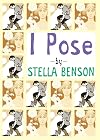
…. I can’t say that I liked it or that I didn’t like it, that you should read it or that you shouldn’t read it, but I can say that I was captivated and that even when I put the book down I went on thinking about it.
Stella Benson was born on 6 January 1892 at Lutwyche Hall, an Elizabethan Mansion in South Shropshire, England, and her aunt was novelist Mary Cholmondeley. Her background was privileged but her health was poor. She became a devoted reader and a regular diarist; she show more inherited a passionate concern for social issues, and in particular women’s suffrage, from her mother and her aunts.
Wen the First World War came she worked as a gardener and she supported poor women in the East End of London who had suddenly found themselves having to earn their own living.
Those experiences provide the foundations for her first novel, published in 1915.
What she builds on those foundations is odd, unexpected, and gloriously creative.
She.tells the story of two characters – a gardener and a suffragette. They are never named, but that really doesn’t matter.
First there is the gardener, a young man with independent means who is proceeding through life by adopting a series of poses that allow him to be exactly who he wants to be and to address those around him in riddles and witticisms.
On the spur of the moment he sets out to try the life of a vagabond.
“I have left everything I have as hostages with fate,” said the gardener. “When I get tired of Paradise, I’ll come back.”
He has not travelled far when he encounters the suffragette. She too is posing: not when she speaks about suffrage, which she cares about deeply, but when she claims not to care about whether she lives or dies, about whether she is loved or not, about whether she is hurt or harmed.
The gardener was concerned when he found the suffragette intended to blow up a church.
‘The gardener, of course, shared the views of all decent men on this subject. One may virtuously destroy life in a good cause, but to destroy property is a heinous crime, whatever its motive..’
He took action, and that was the first step in an adventure that would take them to the a distant, exotic island group and back again, meeting all kinds of characters, having all kinds of experiences and learning all kinds of lessons.
They would pose as a married couple and they would proceed in opposing directions.
The narrator intervened from time to time, posing just as much as her creations, and that balanced things beautifully.
There was a lovely Scottie dog, there was a recue at sea, there was a lady novelist, there was an earthquake, there was the indomitable Mrs Rust:
‘”I don’t agree with you at all,” said Mrs. Rust, who now made this remark mechanically in any pause in the conversation.’
The gardener would fall in love with the suffragette; but the suffragette would fall more deeply in love with her cause – or maybe with her pose.
Disillusion was inevitable ….
I could write reams about the plot, but the plot really isn’t the point.
The writing, the style make the story sing.
At the beginning I felt that Stella Bowen was presenting a puppet show; later I felt that she was staging a production at the theatre, but by the end of the story I had been drawn into a very human story. It was a story that explored the relationship between the poses we present to the world and our real concerns in all of its complexity with wit and with such understanding.
I don’t know what Stella Benson did, I don’t know how she did it, but she did it quite brilliantly.
I don’t want to – I don’t need to – pull her book apart to see how it works. I just want to wonder at it, to be impressed that it does!
And now, of course, I want to read everything else that she ever wrote! show less
Stella Benson was born on 6 January 1892 at Lutwyche Hall, an Elizabethan Mansion in South Shropshire, England, and her aunt was novelist Mary Cholmondeley. Her background was privileged but her health was poor. She became a devoted reader and a regular diarist; she show more inherited a passionate concern for social issues, and in particular women’s suffrage, from her mother and her aunts.
Wen the First World War came she worked as a gardener and she supported poor women in the East End of London who had suddenly found themselves having to earn their own living.
Those experiences provide the foundations for her first novel, published in 1915.
What she builds on those foundations is odd, unexpected, and gloriously creative.
She.tells the story of two characters – a gardener and a suffragette. They are never named, but that really doesn’t matter.
First there is the gardener, a young man with independent means who is proceeding through life by adopting a series of poses that allow him to be exactly who he wants to be and to address those around him in riddles and witticisms.
On the spur of the moment he sets out to try the life of a vagabond.
“I have left everything I have as hostages with fate,” said the gardener. “When I get tired of Paradise, I’ll come back.”
He has not travelled far when he encounters the suffragette. She too is posing: not when she speaks about suffrage, which she cares about deeply, but when she claims not to care about whether she lives or dies, about whether she is loved or not, about whether she is hurt or harmed.
The gardener was concerned when he found the suffragette intended to blow up a church.
‘The gardener, of course, shared the views of all decent men on this subject. One may virtuously destroy life in a good cause, but to destroy property is a heinous crime, whatever its motive..’
He took action, and that was the first step in an adventure that would take them to the a distant, exotic island group and back again, meeting all kinds of characters, having all kinds of experiences and learning all kinds of lessons.
They would pose as a married couple and they would proceed in opposing directions.
The narrator intervened from time to time, posing just as much as her creations, and that balanced things beautifully.
There was a lovely Scottie dog, there was a recue at sea, there was a lady novelist, there was an earthquake, there was the indomitable Mrs Rust:
‘”I don’t agree with you at all,” said Mrs. Rust, who now made this remark mechanically in any pause in the conversation.’
The gardener would fall in love with the suffragette; but the suffragette would fall more deeply in love with her cause – or maybe with her pose.
Disillusion was inevitable ….
I could write reams about the plot, but the plot really isn’t the point.
The writing, the style make the story sing.
At the beginning I felt that Stella Bowen was presenting a puppet show; later I felt that she was staging a production at the theatre, but by the end of the story I had been drawn into a very human story. It was a story that explored the relationship between the poses we present to the world and our real concerns in all of its complexity with wit and with such understanding.
I don’t know what Stella Benson did, I don’t know how she did it, but she did it quite brilliantly.
I don’t want to – I don’t need to – pull her book apart to see how it works. I just want to wonder at it, to be impressed that it does!
And now, of course, I want to read everything else that she ever wrote! show less
I had high hopes when I began this novel as it has a strong opening. It’s about a highminded young vagabond known only as “the gardener” (because he tells people some claptrap about how the world is his garden) and a woman known only as “the suffragette.” The author explains frankly that these people are poseurs who don’t know how to be their true selves, and they wander the world disapproving of everyone and trying to be avant garde, unable to have authentic relationships with show more anyone, including themselves. I guess there have always been people like this, and there are certainly still people like that today. The author also promises that even though one of the main characters is a sufragette, it’s not “one of those books,” which made me feel relieved after my bad experience with Delia Blanchflower last year. But she lied! It is one of those books.
I Pose completely falls apart when the characters alight on a Caribbean island that is an English colony. This is the most racist book I have ever encountered—it makes Tarzan of the Apes and Penrod look real good. Reading this novel, I felt unclean. I don’t really want to get into the details, but I will say, I think a lot of times people have this idea that racist English people from a century ago were just old-fashioned but meant no harm; it was all kind of a misunderstanding, god love ‘em. I Pose makes it clear that this rosy assessment is not the case—one hundred years ago, racists hated black people with vicious cruelty and made fun of everything they could think of about them and literally did not care if they lived or died.
There was a kinda interesting part at the end where the suffragette goes into a poor neighborhood in London and tries to get the women to unionize, leave their alcoholic and abusive husbands, etc. but all her schemes backfire. This bit seemed heartfelt and true to life. Now I’m going to go ahead and spoil the ending, since I don’t recommend this book anyway. The gardener and the suffragette decide to get married, but instead, the suffragette shouts, “I hate god!” and runs into the church and blows it up, killing herself. The end. What??
I looked up Stella Benson on Wikipedia to see what was her deal, anyway, and it turns out she was a feminist and a suffragette (it wasn’t clear from the novel which side she was on) and that she lived all over the world, including China and Vietnam. From her bio I would think oh, I can’t wait to read a book by this neglected woman writer but having read this novel I say, never again, Stella Benson, you deserve to be forgotten. show less
I Pose completely falls apart when the characters alight on a Caribbean island that is an English colony. This is the most racist book I have ever encountered—it makes Tarzan of the Apes and Penrod look real good. Reading this novel, I felt unclean. I don’t really want to get into the details, but I will say, I think a lot of times people have this idea that racist English people from a century ago were just old-fashioned but meant no harm; it was all kind of a misunderstanding, god love ‘em. I Pose makes it clear that this rosy assessment is not the case—one hundred years ago, racists hated black people with vicious cruelty and made fun of everything they could think of about them and literally did not care if they lived or died.
There was a kinda interesting part at the end where the suffragette goes into a poor neighborhood in London and tries to get the women to unionize, leave their alcoholic and abusive husbands, etc. but all her schemes backfire. This bit seemed heartfelt and true to life. Now I’m going to go ahead and spoil the ending, since I don’t recommend this book anyway. The gardener and the suffragette decide to get married, but instead, the suffragette shouts, “I hate god!” and runs into the church and blows it up, killing herself. The end. What??
I looked up Stella Benson on Wikipedia to see what was her deal, anyway, and it turns out she was a feminist and a suffragette (it wasn’t clear from the novel which side she was on) and that she lived all over the world, including China and Vietnam. From her bio I would think oh, I can’t wait to read a book by this neglected woman writer but having read this novel I say, never again, Stella Benson, you deserve to be forgotten. show less

a collection of stories on lives adrift at sea, and then an ending in a sort of anti-grounding. this book tells stories of the mind and its incompatibilities with physical entrapments
stella benson is my favourite author, and this, i think, my favourite of her works.
there are two things which consistently characterise her writing: the first is the use of ellipses as omission of unnecessary, admitting spoken words to often be irrelevant to what's beneath. it gives the feel of grasping at a show more partner not quite seen, barely misheard, always just there out of reach. the accidental necessary walling of the self against the world.
the second is her power of straight-face. jokes are mixed with horror mixed with bland tepidities to leave the reader never knowing quite what's coming till it's come, until you realise that you're laughing or you're crying or annoyed and have to think of just how was it that you got to be that way
i think that she's best suited to these shorter transients. her novels are worth reading, yes, and filled with much the same in character, except she gets somewhat distracted in the laying out and tying up, which pulls a bit away from where it is she writes the best show less
stella benson is my favourite author, and this, i think, my favourite of her works.
there are two things which consistently characterise her writing: the first is the use of ellipses as omission of unnecessary, admitting spoken words to often be irrelevant to what's beneath. it gives the feel of grasping at a show more partner not quite seen, barely misheard, always just there out of reach. the accidental necessary walling of the self against the world.
the second is her power of straight-face. jokes are mixed with horror mixed with bland tepidities to leave the reader never knowing quite what's coming till it's come, until you realise that you're laughing or you're crying or annoyed and have to think of just how was it that you got to be that way
i think that she's best suited to these shorter transients. her novels are worth reading, yes, and filled with much the same in character, except she gets somewhat distracted in the laying out and tying up, which pulls a bit away from where it is she writes the best show less
"This is not a real book. It does not deal with real people, nor should it be read by real people. But there are in the world so many real books already written for the benefit of real people, and there are still so many to be written, that I cannot believe that a little alien book such as this, written for the magically-inclined minority, can be considered too assertive a trespasser."
“There can be few more charming, witty and irreverent novels to arise out of the Great War”, says show more science fiction critic and historian Edward James of Stella Benson’s Living Alone.
I myself have recently read some novels to come out of that war, novels of fantastic fiction. After almost a 100 years, none has such a singular and memorable combination of plot and voice as Benson’s.
That is just the opening of the book, and anyone can write a snappy epigram. But Benson’s voice is wry and flippant from the very beginning, a dear confidant chattering away about recent news and whatever thoughts occur to her. It’s not technically first person narration, but it has that tone even if technically it's the voice of some unknown party.
One of our principals is Thelma Bennett Watkins aka Iris 'Yde aka Hangela the Witch. That’s not an honorary title. She really is a witch right down to riding a broomstick, Harold by name. She bursts into a War Savings committee in an “unfurnished room in an unfashionable part of London.” The significance of “the Stranger” is not immediately appreciated:
"To anybody except a member of a committee it would have been obvious that the Stranger was of the Cinderella type, and bound to turn out a heroine sooner or later. But perception goes out of committees. The more committees you belong to, the less of ordinary life you will understand. When your daily round becomes nothing more than a daily round of committees you might as well be dead."
The dull, impoverished grind of those committees and the rest of the formal apparatus of charity work is felt by Sarah Brown:
The sixth member was a person who, where Social Work was concerned, did more or less as she was told, without doing it particularly well. The result, very properly, was that all the work which a committee euphemistically calls "organising work" was left to her.
The novel is really Sarah’s story with Thelma a magical catalyst that will bring her enlightenment if only of a melancholy sort. For, as Brian Stableford notes in his “Angela Benson” entry in the Encyclopedia of Fantasy, this is a “fantastically transfigured spiritual” autobiography. For sickly, tired, passionate, liberal Benson is, given the details on Benson’s life at Edward James Science Fiction and Fantasy Writers in the Great War site, clearly the model for Sarah.
Both work for pittances in wartime charities often going hungry between meals at wealthy committee members’ home or the ersatz food of wartime rationing. Both dabble with being a “land-woman”, women who replaced men in the agricultural labor of wartime England. Both tire of weeding out the “Naughty Poor” from the deserving and just wish that charity could be freed from the tyranny of organization.
When we first meet Sarah she is just the “sixth member” of that committee, grudgingly given a name for practical reasons by the author. Sarah is weary of Doing Good:
"… she was a member of committees, was neither a real expert in, nor a real lover of, Doing Good. In Doing Good, I think, we have got into bad habits. We try in groups to do good to the individual, whereas, if good is to be done, it would seem more likely, and more consonant with precedent, that the individual might do it to the group. Without the smile of a Treasurer we cannot unloose our purse-strings; without the sanction of a Chairman we have no courage; without Minutes we have no memory."
Sarah is entrusted to return Thelma’s broomstick. Sarah discovers her at the House of Living Alone:
"It is meant to provide for the needs of those who dislike hotels, clubs, settlements, hostels, boarding-houses, and lodgings only less than their own homes; who detest landladies, waiters, husbands and wives, charwomen, and all forms of lookers after. This house is a monastery and a convent for monks and nuns dedicated to unknown gods. Men and women who are tired of being laboriously kind to their bodies, who like to be a little uncomfortable and quite uncared for, who love to live from week to week without speaking, except to confide their destinations to 'bus-conductors, who are weary of woolly decorations, aspidistras, and the eternal two generations of roses which riot among blue ribbons on hireling wall-papers, who are ignorant of the science of tipping and thanking, who do not know how to cook yet hate to be cooked for, will here find the thing they have desired, and something else as well."
Weary Sarah, “only inwardly articulate”, describes a life suited to the house of Living Alone:
"I have been, I may say, a burden and a bore all over the world; I have been an ill and fretful stranger within all men's gates; I have asked much and given nothing; I have never been a friend. Nobody has ever expected any return from me, yet nothing was grudged. Landladies, policemen, chorus girls, social bounders, prostitutes, the natural enemies, one would say, of such as I, have given me kindness, and often much that they could not easily spare ... "
Thelma, foreshadowing the end, eagerly agrees to be her friend but friendship, she warns, is only a means to an end.
Their lives are entangled for the rest of the novel as magic and life in wartime London are entangled. We will meet faeries and a would-be suitor for Thelma and a dragon. The dead will raise from the earth – mistaking a German bombing raid as the Last Judgement. (A scene played so comically and naturally that I missed its significance until I read Brian Stableford’s description of the novel.) And, in something of a set piece for the novel, Thelma and a German witch, carrying a germ weapon to unleash on Britain, duel on broomsticks over London during a Zeppelin raid.
They fight and debate with Thelma forsaking jingoistic justifications for the war. “We are neither of us killing Evil, we are killing youth...."
The German witch plunges from the sky, defeated by Thelma, but bureaucracy has its revenge. Thelma is sought by the authorities for possessing an unauthorized “armed flying machine”. Sarah pulls strings, and most of the novel’s characters leave for America.
Leave for America, but only Sarah arrives there. Thelma stays with her until the “City on its Tiptoes”, New York City, is in sight. Sarah is dismayed that, after she has left everyone she loved to save Thelma from "the wrath of the law", Thelma will not stay with her.
“Didn't you know that all magic lives and thrives on the wrath of the Law?”, replies Thelma. Sarah cannot be, as she claims, “ill and bewildered” because she never left the House of Living Alone. Those in the House of Living Alone can never “make a success of friendship” and have no business with love.
The novel ends with Sarah stepping “over the threshold to the greater House of Living Alone.”
Benson actually finished writing the novel in California. Her dislike of the United States shows in the last chapter with quips like
“I gather America is too full of Liberty to leave room for socialism, isn't that so? My squirrel says there are only two parties in America, Republicans and Sinners—at least I think that was what he said—and anybody who belongs to neither of these parties is given penal servitude for life.”
(I take that as a reference to the imprisoned Eugene Debs.)
However, Benson seems to have found companionship unlike Sarah. She left California for Asia in December 1919 and lived there for the rest of her life. She married in 1921 and died in 1933 at age 41.
As there is a melancholy tension in Sarah’s attempt at friendship leading to even greater isolation and the realization that it will be permanent, there is a tension in this novel about what the Great War meant. Clearly, Benson did not find it a moral struggle.
She seems, though, to have found it a curiously invigorating struggle, at least for society.
Towards the end of the novel, one character complains about the staid Victorian age before the war and its lack of magic:
"The worst of this war is that it has nothing whatever to do with magic of any sort. It was made and is supported by men who had forgotten magic, it is the result of the coming to an end of a spell. Haven't you noticed that a spell came to an end at the beginning of the last century? Why, doesn't almost every one see something lacking about the Victorian age?"
He goes on to tell how the war has put magic has been put back in the world with the spilt blood of the war:
“Magic only dies in a tepid world. I think there is now more magic in the world than ever before. The soil of France is alive with it, and as for Belgium—when Belgium gets back home at last she will find her desecrated house enchanted.... And the same applies to all the thresholds in the world which fighting-men have crossed and will never cross again, except in the dreams of their friends. That sort of austere and secret magic, like a word known by all and spoken by none, is pretty nearly all that is left to keep the world alive now....".
Seeing the end of the war, even for an author writing in the middle of it, as the beginning of a new age – whether to be met with optimism or terror – is not uncommon in the works I’ve seen from the war.
Benson does not seem to have any occult interests, so there is not the mysticism that may be at work in Arthur Machen’s The Terror or another novel I’ll be looking at, Gustav Meyrink’s The Green Face. No, I think magic is a just a metaphor for a better world.
When she saw a Zeppelin, “exactly above” her, dropping bombs, Benson said she “wasn’t frightened, only brutally excited.” But her thrill was not, I think, the thrill of Thermidor though she was a fervent social activist who clearly wanted a changed world.
I think magic, for Benson, partly consists of what we would call “mindfulness”: “Witches and wizards are not blinded by having a Point of View. They just look, and are very much surprised and interested.” That’s partly, I think, the intent of her voice – to shake the reader out of a “Point of View”. That is the magic the war brought back into the tedium of life. show less
“There can be few more charming, witty and irreverent novels to arise out of the Great War”, says show more science fiction critic and historian Edward James of Stella Benson’s Living Alone.
I myself have recently read some novels to come out of that war, novels of fantastic fiction. After almost a 100 years, none has such a singular and memorable combination of plot and voice as Benson’s.
That is just the opening of the book, and anyone can write a snappy epigram. But Benson’s voice is wry and flippant from the very beginning, a dear confidant chattering away about recent news and whatever thoughts occur to her. It’s not technically first person narration, but it has that tone even if technically it's the voice of some unknown party.
One of our principals is Thelma Bennett Watkins aka Iris 'Yde aka Hangela the Witch. That’s not an honorary title. She really is a witch right down to riding a broomstick, Harold by name. She bursts into a War Savings committee in an “unfurnished room in an unfashionable part of London.” The significance of “the Stranger” is not immediately appreciated:
"To anybody except a member of a committee it would have been obvious that the Stranger was of the Cinderella type, and bound to turn out a heroine sooner or later. But perception goes out of committees. The more committees you belong to, the less of ordinary life you will understand. When your daily round becomes nothing more than a daily round of committees you might as well be dead."
The dull, impoverished grind of those committees and the rest of the formal apparatus of charity work is felt by Sarah Brown:
The sixth member was a person who, where Social Work was concerned, did more or less as she was told, without doing it particularly well. The result, very properly, was that all the work which a committee euphemistically calls "organising work" was left to her.
The novel is really Sarah’s story with Thelma a magical catalyst that will bring her enlightenment if only of a melancholy sort. For, as Brian Stableford notes in his “Angela Benson” entry in the Encyclopedia of Fantasy, this is a “fantastically transfigured spiritual” autobiography. For sickly, tired, passionate, liberal Benson is, given the details on Benson’s life at Edward James Science Fiction and Fantasy Writers in the Great War site, clearly the model for Sarah.
Both work for pittances in wartime charities often going hungry between meals at wealthy committee members’ home or the ersatz food of wartime rationing. Both dabble with being a “land-woman”, women who replaced men in the agricultural labor of wartime England. Both tire of weeding out the “Naughty Poor” from the deserving and just wish that charity could be freed from the tyranny of organization.
When we first meet Sarah she is just the “sixth member” of that committee, grudgingly given a name for practical reasons by the author. Sarah is weary of Doing Good:
"… she was a member of committees, was neither a real expert in, nor a real lover of, Doing Good. In Doing Good, I think, we have got into bad habits. We try in groups to do good to the individual, whereas, if good is to be done, it would seem more likely, and more consonant with precedent, that the individual might do it to the group. Without the smile of a Treasurer we cannot unloose our purse-strings; without the sanction of a Chairman we have no courage; without Minutes we have no memory."
Sarah is entrusted to return Thelma’s broomstick. Sarah discovers her at the House of Living Alone:
"It is meant to provide for the needs of those who dislike hotels, clubs, settlements, hostels, boarding-houses, and lodgings only less than their own homes; who detest landladies, waiters, husbands and wives, charwomen, and all forms of lookers after. This house is a monastery and a convent for monks and nuns dedicated to unknown gods. Men and women who are tired of being laboriously kind to their bodies, who like to be a little uncomfortable and quite uncared for, who love to live from week to week without speaking, except to confide their destinations to 'bus-conductors, who are weary of woolly decorations, aspidistras, and the eternal two generations of roses which riot among blue ribbons on hireling wall-papers, who are ignorant of the science of tipping and thanking, who do not know how to cook yet hate to be cooked for, will here find the thing they have desired, and something else as well."
Weary Sarah, “only inwardly articulate”, describes a life suited to the house of Living Alone:
"I have been, I may say, a burden and a bore all over the world; I have been an ill and fretful stranger within all men's gates; I have asked much and given nothing; I have never been a friend. Nobody has ever expected any return from me, yet nothing was grudged. Landladies, policemen, chorus girls, social bounders, prostitutes, the natural enemies, one would say, of such as I, have given me kindness, and often much that they could not easily spare ... "
Thelma, foreshadowing the end, eagerly agrees to be her friend but friendship, she warns, is only a means to an end.
Their lives are entangled for the rest of the novel as magic and life in wartime London are entangled. We will meet faeries and a would-be suitor for Thelma and a dragon. The dead will raise from the earth – mistaking a German bombing raid as the Last Judgement. (A scene played so comically and naturally that I missed its significance until I read Brian Stableford’s description of the novel.) And, in something of a set piece for the novel, Thelma and a German witch, carrying a germ weapon to unleash on Britain, duel on broomsticks over London during a Zeppelin raid.
They fight and debate with Thelma forsaking jingoistic justifications for the war. “We are neither of us killing Evil, we are killing youth...."
The German witch plunges from the sky, defeated by Thelma, but bureaucracy has its revenge. Thelma is sought by the authorities for possessing an unauthorized “armed flying machine”. Sarah pulls strings, and most of the novel’s characters leave for America.
Leave for America, but only Sarah arrives there. Thelma stays with her until the “City on its Tiptoes”, New York City, is in sight. Sarah is dismayed that, after she has left everyone she loved to save Thelma from "the wrath of the law", Thelma will not stay with her.
“Didn't you know that all magic lives and thrives on the wrath of the Law?”, replies Thelma. Sarah cannot be, as she claims, “ill and bewildered” because she never left the House of Living Alone. Those in the House of Living Alone can never “make a success of friendship” and have no business with love.
The novel ends with Sarah stepping “over the threshold to the greater House of Living Alone.”
Benson actually finished writing the novel in California. Her dislike of the United States shows in the last chapter with quips like
“I gather America is too full of Liberty to leave room for socialism, isn't that so? My squirrel says there are only two parties in America, Republicans and Sinners—at least I think that was what he said—and anybody who belongs to neither of these parties is given penal servitude for life.”
(I take that as a reference to the imprisoned Eugene Debs.)
However, Benson seems to have found companionship unlike Sarah. She left California for Asia in December 1919 and lived there for the rest of her life. She married in 1921 and died in 1933 at age 41.
As there is a melancholy tension in Sarah’s attempt at friendship leading to even greater isolation and the realization that it will be permanent, there is a tension in this novel about what the Great War meant. Clearly, Benson did not find it a moral struggle.
She seems, though, to have found it a curiously invigorating struggle, at least for society.
Towards the end of the novel, one character complains about the staid Victorian age before the war and its lack of magic:
"The worst of this war is that it has nothing whatever to do with magic of any sort. It was made and is supported by men who had forgotten magic, it is the result of the coming to an end of a spell. Haven't you noticed that a spell came to an end at the beginning of the last century? Why, doesn't almost every one see something lacking about the Victorian age?"
He goes on to tell how the war has put magic has been put back in the world with the spilt blood of the war:
“Magic only dies in a tepid world. I think there is now more magic in the world than ever before. The soil of France is alive with it, and as for Belgium—when Belgium gets back home at last she will find her desecrated house enchanted.... And the same applies to all the thresholds in the world which fighting-men have crossed and will never cross again, except in the dreams of their friends. That sort of austere and secret magic, like a word known by all and spoken by none, is pretty nearly all that is left to keep the world alive now....".
Seeing the end of the war, even for an author writing in the middle of it, as the beginning of a new age – whether to be met with optimism or terror – is not uncommon in the works I’ve seen from the war.
Benson does not seem to have any occult interests, so there is not the mysticism that may be at work in Arthur Machen’s The Terror or another novel I’ll be looking at, Gustav Meyrink’s The Green Face. No, I think magic is a just a metaphor for a better world.
When she saw a Zeppelin, “exactly above” her, dropping bombs, Benson said she “wasn’t frightened, only brutally excited.” But her thrill was not, I think, the thrill of Thermidor though she was a fervent social activist who clearly wanted a changed world.
I think magic, for Benson, partly consists of what we would call “mindfulness”: “Witches and wizards are not blinded by having a Point of View. They just look, and are very much surprised and interested.” That’s partly, I think, the intent of her voice – to shake the reader out of a “Point of View”. That is the magic the war brought back into the tedium of life. show less
Awards

You May Also Like


Associated Authors
Statistics
- Works
- 21
- Also by
- 10
- Members
- 271
- Popularity
- #85,375
- Rating
- 3.6
- Reviews
- 11
- ISBNs
- 100
- Languages
- 3
- Favorited
- 2
