
Ned Vizzini (1981–2013)
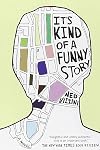
Author of It's Kind of a Funny Story
About the Author
Ned Vizzin was born in New York City on April 4, 1981. He began writing professionally as a teenager. He wrote essays and articles for the New York Press, the New York Times, and other publications. His first book, Teen Angst? Naaah...: A Quasi Autobiography, was published in 2000. His other books show more include Be More Chill, House of Secrets co-written with film director Chris Columbus, and It's Kind of a Funny Story, which was adapted as a feature film in 2010 starring Zack Galifianakis. His television writing credits include MTV's Teen Wolf, and the NBC drama Believe. He committed suicide on December 19, 2013 at the age of 32. (Bowker Author Biography) show less
Series
Works by Ned Vizzini
Associated Works
The Girl Who Was on Fire: Your Favorite Authors on Suzanne Collins' Hunger Games Trilogy (2011) — Contributor — 421 copies, 13 reviews
Beyond the Wall: Exploring George R. R. Martin's A Song of Ice and Fire, From A Game of Thrones to A Dance with Dragons (2012) — Contributor — 174 copies, 7 reviews
You Do Not Talk About Fight Club: I Am Jack's Completely Unauthorized Essay Collection (2008) — Contributor — 79 copies, 2 reviews
The World of the Golden Compass: The Otherworldly Ride Continues (2007) — Contributor — 71 copies, 2 reviews
Through the Wardrobe: Your Favorite Authors on C. S. Lewis's Chronicles of Narnia (2008) — Contributor — 61 copies, 3 reviews
Triumph of The Walking Dead: Robert Kirkman’s Zombie Epic on Page and Screen (2011) — Contributor — 36 copies, 2 reviews
Tagged
Common Knowledge
- Canonical name
- Vizzini, Ned
- Legal name
- Vizzini, Edison Price
- Birthdate
- 1981-04-04
- Date of death
- 2013-12-19
- Gender
- male
- Education
- Hunter College
- Occupations
- author
- Cause of death
- suicide
- Nationality
- USA
- Birthplace
- New York, New York, USA
- Places of residence
- New York, New York, USA
Los Angeles, California, USA - Place of death
- Brooklyn, New York, USA
- Associated Place (for map)
- New York, USA
Members
Discussions
Found: Siblings trapped in author's fictional world in Name that Book (December 2023)
Found: YA/Fantasy Novel Series - Can only remember some vivid plot beats in Name that Book (December 2023)
Ned Vizzini, suicide in Librarians who LibraryThing (December 2013)
Reviews
I've been hearing about this story ever since the film came out, really – which is about five years ago. As someone who has been battling depression and anxiety for the last six, seven years... it felt like a book I should read at least once in my life. But no library close to me had it so year after year went before I actually bothered to buy it – mostly because I find the price absurd. But then it happened. Truly amazing.
Craig's goals in life are pretty simple. Graduate high school show more with top grades, get into a good college, graduate college with top grades, get a good job, get married, buy a big house, buy a dog and have kids. But when he starts to fall behind in school work, he feels like if he doesn't graduate high school with top grades, he will never be able to achieve any of the other goals. He will rise or fall depending on wether his grades turn out to be good or great.
He stops eating, barely able to keep anything down. Most of the things in his life have turned into tentacles whilst he barely have no anchors to keep him grounded when anxiety strikes. It gets even worse when he decides to stop taking Zoloft just like that; one thing leads to another and soon he finds himself checking into the hospital at the middle of the night to prevent himself from killing himself. It might be the greatest achievement of his life.
Okay, so. During the first half of the book, I was spellbound. I don't think I have ever used a marker that much during any other reading session – the depression and anxiety descriptions were all on point. I could relate to most of them and it was definitely a special feeling to read the book because of that very reason. I hardly ever read a book that handles depression and/or anxiety, and definitely not this well.
But the second half of the book completely ruined the whole book for me. The transphobia is absurd and violent. I have stumbled across transphobic books quite a few times before but this is honestly the first one where a transwoman is called it by one of the other patients. And despite of calling an actual person it, that patient still goes on to become the love interest. There is no remorse from the characters about their violently transphobic remarks and neither does the author shame his characters in a manner that makes sure readers know that they are transphobic and gross.
It is the most insensitive portrayal of a transgender character, like, ever. The other characters continue to focus on her genitals, they talk about how good she is at tricking people into thinking she's a "real" girl – and she is even misgendered by the staff. She is introduced as a trans woman but she is from that point on written as some sort of bizarre mix of bigender and a drag queen. Like, what the fuck? show less
Craig's goals in life are pretty simple. Graduate high school show more with top grades, get into a good college, graduate college with top grades, get a good job, get married, buy a big house, buy a dog and have kids. But when he starts to fall behind in school work, he feels like if he doesn't graduate high school with top grades, he will never be able to achieve any of the other goals. He will rise or fall depending on wether his grades turn out to be good or great.
He stops eating, barely able to keep anything down. Most of the things in his life have turned into tentacles whilst he barely have no anchors to keep him grounded when anxiety strikes. It gets even worse when he decides to stop taking Zoloft just like that; one thing leads to another and soon he finds himself checking into the hospital at the middle of the night to prevent himself from killing himself. It might be the greatest achievement of his life.
Okay, so. During the first half of the book, I was spellbound. I don't think I have ever used a marker that much during any other reading session – the depression and anxiety descriptions were all on point. I could relate to most of them and it was definitely a special feeling to read the book because of that very reason. I hardly ever read a book that handles depression and/or anxiety, and definitely not this well.
But the second half of the book completely ruined the whole book for me. The transphobia is absurd and violent. I have stumbled across transphobic books quite a few times before but this is honestly the first one where a transwoman is called it by one of the other patients. And despite of calling an actual person it, that patient still goes on to become the love interest. There is no remorse from the characters about their violently transphobic remarks and neither does the author shame his characters in a manner that makes sure readers know that they are transphobic and gross.
It is the most insensitive portrayal of a transgender character, like, ever. The other characters continue to focus on her genitals, they talk about how good she is at tricking people into thinking she's a "real" girl – and she is even misgendered by the staff. She is introduced as a trans woman but she is from that point on written as some sort of bizarre mix of bigender and a drag queen. Like, what the fuck? show less
I just finished reading this book and have some thoughts and feelings that I would like to share. I went into this book thinking this would be a good book about mental illness. My students and I both were interested in it after doing a class on YA Literature and as someone who has mental illness, has checked themselves into a mental institution to prevent myself from committing suicide, and has even gone through ECT treatments I figured it would be something I could also relate to. And I show more thought it would accurately depict mental illness. I was wrong.
Vizzini obviously had very real mental problems that drove him ultimately to take his own life. This I do not dispute and I think it is tragic that that happened to him. But I want to talk about his book. I've read reviews praising this book from top to bottom for it's "accurate" portrayal of mental illness. I disagree. I am not a psychiatrist or a psychologist, but I have gone through serious mental crises and deal with my illness every day, and if you can feel better after 5 days in a mental ward it doesn't seem plausible you had depression (unless you are bipolar and cycled up).
At the beginning of the story I can believe he is ill although it sounds more like an anxiety problem than depression (anxiety is horrible too!). He can't keep food down and throws up, he has trouble sleeping, he has racing thoughts that are obsessive and cyclical, and has trouble focusing on his homework. Ultimately he ends up with suicidal ideation and begins to take steps to carry it out. It sounds like anxiety that drives him to despair. Totally believable and relatable and an accurate depiction of mental illness (I'd call it anxiety, he calls it depression, I am not a doctor so whatever, the point is the kid is ill).
Now here is where it starts to become something else. Something that, to me, is both an inaccurate portrayal of mental illness and, frankly, a dangerous story to pass off to teens as realistic. It starts small, like where the doctor doesn't correct him when he equates self harm and suicide. As someone who self harms (and research has shown this), the two are not usually related as counterintuitive as that might sound to people who don't self harm. To not make this clear to teens does them a disservice. Then it escalates to the boy being in the psych ward playing games, making connections, drawing pictures, making out with girls, getting rid of toxic friends, and deciding to change to a new school (um why had no one suggested this to him before--parents, therapist, doctor...there were so many things it sounded like the therapist never suggested that it boggles the mind). Suddenly, pretty soon into him being there, he is already feeling a lot better without physical symptoms of his illness and having this rosy attitude. I am sorry, but if he was truly sick he wouldn't be "cured" in a five day stay in the psych ward (he acknowledges at the end he could relapse, but that is besides the point). In addition to that large misrepresentation, he mentions things like the presence of blinds which, I am sorry, would probably not be there. They don't kid around in places like that...anything you could use to harm yourself or kill yourself is not around. You can hang yourself with blinds.
I think it is very dangerous that the author seems to conflate mental illness and a life crisis. At the beginning of the book, like I said, I believe it sounds like he has a real illness. It is good that Vizzini shows teens what that can be like and how to deal with an acute crisis like being suicidal. But then to pivot to this "life crisis" attitude in the hospital where the kid does not seem sick at all, but merely needs to get his s*** together (which is admittedly very hard and is stressful...but is not mental illness) is shocking. A mental ward is not a spa or a short retreat from the world. It's the LAST place you want to go. It is the LAST resort. You sure as hell don't normally leave there walking on sunshine and roses because of how refreshed you feel. You are glad to get out, but you aren't suddenly not sick.
I want to talk about Vizzini for a moment. He supposedly modeled this book on his own experiences. So I wonder--did it really happen like that? It seems unlikely. If so, he couldn't have been that sick, but we know for a fact that he was because he ultimately took his own life. From what I've read about him he sounds like he was a really nice guy and that makes me wonder if he wrote the book to give a rosy picture and a happy ending to something he knew didn't have one. Hopefully it wasn't to sell books.
So as a reader who has mental illness and that has spent a very short stint in a mental institution and had serious mental issues for over a decade, I would say I am extremely disappointed in the portrayal of the whole damn thing. I find it personally offensive to treat the portrayal of mental illness in such a cavalier and inaccurate way. I also think it is dangerous and does a huge disservice to kids dealing with serious mental health problems. They shouldn't be told there is some quick fix. They should be shown how things are and shown characters that truly learn to cope and deal.
But I sympathize with the author because he did have problems. Maybe he just wanted the happy ending his issues could not give him. I'd like to think that rather than that he did it for better sales. His misrepresentation is not good, but maybe he did it as much to himself as he did to anyone. show less
Vizzini obviously had very real mental problems that drove him ultimately to take his own life. This I do not dispute and I think it is tragic that that happened to him. But I want to talk about his book. I've read reviews praising this book from top to bottom for it's "accurate" portrayal of mental illness. I disagree. I am not a psychiatrist or a psychologist, but I have gone through serious mental crises and deal with my illness every day, and if you can feel better after 5 days in a mental ward it doesn't seem plausible you had depression (unless you are bipolar and cycled up).
At the beginning of the story I can believe he is ill although it sounds more like an anxiety problem than depression (anxiety is horrible too!). He can't keep food down and throws up, he has trouble sleeping, he has racing thoughts that are obsessive and cyclical, and has trouble focusing on his homework. Ultimately he ends up with suicidal ideation and begins to take steps to carry it out. It sounds like anxiety that drives him to despair. Totally believable and relatable and an accurate depiction of mental illness (I'd call it anxiety, he calls it depression, I am not a doctor so whatever, the point is the kid is ill).
Now here is where it starts to become something else. Something that, to me, is both an inaccurate portrayal of mental illness and, frankly, a dangerous story to pass off to teens as realistic. It starts small, like where the doctor doesn't correct him when he equates self harm and suicide. As someone who self harms (and research has shown this), the two are not usually related as counterintuitive as that might sound to people who don't self harm. To not make this clear to teens does them a disservice. Then it escalates to the boy being in the psych ward playing games, making connections, drawing pictures, making out with girls, getting rid of toxic friends, and deciding to change to a new school (um why had no one suggested this to him before--parents, therapist, doctor...there were so many things it sounded like the therapist never suggested that it boggles the mind). Suddenly, pretty soon into him being there, he is already feeling a lot better without physical symptoms of his illness and having this rosy attitude. I am sorry, but if he was truly sick he wouldn't be "cured" in a five day stay in the psych ward (he acknowledges at the end he could relapse, but that is besides the point). In addition to that large misrepresentation, he mentions things like the presence of blinds which, I am sorry, would probably not be there. They don't kid around in places like that...anything you could use to harm yourself or kill yourself is not around. You can hang yourself with blinds.
I think it is very dangerous that the author seems to conflate mental illness and a life crisis. At the beginning of the book, like I said, I believe it sounds like he has a real illness. It is good that Vizzini shows teens what that can be like and how to deal with an acute crisis like being suicidal. But then to pivot to this "life crisis" attitude in the hospital where the kid does not seem sick at all, but merely needs to get his s*** together (which is admittedly very hard and is stressful...but is not mental illness) is shocking. A mental ward is not a spa or a short retreat from the world. It's the LAST place you want to go. It is the LAST resort. You sure as hell don't normally leave there walking on sunshine and roses because of how refreshed you feel. You are glad to get out, but you aren't suddenly not sick.
I want to talk about Vizzini for a moment. He supposedly modeled this book on his own experiences. So I wonder--did it really happen like that? It seems unlikely. If so, he couldn't have been that sick, but we know for a fact that he was because he ultimately took his own life. From what I've read about him he sounds like he was a really nice guy and that makes me wonder if he wrote the book to give a rosy picture and a happy ending to something he knew didn't have one. Hopefully it wasn't to sell books.
So as a reader who has mental illness and that has spent a very short stint in a mental institution and had serious mental issues for over a decade, I would say I am extremely disappointed in the portrayal of the whole damn thing. I find it personally offensive to treat the portrayal of mental illness in such a cavalier and inaccurate way. I also think it is dangerous and does a huge disservice to kids dealing with serious mental health problems. They shouldn't be told there is some quick fix. They should be shown how things are and shown characters that truly learn to cope and deal.
But I sympathize with the author because he did have problems. Maybe he just wanted the happy ending his issues could not give him. I'd like to think that rather than that he did it for better sales. His misrepresentation is not good, but maybe he did it as much to himself as he did to anyone. show less
I picked up this book not really expecting too much. And when I learned of the topic, I was bit put off- I've read too many a novel about suicide revolving around a lost, sad-sap protagonist pouting that nobody loves them. To me, this type of story is disappointing not only because of its ambiguity, but also because it's not realistic- totally contrary to It's Kind of a Funny Story.
This is a book, yes, about suicide- but it's so much more than that. It's a novel about helping yourself, show more finding your way, and learning who you can rely on in hard times, and while no review of mine will possibly be able to do it the justice it deserves, I'll take a shot anyway.
Told through the lens of a New York City teen named Craig, this is a book about Craig's stay in the mental-illness (for lack of a better word) section of a hospital. He wound up there because he convinced himself he was going to jump off of the Brooklyn Bridge, because he was drowning- drowning in expectations, drowning in schoolwork and tests and awkward social standings, overly stressed and confused. He checks himself into Argenon Hospital to try and get better, to overcome these feelings, to somehow have the cure handed to him. But the real healing doesn't happen in the visits with his counselor- they happen with the other patients in the ward.
It's Kind of a Funny Story earned my five-star-rating mostly due to it's honesty- it's a story so threaded with truth that I could really feel Vizzini's* own similar experiences permeate through the pages. The humour also made this a totally worthy read, accentuating the events, making them more real, instead of drowning it in some cynical sarcastic remarks like some YA authors tend to do these days, thinking that will make it appeal to younger readers.
The final verdict: READ. THIS. RIGHT. NOW. It's relatively short, too, which is another reason to pick it up pronto! It'll make you laugh, it'll make you stay up all night reading, hell, it might even make you cry. It's a must-read, basically, and it made me feel like- even though I've never had a suicidal urge- I knew exactly what Craig, and, subsequently Ned Vizzini went through. Read it. You won't regret it, I promise.
*Just found out that Ned Vizzini died on December 19, 2013. He will be missed by his family and the readers of all of his books and essays, and I somehow, through those, feel like I knew him even though I've never even met him. show less
This is a book, yes, about suicide- but it's so much more than that. It's a novel about helping yourself, show more finding your way, and learning who you can rely on in hard times, and while no review of mine will possibly be able to do it the justice it deserves, I'll take a shot anyway.
Told through the lens of a New York City teen named Craig, this is a book about Craig's stay in the mental-illness (for lack of a better word) section of a hospital. He wound up there because he convinced himself he was going to jump off of the Brooklyn Bridge, because he was drowning- drowning in expectations, drowning in schoolwork and tests and awkward social standings, overly stressed and confused. He checks himself into Argenon Hospital to try and get better, to overcome these feelings, to somehow have the cure handed to him. But the real healing doesn't happen in the visits with his counselor- they happen with the other patients in the ward.
It's Kind of a Funny Story earned my five-star-rating mostly due to it's honesty- it's a story so threaded with truth that I could really feel Vizzini's* own similar experiences permeate through the pages. The humour also made this a totally worthy read, accentuating the events, making them more real, instead of drowning it in some cynical sarcastic remarks like some YA authors tend to do these days, thinking that will make it appeal to younger readers.
The final verdict: READ. THIS. RIGHT. NOW. It's relatively short, too, which is another reason to pick it up pronto! It'll make you laugh, it'll make you stay up all night reading, hell, it might even make you cry. It's a must-read, basically, and it made me feel like- even though I've never had a suicidal urge- I knew exactly what Craig, and, subsequently Ned Vizzini went through. Read it. You won't regret it, I promise.
*Just found out that Ned Vizzini died on December 19, 2013. He will be missed by his family and the readers of all of his books and essays, and I somehow, through those, feel like I knew him even though I've never even met him. show less
It's Kind of a Funny Story is about 15-yr-old New Yorker, Craig Gilner. Craig is highly ambitious, spending his entire middle school career studying to get into an elite high school. Once there, Craig realizes maybe he isn't so smart after all. He has to work twice as hard as his classmates just to get by. All this pressure causes Craig to suffer from depression, preventing him from sleeping or eating. On a particularly bad night after Craig stops taking his medication, he nearly kills show more himself, deciding to call the suicide hotline at the last moment. From there, Craig spends the next five days in a mental hospital, possibly the most influential five days of his life. He learns to eat and sleep again, he creates friendships, discovers a passion for drawing, and he finally confronts the reason as to why he is so unhappy.
I loved this book. For a book about depression, it was amazingly light-hearted. The tone was clever and humorous and very real. The cast of the novel was original and entertaining. Craig himself was a brilliant character. I don't have depression, yet could sympathize with Craig on so many levels. Craig is a teenage boy, and acts like one. He makes mistakes, but every now and then has a moment of insightful clarity.
The topic of depression and mental illness was treated carefully. These people were messed up, but never seemed inhuman. All of them were very real. While the plot wasn't suspenseful, it was gripping and had me flipping the pages without hesitation.
The only thing I found doubtful was Craig's miraculous recovery. Maybe with some that may be the case, but not many. It would have been difficult if they book ended any other way however, so I'm not too upset about it.
It's Kind of a Funny Story was a truthful and funny story about depression I won't soon forget show less
I loved this book. For a book about depression, it was amazingly light-hearted. The tone was clever and humorous and very real. The cast of the novel was original and entertaining. Craig himself was a brilliant character. I don't have depression, yet could sympathize with Craig on so many levels. Craig is a teenage boy, and acts like one. He makes mistakes, but every now and then has a moment of insightful clarity.
The topic of depression and mental illness was treated carefully. These people were messed up, but never seemed inhuman. All of them were very real. While the plot wasn't suspenseful, it was gripping and had me flipping the pages without hesitation.
The only thing I found doubtful was Craig's miraculous recovery. Maybe with some that may be the case, but not many. It would have been difficult if they book ended any other way however, so I'm not too upset about it.
It's Kind of a Funny Story was a truthful and funny story about depression I won't soon forget show less
Lists
Awards


You May Also Like


Associated Authors
Statistics
- Works
- 10
- Also by
- 13
- Members
- 8,204
- Popularity
- #2,947
- Rating
- 3.8
- Reviews
- 245
- ISBNs
- 140
- Languages
- 11
- Favorited
- 14