
Bryan Hitch
Author of The Authority: Relentless
About the Author
Image credit: comicbookresources
Series
Works by Bryan Hitch
Justice League of America [2015] #1 4 copies
The Ultimates 2 3 copies
Justice League of America [2015] #7 3 copies
Thing & She-Hulk: The Long Night #1 — Illustrator — 2 copies
Frankenstein 1 copy
Real Heroes #3 1 copy
Bryan Hitch: Comic Estudio 1 copy
The Transformers 173: Wrecking Havoc (part two: Smalltown Nightmare!) (1988) — Illustrator — 1 copy, 1 review
Associated Works
Transformers 279:Divide and Conquer! / ...All Fall Down! (part three) (1990) — Cover artist — 1 copy
Tagged
Common Knowledge
- Birthdate
- 1970-04-22
- Gender
- male
- Occupations
- comic book artist
comic book writer
penciller
inker - Nationality
- England
- Associated Place (for map)
- England
Members
Discussions
ABSOLUTE AUTHORITY in Comics (February 2020)
Avengers: Age of Ultron [SPOILERS!] in The Green Dragon (May 2015)
Reviews

The title of The Absolute Authority is a fortunate congruence: this is simply the "Absolute Edition" of a series called The Authority, but unlike the case of, say, Absolute Green Lantern: Rebirth or even The Absolute Watchmen, the title actually has a meaning apart from that. The Authority is about a group of superheroes who have set themselves up as Earth's utmost authority, since that's the best way that it can be protected.
It's fascinating in the way that it chooses to depict utopian show more violence. Peter Paik, as I've said many times, argues that you can't get a utopia without violence. What then interests me is the way that utopian stories elide violence to make the utopia more palatable. Superhero comics were originally utopian, and the original Siegel and Shuster Superman stories solved this problem by simply being very cartoony. Superman is making the world a better place by putting arms lobbyists in war zones, trapping corrupt mine owners in dangerous mines, smashing used car lots, and destroying entire neighborhoods, but somehow no one ever gets hurt. This isn't a gritty, realistic world, so you believe it. Watchmen moves Superman's fantasy violence into a gritty, realistic world, and shows you the consequences of one man using his power to shape the world: mass death. But possibly also world peace? Moore's depiction is surprisingly nuanced, in that I think it's completely impossible to see who in the story he agrees with (if anyone).
The Authority continues the tradition of these earlier texts, but weirdly merges the optimism of the 1930s Superman stuff with the realism of Watchmen. Which is to say that this is a comic book about people who do very violent things to make the world "a better place" but the narrative seems to be endorsing their perspective entirely. Some folks argue that the comic wants you to take the Authority as the actual villains, but if so, it's pretty subtle, which perhaps makes the whole thing more clever. But regardless, at its best, The Authority is a very intriguing depiction of utopian violence.
The first story is "The Circle." Grant Morrison likes to talk about how this story's opening was a big deal, about how it made him sit up and pay attention to superhero comics again. (He says this in both this book's foreword and Supergods.) I don't know about that. Maybe I just have the benefit of another 13 years, but it's all pretty normal stuff: bad buys destroying a city, the civil authorities having no idea what to do, a villain who's a pretty terrible racist caricature. The Authority doesn't show up in time to save Moscow, but they do intervene in London during the Gamorran terrorists' second attack. There's a lot of violence; what makes it noteworthy is how fun the comic makes it. One of the characters, Jack Hawksmoor, says at one point, "I've been waiting to punch someone in the brains all goddamn day." And then he does just that. (Though he does it a couple pages earlier because the narrative is out of sequence.)
Eventually, the Authority beats the Gamorran terrorists to the punch, and they're waiting for them when they attack Los Angeles. But not only do they defeat the hundred of clone warriors flying into Los Angeles, one of the Authority (the Batman analogue "Midnighter") plows a spaceship through the capital city of the Gamorra Island to wipe out their base of operations, grinning while he says, "I love being me." Between Los Angeles and Gamorra, I am certain that millions lie dead at the end of the story.
One of the Authority, Swift (who we are told used to be a pacifist, only "it's just not a good enough world that you can work for it without hurting people badly") asks at the story's end, "How many people you think we killed?" Jack Hawksmoor replies, "How many people would've died if we hadn't been here? It's not a great answer, I know; but it's the best answer there is. We saved more people than we killed." There's something jarring but sort of energizing about a superhero comic that's willing to be so blasé about death. Millions just died, and hey, you should just roll with it. The utopian stuff comes in pretty explicitly on the next page, when Jenny Sparks, the leader of the Authority, points out that with what the United Nations captures from Gamorra, they'll have the capability of performing mass cloning and the key to instantaneous mass transit. Plus the UN will know that the Authority knows they have it, so they'll be sure to use it for good-- or else. Through the threat of violent action, "the world will be a better place." Awesome!, right?
The single best page of The Authority is the last page of chapter two of "The Circle." The issue doesn't end on a bad guy threat or an attack. It ends on a character-- our protagonist-- declaring that "there had to someone left to save the world. And someone left to change it." Jenny Sparks isn't the first superhero to say something like this, but usually when one does, they're going evil. Think of Superman in Red Son ("I could take care of everyone's problems if I ran this place and, to tell you the truth, there's no good reason why I shouldn't"), or maybe Hal Jordan when Coast City is destroyed. When they say things like that, it means they're going bad. The imagery shows them as deranged, mad. But here, we see a beautiful image of a wistful Jenny Sparks looking out a window, the light of the multiverse playing off her face, as she declares her intention to change the way people live. And that's it-- end issue. What an idea! Not to mention, what great art, from Bryan Hitch's pencils and Paul Neary's inks down to Laura DePuy's consistently amazing colors.
The rest of The Absolute Authority is not as good as "The Circle." Or rather, it's just as good, but that's a problem; the stories keep on doing the same thing again and again. These are "widescreen" "decompressed" comics, which would be fine if something happened. The second story, "Shiftships," has Earth attacked by people from an alternate reality, but the first three of its four chapters are taken by information gathering. Information gathering that's ultimately pointless, as the Authority just bombs the crap out of the other world.
The story gets interesting right then, as Jenny Sparks tells its inhabitants:
Albion is free of the Blue. Sicily and the Italian capital infrastructure are gone. If needed, we can annihilate the Hanseatic regions within the hour. If we're asked to, we will go into China and Japan. If we have to, we will personally expunge the royal blood and military rape culture from the face of the planet. We're here to give you a second chance. Make a world worth living in. We are the Authority. Behave.
Then, when the Engineer expresses reservation about what they've done (and I would argue that this is actually an authorizing move for a writer), Jenny Sparks says, "Maybe we just did what we said we would, all along. Changing things for the better. One Earth down, one to go." Oh, now this is getting interesting!
Wait, the story's over? That's where "Shiftships" comes to an end; all the ideas raised by that ending go entirely unexplored. How would they actually enforce their control over this world? Why don't they do this to their ("our") world? In his foreword, Morrison claims that The Authority is more realistic than other superhero stories, but it's making the same elision of violence that the original Superman made. The massive, violent change happens on a world we'll never see again, so there's no real consequences.
The last story, "Outer Dark," is maybe entertaining in a comic book kind of way-- the Earth is attacked by globs of stuff that actually lived there first and want it back-- and moves faster than the previous stories, but is otherwise unimpressive. There is an interesting bit where we see Jenny Sparks's all-guns-blazing approach to reform be overridden, but that's about it.
The Authority has the temerity to raise more interesting problems than it's capable of dealing with. I don't want it to be dark and Watchmen-type serious, but on the other hand, it doesn't have to be as splashy and inconsequential as it sometimes is. There's good writing, good art, and good colors here, but they're not always being harnessed to something that actually needs their potential level of power. show less
It's fascinating in the way that it chooses to depict utopian show more violence. Peter Paik, as I've said many times, argues that you can't get a utopia without violence. What then interests me is the way that utopian stories elide violence to make the utopia more palatable. Superhero comics were originally utopian, and the original Siegel and Shuster Superman stories solved this problem by simply being very cartoony. Superman is making the world a better place by putting arms lobbyists in war zones, trapping corrupt mine owners in dangerous mines, smashing used car lots, and destroying entire neighborhoods, but somehow no one ever gets hurt. This isn't a gritty, realistic world, so you believe it. Watchmen moves Superman's fantasy violence into a gritty, realistic world, and shows you the consequences of one man using his power to shape the world: mass death. But possibly also world peace? Moore's depiction is surprisingly nuanced, in that I think it's completely impossible to see who in the story he agrees with (if anyone).
The Authority continues the tradition of these earlier texts, but weirdly merges the optimism of the 1930s Superman stuff with the realism of Watchmen. Which is to say that this is a comic book about people who do very violent things to make the world "a better place" but the narrative seems to be endorsing their perspective entirely. Some folks argue that the comic wants you to take the Authority as the actual villains, but if so, it's pretty subtle, which perhaps makes the whole thing more clever. But regardless, at its best, The Authority is a very intriguing depiction of utopian violence.
The first story is "The Circle." Grant Morrison likes to talk about how this story's opening was a big deal, about how it made him sit up and pay attention to superhero comics again. (He says this in both this book's foreword and Supergods.) I don't know about that. Maybe I just have the benefit of another 13 years, but it's all pretty normal stuff: bad buys destroying a city, the civil authorities having no idea what to do, a villain who's a pretty terrible racist caricature. The Authority doesn't show up in time to save Moscow, but they do intervene in London during the Gamorran terrorists' second attack. There's a lot of violence; what makes it noteworthy is how fun the comic makes it. One of the characters, Jack Hawksmoor, says at one point, "I've been waiting to punch someone in the brains all goddamn day." And then he does just that. (Though he does it a couple pages earlier because the narrative is out of sequence.)
Eventually, the Authority beats the Gamorran terrorists to the punch, and they're waiting for them when they attack Los Angeles. But not only do they defeat the hundred of clone warriors flying into Los Angeles, one of the Authority (the Batman analogue "Midnighter") plows a spaceship through the capital city of the Gamorra Island to wipe out their base of operations, grinning while he says, "I love being me." Between Los Angeles and Gamorra, I am certain that millions lie dead at the end of the story.
One of the Authority, Swift (who we are told used to be a pacifist, only "it's just not a good enough world that you can work for it without hurting people badly") asks at the story's end, "How many people you think we killed?" Jack Hawksmoor replies, "How many people would've died if we hadn't been here? It's not a great answer, I know; but it's the best answer there is. We saved more people than we killed." There's something jarring but sort of energizing about a superhero comic that's willing to be so blasé about death. Millions just died, and hey, you should just roll with it. The utopian stuff comes in pretty explicitly on the next page, when Jenny Sparks, the leader of the Authority, points out that with what the United Nations captures from Gamorra, they'll have the capability of performing mass cloning and the key to instantaneous mass transit. Plus the UN will know that the Authority knows they have it, so they'll be sure to use it for good-- or else. Through the threat of violent action, "the world will be a better place." Awesome!, right?
The single best page of The Authority is the last page of chapter two of "The Circle." The issue doesn't end on a bad guy threat or an attack. It ends on a character-- our protagonist-- declaring that "there had to someone left to save the world. And someone left to change it." Jenny Sparks isn't the first superhero to say something like this, but usually when one does, they're going evil. Think of Superman in Red Son ("I could take care of everyone's problems if I ran this place and, to tell you the truth, there's no good reason why I shouldn't"), or maybe Hal Jordan when Coast City is destroyed. When they say things like that, it means they're going bad. The imagery shows them as deranged, mad. But here, we see a beautiful image of a wistful Jenny Sparks looking out a window, the light of the multiverse playing off her face, as she declares her intention to change the way people live. And that's it-- end issue. What an idea! Not to mention, what great art, from Bryan Hitch's pencils and Paul Neary's inks down to Laura DePuy's consistently amazing colors.
The rest of The Absolute Authority is not as good as "The Circle." Or rather, it's just as good, but that's a problem; the stories keep on doing the same thing again and again. These are "widescreen" "decompressed" comics, which would be fine if something happened. The second story, "Shiftships," has Earth attacked by people from an alternate reality, but the first three of its four chapters are taken by information gathering. Information gathering that's ultimately pointless, as the Authority just bombs the crap out of the other world.
The story gets interesting right then, as Jenny Sparks tells its inhabitants:
Albion is free of the Blue. Sicily and the Italian capital infrastructure are gone. If needed, we can annihilate the Hanseatic regions within the hour. If we're asked to, we will go into China and Japan. If we have to, we will personally expunge the royal blood and military rape culture from the face of the planet. We're here to give you a second chance. Make a world worth living in. We are the Authority. Behave.
Then, when the Engineer expresses reservation about what they've done (and I would argue that this is actually an authorizing move for a writer), Jenny Sparks says, "Maybe we just did what we said we would, all along. Changing things for the better. One Earth down, one to go." Oh, now this is getting interesting!
Wait, the story's over? That's where "Shiftships" comes to an end; all the ideas raised by that ending go entirely unexplored. How would they actually enforce their control over this world? Why don't they do this to their ("our") world? In his foreword, Morrison claims that The Authority is more realistic than other superhero stories, but it's making the same elision of violence that the original Superman made. The massive, violent change happens on a world we'll never see again, so there's no real consequences.
The last story, "Outer Dark," is maybe entertaining in a comic book kind of way-- the Earth is attacked by globs of stuff that actually lived there first and want it back-- and moves faster than the previous stories, but is otherwise unimpressive. There is an interesting bit where we see Jenny Sparks's all-guns-blazing approach to reform be overridden, but that's about it.
The Authority has the temerity to raise more interesting problems than it's capable of dealing with. I don't want it to be dark and Watchmen-type serious, but on the other hand, it doesn't have to be as splashy and inconsequential as it sometimes is. There's good writing, good art, and good colors here, but they're not always being harnessed to something that actually needs their potential level of power. show less
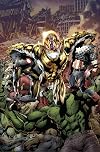
Horrible.
I read this when I heard the title of the new Avengers movie. Whedon has said that he would be giving Ultron a new origin, so it would deviate from this storyline. I hope it deviates all the way, because Age of Ultron is probably the worst comic book miniseries I've ever read.
I barely know where to start. It's an interesting idea, start the story off with Ultron having taken over the world, and the Avengers having lost. See how these characters cope with their loss, and the loss of show more their teammates. The "epic battle" to save the world already happened, and the good guys failed. It's a neat idea, and Ultron is an awesome villain, what with being able to insta-vaporize pretty much anyone. Unfortunately, Bendis completely squanders this idea, weaving a story that is so godawful that it's almost worth reading just to see the trainwreck unfold.
First of all, every issue is padded considerably. The first two issues, in which we establish the post-apocalyptic New York, has Captain America literally sitting in a corner being sad, and he doesn't start a plan until issue 3. This could have easily been one issue, or even the start of one issue. This trend continues through the series, 2 or 3 issues at a time could easily just be one.
Every character is a braindead version of a character you know and love. She-Hulk and Luke Cage, arguably two of the strongest heroes left alive, hatch a plan to basically go visit Ultron under the guise of bartering with him. And then do what, exactly? Well, master strategist Captain America's plan is for them to basically see, once they get there, if there is anything useful they can learn. Great plan. They die, obviously, leaving the team without super-strength.
They retreat to the Savage Land, which Ultron hasn't taken over for some reason, and come across other superheroes who... somehow, knew to come here. Then they hatch another plan. See, it turns out Ultron is actually in the future, and he's using Vision to take over the present time via time conduit or some shit. So they go to the future to defeat him. What? Why would he have any less protection in the future, when there is nothing but more time to build his Army? And you guys got your asses handed to you when you had 10x the number of superheroes, why the hell would you be any more equipped here? Great plan. They die, obviously, leaving the team without leadership.
So then Wolverine and Invisible Woman decide to go to the past to stop Ultron from ever coming into existence. So naturally they go tell a younger Hank Pym that he creates Ultron, in a scene reminiscent of Terminator 2 when Miles Dyson is told he's responsible for the destruction of humanity. Hank, like Miles, joins up with his time-traveling friends to stop this from ever happening. No, I'm actually just kidding about all of this, what happens is that Wolverine decides he needs to KILL Pym (of course) and Invisible Woman basically agrees, after mild protest.
So then they travel back to the present and discover that everything is different and now Tony Stark is evil and controls everything. Also Cable and Cyclops are one person, and Captain America and Nick Fury are one person? I don't know, it's bananas. Of course, they've now thoroughly altered the course of history, so literally everything that has happened, including the travel into the future to stop Ultron, is dropped on the floor. Tons and tons of plot threads and character arcs, vanished instantly.
Anyway, the new present sucks too, so they go back in time, and Wolverine tries to stop Wolverine from killing Pym. They decide to tell Pym after all, but tell Pym not to remember and to instead just put a fail-safe into Ultron so that he can be deleted at a later date, the exact date before Ultron takes over the world. This shit is fucking insane.
This entire story should have a three or four-issue miniseries, at best. Oh, by the way, are you wondering how many of the 10 terribly-written issues of "Age of Ultron" actually see an appearance by Ultron? Yeah, its one. The last one.
Seriously, fuck this miniseries, it's terrible. show less
I read this when I heard the title of the new Avengers movie. Whedon has said that he would be giving Ultron a new origin, so it would deviate from this storyline. I hope it deviates all the way, because Age of Ultron is probably the worst comic book miniseries I've ever read.
I barely know where to start. It's an interesting idea, start the story off with Ultron having taken over the world, and the Avengers having lost. See how these characters cope with their loss, and the loss of show more their teammates. The "epic battle" to save the world already happened, and the good guys failed. It's a neat idea, and Ultron is an awesome villain, what with being able to insta-vaporize pretty much anyone. Unfortunately, Bendis completely squanders this idea, weaving a story that is so godawful that it's almost worth reading just to see the trainwreck unfold.
First of all, every issue is padded considerably. The first two issues, in which we establish the post-apocalyptic New York, has Captain America literally sitting in a corner being sad, and he doesn't start a plan until issue 3. This could have easily been one issue, or even the start of one issue. This trend continues through the series, 2 or 3 issues at a time could easily just be one.
Every character is a braindead version of a character you know and love. She-Hulk and Luke Cage, arguably two of the strongest heroes left alive, hatch a plan to basically go visit Ultron under the guise of bartering with him. And then do what, exactly? Well, master strategist Captain America's plan is for them to basically see, once they get there, if there is anything useful they can learn. Great plan. They die, obviously, leaving the team without super-strength.
They retreat to the Savage Land, which Ultron hasn't taken over for some reason, and come across other superheroes who... somehow, knew to come here. Then they hatch another plan. See, it turns out Ultron is actually in the future, and he's using Vision to take over the present time via time conduit or some shit. So they go to the future to defeat him. What? Why would he have any less protection in the future, when there is nothing but more time to build his Army? And you guys got your asses handed to you when you had 10x the number of superheroes, why the hell would you be any more equipped here? Great plan. They die, obviously, leaving the team without leadership.
So then Wolverine and Invisible Woman decide to go to the past to stop Ultron from ever coming into existence. So naturally they go tell a younger Hank Pym that he creates Ultron, in a scene reminiscent of Terminator 2 when Miles Dyson is told he's responsible for the destruction of humanity. Hank, like Miles, joins up with his time-traveling friends to stop this from ever happening. No, I'm actually just kidding about all of this, what happens is that Wolverine decides he needs to KILL Pym (of course) and Invisible Woman basically agrees, after mild protest.
So then they travel back to the present and discover that everything is different and now Tony Stark is evil and controls everything. Also Cable and Cyclops are one person, and Captain America and Nick Fury are one person? I don't know, it's bananas. Of course, they've now thoroughly altered the course of history, so literally everything that has happened, including the travel into the future to stop Ultron, is dropped on the floor. Tons and tons of plot threads and character arcs, vanished instantly.
Anyway, the new present sucks too, so they go back in time, and Wolverine tries to stop Wolverine from killing Pym. They decide to tell Pym after all, but tell Pym not to remember and to instead just put a fail-safe into Ultron so that he can be deleted at a later date, the exact date before Ultron takes over the world. This shit is fucking insane.
This entire story should have a three or four-issue miniseries, at best. Oh, by the way, are you wondering how many of the 10 terribly-written issues of "Age of Ultron" actually see an appearance by Ultron? Yeah, its one. The last one.
Seriously, fuck this miniseries, it's terrible. show less
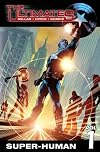
**trigger warnings for anti-woman violence. Because yes, this book is that classy.**
So, I'm kind of obsessed with The Avengers movie. And though I've long shied away from superhero comics, it seemed like maybe this was a good time to give them a shot. But where to start? I spent a good amount of time hunting online for some kind of guide to the Marvel universe. Finally, I found an article that seemed to be just what I was looking for -- a "if you loved The Avengers movie, try these show more comics..." sor of thing. It recommended this.
It was horribly, horribly wrong.
Okay, think what you want of Joss Whedon. But he is explicitly feminist. Sure, he doesn't get it right 100% of the time (who does?), but he's always trying. His dialogue is sharp, intelligence is respected rather than made the butt of jokes, and he does ensembles really well. That's what I was looking for in a comic, but that is not what this is.
You know, I actually mostly enjoyed this book while I was reading it, but the more time went by, the more I thought about it -- the less I liked it. Now I pretty much detest it. Let's start with the feminism, shall we? Not counting Captain America's elderly ex, there are two female characters in this book. Betty, who is (here), a self-centered bitch who thinks it's a compliment when The Hulk tries to rape her and kill her dinner partner, and Janet Pym, who starts out promising, but then evidently ends up making out with Captain America in front of photographers, prompting a psychotic rage from her insecure husband, who then maybe almost kills her at the end.
Awesome.
As for the smart, even though throughout this volume, people keep expressing supposed concern for Bruce Banner's tendency to Hulk out, the whole volume is basically a textbook pressure cooker for poor Bruce. And at no point does anyone ever stop and say, you know, maybe we should be nicer to Bruce. Take a little pressure off. Give him the occasional compliment. If for no other reason than if he gets angry he could kill us all/destroy the entire island of Manhattan/completely undermine everything we've been working for.
You know, I get the whole thing of portraying your "superheroes" as flawed characters, warts and all, but the only character I even liked at the end of this was Thor, who was pretty full-on awesome, all the time, even if he's maybe not really a god in this 'verse.
Anyway, I'm not at all interested in reading any more of this. Giving up on superhero comics a little longer. show less
So, I'm kind of obsessed with The Avengers movie. And though I've long shied away from superhero comics, it seemed like maybe this was a good time to give them a shot. But where to start? I spent a good amount of time hunting online for some kind of guide to the Marvel universe. Finally, I found an article that seemed to be just what I was looking for -- a "if you loved The Avengers movie, try these show more comics..." sor of thing. It recommended this.
It was horribly, horribly wrong.
Okay, think what you want of Joss Whedon. But he is explicitly feminist. Sure, he doesn't get it right 100% of the time (who does?), but he's always trying. His dialogue is sharp, intelligence is respected rather than made the butt of jokes, and he does ensembles really well. That's what I was looking for in a comic, but that is not what this is.
You know, I actually mostly enjoyed this book while I was reading it, but the more time went by, the more I thought about it -- the less I liked it. Now I pretty much detest it. Let's start with the feminism, shall we? Not counting Captain America's elderly ex, there are two female characters in this book. Betty, who is (here), a self-centered bitch who thinks it's a compliment when The Hulk tries to rape her and kill her dinner partner, and Janet Pym, who starts out promising, but then evidently ends up making out with Captain America in front of photographers, prompting a psychotic rage from her insecure husband, who then maybe almost kills her at the end.
Awesome.
As for the smart, even though throughout this volume, people keep expressing supposed concern for Bruce Banner's tendency to Hulk out, the whole volume is basically a textbook pressure cooker for poor Bruce. And at no point does anyone ever stop and say, you know, maybe we should be nicer to Bruce. Take a little pressure off. Give him the occasional compliment. If for no other reason than if he gets angry he could kill us all/destroy the entire island of Manhattan/completely undermine everything we've been working for.
You know, I get the whole thing of portraying your "superheroes" as flawed characters, warts and all, but the only character I even liked at the end of this was Thor, who was pretty full-on awesome, all the time, even if he's maybe not really a god in this 'verse.
Anyway, I'm not at all interested in reading any more of this. Giving up on superhero comics a little longer. show less
This is an event that didn't need to be an event. The first half is just apocalyptic porn, which isn't very illuminating for any character. The last half includes some action, but it also includes characters whose personalities seem off model, plots that are just dropped and unnecessary filler. This could have been a 2-3 issue story and would have been the stronger for it.
Lists
Awards


You May Also Like


Associated Authors
Statistics
- Works
- 100
- Also by
- 54
- Members
- 5,409
- Popularity
- #4,611
- Rating
- 3.8
- Reviews
- 127
- ISBNs
- 182
- Languages
- 9