
Ian Gibson (1) (1939–)
Author of Federico García Lorca: A Life
For other authors named Ian Gibson, see the disambiguation page.
About the Author
Image credit: Ian Gibson firmando un ejemplar en la Feria del Libro de Madrid de 2019. By AytoEru - Own work, CC BY-SA 4.0, https://commons.wikimedia.org/w/index.php?curid=79484266
Series
Works by Ian Gibson
El Hombre Que Detuvo a Garcia Lorca: Ramon Ruiz Alonso y La Muerte del Poeta (Spanish Edition) (2007) 15 copies
Vida, pasión y muerte de Federico García Lorca. 2 tomos. Prólogo de Antonio Muñoz Molina. (2003) 7 copies
Queipo de Llano: Sevilla, verano de 1936 (con las charlas radiofonicas completas) (Coleccion) (Spanish Edition) (1986) 5 copies
La fosa de Lorca / Lorca's Grave: Cronica de un desproposito / A Chronicle of Absurdity (Spanish Edition) (2010) 2 copies
La muerte de Garcia Lorca 1 copy
Muerte en Granada 1 copy
Tagged
Common Knowledge
- Birthdate
- 1939-04-21
- Gender
- male
- Education
- Trinity College, Dublin
- Occupations
- author
biographer - Awards and honors
- Fernando Lara Novel Award (2012)
- Short biography
- Ian Gibson (born 21 April 1939) is an Irish author and Hispanist known for his biographies of Antonio Machado, Salvador Dalí, Henry Spencer Ashbee, and particularly his work on Federico García Lorca, for which he won several awards, including the 1989 James Tait Black Memorial Prize for biography. His work, La represión nacionalista de Granada en 1936 y la muerte de Federico García Lorca (The nationalistic repression of Granada in 1936 and the death of Federico García Lorca) was banned in Spain under Franco.
Born into a Methodist Dublin family, he was educated at Newtown School in Waterford and graduated from Trinity College, Dublin. He became a professor of Spanish literature at Belfast and London universities before moving to Spain. His first novel, Viento del Sur (Wind of the South, 2001), written in Spanish, examines class, religion, family life, and public schools in British society through the fictitious autobiography of a character named John Hill, an English linguist and academic. It won favourable reviews in Spain.
Gibson has also worked in television on projects centering around his scholarly work in Spanish history, having served as a historical consultant and even acting in one historical drama.
He was granted a Spanish passport in 1984.
en.wikipedia.org/wiki/Ian_Gibson_(author - Nationality
- Ireland (birth)
Spain (1984) - Birthplace
- Dublin, Ireland
- Places of residence
- Alpujarras, Andalucia, Spain
Members
Reviews
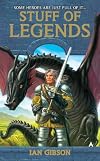
At first, when I opened STUFF OF LEGENDS and read the prologue, where Jordan the Red in the prime of his life topples the throne of an evil Witch Queen, and read, "The throne was magnificent, in an artisan-evil way...", I was delighted. It's so funny! And it pokes fun at the conventions of fantasy! I cracked the spine and settled in to read a book that I hoped would follow through on that promise, and actually be different than a conventional fantasy.
But here's the thing: STUFF OF LEGENDS is show more exactly like a conventional fantasy, except that it persistently mocks itself. Reading it is like going to see a big summer blockbuster, something that is heavy on the explosions and light on...everything else...with a snarky friend whose running commentary prevents you from enjoying a single moment of the movie. Gibson provides the movie, and the running commentary.
The aging hero of the novel, Jordan the Red, will instruct, "Don't ever say that it's too quiet, that's just asking for an ambush..." And then, lo and behold, shortly thereafter someone will observe that it's too quiet and the ambush will arrive on cue. But instead of being surprising or scary (like an ambush ought to be), it's a joke. And because that's the pattern, the gimmick, the entire plot of the entire novel is a joke. Most of the major turning points in the novel are like that, pulled straight out of "Derivative Fantasy Writing 101" (and then mercilessly mocked).
If that's not enough to totally rupture your suspension of disbelief, Gibson's got backups - he constantly makes observations like this one, about fishing with cricket lures: "crickets rarely went swimming with barbed metal piercings, not even rebellious teenage crickets." It's clever, witty, snappy, well phrased, but it also reminds you of rebellious pierced teenagers in the real world, which pops you right out of the alternate reality.
Heroes in Gibson's world aren't self-motivated adventurers. They're more like actors. They contract with a "talent agent" who buys villains from "Central Casting." The Central Casting villains are all designed with an Achilles Heel, the hero is well briefed about the Achilles Heel, and he's sent off to his epic battle. The problem is, the hero's adventures may be scripted and planned but they're not imaginary. So all the people who die along the way are really dead, helpless villagers and brave soldiers alike. Basically, the "talent agent" is a psychopathic murderer and the heroes are his henchmen.
Jordan the Red, the most successful hero of his day, eventually got tired of all the senseless killing and retired. And because of Jordan, we know right off the bat that the real villain of the novel is his talent agent, Glister Starmacher. So it's very frustrating that instead of finding, and eliminating, the real problem we get a novel where Jordan is more or less forced to do an encore. He's grey-haired, creaky, surly, and cynical...but he's not smart enough to pick a different kind of story, to set off in his own direction. Instead he plays his part. He's stoic, capable, clever, and he saves the day when Starmacher sets a plot in motion.
The whole world seems to be somehow enslaved to the laws of narrative. That's part of the "Don't say it's too quiet" thing. And the characters are, too. They can't break out of their roles. Jordan doesn't want to be a hero, but he can't help it. Eliott doesn't want to be a useless little brat, but he can't rise above his place. Cyral, the bard, wants to be a bard - he's the only one more or less content to serve his designated purpose.
At one point, the characters have the opportunity to destroy Central Casting. And I kept thinking: would someone at least point out that if they really want to save the day, they'd let it burn to the ground? But nobody does.
So, to summarize. Gibson has written a conventional fantasy, chock full of cheap plot twists that he telegraphs in advance (and a couple that are legitimately clever and surprising), peopled by characters who are sufficiently self-aware to point out every flaw, and language that interrupts the most persistent attempts to suspend disbelief. He creates real conflict, but fills the novel with an obvious - a very, very obvious - distraction. Even worse, he tells us in the first chapter how the novel will end, in case we were tempted to feel some anticipation.
I found STUFF OF LEGENDS infuriating. It's as close to a wallbanger as I've ever read - because this author is smart and writes well and he knows what he's doing (he tells us so, again and again) and yet he has nonetheless written a book it is almost impossible to enjoy. show less
But here's the thing: STUFF OF LEGENDS is show more exactly like a conventional fantasy, except that it persistently mocks itself. Reading it is like going to see a big summer blockbuster, something that is heavy on the explosions and light on...everything else...with a snarky friend whose running commentary prevents you from enjoying a single moment of the movie. Gibson provides the movie, and the running commentary.
The aging hero of the novel, Jordan the Red, will instruct, "Don't ever say that it's too quiet, that's just asking for an ambush..." And then, lo and behold, shortly thereafter someone will observe that it's too quiet and the ambush will arrive on cue. But instead of being surprising or scary (like an ambush ought to be), it's a joke. And because that's the pattern, the gimmick, the entire plot of the entire novel is a joke. Most of the major turning points in the novel are like that, pulled straight out of "Derivative Fantasy Writing 101" (and then mercilessly mocked).
If that's not enough to totally rupture your suspension of disbelief, Gibson's got backups - he constantly makes observations like this one, about fishing with cricket lures: "crickets rarely went swimming with barbed metal piercings, not even rebellious teenage crickets." It's clever, witty, snappy, well phrased, but it also reminds you of rebellious pierced teenagers in the real world, which pops you right out of the alternate reality.
Heroes in Gibson's world aren't self-motivated adventurers. They're more like actors. They contract with a "talent agent" who buys villains from "Central Casting." The Central Casting villains are all designed with an Achilles Heel, the hero is well briefed about the Achilles Heel, and he's sent off to his epic battle. The problem is, the hero's adventures may be scripted and planned but they're not imaginary. So all the people who die along the way are really dead, helpless villagers and brave soldiers alike. Basically, the "talent agent" is a psychopathic murderer and the heroes are his henchmen.
Jordan the Red, the most successful hero of his day, eventually got tired of all the senseless killing and retired. And because of Jordan, we know right off the bat that the real villain of the novel is his talent agent, Glister Starmacher. So it's very frustrating that instead of finding, and eliminating, the real problem we get a novel where Jordan is more or less forced to do an encore. He's grey-haired, creaky, surly, and cynical...but he's not smart enough to pick a different kind of story, to set off in his own direction. Instead he plays his part. He's stoic, capable, clever, and he saves the day when Starmacher sets a plot in motion.
The whole world seems to be somehow enslaved to the laws of narrative. That's part of the "Don't say it's too quiet" thing. And the characters are, too. They can't break out of their roles. Jordan doesn't want to be a hero, but he can't help it. Eliott doesn't want to be a useless little brat, but he can't rise above his place. Cyral, the bard, wants to be a bard - he's the only one more or less content to serve his designated purpose.
At one point, the characters have the opportunity to destroy Central Casting. And I kept thinking: would someone at least point out that if they really want to save the day, they'd let it burn to the ground? But nobody does.
So, to summarize. Gibson has written a conventional fantasy, chock full of cheap plot twists that he telegraphs in advance (and a couple that are legitimately clever and surprising), peopled by characters who are sufficiently self-aware to point out every flaw, and language that interrupts the most persistent attempts to suspend disbelief. He creates real conflict, but fills the novel with an obvious - a very, very obvious - distraction. Even worse, he tells us in the first chapter how the novel will end, in case we were tempted to feel some anticipation.
I found STUFF OF LEGENDS infuriating. It's as close to a wallbanger as I've ever read - because this author is smart and writes well and he knows what he's doing (he tells us so, again and again) and yet he has nonetheless written a book it is almost impossible to enjoy. show less
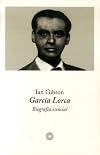
I went to the library the other day looking for a short biography of Federico García Lorca and walked out happy with this book in hand. Who better to introduce me to the man and his work than Ian Gibson, one of the preeminent García Lorca scholars of all time, a man who has published massive tomes on the life and death of the Granadan poet? My worry when looking for a brief overview of his life and work was that if I chose a mediocre source of information, the events of García Lorca's show more life and their importance might have been distorted and corrupted; but If anyone knew how to condense it all into 100 pages, it would be Gibson.
I was satisfied with this introduction. It gave me a synopsis of the author's life and work and managed to mix in more compelling anecdotes than I thought would be possible in such a short summary of the life of a prolific creator. I learned that Lorca's family on his father's side was full of avid readers especially fond of Victor Hugo, and that Hugo's complete works may well have been Lorca's introduction to the world of literature. I learned that Lorca was a musician before he was a writer, and that the death of his childhood music teacher, Antonio Segura Mesa, was fundamental in his transition from one art form to the other. I learned that he was moved by the poetry of Rubén Darío (who wasn't) and found in the Nicaraguan poet a kindred spirit during years during which he was coming to terms with the personal solitude that went hand in hand with being gay in early 20th century Spain. I learned about his years as a young adult in the famous Residencia de Estudiantes in Madrid, where he listened to lectures given by the best and brightest intellectuals in Spain and the western world, and made friends with many classmates who later became famous in their own right. I learned about his friendship with Salvador Dalí and how their relationship affected his art and his life. Gibson doesn't pry much into Lorca's homosexuality, so maybe there were some things I didn't learn about his relationship with Dalí and other men that may have been more than friends; but he doesn't deny or ignore it either. He certainly makes clear that Lorca's sexuality contributed to his strong identification with other marginalized people such as gypsies and American blacks, people about whom he wrote some of his most compelling verses. As the book continues, Lorca's works start coming one after another, and I learned about each work in the context of an increasingly cosmopolitan life. Then the war and Lorca's return to Granada and his death. One anecdote that I found particularly jarring is that Lorca's death came five years to the day after he finished writing a play entitled Así que pasen cinco años (When Five Years Pass).
In about two hours I learned quite a lot about an author whose books I'm preparing to read. I was glad to have Gibson as a guide and I trust his judgement in pruning down the wealth of information available about Lorca into such a short biography. Some day I'd like to read his more extensive works about Lorca's life and death. For now, though, I feel ready to move on to the books themselves. Actually, I've already finished Lorca's first published book, Impresiones y paisajes, which introduced me to Spain as seen through the eyes of an erudite young man leaving his Andalusian home to travel around his country for the first time. show less
I was satisfied with this introduction. It gave me a synopsis of the author's life and work and managed to mix in more compelling anecdotes than I thought would be possible in such a short summary of the life of a prolific creator. I learned that Lorca's family on his father's side was full of avid readers especially fond of Victor Hugo, and that Hugo's complete works may well have been Lorca's introduction to the world of literature. I learned that Lorca was a musician before he was a writer, and that the death of his childhood music teacher, Antonio Segura Mesa, was fundamental in his transition from one art form to the other. I learned that he was moved by the poetry of Rubén Darío (who wasn't) and found in the Nicaraguan poet a kindred spirit during years during which he was coming to terms with the personal solitude that went hand in hand with being gay in early 20th century Spain. I learned about his years as a young adult in the famous Residencia de Estudiantes in Madrid, where he listened to lectures given by the best and brightest intellectuals in Spain and the western world, and made friends with many classmates who later became famous in their own right. I learned about his friendship with Salvador Dalí and how their relationship affected his art and his life. Gibson doesn't pry much into Lorca's homosexuality, so maybe there were some things I didn't learn about his relationship with Dalí and other men that may have been more than friends; but he doesn't deny or ignore it either. He certainly makes clear that Lorca's sexuality contributed to his strong identification with other marginalized people such as gypsies and American blacks, people about whom he wrote some of his most compelling verses. As the book continues, Lorca's works start coming one after another, and I learned about each work in the context of an increasingly cosmopolitan life. Then the war and Lorca's return to Granada and his death. One anecdote that I found particularly jarring is that Lorca's death came five years to the day after he finished writing a play entitled Así que pasen cinco años (When Five Years Pass).
In about two hours I learned quite a lot about an author whose books I'm preparing to read. I was glad to have Gibson as a guide and I trust his judgement in pruning down the wealth of information available about Lorca into such a short biography. Some day I'd like to read his more extensive works about Lorca's life and death. For now, though, I feel ready to move on to the books themselves. Actually, I've already finished Lorca's first published book, Impresiones y paisajes, which introduced me to Spain as seen through the eyes of an erudite young man leaving his Andalusian home to travel around his country for the first time. show less

By all accounts Ian Gibson has taken apart a legacy of secrecy of which the revelation of its known identity must be sourced only in diary entries, historical records, authored artefacts, and limited correspondance and study, to have a crack at piecing together a case for the authorship of My Secret Life (A whopping 4,200 pages worth of debauchery) attributed to Henry Spencer Ashbee. Henry Spencer Ashbee was a wealthy Victorian business man who publicly was known as a scholar of Cervantes, show more travel writer and a bibliophile. His private life consisted of amassing an enormous collection of 'obscene' literature and penning three exhaustive bibliographies under the pseudonym Pisanus Fraxi on banned and erotic/lewd books from around the world.
Part One of The Erotomaniac sets up the inquisition of Part Two, which is vitally important. A thorough examination of Ashbee's diaries, acquaintances (Fellow bibliophiles, authors, publishers), friends, family (Particularly his son), and travels. Ian does so in order for the reader to grasp the sheer duality of Ashbee's double-life. It all concludes in a very Victorian scandal and reprise of Ashbee's identity as Pisanus Fraxi, which bases much of its testimony on Ashbee's will, which is featured at the end of the book in full.
Part Two is where Ian is heading, and through some quite skilful dissection between what is known of Henry Spencer Ashbee (Life, interests, references, dates, travels) and the penmanship of the fictional editor of the My Secret Life; Walter.
At first I wasn't sure what to expect as I followed Ian's extensively referenced mapping out of this seemingly ordinary Victorian businessman, but then when I delved into the second part, my own curiosity kept me chasing the mystery until the end. I thought Ian did a good job of researching particularly difficult material, i.e. diary entries that were at times infrequently entered and unrevealing, missing years, and a life that obviously wanted to be kept separate from the one recorded for the public.
A few missing links I would have chosen myself to reveal, such as suggesting that the mysterious scandal that befell family life for Ashbee might have been attributed to the work of My Secret Life (If discovered accidentally), and also the argument by Ian that My Secret Life was a work of fiction, which I think stemmed from a previous scholar's view that it was fact, I would ascertain that it was both - having felt that Ian might have looked at Ashbee's life too studiously at times, whereas I feel that Ashbee, like so many who live a duality, can live out their desires without a single soul ever knowing, or only those close in the fold ever knowing. Lastly some speculation on Ian's behalf that the author of My Secret Life had little actual knowledge of his expeditions - here the examples Ian gives, I would argue otherwise, as poetic license or those intrinsically immersed in sexual exploration would easily reach the same observatory tones when approaching experience as descriptive prose.
However, all said and done, The Erotomaniac is comprehensive enough to provide the reader with what must of been arduous research at times presented in a well thought out fashion about a man who is a curio of our times, living in a period of horrific conservatism and prudishness; cuckolded by fantasies that could only be nurtured in secret. show less
Part One of The Erotomaniac sets up the inquisition of Part Two, which is vitally important. A thorough examination of Ashbee's diaries, acquaintances (Fellow bibliophiles, authors, publishers), friends, family (Particularly his son), and travels. Ian does so in order for the reader to grasp the sheer duality of Ashbee's double-life. It all concludes in a very Victorian scandal and reprise of Ashbee's identity as Pisanus Fraxi, which bases much of its testimony on Ashbee's will, which is featured at the end of the book in full.
Part Two is where Ian is heading, and through some quite skilful dissection between what is known of Henry Spencer Ashbee (Life, interests, references, dates, travels) and the penmanship of the fictional editor of the My Secret Life; Walter.
At first I wasn't sure what to expect as I followed Ian's extensively referenced mapping out of this seemingly ordinary Victorian businessman, but then when I delved into the second part, my own curiosity kept me chasing the mystery until the end. I thought Ian did a good job of researching particularly difficult material, i.e. diary entries that were at times infrequently entered and unrevealing, missing years, and a life that obviously wanted to be kept separate from the one recorded for the public.
A few missing links I would have chosen myself to reveal, such as suggesting that the mysterious scandal that befell family life for Ashbee might have been attributed to the work of My Secret Life (If discovered accidentally), and also the argument by Ian that My Secret Life was a work of fiction, which I think stemmed from a previous scholar's view that it was fact, I would ascertain that it was both - having felt that Ian might have looked at Ashbee's life too studiously at times, whereas I feel that Ashbee, like so many who live a duality, can live out their desires without a single soul ever knowing, or only those close in the fold ever knowing. Lastly some speculation on Ian's behalf that the author of My Secret Life had little actual knowledge of his expeditions - here the examples Ian gives, I would argue otherwise, as poetic license or those intrinsically immersed in sexual exploration would easily reach the same observatory tones when approaching experience as descriptive prose.
However, all said and done, The Erotomaniac is comprehensive enough to provide the reader with what must of been arduous research at times presented in a well thought out fashion about a man who is a curio of our times, living in a period of horrific conservatism and prudishness; cuckolded by fantasies that could only be nurtured in secret. show less

La honestidad de la obra queda patente desde su título. Frente a los que quieren explicar todo porque probablemente sepan nada o muy poco, Gibson se plantea “cómo fue” lo de Paracuellos, se interroga sobre los asesinatos que tuvieron lugar en aquel pueblo de Madrid en 1937. Lejos de cualquier partidismo, pese a sus simpatías socialistas, intenta esclarecer responsabilidades por comisión u omisión de los dirigentes políticos y funcionarios de aquella época.
Profusamente show more documentado: acude a testimonios directos, a los documentos de la Causa General, a distintas obras que abordaron la cuestión tras la Guerra Civil, a publicaciones en prensa, a archivos de instituciones internacionales,el Diario de Koltsov… Quizá el lector se sienta defraudado tras leer la última página pues percibe que, si bien se conoce lo que sucedió, no se sabe a ciencia cierta el alcance de la responsabilidad de los que participaron en la masacre pues muchos debieron ser cómplices para que se llevase a término. Ni siquiera casi cuarenta años depures de publicada la obra se conoce mucho más.
A destacar la transcripción de la entrevista (13 de septiembre de 1982) que realizó el autor a Santiago Carrillo; donde queda de manifiesto como el líder comunista se exculpa, oculta información y, en ocasiones, claramente miente (“… sinceramente no sabía que existiera Paracuellos”); aunque con algún alarde de sinceridad (“… no puedo decir que, si eso pasó siendo yo consejero, sea totalmente inocente de lo que pasó.”). Frente a tanta infamia Gibson dedica todo un capítulo al líder anarquista Melchor Rodríguez que con su valiente y decidida actitud fue capaz de parar las sacas masivas de presos y el linchamiento de otros. Ante este personaje queda más patente la negligencia, dejadez, connivencia y crueldad de muchos mandos políticos y militares.
Las conclusiones, desgranadas en el capítulo responsabilidades, aparecen mesuradas y certeras en igual medida. Si Gibson fuese tan buen escritor como documentalista el libro podría haber sido muy bueno. show less
Profusamente show more documentado: acude a testimonios directos, a los documentos de la Causa General, a distintas obras que abordaron la cuestión tras la Guerra Civil, a publicaciones en prensa, a archivos de instituciones internacionales,el Diario de Koltsov… Quizá el lector se sienta defraudado tras leer la última página pues percibe que, si bien se conoce lo que sucedió, no se sabe a ciencia cierta el alcance de la responsabilidad de los que participaron en la masacre pues muchos debieron ser cómplices para que se llevase a término. Ni siquiera casi cuarenta años depures de publicada la obra se conoce mucho más.
A destacar la transcripción de la entrevista (13 de septiembre de 1982) que realizó el autor a Santiago Carrillo; donde queda de manifiesto como el líder comunista se exculpa, oculta información y, en ocasiones, claramente miente (“… sinceramente no sabía que existiera Paracuellos”); aunque con algún alarde de sinceridad (“… no puedo decir que, si eso pasó siendo yo consejero, sea totalmente inocente de lo que pasó.”). Frente a tanta infamia Gibson dedica todo un capítulo al líder anarquista Melchor Rodríguez que con su valiente y decidida actitud fue capaz de parar las sacas masivas de presos y el linchamiento de otros. Ante este personaje queda más patente la negligencia, dejadez, connivencia y crueldad de muchos mandos políticos y militares.
Las conclusiones, desgranadas en el capítulo responsabilidades, aparecen mesuradas y certeras en igual medida. Si Gibson fuese tan buen escritor como documentalista el libro podría haber sido muy bueno. show less
Lists
Awards


You May Also Like


Statistics
- Works
- 65
- Members
- 1,394
- Popularity
- #18,439
- Rating
- 3.7
- Reviews
- 26
- ISBNs
- 264
- Languages
- 11


