
Chris Pavone
Author of The Expats
About the Author
Chris Pavone graduated from Cornell University. He spent nearly two decades working as an editor, primarily at Clarkson Potter where he worked on nonfiction titles about several topics including interior design, dogs, cocktails, and food. In the late 1990's, he wrote a book entitled The Wine Log. show more His first novel, The Expats, was published in 2012 and won the 2013 Edgar Award and the 2013 Anthony Award for Best First Novel. His second novel, The Accident, was published in 2014. (Bowker Author Biography) show less
Series
Works by Chris Pavone
Le Portier 2 copies
O manuscrito 1 copy
Il manoscritto 1 copy
L'ultimo turno 1 copy
Votre cerveau vous mène en bateau !: 190 biais cognitifs auxquels vous ne pouvez échapper (2023) 1 copy
Mother of Deception 1 copy
The First Law 1 copy
The Alchemist 1 copy
Tagged
Common Knowledge
- Canonical name
- Pavone, Chris
- Birthdate
- 1968
- Gender
- male
- Occupations
- editor
author - Nationality
- USA
- Birthplace
- New York, New York, USA
- Places of residence
- New York, New York, USA
- Associated Place (for map)
- New York, New York, USA
Members
Reviews
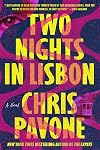
The Publisher Says: You think you know a person . . .
Ariel Pryce wakes up in Lisbon, alone. Her husband is gone—no warning, no note, not answering his phone. Something is wrong.
She starts with hotel security, then the police, then the American embassy, at each confronting questions she can’t fully answer: What exactly is John doing in Lisbon? Why would he drag her along on his business trip? Who would want to harm him? And why does Ariel know so little about her new—much show more younger—husband?
The clock is ticking. Ariel is increasingly frustrated and desperate, running out of time, and the one person in the world who can help is the one person she least wants to ask.
With sparkling prose and razor-sharp insights, bestselling author Chris Pavone delivers a stunning and sophisticated international thriller that will linger long after the surprising final page.
I RECEIVED A DRC FROM THE PUBLISHER VIA NETGALLEY. THANK YOU.
My Review: Unreliable narrator tells unbelievable story with murky stakes attached to its outcome. And here I am giving it four stars.
Doesn't make sense, does it. Or does it....
What Author Pavone does is set the reader up for something from the get-go. Unlike many thriller writers, that "something" isn't glaringly obvious. What sets this thriller in motion is an older woman married to a handsome younger man. Who ups and disappears from their hotel room on an international trip.
Prepare the violins, right? Welllll...yes but not for her, as you'll see. Her fear at this catastrophe seems...performative...to the authorities who look at her late-middle-aged self, see the muffin she's so recently married, and all but say out loud, "well, little lady, what exactly can you expect? Men do stray...and he's been gone less than a day. Give him time to sober up and pay the, um, lady. He'll be back." But she's not having it.
Why is she not having it? It does, after all, make a grim kind of sense. Before their short marriage, she didn't know her husband well...he's a relative stranger, so why is it she's carrying on so?
Wheels within wheels, and here we are rollin' along beside Ariel...has that name, one the lady chose for herself, made its real force felt in you yet?...as the story's necessary force carries us along, stopping for some info-dumpy conversations/monologues/set pieces. It's not like there's any point where Author Pavone sticks it to us, the sad little readers wondering what the living hell possessed this hard-edged survivor to do something so stupid as this mishegas results from. And both parties are hard-edged survivors. So what's the situation underlying the story? It's a thriller! You *know* there is one.
The phrase "ripped-from-the-headlines" is a cliche to my generation of Movie of the Week veterans. It got a bad name for shoddy, indifferent storytelling. But it never needed to be that way, did it. What happens that makes the newspapers is a joyous rioting street party of story plots. Read this one and find out what the right dance partner can give.
I can't give the book all five stars because, despite the clarity of storytelling purpose that snaps into focus as the ending twists us up, there is a prolixity of speechifyin' that really grated on me. (I'm lookin' at you, Griffiths.) And the Epilogue is just a shade over the top I most wanted not to go over. But the story is a deeply, involvingly, satisfyingly real one, and I encourage y'all to read it. show less
Ariel Pryce wakes up in Lisbon, alone. Her husband is gone—no warning, no note, not answering his phone. Something is wrong.
She starts with hotel security, then the police, then the American embassy, at each confronting questions she can’t fully answer: What exactly is John doing in Lisbon? Why would he drag her along on his business trip? Who would want to harm him? And why does Ariel know so little about her new—much show more younger—husband?
The clock is ticking. Ariel is increasingly frustrated and desperate, running out of time, and the one person in the world who can help is the one person she least wants to ask.
With sparkling prose and razor-sharp insights, bestselling author Chris Pavone delivers a stunning and sophisticated international thriller that will linger long after the surprising final page.
I RECEIVED A DRC FROM THE PUBLISHER VIA NETGALLEY. THANK YOU.
My Review: Unreliable narrator tells unbelievable story with murky stakes attached to its outcome. And here I am giving it four stars.
Doesn't make sense, does it. Or does it....
What Author Pavone does is set the reader up for something from the get-go. Unlike many thriller writers, that "something" isn't glaringly obvious. What sets this thriller in motion is an older woman married to a handsome younger man. Who ups and disappears from their hotel room on an international trip.
Prepare the violins, right? Welllll...yes but not for her, as you'll see. Her fear at this catastrophe seems...performative...to the authorities who look at her late-middle-aged self, see the muffin she's so recently married, and all but say out loud, "well, little lady, what exactly can you expect? Men do stray...and he's been gone less than a day. Give him time to sober up and pay the, um, lady. He'll be back." But she's not having it.
Why is she not having it? It does, after all, make a grim kind of sense. Before their short marriage, she didn't know her husband well...he's a relative stranger, so why is it she's carrying on so?
Wheels within wheels, and here we are rollin' along beside Ariel...has that name, one the lady chose for herself, made its real force felt in you yet?...as the story's necessary force carries us along, stopping for some info-dumpy conversations/monologues/set pieces. It's not like there's any point where Author Pavone sticks it to us, the sad little readers wondering what the living hell possessed this hard-edged survivor to do something so stupid as this mishegas results from. And both parties are hard-edged survivors. So what's the situation underlying the story? It's a thriller! You *know* there is one.
The phrase "ripped-from-the-headlines" is a cliche to my generation of Movie of the Week veterans. It got a bad name for shoddy, indifferent storytelling. But it never needed to be that way, did it. What happens that makes the newspapers is a joyous rioting street party of story plots. Read this one and find out what the right dance partner can give.
I can't give the book all five stars because, despite the clarity of storytelling purpose that snaps into focus as the ending twists us up, there is a prolixity of speechifyin' that really grated on me. (I'm lookin' at you, Griffiths.) And the Epilogue is just a shade over the top I most wanted not to go over. But the story is a deeply, involvingly, satisfyingly real one, and I encourage y'all to read it. show less

This thriller set in Lisbon, Portugal has an incredible amount of twists. It begins when Ariel Pryce wakes up in Portugal to find her new (second) husband, John Wright, missing. Eventually she receives a kidnap ransom demand for a huge amount of money she doesn’t have, and the local police and the CIA get involved.
As the story weaves back and forth in time, secrets, lies, and a “Me Too” plot unfold. Ariel is apparently quite attractive, and as a result, has suffered a lifetime of show more sexual harassment, combined with the disbelief and accusations (e.g., “you must have asked for it”) that inevitably accompany such incidents. Ariel, we learn, does want to be attractive, but just “not to every stray lecher who honks his truck horn at her, ogles her at the supermarket checkout, propositions her from a secluded corner of a dark street, every catcall a blatant reminder of how vulnerable she is.” (Any man could be threatening, she muses at one point: “All it took was meanness.”)
Pavone adds a number of interesting themes to the story, including the venality and immorality of the [never named] American President; the way rich men stay rich through a system rigged in their favor; the way flaunting their wealth is one way they took what they wanted as an entertaining type of challenge; the acquiescence of women to the physical, psychological, and sociological demands of men; and the superficial lives of the rich and the unending quest of women in upper social circles to remain there, inter alia. For example, in one biting observation, Pavone writes:
“Ariel had already given up manicures and pedicures and facials, the relentless exercise and constant starvation and continuous hydration, the makeup and the jewelry, the form-fitting jeans and short skirts and shorter shorts, the low-cut blouses and side-boob dresses, the complex time-consuming enterprise of constantly maximizing her physical attractiveness, her sexiness, the incessant effort of attracting attention - look at me, please, please look at me.”
Pavone manages to explore all of these themes in a tension-building narrative that has one surprise after another.
This book is not just a good page-turner but carries socially valuable messages as well. show less
As the story weaves back and forth in time, secrets, lies, and a “Me Too” plot unfold. Ariel is apparently quite attractive, and as a result, has suffered a lifetime of show more sexual harassment, combined with the disbelief and accusations (e.g., “you must have asked for it”) that inevitably accompany such incidents. Ariel, we learn, does want to be attractive, but just “not to every stray lecher who honks his truck horn at her, ogles her at the supermarket checkout, propositions her from a secluded corner of a dark street, every catcall a blatant reminder of how vulnerable she is.” (Any man could be threatening, she muses at one point: “All it took was meanness.”)
Pavone adds a number of interesting themes to the story, including the venality and immorality of the [never named] American President; the way rich men stay rich through a system rigged in their favor; the way flaunting their wealth is one way they took what they wanted as an entertaining type of challenge; the acquiescence of women to the physical, psychological, and sociological demands of men; and the superficial lives of the rich and the unending quest of women in upper social circles to remain there, inter alia. For example, in one biting observation, Pavone writes:
“Ariel had already given up manicures and pedicures and facials, the relentless exercise and constant starvation and continuous hydration, the makeup and the jewelry, the form-fitting jeans and short skirts and shorter shorts, the low-cut blouses and side-boob dresses, the complex time-consuming enterprise of constantly maximizing her physical attractiveness, her sexiness, the incessant effort of attracting attention - look at me, please, please look at me.”
Pavone manages to explore all of these themes in a tension-building narrative that has one surprise after another.
This book is not just a good page-turner but carries socially valuable messages as well. show less
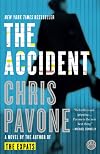
Chris Pavone is maybe one of the best writers active today. Bar none. He knows how to use the language; he knows how to structure a story; he knows how to draw the reader in, feeding bits of information in such a way as to keep the reader engaged and involved in the story.
The story involves a manuscript that lands on a literary agent's desk. The manuscript details the treachery that has been the foundation of the world's largest media conglomerate. The only thing more potentially earth show more shattering than the book is the extent to which the head of that conglomerate will go to to prevent the book from being published.
Pavone creates characters that are fully authentic. Action scenes are not overblown, and a lot of the "action" is implied, rather than described. Pavone has the good taste and confidence in the reader's abilities to picture events for themselves to smoothly, articulately, build up to something, then let's the reader's imagination take over.
The plot is intricate, and clues to the nature of the story and the people in it are parsed out carefully. This is a book you have to read closely and carefully, lest you miss clues to everyone's identity, background, and intentions. And even if you (think you) have it all figured out, you still want to read the story just to see if you are right.
And I can guarantee you that there will be at least one surprise, at least one time when you will realize that you made a mistake somewhere. This is about as close to a perfect suspense story as any I have read. show less
The story involves a manuscript that lands on a literary agent's desk. The manuscript details the treachery that has been the foundation of the world's largest media conglomerate. The only thing more potentially earth show more shattering than the book is the extent to which the head of that conglomerate will go to to prevent the book from being published.
Pavone creates characters that are fully authentic. Action scenes are not overblown, and a lot of the "action" is implied, rather than described. Pavone has the good taste and confidence in the reader's abilities to picture events for themselves to smoothly, articulately, build up to something, then let's the reader's imagination take over.
The plot is intricate, and clues to the nature of the story and the people in it are parsed out carefully. This is a book you have to read closely and carefully, lest you miss clues to everyone's identity, background, and intentions. And even if you (think you) have it all figured out, you still want to read the story just to see if you are right.
And I can guarantee you that there will be at least one surprise, at least one time when you will realize that you made a mistake somewhere. This is about as close to a perfect suspense story as any I have read. show less

Most of this story unfolding over a single day takes place in and around a luxury apartment building on the Upper West Side in New York City called the Bohemia. As the hours tick by, the suspense builds incrementally. The chapters alternate mainly among three characters - the front doorman, Chicky Diaz, and two of the residents: Emily Longworth in 11-C-D (a double penthouse) and Julian Sonnenberg in 2A (a decidedly lesser accommodation).
Emily’s husband Whit had, as Emily described it, show more “nearly incomprehensible wealth.” While Emily felt an intellectual guilt about it, it didn’t take her long to get accustomed to its benefits - the luxurious apartment, expensive meals, chauffeured cars, private planes, clothes, jewelry, and even high-end linens from all the best places. Cost was no object. The purchase price of their apartment, for example, was $32 million before all the costly renovations, and yet that amount represented perhaps only three percent of Whit's net worth.
At the same time, however, as Emily got to know Whit more, she became increasingly repelled by his unsavory business practices; lack of compassion for those with less - especially if they were not white heterosexual men; and an increasing desire to hurt Emily during sex. Emily tried to avoid being near him.
Julian Sonnenberg, the owner of Apartment 2A, was also unhappy. He was starting to feel his age (50) and “felt himself becoming irrelevant” to his wife, to his kids, his business partner, and to his career, especially since he was losing a lot of money.
Chicky knew all the residents, most of their habits, and even many of their secrets. He loved his job; he had worked at the Bohemia for 28 years. The residents couldn't imagine the place without Chicky. But he too had mounting problems. He found that he had to pretend to be nice more than he used to, especially in response to the classist treatment of him by of some of the wealthy residents. And he was lonely; his wife Tiffani recently died of lymphoma, and left him with “two hundred grand in bills that were at various stages of unpaid or disputed or unreimbursed or what-the-fuck-ever. The processes were circular and the paperwork impenetrable.” He had college tuition to pay for his girls in excess of the financial aid and loans they had. Chicky also owed thousands to his landlord in back rent and his credit cards were maxed out. He now even owed money to a loan shark. The world he occupied, with its lack of connections, resources, and a way to climb out of widening downward spirals that sucked in the poor, was a galaxy away from the privilege and excess of those he interacted with every day in the same building.
Over the course of the day, we learn the specific ways in which each of the characters obsesses about money: either not enough to live on, or too much to feel comfortable about having, or not enough to have more than anyone else, along with the superficial sense of superiority that status confers. They each take irrevocable steps to escape their situations that have profound consequences.
Meanwhile, when the sun goes down, angry protesters and counterprotestors (after the NYPD fatally shot yet another Black man) are heading toward the Upper West Side, and pose dangers for the Bohemia residents. The tension ramps up with the book metamorphosing into the kind of thriller with which Pavone’s audience is familiar. A number of twists in a whirlwind denouement lead to both tragedy and redemption. The ending seemed like a riff on the end of the movie “Chinatown.”
Evaluation: The author cleverly limns the inequality of New York City by focusing on a single place in which he can juxtapose stories of people with radically different situations in life. This nuanced character study/sociological treatise/thriller could stand as an update of Tom Wolfe's 1987 novel, The Bonfire of the Vanities. It is a great choice for book clubs, with numerous themes and topics to analyze. show less
Emily’s husband Whit had, as Emily described it, show more “nearly incomprehensible wealth.” While Emily felt an intellectual guilt about it, it didn’t take her long to get accustomed to its benefits - the luxurious apartment, expensive meals, chauffeured cars, private planes, clothes, jewelry, and even high-end linens from all the best places. Cost was no object. The purchase price of their apartment, for example, was $32 million before all the costly renovations, and yet that amount represented perhaps only three percent of Whit's net worth.
At the same time, however, as Emily got to know Whit more, she became increasingly repelled by his unsavory business practices; lack of compassion for those with less - especially if they were not white heterosexual men; and an increasing desire to hurt Emily during sex. Emily tried to avoid being near him.
Julian Sonnenberg, the owner of Apartment 2A, was also unhappy. He was starting to feel his age (50) and “felt himself becoming irrelevant” to his wife, to his kids, his business partner, and to his career, especially since he was losing a lot of money.
Chicky knew all the residents, most of their habits, and even many of their secrets. He loved his job; he had worked at the Bohemia for 28 years. The residents couldn't imagine the place without Chicky. But he too had mounting problems. He found that he had to pretend to be nice more than he used to, especially in response to the classist treatment of him by of some of the wealthy residents. And he was lonely; his wife Tiffani recently died of lymphoma, and left him with “two hundred grand in bills that were at various stages of unpaid or disputed or unreimbursed or what-the-fuck-ever. The processes were circular and the paperwork impenetrable.” He had college tuition to pay for his girls in excess of the financial aid and loans they had. Chicky also owed thousands to his landlord in back rent and his credit cards were maxed out. He now even owed money to a loan shark. The world he occupied, with its lack of connections, resources, and a way to climb out of widening downward spirals that sucked in the poor, was a galaxy away from the privilege and excess of those he interacted with every day in the same building.
Over the course of the day, we learn the specific ways in which each of the characters obsesses about money: either not enough to live on, or too much to feel comfortable about having, or not enough to have more than anyone else, along with the superficial sense of superiority that status confers. They each take irrevocable steps to escape their situations that have profound consequences.
Meanwhile, when the sun goes down, angry protesters and counterprotestors (after the NYPD fatally shot yet another Black man) are heading toward the Upper West Side, and pose dangers for the Bohemia residents. The tension ramps up with the book metamorphosing into the kind of thriller with which Pavone’s audience is familiar. A number of twists in a whirlwind denouement lead to both tragedy and redemption. The ending seemed like a riff on the end of the movie “Chinatown.”
Evaluation: The author cleverly limns the inequality of New York City by focusing on a single place in which he can juxtapose stories of people with radically different situations in life. This nuanced character study/sociological treatise/thriller could stand as an update of Tom Wolfe's 1987 novel, The Bonfire of the Vanities. It is a great choice for book clubs, with numerous themes and topics to analyze. show less
Lists
Awards


You May Also Like


Statistics
- Works
- 23
- Members
- 4,601
- Popularity
- #5,471
- Rating
- 3.6
- Reviews
- 396
- ISBNs
- 151
- Languages
- 10
- Favorited
- 1

