
Neil Peart (1952–2020)
Author of Ghost Rider: Travels on the Healing Road
About the Author
Neil Peart is an international bestselling and award-nominated author, and for thirty years, the Iyricist and Hall of Fame drummer for the legendary band Rush
Image credit: Matt Becker
Works by Neil Peart
Modern Drummer Legends: Rush's Neil Peart - An Anthology of Neil's Modern Drummer Cover Stories (2020) 6 copies
Rush Deluxe Anthology 3 copies
Associated Works
Tagged
Common Knowledge
- Canonical name
- Peart, Neil
- Legal name
- Peart, Neil Ellwood
- Birthdate
- 1952-09-12
- Date of death
- 2020-01-07
- Gender
- male
- Occupations
- musician
songwriter
music producer
author
drummer - Organizations
- Rush
- Awards and honors
- Order of Canada (Officer ∙ 1996)
Canadian Songwriter Hall of Fame - Relationships
- Nuttall, Carrie (second wife)
Rush (band) - Nationality
- Canada
- Birthplace
- Hamilton, Ontario, Canada
- Places of residence
- Port Dalhousie, Ontario, Canada
Laurentian Mountains, Quebec, Canada
Hagersville, Ontario, Canada
St. Catharines, Ontario, Canada
Toronto, Ontario, Canada - Place of death
- Santa Monica, California, USA
- Associated Place (for map)
- Ontario, Canada
Members
Reviews

The late, great Rush drummer Neil Peart's account of his experiences during the band's thirtieth anniversary ("R30") tour in 2004, during which he traveled between venues by motorcycle, racking up more than 20,000 miles over the course of the tour. (This is the fourth book he wrote about music and motorcycles, but the first one I've read.)
It's full of little details of the trip (including very mundane ones), passing thoughts, stories about various people he knew (although less about his show more bandmates than you might expect), facts and histories about some of the more interesting places he visited, etc. Also an awful lot of him looking back on the journal he kept and seeing that, at the end of the day, he'd written something along the lines of, "This was such a full day while it was happening, but it's all slipping from my mind and I'm frustrated that I can't get it down in words." (Which, y'know, relatable, even if it's not exactly literarily gripping.)
Most of this stuff isn't especially compelling in itself, but I tend to find that there's something about this kind of real-life day-by-day accounting of someone's experiences that holds my attention unexpectedly well even when the things they're talking about aren't necessarily all that exciting, and that was mostly true of this one, too. Plus, it was really interesting to get a look at the perspective from the other side of the stage, so to speak, to get a feeling of what it's like for a touring musician for whom playing is simply his job. A rewarding and interesting job, to be sure, but a very different experience from the one we're having in the audience.
Plus, Neil was just an interesting and thoughtful guy... and one who very much defied the stereotypes of the rock star. How often do we get to hear what that life is like for someone who's a shy, intellectual, slightly socially awkward introvert? Also, ye gods, if the man who had a truly viable claim to the title of "world's best drummer" -- no matter how much he disputed that -- a man so unquestionably at the pinnacle of his profession, if this guy could feel inadequate, self-critical, and perhaps even subject to imposter syndrome, what does that say about the rest of us? Maybe that we should all be a little easier on ourselves, I don't know. What I do know is that his honesty on this stuff provides some worthwhile food for thought on the question of how any of us looks to ourselves on the inside vs. to others on the outside.
And, of course, there is a bittersweet poignancy to reading this now, as the band prepares to kick off its new reunion tour, knowing that he's gone and we'll never get to see him doing his virtuoso thing on the drums live, ever again. RIP, Neil. You are missed. show less
It's full of little details of the trip (including very mundane ones), passing thoughts, stories about various people he knew (although less about his show more bandmates than you might expect), facts and histories about some of the more interesting places he visited, etc. Also an awful lot of him looking back on the journal he kept and seeing that, at the end of the day, he'd written something along the lines of, "This was such a full day while it was happening, but it's all slipping from my mind and I'm frustrated that I can't get it down in words." (Which, y'know, relatable, even if it's not exactly literarily gripping.)
Most of this stuff isn't especially compelling in itself, but I tend to find that there's something about this kind of real-life day-by-day accounting of someone's experiences that holds my attention unexpectedly well even when the things they're talking about aren't necessarily all that exciting, and that was mostly true of this one, too. Plus, it was really interesting to get a look at the perspective from the other side of the stage, so to speak, to get a feeling of what it's like for a touring musician for whom playing is simply his job. A rewarding and interesting job, to be sure, but a very different experience from the one we're having in the audience.
Plus, Neil was just an interesting and thoughtful guy... and one who very much defied the stereotypes of the rock star. How often do we get to hear what that life is like for someone who's a shy, intellectual, slightly socially awkward introvert? Also, ye gods, if the man who had a truly viable claim to the title of "world's best drummer" -- no matter how much he disputed that -- a man so unquestionably at the pinnacle of his profession, if this guy could feel inadequate, self-critical, and perhaps even subject to imposter syndrome, what does that say about the rest of us? Maybe that we should all be a little easier on ourselves, I don't know. What I do know is that his honesty on this stuff provides some worthwhile food for thought on the question of how any of us looks to ourselves on the inside vs. to others on the outside.
And, of course, there is a bittersweet poignancy to reading this now, as the band prepares to kick off its new reunion tour, knowing that he's gone and we'll never get to see him doing his virtuoso thing on the drums live, ever again. RIP, Neil. You are missed. show less
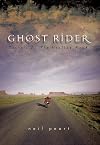
(This is an edited version of a review I wrote in 2002, so some parts may seem dated.)
Most of you have probably seen the motivational posters that feature a word like "LEADERSHIP" along with a one-sentence commentary and an inspirational photograph. Those of you who appreciate dark humor will enjoy the takeoffs on these posters that can be found at Despair.com. One of my favorites shows a mountain climber clinging to an icy precipice and has the caption "DOUBT: In the Battle Between You and show more the World, Bet on the World." Despair.com has about 50 of these, each accompanied by a list of 3 or 4 categories of persons for whom it would be an appropriate gift. The poster "PRETENSION: The Downside of Being Better Than Everyone Else is That People Tend to Assume You're Pretentious" comes with some very specific recommendations, one of which is that it would be "perfect for Neil Peart".
When discussing with various friends the LDS movie "The Testaments", which shows in the Joseph Smith Memorial Building, I usually mention that when I saw it I was distracted by the fact that the chief villain reminded me of "the lead singer of Rush". These friends of varying backgrounds invariably respond "Ah, yes. Geddy Lee." Apparently, I've underestimated the extent to which the members of this band have become cultural icons to people of my generation. Anyway, for those of you who don't already know, Neil Peart is Rush's drummer and lyricist.
Neil's daughter Selena died in a car wreck on August 10, 1997, while driving from her parents' house in Quebec to school at the University of Toronto. His wife Jackie, who was devastated by Selena's death, died on June 29, 1998, apparently of a combination of cancer and a broken heart. Ghost Rider chronicles a little over a year in Neil's life, beginning in August 1998 when he headed out on a 50,000-mile motorcycle trip in an attempt to cope with his losses.
I had read previously that Peart was a disciple of Ayn Rand--a revelation that shouldn't be too startling to those who've paid attention to his lyrics--and I was interested to see how much objectivism/libertarianism/skepticism/atheism was a part of Peart's life in general and how it affected his bereavement in particular.
The first thing to surprise me was on the title page: "The publication of Ghost Rider has been generously supported by the Canada Council, the Ontario Arts Council, and the Government of Canada through the Book Publishing Industry Development Program." Pursuit of government subsidization of one's writings is not what I expected from a libertarian multimillionaire!
Peart brings up Darwinism on several occasions. Seeking explanations for "the sad fact that most couples do not stay together after losing a child", Neil conjectures that "it might run as deep as the 'selfish genes' rejecting an unsuccessful effort at reproduction" (p. 7). He was "mildly excited" to find the Darwin fish-with-legs decals (satirizing the Jesus fish) on sale in a counterculture bookstore in Moab, Utah, but he decided he didn't want to risk offense to believers by "trumpeting [his] 'non-belief'" by sticking one on his bike (p. 164). He attributes his will to carry on to "pure Darwinism, and the cellular drives to survive and reproduce" (p. 265).
Of his life before the tragic loss of his wife and daughter, Peart says: "I would try to do good, believing in some karmic principle that 'if you do good, you get good.' Well, it ain't true at all" (p. 158). Looking back on the outpouring of support from his friends and family in the wake of these tragedies, Neil says: "You know I used to think, 'Life is great, but people suck,' but now I've had to learn the opposite, 'Life sucks, but *people* are great'" (p. 34.) Neither Neil nor Jackie nor Selena "'got' religion but . . . all understood spirituality", and one way they manifested that spirituality was in appreciating the Catholic churches they encountered in their travels in Mexico (p. 199). On Selena's (2nd posthumous) birthday in 1999, Neil lit two votive candles for her in a cathedral in Zocalo and wept "amid the pious old ladies, tourists, and construction workers" (p. 310).
Peart categorizes himself as a "card-carrying rational-scientific-skeptic" (p. 238) but that doesn't stop him from judging the Nevada UFO sites to be "interesting stuff" (p. 147), and in Venice, California, he receives a tarot card reading that is so accurate it makes his jaw drop (p. 339). Subsequently, he buys an "Idiot's Guide" to tarot cards so that he can do tarot card readings for himself (p. 359). Peart better keep his rational-scientific-skeptic card away from the folks at CSICOP or they'll cut it in two! If there's such a thing as a New Age skeptic, I guess Peart is one.
As a member of the Church of Jesus Christ of Latter-day Saints, I was interested to see that there are a number of references to Mormons in Ghost Rider. Just before the police chief arrived at his house to break the news about the death of his daughter, Peart says he was watching a documentary about the Mormon trek west. (Judging by the timing, I'd guess it was "Trail of Hope".) Peart recounts the words of a woman who survived the trek--"The only reason I am alive is because I could not die"--and says those words haunted him for months (p. 7). He knows enough about Mormon culture to know that the owners of many of the pickups with Utah plates he sees in Wendover casino parking lots are called "jack Mormons" (p. 127). While on his bike trip Neil lets his goatee grow untrimmed for several months, and his friends tell him "you look like a Mormon" (p. 294). Each time he passes through Utah, Peart grumbles a little about the "paternalistic" liquor laws but doesn't mention Mormons by name when doing so. His journal entry for October 8, 1999, a day on which he rode from Moab to Boise, reads: "Poor Utah. Growing too fast . . . Used to be so lovely there, and the people so active. Remember days of bicycling around there and noticing every car had a bike rack and/or ski rack. Also tough for them as Mormon majority gets watered down. Others don't necessarily share their hard-working values. Or wish to keep things nice. Neat, clean, and proper." (p. 419)
I was impressed by an account of Peart's encounter with some folks in Idaho. While hiking in the southwest part of the state, Neil says: "I saw a nice-looking young family, father, mother, and two teenage daughters. . . I don't know why I was so taken with this family, but in the few seconds I spoke with them they radiated such openness, friendliness, and health that it melted me inside to look at them. Such a contrast to the bovine trailer-trash the other night in Lewiston, . . . they definitely corrected the balance of my personal scales of humanity. Certainly they 'weighed' less, in several senses, but *counted* for more, as the good ought to do. Their pickup was a few years old; their outdoor clothes were not made of the latest goretex-cordura-kevlar blend, but they were nice to me, and to each other, and I felt a burning pang of envy." (p. 117)
So what did I think of Ghost Rider? It was a little disappointing. Much of the book consists of copies of letters Peart wrote during his journeys, with the majority going to his friend Brutus, who got busted for marijuana smuggling shortly before he was to join Neil on his trip. Neil and Brutus apparently share a weird sense of humor; I guess I'm at least a little glad to learn that I'm not the only one who writes goofy letters. When Neil writes letters to other friends he often, very naturally, covers the same ground he did with Brutus, and so the book is a little repetitive.
I was hoping that Peart might have miraculously been pulled out of his grief by something akin to Christian faith, but, no, Peart always speaks of Selena and Jackie in the past tense or the subjunctive, as if there is no sort of existence that is currently theirs. I guess I would have settled for some substantial psychological insight into grief, sort of a humanist version of C.S. Lewis's A Grief Observed, but it's really not there in Ghost Rider. So, how did Peart end up managing to cope with the loss of his wife and his daughter? He found someone else to fall in love with. This is a happy ending for Neil, but not for me as a reader. show less
Most of you have probably seen the motivational posters that feature a word like "LEADERSHIP" along with a one-sentence commentary and an inspirational photograph. Those of you who appreciate dark humor will enjoy the takeoffs on these posters that can be found at Despair.com. One of my favorites shows a mountain climber clinging to an icy precipice and has the caption "DOUBT: In the Battle Between You and show more the World, Bet on the World." Despair.com has about 50 of these, each accompanied by a list of 3 or 4 categories of persons for whom it would be an appropriate gift. The poster "PRETENSION: The Downside of Being Better Than Everyone Else is That People Tend to Assume You're Pretentious" comes with some very specific recommendations, one of which is that it would be "perfect for Neil Peart".
When discussing with various friends the LDS movie "The Testaments", which shows in the Joseph Smith Memorial Building, I usually mention that when I saw it I was distracted by the fact that the chief villain reminded me of "the lead singer of Rush". These friends of varying backgrounds invariably respond "Ah, yes. Geddy Lee." Apparently, I've underestimated the extent to which the members of this band have become cultural icons to people of my generation. Anyway, for those of you who don't already know, Neil Peart is Rush's drummer and lyricist.
Neil's daughter Selena died in a car wreck on August 10, 1997, while driving from her parents' house in Quebec to school at the University of Toronto. His wife Jackie, who was devastated by Selena's death, died on June 29, 1998, apparently of a combination of cancer and a broken heart. Ghost Rider chronicles a little over a year in Neil's life, beginning in August 1998 when he headed out on a 50,000-mile motorcycle trip in an attempt to cope with his losses.
I had read previously that Peart was a disciple of Ayn Rand--a revelation that shouldn't be too startling to those who've paid attention to his lyrics--and I was interested to see how much objectivism/libertarianism/skepticism/atheism was a part of Peart's life in general and how it affected his bereavement in particular.
The first thing to surprise me was on the title page: "The publication of Ghost Rider has been generously supported by the Canada Council, the Ontario Arts Council, and the Government of Canada through the Book Publishing Industry Development Program." Pursuit of government subsidization of one's writings is not what I expected from a libertarian multimillionaire!
Peart brings up Darwinism on several occasions. Seeking explanations for "the sad fact that most couples do not stay together after losing a child", Neil conjectures that "it might run as deep as the 'selfish genes' rejecting an unsuccessful effort at reproduction" (p. 7). He was "mildly excited" to find the Darwin fish-with-legs decals (satirizing the Jesus fish) on sale in a counterculture bookstore in Moab, Utah, but he decided he didn't want to risk offense to believers by "trumpeting [his] 'non-belief'" by sticking one on his bike (p. 164). He attributes his will to carry on to "pure Darwinism, and the cellular drives to survive and reproduce" (p. 265).
Of his life before the tragic loss of his wife and daughter, Peart says: "I would try to do good, believing in some karmic principle that 'if you do good, you get good.' Well, it ain't true at all" (p. 158). Looking back on the outpouring of support from his friends and family in the wake of these tragedies, Neil says: "You know I used to think, 'Life is great, but people suck,' but now I've had to learn the opposite, 'Life sucks, but *people* are great'" (p. 34.) Neither Neil nor Jackie nor Selena "'got' religion but . . . all understood spirituality", and one way they manifested that spirituality was in appreciating the Catholic churches they encountered in their travels in Mexico (p. 199). On Selena's (2nd posthumous) birthday in 1999, Neil lit two votive candles for her in a cathedral in Zocalo and wept "amid the pious old ladies, tourists, and construction workers" (p. 310).
Peart categorizes himself as a "card-carrying rational-scientific-skeptic" (p. 238) but that doesn't stop him from judging the Nevada UFO sites to be "interesting stuff" (p. 147), and in Venice, California, he receives a tarot card reading that is so accurate it makes his jaw drop (p. 339). Subsequently, he buys an "Idiot's Guide" to tarot cards so that he can do tarot card readings for himself (p. 359). Peart better keep his rational-scientific-skeptic card away from the folks at CSICOP or they'll cut it in two! If there's such a thing as a New Age skeptic, I guess Peart is one.
As a member of the Church of Jesus Christ of Latter-day Saints, I was interested to see that there are a number of references to Mormons in Ghost Rider. Just before the police chief arrived at his house to break the news about the death of his daughter, Peart says he was watching a documentary about the Mormon trek west. (Judging by the timing, I'd guess it was "Trail of Hope".) Peart recounts the words of a woman who survived the trek--"The only reason I am alive is because I could not die"--and says those words haunted him for months (p. 7). He knows enough about Mormon culture to know that the owners of many of the pickups with Utah plates he sees in Wendover casino parking lots are called "jack Mormons" (p. 127). While on his bike trip Neil lets his goatee grow untrimmed for several months, and his friends tell him "you look like a Mormon" (p. 294). Each time he passes through Utah, Peart grumbles a little about the "paternalistic" liquor laws but doesn't mention Mormons by name when doing so. His journal entry for October 8, 1999, a day on which he rode from Moab to Boise, reads: "Poor Utah. Growing too fast . . . Used to be so lovely there, and the people so active. Remember days of bicycling around there and noticing every car had a bike rack and/or ski rack. Also tough for them as Mormon majority gets watered down. Others don't necessarily share their hard-working values. Or wish to keep things nice. Neat, clean, and proper." (p. 419)
I was impressed by an account of Peart's encounter with some folks in Idaho. While hiking in the southwest part of the state, Neil says: "I saw a nice-looking young family, father, mother, and two teenage daughters. . . I don't know why I was so taken with this family, but in the few seconds I spoke with them they radiated such openness, friendliness, and health that it melted me inside to look at them. Such a contrast to the bovine trailer-trash the other night in Lewiston, . . . they definitely corrected the balance of my personal scales of humanity. Certainly they 'weighed' less, in several senses, but *counted* for more, as the good ought to do. Their pickup was a few years old; their outdoor clothes were not made of the latest goretex-cordura-kevlar blend, but they were nice to me, and to each other, and I felt a burning pang of envy." (p. 117)
So what did I think of Ghost Rider? It was a little disappointing. Much of the book consists of copies of letters Peart wrote during his journeys, with the majority going to his friend Brutus, who got busted for marijuana smuggling shortly before he was to join Neil on his trip. Neil and Brutus apparently share a weird sense of humor; I guess I'm at least a little glad to learn that I'm not the only one who writes goofy letters. When Neil writes letters to other friends he often, very naturally, covers the same ground he did with Brutus, and so the book is a little repetitive.
I was hoping that Peart might have miraculously been pulled out of his grief by something akin to Christian faith, but, no, Peart always speaks of Selena and Jackie in the past tense or the subjunctive, as if there is no sort of existence that is currently theirs. I guess I would have settled for some substantial psychological insight into grief, sort of a humanist version of C.S. Lewis's A Grief Observed, but it's really not there in Ghost Rider. So, how did Peart end up managing to cope with the loss of his wife and his daughter? He found someone else to fall in love with. This is a happy ending for Neil, but not for me as a reader. show less

Imagine sending your nineteen-year-old daughter, Selena, your only child, off to college in the morning, and that evening the police show up at your front door with some "bad news". Imagine the officer suggesting to you and your wife, Jackie, whose eyes have presently "gone wide" and "her face turned white" (because she already knew), that "maybe you'd better sit down." Imagine the officer telling you and your spouse it was a "single car accident," she "apparently lost control," she was show more "dead at the scene."
Neil Peart, drummer and lyricist for RUSH, and one of the most literary and imaginative minds in the history of rock, didn't have to imagine it, having endured that agony the night of August 10th, 1997, when life as he'd known it abruptly and irrevocably ended. His wife collapsed to the floor with the news. Unfortunately, for her sake and for Neil Peart's, she never really got back up off the floor. Shattered by the sudden death of her daughter, Jackie was so inconsolable that not even Neil, her husband of almost twenty years, could comfort her, though he tried and tried. Five months after their daughter was killed, Jackie was diagnosed with terminal cancer, and Neil confessed in Ghost Rider, a memoir that has to be the most painful and yet ultimately the most hopeful and resilient memoir I've ever read, that Jackie absorbed the news of her terminal cancer "almost gratefully". Three months later, she died.
Imagine being Neil Peart, losing your daughter and then your wife, your entire immediate family, your entire life, in the span of eight cursed months? How could you survive something that hellish and unbearable?
Neil hopped on his motorcycle, a BMW R1100GS, and rode through almost every province in Canada, including the Yukon and Northwest Territories; through almost ever state in the U.S.A., including Alaska; through almost every state in Mexico, traveling as far south as the Central American nation of Belize. Thirteen months riding a motorcycle, rain or shine, 500 miles a day, not really running from his grief but moving along with it, perhaps living out Mark Strand's poetic maxim, "I move to keep things whole."
I've been doing a lot of "moving" myself these past three weeks since my own fifteen-year-old daughter, Megan, died suddenly from an unforeseen and unpredictable pulmonary embolism that took her life almost instantly. It's weird and it's cruel: find myself walking through the house, pacing, stopping only long enough to straighten up and organize book shelves that are already perfectly straightened up and organized, or stopping to eat and to truly absorb and appreciate as much as I can, in every blessed moment I know I'll never take for granted again, the beloved company of my wife and two other children who are thankfully still alive and well. Neil Peart explained that all this "moving" in the aftermath of an unexpected loss is a normal part of the grieving process known as the "search mode," a period of time in which your unconscious mind is "trying to find the lost one," or trying to create a sense of organized reality out of (in what for me in my recent experience), still seems unsettled, vaguely unreal when it's not so surreal sometimes, even though I know in my head, and can proclaim it aloud, "Megan's gone."
Having been a fan of RUSH since I was thirteen and first heard the songs "Subdivisions" and "New World Man" off their underrated Signals album (and then shortly thereafter, discovered their even more brilliant back catalog of classic records, stuff like 2112 and Permanent Waves), it's hard to love them anymore than I already have. But I do! And it's solely because of Neil Peart's experiences and perspectives, his willingness to write about, with great candor and wisdom, his personal pain that can, understandably, crush some people, that bonds me closer to the man and his music, helping me cope and offering hope for a new future. As I've read and reread passages of his healing memoir, Ghost Rider, I've come to view Neil Peart as being much more than merely a genius percussionist or lyricist or reclusive rock star, but like some ambassador from the bleak country of Grief or capital of Commiseration, who's comforting and encouraging, helping me navigate this seemingly endless, merciless, and incomprehensible maze of mourning. show less
Neil Peart, drummer and lyricist for RUSH, and one of the most literary and imaginative minds in the history of rock, didn't have to imagine it, having endured that agony the night of August 10th, 1997, when life as he'd known it abruptly and irrevocably ended. His wife collapsed to the floor with the news. Unfortunately, for her sake and for Neil Peart's, she never really got back up off the floor. Shattered by the sudden death of her daughter, Jackie was so inconsolable that not even Neil, her husband of almost twenty years, could comfort her, though he tried and tried. Five months after their daughter was killed, Jackie was diagnosed with terminal cancer, and Neil confessed in Ghost Rider, a memoir that has to be the most painful and yet ultimately the most hopeful and resilient memoir I've ever read, that Jackie absorbed the news of her terminal cancer "almost gratefully". Three months later, she died.
Imagine being Neil Peart, losing your daughter and then your wife, your entire immediate family, your entire life, in the span of eight cursed months? How could you survive something that hellish and unbearable?
Neil hopped on his motorcycle, a BMW R1100GS, and rode through almost every province in Canada, including the Yukon and Northwest Territories; through almost ever state in the U.S.A., including Alaska; through almost every state in Mexico, traveling as far south as the Central American nation of Belize. Thirteen months riding a motorcycle, rain or shine, 500 miles a day, not really running from his grief but moving along with it, perhaps living out Mark Strand's poetic maxim, "I move to keep things whole."
I've been doing a lot of "moving" myself these past three weeks since my own fifteen-year-old daughter, Megan, died suddenly from an unforeseen and unpredictable pulmonary embolism that took her life almost instantly. It's weird and it's cruel: find myself walking through the house, pacing, stopping only long enough to straighten up and organize book shelves that are already perfectly straightened up and organized, or stopping to eat and to truly absorb and appreciate as much as I can, in every blessed moment I know I'll never take for granted again, the beloved company of my wife and two other children who are thankfully still alive and well. Neil Peart explained that all this "moving" in the aftermath of an unexpected loss is a normal part of the grieving process known as the "search mode," a period of time in which your unconscious mind is "trying to find the lost one," or trying to create a sense of organized reality out of (in what for me in my recent experience), still seems unsettled, vaguely unreal when it's not so surreal sometimes, even though I know in my head, and can proclaim it aloud, "Megan's gone."
Having been a fan of RUSH since I was thirteen and first heard the songs "Subdivisions" and "New World Man" off their underrated Signals album (and then shortly thereafter, discovered their even more brilliant back catalog of classic records, stuff like 2112 and Permanent Waves), it's hard to love them anymore than I already have. But I do! And it's solely because of Neil Peart's experiences and perspectives, his willingness to write about, with great candor and wisdom, his personal pain that can, understandably, crush some people, that bonds me closer to the man and his music, helping me cope and offering hope for a new future. As I've read and reread passages of his healing memoir, Ghost Rider, I've come to view Neil Peart as being much more than merely a genius percussionist or lyricist or reclusive rock star, but like some ambassador from the bleak country of Grief or capital of Commiseration, who's comforting and encouraging, helping me navigate this seemingly endless, merciless, and incomprehensible maze of mourning. show less
This is hard to review because of the pain that is documented. I appreciated the rawness, honesty, and courage to share that pain and the anger at the world that comes with it. I can understand how that would be cathartic for some people going through a similar tragic experience. However, the book needed a more exacting editor to clip out some of the repetition between letters to different friends. It was also difficult to read the harsh judgements passed on the bystanders of this show more travelogue. One would expect some empathy for others when they are asking to have their own grieving to be accepted. There is some resolution to this harsh judgement at the end of the book but I wish there had been more thoughtful insight shared from the experience. On the other hand maybe this is as much as was comfortable to be shared. show less
Lists
Awards

You May Also Like


Associated Authors
Statistics
- Works
- 23
- Also by
- 8
- Members
- 1,612
- Popularity
- #15,986
- Rating
- 3.8
- Reviews
- 44
- ISBNs
- 58
- Languages
- 4
- Favorited
- 8