
Dervla Murphy (1931–2022)
Author of Full Tilt: Ireland to India with a Bicycle
About the Author
Works by Dervla Murphy
Associated Works
Forbidden Journey: From Peking to Kashmir (1937) — Introduction, some editions — 201 copies, 12 reviews
Beastly Journeys: Unusual Tales of Travel with Animals (Bradt Travel Guide) (2018) — Contributor — 9 copies
Townlands: a Habitation. A Creative Exploration of The Rural Landscape (2013) — Contributor — 6 copies
Tagged
Common Knowledge
- Legal name
- Murphy, Dervilla Maria
- Birthdate
- 1931-11-28
- Date of death
- 2022-05-23
- Gender
- female
- Education
- Ursuline Convent for Girls, Waterford, Ireland
- Occupations
- travel writer
- Awards and honors
- Edward Stanford Award (2021)
- Relationships
- White, Terence de Vere (partner)
Murphy, Rachel (daughter) - Nationality
- Ireland
- Birthplace
- Lismore, County Waterford, Ireland
- Places of residence
- Lismore, County Waterford, Ireland (birth)
- Place of death
- Lismore, County Waterford, Ireland
- Associated Place (for map)
- Lismore, County Waterford, Ireland
Members
Reviews
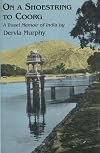
For once not on a bicycle, Dervla Murphy travels through Southern India with her five year old daughter, giving rein to what must be one of the world's strongest travelling compulsions. But for someone whose wanderlust is so deeply embedded, she also seems to have a great attachment to place. In Ireland she still lives in the house she grew up in, and on this journey settles into and writes lyrically (and with an finely tuned political and sociological eye) about village life in the district show more of Coorg in the Indian State of Karnataka.
It is apparent for Murphy the 'journeying' is of secondary importance (she admits to not being able to fix her own bicycle). Her central interest is in people and culture. And there are wonderfully observant portraits of everyone from exiled Tibetans (in replanted communities) to the villagers of the Coorg who straddled ancient traditions and the modern world. Murphy, however, reserves some of her most acute observations to how she and her daughter react to an alien but not-so-different world. Murphy has a great sympathy for the people around her. There's an evident respect for what she comes to know about them (including the things she finds unpalatable such as the caste distinctions), and an acknowledgement of the limitations of her understanding. It seems to me that this is what makes for some of the very best travel writing, and brings to mind Michael Wood's The Smile of Murugan: A South Indian Journey ' which covers some of the same territory. Murphy has written many books, but if you were to choose one to start with this might be the one of the best. Highly recommended. show less
It is apparent for Murphy the 'journeying' is of secondary importance (she admits to not being able to fix her own bicycle). Her central interest is in people and culture. And there are wonderfully observant portraits of everyone from exiled Tibetans (in replanted communities) to the villagers of the Coorg who straddled ancient traditions and the modern world. Murphy, however, reserves some of her most acute observations to how she and her daughter react to an alien but not-so-different world. Murphy has a great sympathy for the people around her. There's an evident respect for what she comes to know about them (including the things she finds unpalatable such as the caste distinctions), and an acknowledgement of the limitations of her understanding. It seems to me that this is what makes for some of the very best travel writing, and brings to mind Michael Wood's The Smile of Murugan: A South Indian Journey ' which covers some of the same territory. Murphy has written many books, but if you were to choose one to start with this might be the one of the best. Highly recommended. show less

I basically have one requirement of travel writers — that they spend more time talking to the locals than describing the scenery and chatting to expats and fellow-tourists. Murphy kills it, digging up interesting stories wherever she, her 18 year old daughter and their pack horse Egbert wander, despite frequent language barriers. The three of them are indefatigable, routinely covering twenty miles a day through unforgiving terrain and surviving on bananas, mangos, gallons of local beer and show more the wheat dumplings and vegetable mash served up by the hospitable locals with whom they lodge when not sleeping in some pestilent thicket. Murphy’s prose is equally energetic, always on the move yet keeping up a steady supply of elegant images and sarcastic quips often arising from her inevitable misgendering and resigned breast-baring to set the record straight. Adventure of the first order, topped by the twosome’s (I won’t give away how they go from three to two) inadvertent visit to the ghost town of Nyos, depopulated eight months before when the local lake emitted a cloud of noxious gases killing approximately 2,000. Now I suppose I’ll have to go and read all her other books. show less

The celebrated Irish travel writer describes three visits to South Africa, before, during and after the 1994 elections. In the winter of 1993 she cycled right across the country from the Zimbabwe border on the Limpopo to Johannesburg and Cape Town, then back east through the Cape into Natal; in April 1994 she was in Cape Town for the election and Mandela's inauguration; later in 1994, after recovering from an accident in her home in Ireland, she is back in the saddle to see the parts of show more Natal and Transvaal she wasn't able to get to earlier.
As we would expect, Murphy heads for the most interesting-seeming spots, whether or not she's been warned to avoid them for her own safety, and manages to get into conversation with people of just about every possible cultural background and variety of political opinion (always provided that they can speak some English). Interviewees range all the way from ANC comrades in townships to Eugene Terre'Blanche's horse. Whilst Murphy evidently does her best to give everyone a fair hearing and not get into arguments, she doesn't hesitate to share her positive or negative reactions to what she sees and hears with the reader.
Everything is reported diary-fashion, thus with as little intrusion of hindsight as possible: she wants us to share her on-the-spot reactions: the uncertainty and danger of the lead-up to the elections (especially around the Chris Hani assassination, which happened whilst she was in Cape Town), the general euphoria when they passed off peacefully, and then the realisation six months later that electing a black president was just the first step on a long journey and that there would be a lot of difficult readjustment before all the injustices of apartheid could be put right.
Lively, opinionated, committed: wonderful travel-writing, as always. show less
As we would expect, Murphy heads for the most interesting-seeming spots, whether or not she's been warned to avoid them for her own safety, and manages to get into conversation with people of just about every possible cultural background and variety of political opinion (always provided that they can speak some English). Interviewees range all the way from ANC comrades in townships to Eugene Terre'Blanche's horse. Whilst Murphy evidently does her best to give everyone a fair hearing and not get into arguments, she doesn't hesitate to share her positive or negative reactions to what she sees and hears with the reader.
Everything is reported diary-fashion, thus with as little intrusion of hindsight as possible: she wants us to share her on-the-spot reactions: the uncertainty and danger of the lead-up to the elections (especially around the Chris Hani assassination, which happened whilst she was in Cape Town), the general euphoria when they passed off peacefully, and then the realisation six months later that electing a black president was just the first step on a long journey and that there would be a lot of difficult readjustment before all the injustices of apartheid could be put right.
Lively, opinionated, committed: wonderful travel-writing, as always. show less
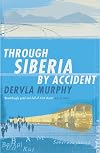
Septuagenarian Murphy’s plan to solo-cycle thousands of miles through one of the most sparsely-populated and harsh environments on earth is foiled by a knee-knackering slip in a train toilet and then a further leg-wrenching misstep while recuperating at a spa on the shores of Lake Baikal. Hence the title. Of course she still manages to get around, to-ing and fro-ing on the Baikal-Amur Mainline or BAM, the Trans-Siberian’s cursed northern double, and enjoying, in typical “Type 3 fun” show more Murphy fashion, a tragicomic bus odyssey from Yakutsk to the benighted mining town of Neryungri. And despite her linguistic ineptitude she fills her book with the usual plurality of voices, many of them “children of BAM” who worked, or whose parents or even grandparents worked, on the decades-long railway project and became Siberianised in the process. Putin has recently ascended to the throne and the Russians in their Russian way have both the intelligence to know they’re in for a bad time and the fatalism to know there’s not much they can do about it (other than join the bastards if you’re willing and able). Here’s the perceptive Olga from Severobaikalsk, diagnosing her own country’s situation and that of America 23 years in the future:
Putin wants to keep democracy out! Under Yeltsin, even under Gorbachev, we relaxed and felt more free to criticize openly. Since 1 January 2000 that’s been changing, at first slowly, now faster and faster. Putin cuts back on support for most state institutions but gives extra power and funding to law-enforcement agencies. The police beat up opposition political meetings. The Kremlin again controls most of the media, taken over from the big-business gangs who’d got control by the end of Yeltsin’s time. Putin loves the Americans’ “War Against Terrorism”, all groups he doesn’t like can be called “terrorists”, given no media space to make their arguments, imprisoned without trial for ever. When the US is doing that to groups they don’t like, the West can’t criticize Putin for doing the same!Sometimes one gets the impression that Murphy, irrationally guilty at not delivering on her initial plan, tries to compensate with tangentially-relevant background and research — e.g. excursuses on the history of vodka in Russia, or the evolution of the Russian church and its relations with the state — which while not uninteresting don’t add much to her Siberian story. This book should be shorter, but like all her books it’s a uniquely human adventure tale, a diagnostic of a place, a time, and a people based on listening, patience, perseverance, and plenty of the local pivo. show less
Lists
Awards


You May Also Like


Associated Authors
Statistics
- Works
- 29
- Also by
- 11
- Members
- 2,928
- Popularity
- #8,752
- Rating
- 4.0
- Reviews
- 113
- ISBNs
- 193
- Languages
- 6
- Favorited
- 6