
Herbert Best (1894–1980)
Author of Young'un
About the Author
Series
Works by Herbert Best
Tal of the four tribes 3 copies
Writing for Children 2 copies
The mystery of the flaming hut 2 copies
De Vikingen op oorlogspas 1 copy
Associated Works
Tagged
Common Knowledge
- Canonical name
- Best, Herbert
- Legal name
- Best, Oswald Herbert
- Birthdate
- 1894-03-25
- Date of death
- 1980-07
- Gender
- male
- Relationships
- Erick Berry (wife)
- Nationality
- UK
- Birthplace
- Chester, Cheshire, England, UK
- Associated Place (for map)
- England, UK
Members
Reviews

Chosen as a Newbery Honor Book in 1931 - other titles to be so distinguished that year include Floating Island, The Dark Star Of Itza, Queer Person, Mountains Are Free, Spice and the Devil's Cave, Meggy MacIntosh: A Highland Girl in the Carolina Colony, and Ood-Le-Uk the Wanderer - Herbert Best's Garram the Hunter follows its eponymous young hero as, concerned for his father's welfare, he goes into a self-imposed exile, far from his home in the hills. The son of Warok, the chief of the show more tough, independent Hillmen, Garram is a boy in age, but a man in habits, silently hunting on his own, rather than having anything to do with the other youths, who follow the false braggart, Menud. When Menud and his wealthy father, Sura, bring a false accusation of theft and goat-rustling against Garram, in order to discredit his father, the young hunter easily disproves the allegations, but discovers that his enemies continue to work against him. Advised by his tribe's priest, the Rainmaker, that he should remove himself for a time, in order to protect Warok - the theory being that, without an heir presumptive, the chief will be safe from Sura and Menud's plotting - Garram leaves the village of Kwallak behind, and, finding himself on the western plain, makes his way to the great walled city of Yelwa. Here, surrounded by the Fulani people, he makes both friends and enemies, eventually finding a place for himself in the court of the Emir. But when the time comes, he knows he must return once again to the Hills, to free his father and aid his own people...
It is an unfortunate reality that many of these early Newbery titles (like vintage children's fiction in general) have some pretty sharply anachronistic social content, and often depict non-European or European-descended peoples in egregiously racist ways. Books like The Great Quest, with its "accidental" slave voyage to Africa, or Queer Person, with its counter-to-fact depiction of the Crow Nation practicing human sacrifice, in their Sun Dance observances, are particularly noteworthy in this respect. Of course, there are also a few older Newberies, from The Dark Star Of Itza: The Story Of A Pagan Princess, with its epic tale of inter-city warfare, in medieval Meso-America, to Pran Of Albania, with its story of a proud and independent mountain people fending off those who would invade and conquer them, that treat non-Europeans (or, in the case of "Pran," non-western Europeans) with respect. I wasn't sure, going in, which category Garram the Hunter: A Boy of the Hill Tribes would fall into, but given the setting in Africa, I suspected it would be the former.
Happily, this was not the case, and I can report that, save for one odd comment, approximately eighty pages in, about the "cruel nature" of Africans (one of the few narratological interruptions in a story told almost exclusively from Garram's perspective), Garram the Hunter is free of condescension and racist over-(or under)tones. Its hero is an engaging, if somewhat over-idealized character, and the events depicted are fascinating, giving an insight into a time and place not often depicted in American children's fiction. What is that time and place? Best doesn't specify, but given the mention of conflicts between the Fulani and the Hillmen, involving slave raids conducted by the former, I suspect that it is early nineteenth-century Nigeria, in the mountainous northeastern region now dominated by Gashaka-Gumti National Park. The contrasting of the pagan Hill people, and the Muslim Fulani here was quite interesting, particularly as it demonstrated the diversity of belief and culture, in just this one small corner of Africa - something that is often lost on authors of the time (as well as today), who erroneously assume a sort of uniformity amongst all Africans.
All in all, a surprisingly engaging read, one I would recommend to young readers of today, if they enjoy adventure stories, and/or historical fiction! show less
It is an unfortunate reality that many of these early Newbery titles (like vintage children's fiction in general) have some pretty sharply anachronistic social content, and often depict non-European or European-descended peoples in egregiously racist ways. Books like The Great Quest, with its "accidental" slave voyage to Africa, or Queer Person, with its counter-to-fact depiction of the Crow Nation practicing human sacrifice, in their Sun Dance observances, are particularly noteworthy in this respect. Of course, there are also a few older Newberies, from The Dark Star Of Itza: The Story Of A Pagan Princess, with its epic tale of inter-city warfare, in medieval Meso-America, to Pran Of Albania, with its story of a proud and independent mountain people fending off those who would invade and conquer them, that treat non-Europeans (or, in the case of "Pran," non-western Europeans) with respect. I wasn't sure, going in, which category Garram the Hunter: A Boy of the Hill Tribes would fall into, but given the setting in Africa, I suspected it would be the former.
Happily, this was not the case, and I can report that, save for one odd comment, approximately eighty pages in, about the "cruel nature" of Africans (one of the few narratological interruptions in a story told almost exclusively from Garram's perspective), Garram the Hunter is free of condescension and racist over-(or under)tones. Its hero is an engaging, if somewhat over-idealized character, and the events depicted are fascinating, giving an insight into a time and place not often depicted in American children's fiction. What is that time and place? Best doesn't specify, but given the mention of conflicts between the Fulani and the Hillmen, involving slave raids conducted by the former, I suspect that it is early nineteenth-century Nigeria, in the mountainous northeastern region now dominated by Gashaka-Gumti National Park. The contrasting of the pagan Hill people, and the Muslim Fulani here was quite interesting, particularly as it demonstrated the diversity of belief and culture, in just this one small corner of Africa - something that is often lost on authors of the time (as well as today), who erroneously assume a sort of uniformity amongst all Africans.
All in all, a surprisingly engaging read, one I would recommend to young readers of today, if they enjoy adventure stories, and/or historical fiction! show less

from Amazon reviewer Wayne S. Walker
Garram lives in the African village of Kwallak where his father Warock is the chief of the Hill tribes. When he and his dog Kon return from hunting in the plains to the west, his father’s rival Sura and Sura’s son Menud accuse Garram of stealing in an attempt to remove Warock so that Sura can take his place. The charges are shown to be false, but Sura and Menud vow revenge, so Garram’s uncle Rainmaker, the tribe’s priest, advises him to leave. He show more goes to the Fulani city of Yelwa where he saves the life of the Emir and joins his bodyguard. Yet even in Yelwa he makes enemies. Then he learns that things are not well in Kwallak. What happens to Warock? How does Garram deal with the plots against him? And will he ever make it back home?
This is the kind of exciting adventure book that I dearly loved to read when I was a boy. In fact, it was apparently part of an “Adventure Library for Boys and Girls Series.” It is almost on a par with Call It Courage by Armstrong Sperry. But I never heard of Garram then. It seems as if being an old Newbery Honor Book, which Garram the Hunter was in 1931, is almost like a kiss of death. Old Newbery Medal winners get republished from time to time, but many of the honor books (runners-up) often pass into oblivion. In trying to find some of them, I’ve learned that the entire SHARE library system in Illinois doesn’t have a single copy. I’m glad that I located this one. I’ve been told that in a lot of modern libraries, it’s all NEW, NEW, NEW, and throw out the old. Too bad.
This book would make a good literary component to a unit study on slave-era Africa. The only complaint which I saw about the story is from a reviewer who wrote, “One thing I found very odd in this book is the lack of women. Garram takes place entirely in a man’s world. No women are mentioned at all in the city of Yelwa, nor are they among Garram’s peers in the hills.” That’s not entirely true. Women are mentioned though certainly not the focus of attention. But come on! It’s a boy’s adventure book. You don’t want to mess it up with a bunch of “girlie” stuff. I wholeheartedly agree with another reviewer who said, “This is a wonderful, fast-paced book that should not be out of print. It shows no signs of being dated.” It is a fairly easy read despite its length and contains both danger and humor. Herbert Best, the author, was born on March 25, 1894, at Chester, England, and died in July, 1980, at New York City, NY. show less
Garram lives in the African village of Kwallak where his father Warock is the chief of the Hill tribes. When he and his dog Kon return from hunting in the plains to the west, his father’s rival Sura and Sura’s son Menud accuse Garram of stealing in an attempt to remove Warock so that Sura can take his place. The charges are shown to be false, but Sura and Menud vow revenge, so Garram’s uncle Rainmaker, the tribe’s priest, advises him to leave. He show more goes to the Fulani city of Yelwa where he saves the life of the Emir and joins his bodyguard. Yet even in Yelwa he makes enemies. Then he learns that things are not well in Kwallak. What happens to Warock? How does Garram deal with the plots against him? And will he ever make it back home?
This is the kind of exciting adventure book that I dearly loved to read when I was a boy. In fact, it was apparently part of an “Adventure Library for Boys and Girls Series.” It is almost on a par with Call It Courage by Armstrong Sperry. But I never heard of Garram then. It seems as if being an old Newbery Honor Book, which Garram the Hunter was in 1931, is almost like a kiss of death. Old Newbery Medal winners get republished from time to time, but many of the honor books (runners-up) often pass into oblivion. In trying to find some of them, I’ve learned that the entire SHARE library system in Illinois doesn’t have a single copy. I’m glad that I located this one. I’ve been told that in a lot of modern libraries, it’s all NEW, NEW, NEW, and throw out the old. Too bad.
This book would make a good literary component to a unit study on slave-era Africa. The only complaint which I saw about the story is from a reviewer who wrote, “One thing I found very odd in this book is the lack of women. Garram takes place entirely in a man’s world. No women are mentioned at all in the city of Yelwa, nor are they among Garram’s peers in the hills.” That’s not entirely true. Women are mentioned though certainly not the focus of attention. But come on! It’s a boy’s adventure book. You don’t want to mess it up with a bunch of “girlie” stuff. I wholeheartedly agree with another reviewer who said, “This is a wonderful, fast-paced book that should not be out of print. It shows no signs of being dated.” It is a fairly easy read despite its length and contains both danger and humor. Herbert Best, the author, was born on March 25, 1894, at Chester, England, and died in July, 1980, at New York City, NY. show less
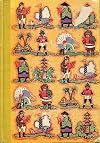
A young African hunter and his clever dog have various adventures, including saving the life on an Emir and a chieftain (the latter being his own father).
I liked this one much more than I expected to, honestly. Funny and engaging, and the young Garram is extremely likable.
I liked this one much more than I expected to, honestly. Funny and engaging, and the young Garram is extremely likable.

Review from Kirkus Reviews:
"A practiced historian tells a sure fire story about a boy who found himself in a strange situation in the village of Hebron, Mass. during the French and Indian wars. Cass Purdie, whose family had been blacksmiths, was apprenticed to the blacksmith Nat Golden, to pay off his debt to the towns- people- for they had ransomed him from the Abenaki Indians some years after all the Purdie's had been taken captive and all but Cass, killed. Cass's years with the Abenaki show more had made him almost half Indian. But bound as he was to Hebron, his stint with the troops of Amherst and Rogers was fraught with double motives, and through the campaigns and the victories there's suspense to the last working out of Cass's freedom." show less
"A practiced historian tells a sure fire story about a boy who found himself in a strange situation in the village of Hebron, Mass. during the French and Indian wars. Cass Purdie, whose family had been blacksmiths, was apprenticed to the blacksmith Nat Golden, to pay off his debt to the towns- people- for they had ransomed him from the Abenaki Indians some years after all the Purdie's had been taken captive and all but Cass, killed. Cass's years with the Abenaki show more had made him almost half Indian. But bound as he was to Hebron, his stint with the troops of Amherst and Rogers was fraught with double motives, and through the campaigns and the victories there's suspense to the last working out of Cass's freedom." show less
Lists
Awards

You May Also Like


Associated Authors
Statistics
- Works
- 27
- Also by
- 1
- Members
- 298
- Popularity
- #78,714
- Rating
- 3.6
- Reviews
- 5
- ISBNs
- 14