
Louis Bromfield (1896–1956)
Author of The Rains Came
About the Author
Image credit: Credit: Carl Van Vechten, 1933
(Carl Van Vechten Collection,
LoC Prints and Photographs Division,
LOT 12735, no. 155)
(Carl Van Vechten Collection,
LoC Prints and Photographs Division,
LOT 12735, no. 155)
Series
Works by Louis Bromfield
La gran pradera 2 copies
It All Came True [1940 film] — Story — 2 copies
Night in Bombay, Until the Day Breaks, Pleasant Valley, Mrs. Paddington, Wild Is the River, What Became of Anna Bolton (1942) 2 copies
Parkingtons 2 copies
Sateet tulivat 1 2 copies
Better Than Life 1 copy
NOVELAS ESCOGIDAS I 1 copy
That Which Never Returns 1 copy
Good Time Bessie 1 copy
The Girl Who Knew Everybody 1 copy
The Hand of God 1 copy
Aunt Flora 1 copy
Nr̃ regnet kom 1 copy
Qué pasó con Ana Bolton? 1 copy
Great Short Novels: from Here Today and Gone Tomorrow (Avon Modern Short Story Monthly, No. 13) (1944) 1 copy
sateet tulivat I 1 copy
Atlantische Nacht 1 copy
NOVELAS ESCOGIDAS II 1 copy
A Primer of Conservation 1 copy
England A Dying Oligarchy 1 copy
Mijn Paradijs 1 copy
You Get What You Give: A Collection of Four Novels — Author — 1 copy
The wealth of the soil 1 copy
El Dorado 1 copy
Blestemul Dragostei — Author — 1 copy
Sateet tulivat 2 1 copy
Nature's Bank - The Soil 1 copy
niin piti käydä 1 copy
O senhor Smith 1 copy
Det fortryllede Land 1 copy
Og regnen kom - I 1 copy
När regnet kom. 2 1 copy
המאזינה 1 copy
Associated Works
Grandma Moses, American primitive; 40 paintings with comments by Grandma Moses, together with her life's history (1946) — Introduction, some editions — 13 copies
Great American Short Stories: O. Henry Memorial Prize Winning Stories, 1919-1934 (1935) — Contributor — 11 copies, 1 review
The Best Short Stories of 1931 and the Yearbook of the American Short Story (1931) — Contributor — 7 copies, 1 review
The Best Short Stories of 1928 and the Yearbook of the American Short Story (1928) — Contributor — 3 copies
Furrow's End: An Anthology of Great Farm Stories — Introduction; Contributor — 2 copies
Best-in-Books: Band of Angels / Hazel Rides Again / Five Fathers of Pepi / Animals and Other People / John Goffe's Legacy — Contributor — 2 copies
Avon Modern Short Story Monthly No. 7 (14 Great stories by 14 Great Authors) (1943) — Contributor — 1 copy
Omnibook Magazine (Overseas Edition for Armed Forces) July 1945 — Author — 1 copy
Trumps: A Collection of Short Stories — Contributor — 1 copy
The Ethnic Image in Modern American Literature, 1900-1950, Volumes 1-2 (1984) — Contributor — 1 copy
Tagged
Common Knowledge
- Canonical name
- Bromfield, Louis
- Legal name
- Brumfield, Louis
- Birthdate
- 1896-12-27
- Date of death
- 1956-03-18
- Gender
- male
- Education
- Cornell University
Columbia University - Occupations
- farmer
ambulance driver (WWI) - Organizations
- American Academy of Arts and Letters (Literature, 1928)
- Nationality
- USA
- Birthplace
- Mansfield, Ohio, USA
- Places of residence
- Mansfield, Ohio, USA
Lucas, Ohio, USA - Associated Place (for map)
- Ohio, USA
Members
Reviews
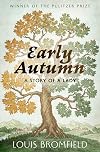
Summary: Olivia Pentland, in a loveless marriage in a rich old family, faces choices as the early autumn approaches when she turns 40.
I’ve long had an interest in Ohio-born author Louis Bromfield. Bromfield was a best-selling novelist in the 1920’s, winning the Pulitzer Prize for this work. In the 1938, he returned from Paris to his home town of Mansfield, Ohio, purchasing a worn out piece of farmland that he renamed Malabar Farm, building an elegant home that was the site of the wedding show more of Humphrey Bogart and Lauren Bacall. I’ve toured the home, camped with Boy Scouts on the farm, and read two books on his early experiments with sustainable agriculture, Pleasant Valley and Malabar Farm. But until now, I’ve not read any of his fiction, which I suspect is largely neglected these days.
The story is set in the fictional town of Durham, Massachusetts at the estate of the Pentlands, a rich but declining old New England family. The central character is Olivia Pentland. Though Scotch-Irish and of a lower class, she had a dark beauty and her own wealth. As a young girl, a marriage to Anson Pentland appeared promising. Twenty years on, she found herself in a loveless marriage. Anson was in love with writing his family’s history but no longer slept with Olivia, Their daughter, Sybil was turning 18, their son and heir, John, was sickly, and the shadow of death hangs over this narrative.
The one person Olivia shares the deepest bond with is Anson’s father, John. He is still in many ways the family head at the Pentlands, even as Olivia makes the household work. His wife is still living, but confined to a wing of the home, having descended into insanity and cared for by Miss Egan, who is secretly having an affair with Higgins, their groom. While visiting his wife every day, John Pentland also has had a close companionship with Mrs. Soames.
During the summer before Olivia is to turn forty, John’s niece, Sabine Callendar and her daughter Therese have come for a visit, staying at a cottage owned by Michael O’Hara, an upstart Irish politician who has built a new estate nearby. Sabine represents the family scandal, having lived a libertine life in France. She is resented by Aunt Cassie, the family Puritan determined to maintain the rectitude and reputation of the Pentlands. But Sabine’s presence is the catalyst for Olivia to realize the confining character of her own life at Pentlands. The loveless marriage, the strictures of what’s appropriate, and the secrets lurking behind the pious appearances. Not only that, Olivia fears her daughter will inherit all this.
Not only that, Sabine brings Olivia together with Michael O’Hara. O’Hara had been riding horses with Sybil. When Olivia joins to discover his intentions, she learns his interest is in her, not the daughter. Through the summer, romance kindles between them. Meanwhile, she finds a bundle of letters revealing a family secret that will wreck the pretensions of the Pentlands. That includes Anson’s book. Then a young man arrives from France who had met Sybil during a visit and is seeking her hand. He’s a man of character and the two really love each other. But this won’t go down well with the Pentlands.
Things come to a head as autumn and Olivia’s birthday approaches. What will she do about O’Hara? About her daughter? About the messed up household of the Pentlands, which somehow has ended depending upon her? Among all those trying to influence and define her, she is confronted with what she wants in her life at this important juncture, and what kind of person she will be.
I liked the way Bromfield builds up to the crisis we all see is coming. In addition, in developing the character of Olivia, we come to appreciate her strength, quiet beauty, and deep sadness. The novel harks back to a different time, a blend (or clash?) of Regency, Victorian, and Continental sensibilities in a New England setting. Written a century after Jane Austen’s novels, I found it had more in common with these than more recent works. Perhaps that is why people aren’t reading Bromfield these days. But this is Bromfield at his best, and well worth the read.
My reviews of Bromfield’s non-fiction:
Pleasant Valley: https://bobonbooks.com/2015/10/08/review-pleasant-valley/
Malabar Farm: https://bobonbooks.com/2015/10/26/review-malabar-farm/ show less
I’ve long had an interest in Ohio-born author Louis Bromfield. Bromfield was a best-selling novelist in the 1920’s, winning the Pulitzer Prize for this work. In the 1938, he returned from Paris to his home town of Mansfield, Ohio, purchasing a worn out piece of farmland that he renamed Malabar Farm, building an elegant home that was the site of the wedding show more of Humphrey Bogart and Lauren Bacall. I’ve toured the home, camped with Boy Scouts on the farm, and read two books on his early experiments with sustainable agriculture, Pleasant Valley and Malabar Farm. But until now, I’ve not read any of his fiction, which I suspect is largely neglected these days.
The story is set in the fictional town of Durham, Massachusetts at the estate of the Pentlands, a rich but declining old New England family. The central character is Olivia Pentland. Though Scotch-Irish and of a lower class, she had a dark beauty and her own wealth. As a young girl, a marriage to Anson Pentland appeared promising. Twenty years on, she found herself in a loveless marriage. Anson was in love with writing his family’s history but no longer slept with Olivia, Their daughter, Sybil was turning 18, their son and heir, John, was sickly, and the shadow of death hangs over this narrative.
The one person Olivia shares the deepest bond with is Anson’s father, John. He is still in many ways the family head at the Pentlands, even as Olivia makes the household work. His wife is still living, but confined to a wing of the home, having descended into insanity and cared for by Miss Egan, who is secretly having an affair with Higgins, their groom. While visiting his wife every day, John Pentland also has had a close companionship with Mrs. Soames.
During the summer before Olivia is to turn forty, John’s niece, Sabine Callendar and her daughter Therese have come for a visit, staying at a cottage owned by Michael O’Hara, an upstart Irish politician who has built a new estate nearby. Sabine represents the family scandal, having lived a libertine life in France. She is resented by Aunt Cassie, the family Puritan determined to maintain the rectitude and reputation of the Pentlands. But Sabine’s presence is the catalyst for Olivia to realize the confining character of her own life at Pentlands. The loveless marriage, the strictures of what’s appropriate, and the secrets lurking behind the pious appearances. Not only that, Olivia fears her daughter will inherit all this.
Not only that, Sabine brings Olivia together with Michael O’Hara. O’Hara had been riding horses with Sybil. When Olivia joins to discover his intentions, she learns his interest is in her, not the daughter. Through the summer, romance kindles between them. Meanwhile, she finds a bundle of letters revealing a family secret that will wreck the pretensions of the Pentlands. That includes Anson’s book. Then a young man arrives from France who had met Sybil during a visit and is seeking her hand. He’s a man of character and the two really love each other. But this won’t go down well with the Pentlands.
Things come to a head as autumn and Olivia’s birthday approaches. What will she do about O’Hara? About her daughter? About the messed up household of the Pentlands, which somehow has ended depending upon her? Among all those trying to influence and define her, she is confronted with what she wants in her life at this important juncture, and what kind of person she will be.
I liked the way Bromfield builds up to the crisis we all see is coming. In addition, in developing the character of Olivia, we come to appreciate her strength, quiet beauty, and deep sadness. The novel harks back to a different time, a blend (or clash?) of Regency, Victorian, and Continental sensibilities in a New England setting. Written a century after Jane Austen’s novels, I found it had more in common with these than more recent works. Perhaps that is why people aren’t reading Bromfield these days. But this is Bromfield at his best, and well worth the read.
My reviews of Bromfield’s non-fiction:
Pleasant Valley: https://bobonbooks.com/2015/10/08/review-pleasant-valley/
Malabar Farm: https://bobonbooks.com/2015/10/26/review-malabar-farm/ show less

When the approach of war forced bestselling novelist Louis Bromfield to leave France in the late thirties, he chose to settle with his family in the area where he had grown up, near Mansfield, Ohio. In this book he writes about the group of farms he bought to live on and work, and his approach to restoring the soil from the erosion and damage caused by the non-sustainable farming techniques of some of his predecessors there. There is a lot about mulch and legumes and water management and the show more evils of deep ploughing, but there are also Bromfield’s lyrical reflections on the nature of Ohio, and on some of his less destructive neighbours (plus some distinguished fore-runners, like the semi-legendary Johnny Appleseed), as well as some rather less measured reflections on the evils of mid-20th century American society (as compared to France, for instance).
Sometimes Bromfield seems to forget that he’s a wealthy and well-connected man who can afford to do experimental agriculture at a time of food and labour shortages, and sees himself as though he were some kind of peasant revolutionary, so the book can be a bit irritating, but elsewhere it is very interesting to see his way of working, always taking a close look at what might be going on when something they have done on the farm produces a surprisingly good or bad result. It’s not quite rigorous scientific testing, but obviously a worthwhile attempt at bringing scientific methods into everyday work. Bromfield’s key mantra seems to be about alertness to the specific local factors that often mean a textbook technique may not be the most appropriate for the place where you happen to be farming.
I’m not an expert on organic farming, but I found this very interesting, and I enjoyed sharing the great pleasure Bromfield obviously took in doing a good job in a lovely place. show less
Sometimes Bromfield seems to forget that he’s a wealthy and well-connected man who can afford to do experimental agriculture at a time of food and labour shortages, and sees himself as though he were some kind of peasant revolutionary, so the book can be a bit irritating, but elsewhere it is very interesting to see his way of working, always taking a close look at what might be going on when something they have done on the farm produces a surprisingly good or bad result. It’s not quite rigorous scientific testing, but obviously a worthwhile attempt at bringing scientific methods into everyday work. Bromfield’s key mantra seems to be about alertness to the specific local factors that often mean a textbook technique may not be the most appropriate for the place where you happen to be farming.
I’m not an expert on organic farming, but I found this very interesting, and I enjoyed sharing the great pleasure Bromfield obviously took in doing a good job in a lovely place. show less
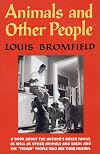
Part author, part farmer Louis Bromfield was well known as a conservationist who won the Pulitzer Prize as well as pioneering innovative farming concepts. His short stories of Animals & Other People was originally published in 1955, and he often refers to growing up in the ealy part of the century. What shines through in this book is his love of his thousand acre farm in Ohio. The lush valley, deep woods and fertile farmland that is inhabited by rabbits, raccoons, foxes, skunks, deer and his show more own assorted animals, Boxers, spaniels, cats, chickens, cows and horses. This is writing at it’s finest, his descriptions are inviting and rich and each animal that he writes about has his own distinct personality.
The book opens with a story from his years of living in France. He describes the pets that his family had adopted and explains how the family turned from mostly having Scottie dogs to owning Boxers. At the same time this story introduces Rikky, a meercat that Bromfield brings home from India. Forced to leave France due to WW II, and leave Rikky behind, Bromfield, his family and many of his pets reestablished themselves at Malabar Farm.
This collection of stories about living the rural life is a delight for all ages. Wild and domestic animals fill the pages along with interesting characters who are “teched” as Bromfield labels people, himself included, who have a love of animals and an inner sense that makes them able to be one with nature.
A great book to pick up and put down, and pick up again. show less
The book opens with a story from his years of living in France. He describes the pets that his family had adopted and explains how the family turned from mostly having Scottie dogs to owning Boxers. At the same time this story introduces Rikky, a meercat that Bromfield brings home from India. Forced to leave France due to WW II, and leave Rikky behind, Bromfield, his family and many of his pets reestablished themselves at Malabar Farm.
This collection of stories about living the rural life is a delight for all ages. Wild and domestic animals fill the pages along with interesting characters who are “teched” as Bromfield labels people, himself included, who have a love of animals and an inner sense that makes them able to be one with nature.
A great book to pick up and put down, and pick up again. show less
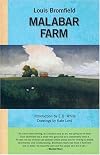
The book is a mix of farm dairy passages during WWII and editorialized editions from a few years later. It’s interesting that many of the arguments made are still being made today (not abusing the land and soil, the struggles of small family farms to compete with large companies, etc). The political commentary is also interesting (lots of discussion about the New Deal). The comments about black folks not being stupid but just not having been ‘civilized’ properly might have sounded show more almost progressive to white northerners, but now just sound racist. Without the racism, I’d probably give the book four stars (I found the agriculture parts really engaging) but one can’t ignore parts of a work that we find reprehensible. As a piece of history, it’s worth reading, but only through a modernized lens. I’ve chosen not to rate it at all. show less
Lists
Awards


You May Also Like


Associated Authors
Statistics
- Works
- 97
- Also by
- 29
- Members
- 2,523
- Popularity
- #10,168
- Rating
- 3.7
- Reviews
- 57
- ISBNs
- 186
- Languages
- 11
- Favorited
- 8