
Clare Beams
Author of The Illness Lesson
About the Author
Image credit: Copyright Lookout Books.
Works by Clare Beams
Associated Works
Tagged
Common Knowledge
- Gender
- female
- Occupations
- creative writing professor
- Relationships
- Beams, Ann (mother)
- Places of residence
- Pittsburgh, Pennsylvania, USA
Falmouth, Massachusetts, USA - Associated Place (for map)
- USA
Members
Reviews
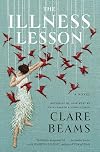
Caroline Hood has lived with her father Samuel at Birch Hill ever since her mother's death (from an epileptic fit - Caroline thinks). Samuel Hood is getting ready to launch a new school for girls, named after the birds Caroline's mother named, Trilling Hearts. Samuel believes that girls can learn everything boys can, and Caroline agrees - she has learned it, after all - but she is less concerned about the girls' capabilities than about what girls educated like boys will do out in the world show more of 1871 New England. She herself has little hope for the traditional path of marriage and motherhood, though she harbors hopes that one of her father's acolytes, David, who has come to live with them and teach at the school, has feelings for her.
Seven girls are to attend Trilling Heart, but at the last minute, an eighth convinces Caroline to admit her: Eliza, the daughter of a man who wrote a novel about a thinly fictionalized version of the Hood couple, and his love for Caroline's mother.
Eliza is the first student to show signs of a curious affliction, but soon it spreads to every girl, though each has different symptoms: fainting, a rash, a verbal tic, etc. A former Birch Hill man, a doctor Samuel knows, comes to study and care for the group - but Caroline has never trusted him. Her instincts are correct, but unfortunately, she does not act on them.
The men in this story are confident of their place in the world - on top of the hierarchy - and sure of themselves and their ideas, to a fault. Caroline is both bystander and victim, knowing better but unable to trust herself enough to force a stop to Hawkins' "treatment" of the girls' malady. Ultimately, she is able to leave Birch Hill after the Trilling Heart school experiment crumbles, leaving her father for the first time in her life, but what happened there weighs on her conscience.
See also: Little Women by Louisa May Alcott, The Fever by Megan Abbott, The Swallows by Lisa Lutz, The Secret History by Donna Tartt, The Little Stranger by Sarah Waters
Quotes
[Hawkins was] the sort of man who never considered himself an amateur at anything. They all were. (3)
...that sense that a gift was being given, and the moment for its use was passing, had passed. (17)
Had he ever considered her life, really? (35)
"I think we'd all be wise to remember that it isn't as easy to achieve a thing as to dream it up." (Caroline to David, 36)
"Is it the same journey if different people are on it?" (Samuel, re: Pilgrim's Progress, 63)
"I would argue that it is always right to think." (Samuel to Thoreson, 65)
It might be the only line that mattered in life: between those who thought about things and those who did them. (90)
Every night her woods had been changing into a different country while she'd slept. (101)
Marriage mystified Caroline in its attending certainties about the actions and intentions of someone else. (135)
"You think they'll contain their own cures, somehow." (David, 161)
"...the view we take of our obstacles often shapes our path more, even, than those obstacles themselves." (Samuel, 162)
There was some fragility to Samuel that demanded protection, at least if one loved him. (175)
His eyes were so full of what he expected to see that he wouldn't really look at them. It would seem impossible to him that such small bodies might contain depths. (186)
How could she not have seen and known all along...? How? By believing, always, her father above herself, even when this belief required averting her attention, suspending her judgment, putting out of her mind what she had seen, deciding she had not, after all understood anything. (215)
"Sometimes the ideas we have about the people in our lives aren't helpful to us." (Samuel to Eliza, 217)
Caroline could see well enough what he was doing, but seeing didn't help her. (221)
[These people] ferried all their terrors and joys like incidental luggage along with them, not hidden, not really, but not much looked at, since all the others were occupied in carrying their own. (255) show less
Seven girls are to attend Trilling Heart, but at the last minute, an eighth convinces Caroline to admit her: Eliza, the daughter of a man who wrote a novel about a thinly fictionalized version of the Hood couple, and his love for Caroline's mother.
Eliza is the first student to show signs of a curious affliction, but soon it spreads to every girl, though each has different symptoms: fainting, a rash, a verbal tic, etc. A former Birch Hill man, a doctor Samuel knows, comes to study and care for the group - but Caroline has never trusted him. Her instincts are correct, but unfortunately, she does not act on them.
The men in this story are confident of their place in the world - on top of the hierarchy - and sure of themselves and their ideas, to a fault. Caroline is both bystander and victim, knowing better but unable to trust herself enough to force a stop to Hawkins' "treatment" of the girls' malady. Ultimately, she is able to leave Birch Hill after the Trilling Heart school experiment crumbles, leaving her father for the first time in her life, but what happened there weighs on her conscience.
See also: Little Women by Louisa May Alcott, The Fever by Megan Abbott, The Swallows by Lisa Lutz, The Secret History by Donna Tartt, The Little Stranger by Sarah Waters
Quotes
[Hawkins was] the sort of man who never considered himself an amateur at anything. They all were. (3)
...that sense that a gift was being given, and the moment for its use was passing, had passed. (17)
Had he ever considered her life, really? (35)
"I think we'd all be wise to remember that it isn't as easy to achieve a thing as to dream it up." (Caroline to David, 36)
"Is it the same journey if different people are on it?" (Samuel, re: Pilgrim's Progress, 63)
"I would argue that it is always right to think." (Samuel to Thoreson, 65)
It might be the only line that mattered in life: between those who thought about things and those who did them. (90)
Every night her woods had been changing into a different country while she'd slept. (101)
Marriage mystified Caroline in its attending certainties about the actions and intentions of someone else. (135)
"You think they'll contain their own cures, somehow." (David, 161)
"...the view we take of our obstacles often shapes our path more, even, than those obstacles themselves." (Samuel, 162)
There was some fragility to Samuel that demanded protection, at least if one loved him. (175)
His eyes were so full of what he expected to see that he wouldn't really look at them. It would seem impossible to him that such small bodies might contain depths. (186)
How could she not have seen and known all along...? How? By believing, always, her father above herself, even when this belief required averting her attention, suspending her judgment, putting out of her mind what she had seen, deciding she had not, after all understood anything. (215)
"Sometimes the ideas we have about the people in our lives aren't helpful to us." (Samuel to Eliza, 217)
Caroline could see well enough what he was doing, but seeing didn't help her. (221)
[These people] ferried all their terrors and joys like incidental luggage along with them, not hidden, not really, but not much looked at, since all the others were occupied in carrying their own. (255) show less
‘’This is a place of marvels.’’
Unfortunately, this novel was anything but a marvel to me…
Set in the USA during the 1870s, this is the story of a daughter and a father who wanted to change the perception of what education actually means for young women, aspiring to provide the -privileged- young ladies with spiritual talents, breaking the norms of traditional teaching. When the first students arrive at this peculiar school, things go awry very quickly. The daughter of a deceased show more writer who had provoked much havoc in his lifetime, an artist teacher that can’t distinguish two from two and a repressed love complicate everything all too quickly. Add a bunch of strange dreams full of the colour red and a weird flock of red birds that come and go and you have a promising mixture for a novel.
Or not.
I couldn’t wait to read The Illness Lesson. Judging from the synopsis, I couldn’t see how this could go wrong. And yet, it proved to be my major disappointment for 2020. I had so many issues with the story, the writing, the characters, the execution that I don’t know where to begin. Led by my personal standards and having read a ton of Historical Fiction and Magical Realism novels, I fast-forwarded my reading, wanting to reach the last page as soon as possible. I didn’t want to abandon it even though it became hard for me to continue as soon as I reached about 40%.
I don’t demand the characters in a novel to be of Shakespearean complexity and I don’t expect Bronte female characters in every book I read. But I do want them to be at least remotely interesting. I don’t even want them to be sympathetic but I need some spark, some ambition, a driving point. I found nothing here. Nothing. Not even a single character that could make me sit up and read carefully, that would make me care for their story. Caroline seemed to be an interesting character but her endless romantic monologues - although I should say ‘’horny’’ and be done with it…- irritated and exhausted me. She was so docile and polite even when she should have reacted to set things right that I just couldn’t cope with her. My rebel nature took the upper hand and I lost hope. Samuel was an ordeal. I grew tired of his pseudo-philosophical remarks, empty words, ridiculous points, absurd fantasies. David was a caricature, Sophia was another unbearable idiot testing my patience…
And the students? Jesus Christ Almighty! The entire bunch was an awful, hopeless, insolent lot. No motives, no meaningful behaviour. Silly small talk, ridiculous, naive, ‘’girly’’ giggles. Repetitive and irritating. Eliza struggling to become the centre of attention is the epitome, the very definition of the worst type of students. Opinionated in all possible negative ways, brassy, and, ultimately, idiots. It takes a teacher to know and this array of stereotyped teenagers pushed all my buttons. I’ve been dealing with such students for many years and I know how to put them in their place. Caroline didn’t. It was unrealistic, infuriating, cowardish.
I can’t bring myself to believe that such behaviour would be tolerated at the time - at any time, frankly- even in the most progressive of schools. Somehow, it all seemed too far-fetched. Wives using their husbands’ pet names in front of the students. Teachers watching a fellow teacher’s lesson like vultures. Students explicitly making advances towards a teacher or disputing a view with unreprimanded rudeness. And what were they taught? Nothing, absolutely nothing. In addition, having the story told through Caroline’s eyes and experiencing the ‘’periphery’’ of the action only when she manages to creep up on somebody to eavesdrop was constant. And it was tiring and boring. The novel would have benefited from multiple POVs even from this cast of utterly lifeless characters.
It’s such a shame...the descriptions of the woods were beautiful and atmospheric and certain passages were haunting. But in the end, I didn’t care for any of the characters, I didn’t care for the story or the conclusion, or the implications of the Magical Realism subplot that was never fully realised or utilised. I have no doubts that this novel will appeal to the majority of readers but to me it was an ordeal and a severe disappointment.
Many thanks to Doubleday and Edelweiss for the ARC in exchange for an honest review.
My reviews can also be found on https://theopinionatedreaderblog.wordpress.com/ show less
Unfortunately, this novel was anything but a marvel to me…
Set in the USA during the 1870s, this is the story of a daughter and a father who wanted to change the perception of what education actually means for young women, aspiring to provide the -privileged- young ladies with spiritual talents, breaking the norms of traditional teaching. When the first students arrive at this peculiar school, things go awry very quickly. The daughter of a deceased show more writer who had provoked much havoc in his lifetime, an artist teacher that can’t distinguish two from two and a repressed love complicate everything all too quickly. Add a bunch of strange dreams full of the colour red and a weird flock of red birds that come and go and you have a promising mixture for a novel.
Or not.
I couldn’t wait to read The Illness Lesson. Judging from the synopsis, I couldn’t see how this could go wrong. And yet, it proved to be my major disappointment for 2020. I had so many issues with the story, the writing, the characters, the execution that I don’t know where to begin. Led by my personal standards and having read a ton of Historical Fiction and Magical Realism novels, I fast-forwarded my reading, wanting to reach the last page as soon as possible. I didn’t want to abandon it even though it became hard for me to continue as soon as I reached about 40%.
I don’t demand the characters in a novel to be of Shakespearean complexity and I don’t expect Bronte female characters in every book I read. But I do want them to be at least remotely interesting. I don’t even want them to be sympathetic but I need some spark, some ambition, a driving point. I found nothing here. Nothing. Not even a single character that could make me sit up and read carefully, that would make me care for their story. Caroline seemed to be an interesting character but her endless romantic monologues - although I should say ‘’horny’’ and be done with it…- irritated and exhausted me. She was so docile and polite even when she should have reacted to set things right that I just couldn’t cope with her. My rebel nature took the upper hand and I lost hope. Samuel was an ordeal. I grew tired of his pseudo-philosophical remarks, empty words, ridiculous points, absurd fantasies. David was a caricature, Sophia was another unbearable idiot testing my patience…
And the students? Jesus Christ Almighty! The entire bunch was an awful, hopeless, insolent lot. No motives, no meaningful behaviour. Silly small talk, ridiculous, naive, ‘’girly’’ giggles. Repetitive and irritating. Eliza struggling to become the centre of attention is the epitome, the very definition of the worst type of students. Opinionated in all possible negative ways, brassy, and, ultimately, idiots. It takes a teacher to know and this array of stereotyped teenagers pushed all my buttons. I’ve been dealing with such students for many years and I know how to put them in their place. Caroline didn’t. It was unrealistic, infuriating, cowardish.
I can’t bring myself to believe that such behaviour would be tolerated at the time - at any time, frankly- even in the most progressive of schools. Somehow, it all seemed too far-fetched. Wives using their husbands’ pet names in front of the students. Teachers watching a fellow teacher’s lesson like vultures. Students explicitly making advances towards a teacher or disputing a view with unreprimanded rudeness. And what were they taught? Nothing, absolutely nothing. In addition, having the story told through Caroline’s eyes and experiencing the ‘’periphery’’ of the action only when she manages to creep up on somebody to eavesdrop was constant. And it was tiring and boring. The novel would have benefited from multiple POVs even from this cast of utterly lifeless characters.
It’s such a shame...the descriptions of the woods were beautiful and atmospheric and certain passages were haunting. But in the end, I didn’t care for any of the characters, I didn’t care for the story or the conclusion, or the implications of the Magical Realism subplot that was never fully realised or utilised. I have no doubts that this novel will appeal to the majority of readers but to me it was an ordeal and a severe disappointment.
Many thanks to Doubleday and Edelweiss for the ARC in exchange for an honest review.
My reviews can also be found on https://theopinionatedreaderblog.wordpress.com/ show less
The Illness Lesson is an odd duck of a book, which I mean as an observation, not a criticism. In terms of genre, I would label it historical fiction, but it also feels strikingly contemporary in ways that don't undermine the historical setting. The Illness Lesson does many things at once, most of them quite well: it explores female identity in a world dominated by men and the limitations placed on even the lives of women deemed exceptional; it opens up the transcendentalist movement in ways show more that embrace both its aspirations and failings; it wrestles with the question of whether education should prepare individuals for their likely social roles or should be aspirational; it illustrates the consequences of male medical "knowledge" that does not clearly recognize and value the female lives over which it holds sway. And The Illness Lesson manages all this without feeling heavy handed.
On one level, the plot is fairly straightforward. An aging figure from the transcendentalist movement decides that he, his daughter Caroline, and a male acolyte will open a school for girls that will take women's intelligence as seriously as men's. The first class is small, but enthusiastic. The girls ask questions, explore, and develop their own lives of the mind. Then, the girls become ill with a range of symptoms: fainting, seizures, rashes, stuttering, and general debilitation. The school's founder, Caroline's father, invites in a former member of his transcendentalist circle to "treat" them.
While the book is presented in third person, the perspective most clearly represented is Caroline's. She is a product of an earlier version of the education the girls are now receiving, she shares some of their symptoms, and, like them, she is underestimated by the men enacting their own vision of what female identity should be. Caroline's profound discomfort becomes the reader's as well, making this book an emotionally difficult read at times, but also making it deeply compelling. show less
On one level, the plot is fairly straightforward. An aging figure from the transcendentalist movement decides that he, his daughter Caroline, and a male acolyte will open a school for girls that will take women's intelligence as seriously as men's. The first class is small, but enthusiastic. The girls ask questions, explore, and develop their own lives of the mind. Then, the girls become ill with a range of symptoms: fainting, seizures, rashes, stuttering, and general debilitation. The school's founder, Caroline's father, invites in a former member of his transcendentalist circle to "treat" them.
While the book is presented in third person, the perspective most clearly represented is Caroline's. She is a product of an earlier version of the education the girls are now receiving, she shares some of their symptoms, and, like them, she is underestimated by the men enacting their own vision of what female identity should be. Caroline's profound discomfort becomes the reader's as well, making this book an emotionally difficult read at times, but also making it deeply compelling. show less
Beam’s novel is an authentic voice of what the Transcendentalist movement. Were the ideals of progressive feminism just before their time or were they, as this novel seems to point to, the idea that women should be allowed to have a voice up to a certain point. Women were looked at as having an intellect but still their highest goal was to be married and have children. Other than Jo March in Little Women, I’ve never heard a voice as strong as the story told from Catherine’s point of show more view. An excellent book to read, particularly if you, like me, have questioned the idealism of the male Transcendentalists as they failed to let go of male power. show less
Awards


You May Also Like


Associated Authors
Statistics
- Works
- 3
- Also by
- 1
- Members
- 435
- Popularity
- #56,231
- Rating
- 3.5
- Reviews
- 15
- ISBNs
- 26
- Languages
- 1