
Stephen Ellis (1) (1953–2015)
Author of The Mask of Anarchy: The Destruction of Liberia and the Religious Dimension of an African Civil War
For other authors named Stephen Ellis, see the disambiguation page.
About the Author
Stephen Ellis is a senior researcher at the African Studies Centre, Leiden, the Netherlands
Works by Stephen Ellis
The Mask of Anarchy: The Destruction of Liberia and the Religious Dimension of an African Civil War (1999) 59 copies, 1 review
Tagged
Common Knowledge
- Legal name
- Ellis, Stephen Derek Kingscote
- Birthdate
- 1953-06-13
- Date of death
- 2015-07-29
- Gender
- male
- Relationships
- Haar, Gerrie ter (wife)
- Nationality
- UK
- Birthplace
- Nottingham, England, UK
- Place of death
- Amsterdam, Netherlands
- Associated Place (for map)
- UK
Members
Reviews
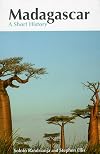
For me, Madagascar always had an appealing and mysterious ring to it. It's just not a nation you ever hear much about, and yet it's quite a large country. I didn't know the first thing about the place until I read this book. I found it fascinating. It wasn't the easiest reading, but I sort of figured that would be the case. If you have any interest in Madagascar, I recommend this book (There aren't too many to choose from.).
The Mask of Anarchy: Roots of Liberia's Civil War: The Destruction of Liberia and the Religious Dimension of an African Civil War by Stephen Ellis
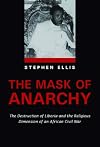
Liberia was in the headlines in 1990 when thousands of teenage fighters, including young men wearing women's clothing and bizarre objects of decoration, laid seige to the capital, Monrovia. In response to the crisis, a West African peacekeeping force, ECONMOG, was sent to stabilize the country and prevent the main warlord, Charles Taylor, from coming to power. Seven years later, however, Taylor was elected President. The country had a fragile peace but the war had spread to its neighbour show more Sierra Leone. This book traces the history of the civil war that has blighted Liberia in recent years and looks at its roots in the way governments have been established in West Africa during the 20th century. show less
The Worlds of Power: Religious Thought and Political Practice in Africa (Contemporary History & World Affairs) by Stephen Ellis
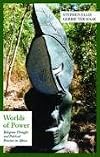
'Worlds of Power shows how religious and supernatural ideas dominate African politics and culture, how they shape the ways that Africans both rich and poor view the world. [...] This wide-ranging and thoroughly researched book is essential reading for anyone wishing to understand modern Africa.' --Professor Philip Jenkins, author of The Next Christendom: the Coming of Global Christianity 'Power in the material world, most Africans continue to believe, cannot be separated from its source in show more the spiritual. It is the singular genius of authors Stephen Ellis and Gerrie ter Haar that they understand the encompassing nature and centrality of this belief. [...] The clarity and accuracy of this analytical lens makes Worlds of Power one of the most important books on African religion - and, indeed, on African politics - to appear in many years.' --Professor R. Scott Appleby, University of Notre Dame Far from falling off the map of the world, Africa is today a leading centre of Christianity and a growing field of Islamic activism. African traditional religions are gaining converts in the West. Religious belief has a huge impact on politics in Africa, from the top of society to the bottom. Religious ideas show what people actually think about the world and how to deal with it. Stories about witches, miracles and people returning from the dead incite political action. Ellis and Ter Haar maintain that the specific content of religious thought has to be grasped if we are to appreciate the political significance of religion in Africa today, and this is what their book sets out to do. It also advances understanding of the relation between religion and political action in general. show less

Two thousand years ago, Madagascar was probably uninhabited. An island twice the size of Great Britain, it was home to unique species of flora and fauna that were undisturbed by humanity until the first navigators landed on its shores. Since then, the changes imposed by humans on the wide range of environments to be found in this mini-continent have formed one of the threads of Madagascar's history. No one knows where the island's first inhabitants came from, but there was a strong show more connection from the earliest period to the islands of South East Asia - today's Indonesia.Austronesians, Arabs, Portuguese, and Dutch sailors and traders successively dominated the sea-lanes around Madagascar, some of the world's oldest long-distance shipping routes. Over the centuries, Madagascar developed its own distinctive language and cultural systems, absorbing migrants from every shore of the Indian Ocean. In the nineteenth century, Britain and France projected a new type of global power that had a major effect on the island, which became a French colony from 1896 to 1960. Throughout this colourful and often turbulent history, the tension between the formation of a highly original culture and the absorption of immigrants, the development of strong social hierarchies, a long experience of slavery and the slave trade, have all had effects that are still felt today. Now home to 17 million people, Madagascar is one of the world's most fascinating and least-known societies. show less
Awards

You May Also Like


Statistics
- Works
- 9
- Members
- 201
- Popularity
- #109,506
- Rating
- 3.7
- Reviews
- 5
- ISBNs
- 57
- Languages
- 2