
Leela Corman
Author of Unterzakhn
Works by Leela Corman
Associated Works
Scheherazade: Comics About Love, Treachery, Mothers, and Monsters (2004) — Contributor — 54 copies, 2 reviews
Tagged
Common Knowledge
- Birthdate
- 1976
- Gender
- female
- Relationships
- Hart, Tom (husband)
- Nationality
- USA
- Associated Place (for map)
- USA
Members
Reviews

...and once again the blurb is just kind of bizarre -- related to the book, but not accurate. Anyway. Love the artistic style, love the Yiddish throughout, love the storytelling. It's a little bit one note, in that it feels like all the stories are about sex in one way or another -- the filter each character is seen through, almost, but it's hard to put down, and it paints a vivid picture of turn of the century New York.
*Many thanks to Pantheon Books for the gifted copy. All opinions expressed in this review are my own. This book was published on April 02, 2024.*
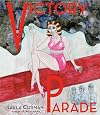
Set in 1943, Victory Parade by Leela Corman is a brutal yet profoundly moving meditation on the horrors of war and trauma, the challenges faced by the women who contributed to the WWII effort back home while they waited for their men to return from the war front, Jewish refugees fleeing persecution and the physical and psychological scars left on show more those returning from home.
The narrative, presented in vivid watercolor, follows the cast of characters among whom are Rose, a married woman employed as a welder in Brooklyn who is involved in a relationship with a disabled veteran; Ruth, a German Jewish refugee taken in by Rose who finds a violent outlet to vent the simmering rage she harbors; and Sam, Rose’s husband who returns home destined to be haunted by visions of what he witnessed in the liberated concentration camps. Through haunting imagery illustrator Leela Corman presents their stories - perspectives from their past, present and beyond– real and surreal – cathartic, nightmarish and devastating.
Intense and dark yet brilliantly composed, this graphic novel is an experience that I would not hesitate to recommend to those who read WWII fiction. show less
Set in 1943, Victory Parade by Leela Corman is a brutal yet profoundly moving meditation on the horrors of war and trauma, the challenges faced by the women who contributed to the WWII effort back home while they waited for their men to return from the war front, Jewish refugees fleeing persecution and the physical and psychological scars left on show more those returning from home.
The narrative, presented in vivid watercolor, follows the cast of characters among whom are Rose, a married woman employed as a welder in Brooklyn who is involved in a relationship with a disabled veteran; Ruth, a German Jewish refugee taken in by Rose who finds a violent outlet to vent the simmering rage she harbors; and Sam, Rose’s husband who returns home destined to be haunted by visions of what he witnessed in the liberated concentration camps. Through haunting imagery illustrator Leela Corman presents their stories - perspectives from their past, present and beyond– real and surreal – cathartic, nightmarish and devastating.
Intense and dark yet brilliantly composed, this graphic novel is an experience that I would not hesitate to recommend to those who read WWII fiction. show less
An interesting failure.
In the closing months of World War II, a Jewish woman named Rose Arensberg works a factory job in Brooklyn and has an affair with a co-worker while her husband is deployed with a unit in Germany. She has a daughter, Eleanor, and has also taken in a Jewish refugee from Germany, Ruth Leib, a young woman who finds herself pulled into the world of professional women's wrestling when she is fired from her waitress job. The storytelling wobbles a bit with the dialogue and show more the overuse of dream sequences, but I was slowly engaging with this offbeat look at homefront struggles and relationships, especially Ruth's glorious but tortured wrestling career. But then the wrestling storyline ends in a most abrupt and unsatisfying manner. And before I could really process that unfortunate turn, the last section of the book basically dumps all that came before to suddenly center the story on Ruth's husband and a concentration camp in Germany with a crap-ton more hallucinatory and dream sequences.
There are some intriguing and powerful scenes, but it just doesn't comes together as a whole for me: too much dreaming, too little Ruth, and an ending that feels like it belongs in an entirely different book.
(Best of 2024 Project: I'm reading all the graphic novels that made it onto one or more of these lists:
• Washington Post 10 Best Graphic Novels of 2024
• Publishers Weekly 2024 Graphic Novel Critics Poll
• NPR's Books We Love 2024: Favorite Comics and Graphic Novels
This book made all three lists.)
FOR REFERENCE:
Portions of this book originally appeared, in different form, in Tablet in 2017 (https://www.tabletmag.com/sections/com...) and in The Believer in Spring 2018 [#118, April/May 2018] and Summer 2019 [#125, June/July 2019] (https://www.thebeliever.net/). show less
In the closing months of World War II, a Jewish woman named Rose Arensberg works a factory job in Brooklyn and has an affair with a co-worker while her husband is deployed with a unit in Germany. She has a daughter, Eleanor, and has also taken in a Jewish refugee from Germany, Ruth Leib, a young woman who finds herself pulled into the world of professional women's wrestling when she is fired from her waitress job. The storytelling wobbles a bit with the dialogue and show more the overuse of dream sequences, but I was slowly engaging with this offbeat look at homefront struggles and relationships, especially Ruth's glorious but tortured wrestling career. But then the wrestling storyline ends in a most abrupt and unsatisfying manner. And before I could really process that unfortunate turn, the last section of the book basically dumps all that came before to suddenly center the story on Ruth's husband and a concentration camp in Germany with a crap-ton more hallucinatory and dream sequences.
There are some intriguing and powerful scenes, but it just doesn't comes together as a whole for me: too much dreaming, too little Ruth, and an ending that feels like it belongs in an entirely different book.
(Best of 2024 Project: I'm reading all the graphic novels that made it onto one or more of these lists:
• Washington Post 10 Best Graphic Novels of 2024
• Publishers Weekly 2024 Graphic Novel Critics Poll
• NPR's Books We Love 2024: Favorite Comics and Graphic Novels
This book made all three lists.)
FOR REFERENCE:
Portions of this book originally appeared, in different form, in Tablet in 2017 (https://www.tabletmag.com/sections/com...) and in The Believer in Spring 2018 [#118, April/May 2018] and Summer 2019 [#125, June/July 2019] (https://www.thebeliever.net/). show less
Oh! I loved this tale of Jewish twin sisters whose lives take divergent paths--one becomes a dancer and prostitute, the other a protégé of an OBGYN who performs illegal abortions. The stark black and white was just perfect for the turn-of-the-century New York setting, and the use of Yiddish really puts you right into their community. This is SO SAD but SO GOOD.
Lists
Awards


You May Also Like


Associated Authors
Statistics
- Works
- 12
- Also by
- 6
- Members
- 357
- Popularity
- #67,135
- Rating
- 3.4
- Reviews
- 14
- ISBNs
- 14
- Languages
- 3