
Miriam Katin
Author of We Are On Our Own: A Memoir
About the Author
Works by Miriam Katin
Associated Works
Tagged
Common Knowledge
- Birthdate
- 1942
- Gender
- female
- Occupations
- animator
graphic designer
memoirist
Holocaust survivor - Nationality
- Hungary (birth)
Israel
USA - Birthplace
- Budapest, Hungary
- Places of residence
- New York, New York, USA
- Associated Place (for map)
- New York, New York, USA
Members
Reviews

I am new to graphic books and, to be honest, a bit leery. In a surprising (to me) discovery, this is a book I cannot image being told in any other format. Miriam Katin is truly able to convey a thousand words in key frames.
In 1944, Miriam is a bright and happy child living in Budapest with her mother and her dog Rexy. Her father, a dimly remembered figure, is away at the front. Miriam's mother, Esther, worries about the increasing restrictions on Jews, but Miriam's too young to understand show more the adults' fears. But when her dog is taken away and then they themselves have to move, Miriam struggles to make sense of her world and links their situation to her early lessons about God, often in a very literal way. On the run and relying on the protection of strangers, Miriam and Esther face loneliness, hunger, and fear over and over again during the next year. Finally the war ends, but it is still months before their journey ends.
The sketches in the book are mostly in black and white. Interspersed throughout, however, are a few pages in color. Most of these pages depict Miriam's perspective on her childhood as an adult, now with a child of her own. I found this juxtaposition to be particularly effective and easy to follow because of the use of color. The evolution of the child Miriam's concept of God during this horrible year is mirrored in the adult Miriam's struggles with religion and what she will teach her son. I found this strand of the story to be an important link between past and present, and representative of the effects of trauma on Miriam as an adult.
Miriam's memoir is also the story of her mother's bravery. The drawings of Esther portray a mother desperately trying to keep her daughter safe and, perhaps even harder, innocent. Visually seeing Esther's grief and despair, I leaped immediately to an emotional response, without needing to have it described in words. In a way her grief is beyond words. For me, this was the hardest part of the book to experience and the most beautiful.
I strongly recommend this book, even if you are not a voracious graphic novel reader. show less
In 1944, Miriam is a bright and happy child living in Budapest with her mother and her dog Rexy. Her father, a dimly remembered figure, is away at the front. Miriam's mother, Esther, worries about the increasing restrictions on Jews, but Miriam's too young to understand show more the adults' fears. But when her dog is taken away and then they themselves have to move, Miriam struggles to make sense of her world and links their situation to her early lessons about God, often in a very literal way. On the run and relying on the protection of strangers, Miriam and Esther face loneliness, hunger, and fear over and over again during the next year. Finally the war ends, but it is still months before their journey ends.
The sketches in the book are mostly in black and white. Interspersed throughout, however, are a few pages in color. Most of these pages depict Miriam's perspective on her childhood as an adult, now with a child of her own. I found this juxtaposition to be particularly effective and easy to follow because of the use of color. The evolution of the child Miriam's concept of God during this horrible year is mirrored in the adult Miriam's struggles with religion and what she will teach her son. I found this strand of the story to be an important link between past and present, and representative of the effects of trauma on Miriam as an adult.
Miriam's memoir is also the story of her mother's bravery. The drawings of Esther portray a mother desperately trying to keep her daughter safe and, perhaps even harder, innocent. Visually seeing Esther's grief and despair, I leaped immediately to an emotional response, without needing to have it described in words. In a way her grief is beyond words. For me, this was the hardest part of the book to experience and the most beautiful.
I strongly recommend this book, even if you are not a voracious graphic novel reader. show less
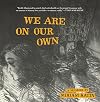
We are on Our Own tells the story of a Jewish mother and child during World War II who, forced to flee their home in Budapest, struggle to survive and eventually reunite with their family. The plot and dialogue are elliptical, just giving you the edges of the big picture of the events surrounding our main characters. What the text elides, the chaotic and rich pencil illustrations eagerly fill in, telling a story that is as much an emotional portrait as it is historical one. Katin's specific show more emphasis on faith (and the questioning thereof) provides a meaningful thematic throughline. show less
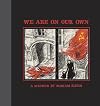
This lovely book, with its colored-pencil-and-graphite artwork, tells the memories of the young Katin as she lived through the 1944 German invasion of Budapest. 5-year-old Miriam’s father is at the front when the order comes for all Hungarian Jews to be rounded up, so her upper-class mother takes drastic and life-altering steps: She purchases false papers, saying that she is a country cleaning woman, and that Miriam is her illegitimate child. She then fakes her own death and vanishes into show more the countryside, Miriam in tow.
The next year is a grim and dangerous odyssey – always one step ahead of the Nazis, Miriam’s mother tries to make a life for the two of them on the run, making awful bargains along the way (she is forced to become an SS officer’s lover for a time, in exchange for his silence). Mother and daughter seek help from strangers, work on farms in exchange for meager lodgings, and barter their last few belongings to stay alive. And along the way, Miriam suspects that her strong childhood faith in God has been misplaced.
At last, the war ends, Miriam’s father reunites with the pair, and the family eventually ends up in New York. But although her parents make their peace with the world, Miriam is left with a lifelong bitterness and a lack of faith. One hopes that the creation of this book is perhaps her way of laying her demons once and for all. show less
The next year is a grim and dangerous odyssey – always one step ahead of the Nazis, Miriam’s mother tries to make a life for the two of them on the run, making awful bargains along the way (she is forced to become an SS officer’s lover for a time, in exchange for his silence). Mother and daughter seek help from strangers, work on farms in exchange for meager lodgings, and barter their last few belongings to stay alive. And along the way, Miriam suspects that her strong childhood faith in God has been misplaced.
At last, the war ends, Miriam’s father reunites with the pair, and the family eventually ends up in New York. But although her parents make their peace with the world, Miriam is left with a lifelong bitterness and a lack of faith. One hopes that the creation of this book is perhaps her way of laying her demons once and for all. show less
A memoir that mostly takes place in Hungary in the last year or so of WWII, where a young Miriam Katin and her mother are in hiding for fear that they will be captured like so many other Jewish people. These moments, depicted in softly blurred greyscale pencil, are contrasted with full colour glimpses at an older Katin's life in 1970s New York. But while I can understand and appreciate an understated/elliptical memoir—Katin was a very small child at the time of the war, so it makes sense show more that she didn't understand/notice everything that was happening—the same style applied to the parts of the book set later didn't work so well. I feel like Katin understood very well the point that she's trying to make about identity and (the loss of) faith, but she didn't convey it very clearly to the reader. show less
Lists
Awards


You May Also Like


Associated Authors
Statistics
- Works
- 2
- Also by
- 8
- Members
- 337
- Popularity
- #70,619
- Rating
- 3.6
- Reviews
- 11
- ISBNs
- 10
- Languages
- 4