
Lynn Curlee
Author of Liberty
About the Author
Works by Lynn Curlee
Tagged
Common Knowledge
Members
Reviews
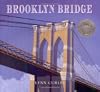
Read for my 365 Kids Book challenge. You can see all the books on their own shelf.
I love a great non-fiction picture book, chock full of factoids, and big pictures, and scale, and real people, etc. This isn't the only book I've read about the building of the Brooklyn Bridge, because I'm that kind of nerd. And this one is great. Lots of detail about how the bridge is made, amazing stuff about the steel cables and the bends and so on. Great stuff.
John Roebling invents the steel cables and show more designs the bridge then dies in 1869 after an accident, just as construction is beginning. His son, Washington, takes over as Chief Engineer. Then in 1872 Washington is debilitated by repeated attacks of the bends that leave him “an invalid, confined to his room and unable to endure the company of anyone except his wife. Although he gradually was able to work as effectively as before, during the eleven years remaining for its construction, Washington Roebling never once returned to the bridge site.” The stonework is finally completed in July 1876. Washington and his wife Emily return from New Jersey where he has been recuperating. “Already his best friend, nurse, and confidante, Emily Roebling had now become her husband’s secretary and personal assistant. She wrote his letters, helped with working drawings, and served as his eyes and ears, conveying his instructions to the assistant engineers and dealing personally with the trustees and contractors at the building site.”
Then a little farther down
I don’t know what we could consider objective truth when talking about partners and shared tasks, it tends to be grey and muddy. But Emily wrote the letters and made working drawings and nursed her husband for four years. Then she spent seven years on site in Brooklyn dealing with contractors, trustees, assistant engineers, problems and questions while still caring for her husband who was still debilitated and reclusive. So if instead of Washington’s wife it was his assistant that had stepped up, just as John’s assistant, Washington, had actually once done, no one would have ever questioned who was the Chief Engineer.
See it’s a great book: it even shows how women are routinely belittled and dismissed in STEM fields.
Library copy show less
I love a great non-fiction picture book, chock full of factoids, and big pictures, and scale, and real people, etc. This isn't the only book I've read about the building of the Brooklyn Bridge, because I'm that kind of nerd. And this one is great. Lots of detail about how the bridge is made, amazing stuff about the steel cables and the bends and so on. Great stuff.
John Roebling invents the steel cables and show more designs the bridge then dies in 1869 after an accident, just as construction is beginning. His son, Washington, takes over as Chief Engineer. Then in 1872 Washington is debilitated by repeated attacks of the bends that leave him “an invalid, confined to his room and unable to endure the company of anyone except his wife. Although he gradually was able to work as effectively as before, during the eleven years remaining for its construction, Washington Roebling never once returned to the bridge site.” The stonework is finally completed in July 1876. Washington and his wife Emily return from New Jersey where he has been recuperating. “Already his best friend, nurse, and confidante, Emily Roebling had now become her husband’s secretary and personal assistant. She wrote his letters, helped with working drawings, and served as his eyes and ears, conveying his instructions to the assistant engineers and dealing personally with the trustees and contractors at the building site.”
Then a little farther down
Eventually she knew as much as anyone about the techniques of bridge building, and later it was even rumored that she took over as Chief Engineer. While this was untrue..."
I don’t know what we could consider objective truth when talking about partners and shared tasks, it tends to be grey and muddy. But Emily wrote the letters and made working drawings and nursed her husband for four years. Then she spent seven years on site in Brooklyn dealing with contractors, trustees, assistant engineers, problems and questions while still caring for her husband who was still debilitated and reclusive. So if instead of Washington’s wife it was his assistant that had stepped up, just as John’s assistant, Washington, had actually once done, no one would have ever questioned who was the Chief Engineer.
See it’s a great book: it even shows how women are routinely belittled and dismissed in STEM fields.
Library copy show less
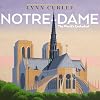
Well-rounded, information richness combines with a story-like atmosphere and lovely illustrations to open up the door on the history of the Cathedral of Notre Dame.
After a foreword, this book immediately dives into the fire, which almost destroyed the Notre-Dame before turning to the history of the cathedral, interesting events, facts, and then, the reconstruction. The author brings the information across in a smooth, narrative style, which makes sure to hit the highlights in an interesting show more way. It's not only about dates and facts but includes the emotional and human aspects to keep the reader connected to the material. Plus, it goes into needed depth to add reasoning and understanding, and this also guarantees that even Notre-Dame gurus will come out knowing more than before. At the very end, there's a quick rundown of information (height and more) for a compact overview of those numbers and such.
The illustrations are well done and make the details clear while adding atmosphere. These work well with the text to create a balanced read. The text itself is on the heavier end and works best with the mid and upper end of the age range. I'd even suggest this one to older readers...all the way through adults (a lighter read for them, but still interesting). This would work nicely in classrooms, for themes surrounding the Notre-Dame, or for homeschoolers. It, of course, is a gem for anyone who enjoys learning more about the Notre-Dame as well.
It was also soulful to read the editor's note at the end, which explains how this will, unfortunately, be the last work put out from this author. As someone who has enjoyed several of his books, I am sad to hear of this, wish him the best, and am glad to have run across his works. show less
After a foreword, this book immediately dives into the fire, which almost destroyed the Notre-Dame before turning to the history of the cathedral, interesting events, facts, and then, the reconstruction. The author brings the information across in a smooth, narrative style, which makes sure to hit the highlights in an interesting show more way. It's not only about dates and facts but includes the emotional and human aspects to keep the reader connected to the material. Plus, it goes into needed depth to add reasoning and understanding, and this also guarantees that even Notre-Dame gurus will come out knowing more than before. At the very end, there's a quick rundown of information (height and more) for a compact overview of those numbers and such.
The illustrations are well done and make the details clear while adding atmosphere. These work well with the text to create a balanced read. The text itself is on the heavier end and works best with the mid and upper end of the age range. I'd even suggest this one to older readers...all the way through adults (a lighter read for them, but still interesting). This would work nicely in classrooms, for themes surrounding the Notre-Dame, or for homeschoolers. It, of course, is a gem for anyone who enjoys learning more about the Notre-Dame as well.
It was also soulful to read the editor's note at the end, which explains how this will, unfortunately, be the last work put out from this author. As someone who has enjoyed several of his books, I am sad to hear of this, wish him the best, and am glad to have run across his works. show less
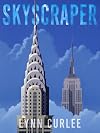
There was absolutely nothing to take exception to in this book and the illustrations were excellent. There is an excellent diagram near the end to show the relative sizes of the skyscrapers and a fine illustration near the beginning juxtaposing earlier monuments and modern skyscrapers. There is a full page inset listing the technological innovations that made skyscrapers possible. The book is a bit tall and narrow to match the theme. I think a child might find it exciting, and this adult show more found it aesthetically pleasing to the highest degree.
The book was written after the destruction of the World Trade Center and before the completion of the new skyscraper that was put in its place. It treats these topics soberly. show less
The book was written after the destruction of the World Trade Center and before the completion of the new skyscraper that was put in its place. It treats these topics soberly. show less
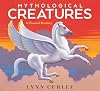
This book depressed me rather. I think Curlee is best at transportation, really good at modern buildings, fine at ancient buildings, and rather poor at figure drawing. Yet figure drawing is what he is doing for most of this book. I kept wishing he had done a book about submarines instead. That book would have been wonderful.
This book does have good points, though. The picture of the "realistic" gorgon's head on a shield on the page facing the title page is followed by a picture of Athena and show more Apollo; Athena's shield has a stylized painting of a gorgon's head on its face. The picture of Cerberus, showing the left head looking like that of a happy Great Dane, the middle head like the hound of the Baskervilles, and the head farthest from Orpheus a slavering monster is fun. I think in this instance Curlee was probably able to inspire himself with gargoyles, which are sort of architectural, and more suitable for him.
But the arrangement is poor. Each page gets a monster, but the story tries to be a narrative on occasion, and yet sometimes is disjoint. It's not chronological, Polyphemus pops up somewhere in the middle of the book, but from a mythological standpoint is one of the last monsters ever. Scylla doesn't get a mention. Go figure.
Oh, if only Curlee had done an awesome book about submarines instead! show less
This book does have good points, though. The picture of the "realistic" gorgon's head on a shield on the page facing the title page is followed by a picture of Athena and show more Apollo; Athena's shield has a stylized painting of a gorgon's head on its face. The picture of Cerberus, showing the left head looking like that of a happy Great Dane, the middle head like the hound of the Baskervilles, and the head farthest from Orpheus a slavering monster is fun. I think in this instance Curlee was probably able to inspire himself with gargoyles, which are sort of architectural, and more suitable for him.
But the arrangement is poor. Each page gets a monster, but the story tries to be a narrative on occasion, and yet sometimes is disjoint. It's not chronological, Polyphemus pops up somewhere in the middle of the book, but from a mythological standpoint is one of the last monsters ever. Scylla doesn't get a mention. Go figure.
Oh, if only Curlee had done an awesome book about submarines instead! show less
Lists
Awards


You May Also Like


Statistics
- Works
- 16
- Members
- 1,834
- Popularity
- #14,034
- Rating
- 3.8
- Reviews
- 81
- ISBNs
- 68
- Languages
- 1