
John A. Farrell
Author of Richard Nixon: The Life
About the Author
John A. Farrell is the Washington editor of the Boston Globe. He lives in Kensington, Maryland. John A. Farrell is a journalist and editor, born on Long Island, New York. He is a graduate of the University of Virginia. He worked in Washington for the Boston Globe as an editor and White House show more correspondent. He has also worked for the Annapolis Evening Capital, the Baltimore News American, The Denver Post and National Journal. He is a contributing editor to Politico Magazine and a contributor to The Atlantic. His awards include the Gerald R. Ford prize, the Aldo Beckman Award, Raymond Clapper Memorial Award, Roy Howard Public Service Prize, and a George Polk Award. He is the author of Clarence Darrow: Attorney for the Damned, which was awarded the Los Angeles Times book prize for best biography of 2011, Tip O'Neill and the Democratic Century, and Richard Nixon: The Life. (Bowker Author Biography) show less
Image credit: John Farrell at the 2012 National Book Festival By Slowking4 - Own work, GFDL 1.2, https://commons.wikimedia.org/w/index.php?curid=21582161
Works by John A. Farrell
Tagged
Common Knowledge
- Legal name
- Farrell, John Aloysius
- Other names
- Farrell, Jack (known as)
- Birthdate
- 1953-01-12
- Gender
- male
- Education
- University of Virginia
- Occupations
- journalist
biographer - Organizations
- The Boston Globe
- Nationality
- USA
- Birthplace
- Long Island, New York, USA
- Associated Place (for map)
- New York, USA
Members
Reviews
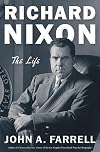
As the 1976 presidential election approached, it struck me that one man—Richard Nixon—had been on the ticket in five of the previous six elections. As far back as I could remember, he had been a significant player on the political scene. It follows that you cannot understand his life and career apart from the times in which he lived, nor can you understand national and world affairs in the second half of the twentieth century without considering him.
Add to that a personality that show more was—to put it mildly—complicated, and you have a daunting challenge for any prospective biographer.
John A. Farrell met and mastered this challenge.
This book would be valuable for its research alone. Farrell was the first to have access to nearly all of the oval office tapes (some with a bearing on national security remain under wraps) as well as memos and other written records. Among his scoops was uncovering written evidence of the long-rumored Chennault affair, thus documenting Nixon’s felonious, perhaps treasonous, sabotage of the Paris peace talks in 1968. Sadly, other than securing his presidential election, it achieved nothing. The deal finally struck four years later, after the death of 20,000 further G.I.s and many times that of Vietnamese and other Asians, was the same as that tabled in 1968.
Farrell interviewed many figures associated with Nixon, both as friends and enemies. The fact that Nixon had enemies should come as no surprise. Perhaps no other U. S. political figure in the twentieth century was as vilified as he, something he more than reciprocated; Nixon was a consummate grudge-holder and hater. Farrell calls it a cycle of enmity.
In this trait, he was his father’s son. Farrell traces how the root of Nixon’s divided nature was that, at times, he was Frank Nixon’s son and, at other times, Hannah’s. Nixon idolized his Quaker mother yet received little nurturing from her to balance his father’s demanding and brutal treatment. Even if she hadn’t been absorbed with caring for two tubercular sons who died, she was an emotionally remote person. Farrell observes that Nixon early concluded that he was not easy to like and that it hurt him.
So, Nixon had his enemies. For me, though, the insights Farrell obtained in his interviews with Nixon’s friends, associates, and supporters were revealing. None of them were blind to how deeply-flawed Nixon was. Some, like Henry Kissinger, saw him in terms of Greek tragedy, in which the protagonist’s fate is clearly foreshadowed by his character yet unavoidable.
I was provoked to read this by watching Robert Altman’s harrowing masterpiece, Secret Honor. Until then, I thought I’d known all I needed to know about “tricky Dick” from what I couldn’t avoid knowing by following the news. The film made me curious to get a detailed overview, however. A half-century after Nixon became the only president to resign from office, the time was also ripe. There was enough distance that I could revise my judgment. I had forgotten how many genuine domestic achievements came in his first term. But even that is complicated. Nixon had little interest in domestic affairs; his expertise and passion were in foreign affairs. Yet he staffed his administration with several talented hires in domestic affairs and let them get on with it.
Yet even that is not the whole story. His administration’s remarkable progress in school desegregation accorded with his long-held progressive views on civil rights. If that surprises you as it did me, it’s because Nixon realized early on that few votes would be gained if that side of him were known. The same holds true with his moderately enlightened personal views on abortion and same-sex partnerships. Meanwhile, when Spiro Agnew, Pat Buchanan, and others waged their campaign to divide Americans, they knew they did so with their boss’s blessing. At least, the Frank Nixon side of him. And both his Frank and Hannah sides deplored hippies, free love, drugs, and crime.
Yet, as mentioned, it was to foreign affairs that Nixon devoted his attention, achieving an astounding reset through his trip to China and the SALT talks with the Soviet Union. In this, he was seconded by Kissinger, but this was his strategy. Kissinger, by the way, is comically obsequious in the tape excerpts quoted by Farrell.
Above all, it is remarkable how such an awkward, troubled man could rise to the political pinnacle through hard work and force of will. That, and from the outset, generous donations from California oilmen, discretely funneled through back channels. This aspect of Nixon’s career is also documented. He was not only a self-made man; he was, from his first campaign for congress, a “made” man. This willingness to bend his convictions to conform to his wealthy backers and the ruthlessness and skillful use of innuendo with which he waged every campaign he entered from 1946 on is distasteful. It’s no wonder that when the amateurish Watergate break-in led to the walls inexorably closing in on him, Nixon had few reserves of goodwill among those who knew him best, whether friend or foe. show less
Add to that a personality that show more was—to put it mildly—complicated, and you have a daunting challenge for any prospective biographer.
John A. Farrell met and mastered this challenge.
This book would be valuable for its research alone. Farrell was the first to have access to nearly all of the oval office tapes (some with a bearing on national security remain under wraps) as well as memos and other written records. Among his scoops was uncovering written evidence of the long-rumored Chennault affair, thus documenting Nixon’s felonious, perhaps treasonous, sabotage of the Paris peace talks in 1968. Sadly, other than securing his presidential election, it achieved nothing. The deal finally struck four years later, after the death of 20,000 further G.I.s and many times that of Vietnamese and other Asians, was the same as that tabled in 1968.
Farrell interviewed many figures associated with Nixon, both as friends and enemies. The fact that Nixon had enemies should come as no surprise. Perhaps no other U. S. political figure in the twentieth century was as vilified as he, something he more than reciprocated; Nixon was a consummate grudge-holder and hater. Farrell calls it a cycle of enmity.
In this trait, he was his father’s son. Farrell traces how the root of Nixon’s divided nature was that, at times, he was Frank Nixon’s son and, at other times, Hannah’s. Nixon idolized his Quaker mother yet received little nurturing from her to balance his father’s demanding and brutal treatment. Even if she hadn’t been absorbed with caring for two tubercular sons who died, she was an emotionally remote person. Farrell observes that Nixon early concluded that he was not easy to like and that it hurt him.
So, Nixon had his enemies. For me, though, the insights Farrell obtained in his interviews with Nixon’s friends, associates, and supporters were revealing. None of them were blind to how deeply-flawed Nixon was. Some, like Henry Kissinger, saw him in terms of Greek tragedy, in which the protagonist’s fate is clearly foreshadowed by his character yet unavoidable.
I was provoked to read this by watching Robert Altman’s harrowing masterpiece, Secret Honor. Until then, I thought I’d known all I needed to know about “tricky Dick” from what I couldn’t avoid knowing by following the news. The film made me curious to get a detailed overview, however. A half-century after Nixon became the only president to resign from office, the time was also ripe. There was enough distance that I could revise my judgment. I had forgotten how many genuine domestic achievements came in his first term. But even that is complicated. Nixon had little interest in domestic affairs; his expertise and passion were in foreign affairs. Yet he staffed his administration with several talented hires in domestic affairs and let them get on with it.
Yet even that is not the whole story. His administration’s remarkable progress in school desegregation accorded with his long-held progressive views on civil rights. If that surprises you as it did me, it’s because Nixon realized early on that few votes would be gained if that side of him were known. The same holds true with his moderately enlightened personal views on abortion and same-sex partnerships. Meanwhile, when Spiro Agnew, Pat Buchanan, and others waged their campaign to divide Americans, they knew they did so with their boss’s blessing. At least, the Frank Nixon side of him. And both his Frank and Hannah sides deplored hippies, free love, drugs, and crime.
Yet, as mentioned, it was to foreign affairs that Nixon devoted his attention, achieving an astounding reset through his trip to China and the SALT talks with the Soviet Union. In this, he was seconded by Kissinger, but this was his strategy. Kissinger, by the way, is comically obsequious in the tape excerpts quoted by Farrell.
Above all, it is remarkable how such an awkward, troubled man could rise to the political pinnacle through hard work and force of will. That, and from the outset, generous donations from California oilmen, discretely funneled through back channels. This aspect of Nixon’s career is also documented. He was not only a self-made man; he was, from his first campaign for congress, a “made” man. This willingness to bend his convictions to conform to his wealthy backers and the ruthlessness and skillful use of innuendo with which he waged every campaign he entered from 1946 on is distasteful. It’s no wonder that when the amateurish Watergate break-in led to the walls inexorably closing in on him, Nixon had few reserves of goodwill among those who knew him best, whether friend or foe. show less
I thought the author had a conservative slant, with constant mentions of the liberal media, the liberal Kennedys, etc and if Nixon did something bad you can be sure he’ll mention an example of a Democrat who did something similar. At first this annoyed me but I started to appreciate it because it’s closer to the mindset of the subject. I did like that he showed the human side of him as well since Nixon’s insecurity and awkwardness are the traits that endear him to me.
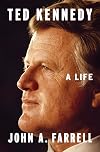
(2) I loved this book! I am not sure why it does not seem to be more popular on LT. Long-listed for the National non-fiction book award 2022. I am not always a big biography reader, but I am from Massachusetts and grew up with Kennedy as our senator. My parents were Kennedy Democrats and my city was full of working class Irish/Italian immigrants flowing out from South Boston. I named my son Edward, and we call him Teddy - in homage to Massachusetts - my grandfather, Ted Williams, and Ted show more Kennedy - so of course I would read this...
I am amazed at how many things that are commonplace now such as HIPPA, CHIP, chain immigration had Kennedy's imprint on them. In addition, he was key in brokering peace in Northern Ireland and ending the Vietnam War. Amazing that senators actually worked across party lines in my lifetime. What a great senator he was. I completely remember like it was yesterday his showing up to vote on healthcare legislation while dying of brain cancer, JFK, Jrs plane crash, the skiing death of RFK's son, the Palm Beach trial of William Kennedy Smith. Of course what I don't remember is Chappaquidick, but felt its ghost in the whispered conversations of my elders. .. and read Joyce Carol Oates 'Black Water,' -- masterful.
Anyway, I read this voraciously for some reason. Whether it is a feeling of personal connection; whether it was because it was so well-written; so compelling -- I don't know. I just know I liked it and it was incredibly interesting to have some perspective on US events through the Bush and Clinton years. The reflective hindsight of an intelligent well informed author really helped me see things I lived through in a historical context that I found essentially 'unputdownable.' This seems weird for non-fiction biography for me. Not my usual response.
I miss Teddy with all his flaws despite the fact that I haven't lived in Mass. for most of my adult life. I have empathy, respect, and admiration for him despite his flaws. Great and fascinating reading for light-weight non-fiction readers like myself. Reads more like narrative and while long acknowledgments and sourcing - no footnotes or other distracting academia. Bravo! RIP John, Robert, and Teddy. show less
I am amazed at how many things that are commonplace now such as HIPPA, CHIP, chain immigration had Kennedy's imprint on them. In addition, he was key in brokering peace in Northern Ireland and ending the Vietnam War. Amazing that senators actually worked across party lines in my lifetime. What a great senator he was. I completely remember like it was yesterday his showing up to vote on healthcare legislation while dying of brain cancer, JFK, Jrs plane crash, the skiing death of RFK's son, the Palm Beach trial of William Kennedy Smith. Of course what I don't remember is Chappaquidick, but felt its ghost in the whispered conversations of my elders. .. and read Joyce Carol Oates 'Black Water,' -- masterful.
Anyway, I read this voraciously for some reason. Whether it is a feeling of personal connection; whether it was because it was so well-written; so compelling -- I don't know. I just know I liked it and it was incredibly interesting to have some perspective on US events through the Bush and Clinton years. The reflective hindsight of an intelligent well informed author really helped me see things I lived through in a historical context that I found essentially 'unputdownable.' This seems weird for non-fiction biography for me. Not my usual response.
I miss Teddy with all his flaws despite the fact that I haven't lived in Mass. for most of my adult life. I have empathy, respect, and admiration for him despite his flaws. Great and fascinating reading for light-weight non-fiction readers like myself. Reads more like narrative and while long acknowledgments and sourcing - no footnotes or other distracting academia. Bravo! RIP John, Robert, and Teddy. show less
The sun of a thousand virtues can be cloaked by one night of vice
And thus it was with Robert Nixon, the 37th President of the United States and the only president ever to resign from his office.
Farrell's virtue, in this book, lies in his crafting of a very endearing biography of Robert Nixon while also factually portraying his notoriously premier role in the Watergate Scandal which brought about his downfall. He charts Nixon's early poverty-stricken years; his military service and meteoric show more rise as Congress elect and budding Senator during the McCarthy era.
The reader is treated to a frontline seat as Nixon clinches the Vice Presidency from Eisenhower; almost forfeits it and then fights to retain it as well as his absolution in the form of his leading the Republicans to victory post-Kennedy.
Then, Farrell takes a dark turn and logically so. Based on primary material we witness the real Nixon. The groundbreaking statesman who forces Russia to a treaty and re-introduces isolationist China to the world but also a deeply suspicious and vitriolic man intoxicated by the power bequeathed to him. We journey to the dizzying heights of the Watergate edifice which has Nixon's insecurities about journalists and opponents in full glare; his over-excessive reaction to the Pentagon Papers scandal and his obfuscation of himself with the powers of an executive until he recognizes no limit to himself. Statesman but also an insecure human being with profound sadness permeating his life-Farrell makes a convincing case for the fact that had it not been for his missteps in his reaction to Watergate leaking, Nixon would today have been invoked as one of the USA's finest Presidents.
Overall, I thoroughly enjoyed Farrell's narration of Nixon's life which is laced with considerable wit. It does not detract from Nixon as a warm human and neither does it pillory him for Watergate. Rather, it leaves that ultimate decision to the reader. I confess that I did not put this book down until bedtime. A mesmerizing and memorable read with considerably important lessons for all of us today. show less
And thus it was with Robert Nixon, the 37th President of the United States and the only president ever to resign from his office.
Farrell's virtue, in this book, lies in his crafting of a very endearing biography of Robert Nixon while also factually portraying his notoriously premier role in the Watergate Scandal which brought about his downfall. He charts Nixon's early poverty-stricken years; his military service and meteoric show more rise as Congress elect and budding Senator during the McCarthy era.
The reader is treated to a frontline seat as Nixon clinches the Vice Presidency from Eisenhower; almost forfeits it and then fights to retain it as well as his absolution in the form of his leading the Republicans to victory post-Kennedy.
Then, Farrell takes a dark turn and logically so. Based on primary material we witness the real Nixon. The groundbreaking statesman who forces Russia to a treaty and re-introduces isolationist China to the world but also a deeply suspicious and vitriolic man intoxicated by the power bequeathed to him. We journey to the dizzying heights of the Watergate edifice which has Nixon's insecurities about journalists and opponents in full glare; his over-excessive reaction to the Pentagon Papers scandal and his obfuscation of himself with the powers of an executive until he recognizes no limit to himself. Statesman but also an insecure human being with profound sadness permeating his life-Farrell makes a convincing case for the fact that had it not been for his missteps in his reaction to Watergate leaking, Nixon would today have been invoked as one of the USA's finest Presidents.
Overall, I thoroughly enjoyed Farrell's narration of Nixon's life which is laced with considerable wit. It does not detract from Nixon as a warm human and neither does it pillory him for Watergate. Rather, it leaves that ultimate decision to the reader. I confess that I did not put this book down until bedtime. A mesmerizing and memorable read with considerably important lessons for all of us today. show less
Lists
Awards


You May Also Like


Associated Authors
Statistics
- Works
- 4
- Members
- 811
- Popularity
- #31,468
- Rating
- 4.3
- Reviews
- 22
- ISBNs
- 29
- Favorited
- 1
