
Mike Monteiro
Author of Design Is a Job
About the Author
Works by Mike Monteiro
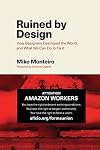
Ruined by Design: How Designers Destroyed the World and What We Can Do to Fix It (2019) 138 copies, 2 reviews
How to die (and other stories) 4 copies
Design Ethics 2 copies
Tagged
Common Knowledge
- Gender
- male
Members
Reviews
7/8/19
I don't always write reviews, and when I do, they tend to be more of reactions than "thoughtful analysis." Furthermore, I don't believe I have ever written any kind of review before finishing a book, unless to say that the book was so awful I couldn't finish it. Well, this isn't quite that. I'm commenting now, with half the book yet to go, because I'm irritated by how long it's taking me to get through the damn thing. It's taking me forever because Ruined by Design is sort of ruined by show more its design, i.e it's an unchecked, unmitigated rant. However, there's enough here to keep me wading in his waters for fear of throwing the baby out with the bath water. Still,ugh... Additional reactions forthcoming.
7/13/19
I'm no further along but continue to see more trains attaching to the car. Monteiro particularly calls out Twitter, Facebook, and Uber as prime examples of designer abetted malfeasance. Today Wired has published an op-ed by Guilluime Chasbot, YouTube's former AI engineer, and The Guardian UK has a piece similar in spirit on Craiglist's Craig Newmark in which he talks about "the way in which social media can be weaponized." Though Newmark doesn't discuss it as a design issue, the interviewer frame it as a problem with the ecosystem, and that does point back to a flaw in the design a la Monteiro.
1/14/20
Phew! Wow, that was sort of a slog but a worthwhile slog. A slog worth enduring, I think. By number of pages, not very long, but a bit much at times in ways aforementioned. Sidenote, Slate's "Evil List" of tech companies who are doing the most harm, was published today. Their definition is evil "in the way Googlers once swore to avoid mission drift, respect their users, and spurn short-term profiteering, even though the company now regularly faces scandals in which it has violated its users’ or workers’ trust. We mean ills that outweigh conveniences. We mean temptations and poison pills and unanticipated outcomes."
Well that's what Ruined by Design is all about. Unfortunately there are too many examples of malfeasance for Monteiro to choose from with more rising to public acknowledgement each day. He tackles some of these exhaustively, but I think the most important stuff is in the last chapters when he makes cases for three interesting and important remedies.
The case for starting a design community: "If we agree that we work within an ethical framework, as most other profession of our caliber do, then we can elevate not just the type of work we do and how we do it, but also the society which that work ends up affecting." Right now many of these companies set themselves up to become their employees' de facto community, which makes might seem like a benevolent benefit to the workers, but is really designed to benefit the company by essentially locking in one's loyalty to the company instead of to the world at large (i.e. service and product users). This is the backbone of incidents such as Mark Zuckerberg's infamous "what's good for Facebook is good for the world."
The case for professional organizations, inc. unions--to set standards, codes of professional conduct, and provide mentorship; to resolve disputes and provide legal representation; and perhaps group benefits and/or financial services. These things would give designers greater freedom to confront or walk away from unethical employers.
The case for licensing and regulation:Licensing practitioners and regulating industries don't solve all problems, but they do provide some sort of accountability. From lawyers and doctors to drivers and realtors and from the airline and financial services industries to nursing homes, these exist, to varying degrees of success, to protect the public from potential harm. I found his arguments here very compelling. Again, these won't prevent bad outcomes, but at least "guarantee" some sort of qualifications to do a job (license) and oversight (regulation).
Most compelling of all, however, is his broad definition of a designer. While ostensibly, he's mostly writing to/for user experience designers, right from the beginning he writes that regardless of whether your job has "designer" in the title, "if you're affecting how a product works in any way whatsoever" or have any impact on a final design, product, service, or result, you're designing, whether it's fashion or Congressional districts. He further qualifies, and quite rightly, that "design is a political act. What we choose to design and more importantly, what we choose not to design, and even more importantly, who exclude from the design process--these are all political acts. ... And he quotes the 20th century designer Victor Papanek, who said, "You are responsible for what you put into the world. And you are responsible for the effects those things have upon the world." That's the crux of the entire book. Read it. Maybe try to live it. show less
I don't always write reviews, and when I do, they tend to be more of reactions than "thoughtful analysis." Furthermore, I don't believe I have ever written any kind of review before finishing a book, unless to say that the book was so awful I couldn't finish it. Well, this isn't quite that. I'm commenting now, with half the book yet to go, because I'm irritated by how long it's taking me to get through the damn thing. It's taking me forever because Ruined by Design is sort of ruined by show more its design, i.e it's an unchecked, unmitigated rant. However, there's enough here to keep me wading in his waters for fear of throwing the baby out with the bath water. Still,ugh... Additional reactions forthcoming.
7/13/19
I'm no further along but continue to see more trains attaching to the car. Monteiro particularly calls out Twitter, Facebook, and Uber as prime examples of designer abetted malfeasance. Today Wired has published an op-ed by Guilluime Chasbot, YouTube's former AI engineer, and The Guardian UK has a piece similar in spirit on Craiglist's Craig Newmark in which he talks about "the way in which social media can be weaponized." Though Newmark doesn't discuss it as a design issue, the interviewer frame it as a problem with the ecosystem, and that does point back to a flaw in the design a la Monteiro.
1/14/20
Phew! Wow, that was sort of a slog but a worthwhile slog. A slog worth enduring, I think. By number of pages, not very long, but a bit much at times in ways aforementioned. Sidenote, Slate's "Evil List" of tech companies who are doing the most harm, was published today. Their definition is evil "in the way Googlers once swore to avoid mission drift, respect their users, and spurn short-term profiteering, even though the company now regularly faces scandals in which it has violated its users’ or workers’ trust. We mean ills that outweigh conveniences. We mean temptations and poison pills and unanticipated outcomes."
Well that's what Ruined by Design is all about. Unfortunately there are too many examples of malfeasance for Monteiro to choose from with more rising to public acknowledgement each day. He tackles some of these exhaustively, but I think the most important stuff is in the last chapters when he makes cases for three interesting and important remedies.
The case for starting a design community: "If we agree that we work within an ethical framework, as most other profession of our caliber do, then we can elevate not just the type of work we do and how we do it, but also the society which that work ends up affecting." Right now many of these companies set themselves up to become their employees' de facto community, which makes might seem like a benevolent benefit to the workers, but is really designed to benefit the company by essentially locking in one's loyalty to the company instead of to the world at large (i.e. service and product users). This is the backbone of incidents such as Mark Zuckerberg's infamous "what's good for Facebook is good for the world."
The case for professional organizations, inc. unions--to set standards, codes of professional conduct, and provide mentorship; to resolve disputes and provide legal representation; and perhaps group benefits and/or financial services. These things would give designers greater freedom to confront or walk away from unethical employers.
The case for licensing and regulation:Licensing practitioners and regulating industries don't solve all problems, but they do provide some sort of accountability. From lawyers and doctors to drivers and realtors and from the airline and financial services industries to nursing homes, these exist, to varying degrees of success, to protect the public from potential harm. I found his arguments here very compelling. Again, these won't prevent bad outcomes, but at least "guarantee" some sort of qualifications to do a job (license) and oversight (regulation).
Most compelling of all, however, is his broad definition of a designer. While ostensibly, he's mostly writing to/for user experience designers, right from the beginning he writes that regardless of whether your job has "designer" in the title, "if you're affecting how a product works in any way whatsoever" or have any impact on a final design, product, service, or result, you're designing, whether it's fashion or Congressional districts. He further qualifies, and quite rightly, that "design is a political act. What we choose to design and more importantly, what we choose not to design, and even more importantly, who exclude from the design process--these are all political acts. ... And he quotes the 20th century designer Victor Papanek, who said, "You are responsible for what you put into the world. And you are responsible for the effects those things have upon the world." That's the crux of the entire book. Read it. Maybe try to live it. show less

2025. I had to get the “shitty pulp edition.” Such great design. Reverses to The Official Elon Musk Joke Book, which is just one long joke about three pages long. Mike is right about everything generally, but I just come away from it going, oh I’m part of the problem. It’s one of those you-have-to-make-yourself-uncomfortable-for-justice books. Like no, being comfortable is my whole goal in life. This book also includes incredibly specific directions for how to be an ethical designer. show more Appropriate for anyone with a tech job. Mike is funny. See his zine “Don’t Build the Torment Nexus.” I think we are probably too deep inside the Torment Nexus to do much good. I think I have given up. Don’t mind me. Everyone else go about your business fighting for justice. I’ll be over here on the couch. show less

I'm not a freelancer or in a small design house where I need to worry about things like billing and contracts (or then again maybe I do, there are things that have gone wrong for me that this suggests should have had expectations set in initial negotiations...), but the advice in here was still well worth reading, especially chapters on process, presenting, and managing feedback.

This is the shit you need
Designing? Thinking about designing? Responsible for designers? Read this book/manifesto to help stop destroying the world. We all need more rabble rousing in our lives, and Monteiro is showing us how to do it.
Designing? Thinking about designing? Responsible for designers? Read this book/manifesto to help stop destroying the world. We all need more rabble rousing in our lives, and Monteiro is showing us how to do it.
Lists
You May Also Like


Associated Authors
Statistics
- Works
- 11
- Members
- 394
- Popularity
- #61,533
- Rating
- 4.1
- Reviews
- 8
- ISBNs
- 15
- Languages
- 1