
Doug Pagitt
Author of Reimagining Spiritual Formation: A Week in the Life of an Experimental Church
About the Author
Doug Pagitt is pastor of Solomon's Porch, a congregation in Minneapolis that focuses on addressing human needs in the neighboring community and facilitating a more personal encounter with God. He is also host of Doug Pagitt Radio and the author of several books, including A Christianity Worth show more Believing. Pagitt and his wife, Shelley, live in Minneapolis. show less
Image credit: Used by permission of Baker Publishing Group, copyright © 2008. All rights to this material are reserved. Materials are not to be distributed to other web locations for retrieval, published(see © info.)
Works by Doug Pagitt
Reimagining Spiritual Formation: A Week in the Life of an Experimental Church (2004) 341 copies, 2 reviews
A Christianity Worth Believing: Hope-filled, Open-armed, Alive-and-well Faith for the Left Out, Left Behind, and Let Down in us All (2008) 134 copies, 2 reviews
Flipped: The Provocative Truth That Changes Everything We Know About God (2015) 21 copies, 2 reviews
Associated Works
Tagged
Common Knowledge
- Birthdate
- 1966-07-05
- Gender
- male
Members
Reviews
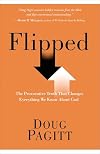
Doug Pagitt is probably a familiar name to anybody who has dipped their toes in the emergent church waters. While the emerging church generally balks at hierarchy, Pagitt is considered by many to be a founding father of the movement. Not only was he influential in the emerging church movement of the nineties, he started the Emergent Village network along with Brian McLaren, Tony Jones, and others. He’s certainly played a role in the theological and ecumenical shifts that have taken place show more in America’s Christian landscape over the past twenty years. In his latest book, Flipped: The Provocative Truth that Changes Everything We Know About God, Pagitt seeks to push Christianity even further.
In the fashion of Rob Bell, Doug reveals the trajectory of the book by using a simple, memorable word: flipped. Doug’s definition of flipping is: to completely change one’s mind about an idea or relationship to a thing; to completely change directions. He believes that flips are indicative of growth, life, and spiritual vitality. I couldn’t help but see the correlation between Jesus’ call to repent, which was really a call to change perspective, and this definition of flip. Much like the great Christian communicator Eugene Peterson, Pagitt took the heart of a tired and misused word like “repent” and gave it fresh new life.
The main flip that Doug wants to convey to readers arises from Paul’s sermon on Mars Hill. During that sermon Paul said to the Athenians “God isn’t far away from any of us. In God we live, move, and exist.” Through his own personal story, Doug shares how a friend helped him flip his own understanding about the relationship between God and humanity.
Like many of us, Doug was given a worldview that operated on the premise that God was distant and disconnected from humanity. He believed and taught that “adapters” were necessary to allow humanity to connect with the divine. He shares how flipping his perspective to one that saw all of creation in God rather than separated from God, changed how he lived, worked, and read the scriptures.
By examining well-known stories from the Bible, Doug makes a strong case that many of them are about flipping. He shows how the story of Abraham was a huge flip in not only Abraham’s understanding of God, but the morality of child sacrifice in that time period. He also highlights the many instances when Jesus flipped the first century understanding of the temple, the Torah, sacrifice, and the politics of Israel. He also points out Jesus’ call for modern followers to flip their understanding of ecology, relationships, and violence. Strangely there was little discussion of Paul’s momentous flip, but the point was clear that scripture not only captures historical flips, but calls modern readers to flip as well.
Circling back to the main premise of the book, Pagitt engages a common and important topic inside the Christian tradition. Christianity has always wrestled with the idea that certain actions or abstinence will curry God’s favor. In recent decades this topic has become a key issue in the spiritual-but-not-religious debate. Pagitt shows that embracing the view that all things exist in God settles that debate. If God is, as Paul states in his Mars Hill sermon, without need and the existence of humanity is not separate from God, then God’s favor is already with us.
This section appealed most to me as a reader because I’ve spent most of my life learning and practicing if/then Christianity’s approach to God (i.e. if I do this, then God will do that). After spending a year digging into the book of Matthew, my understanding was irreversibly altered. Once I stepped away from viewing Jesus as just a transactional element that “bridged” the distance between myself and God, I was forced to reevaluate my faith. The if/then way seemed so contrary to what I had read about Jesus’ life and teachings that I could no longer subscribe to it. Even today, hearing if/then approaches to God cause an almost physical reaction in me.
Of course there are valid objections to the implications of embracing Pagitt’s view of God. Won’t God become impersonal and vague? Won’t there be a loss of distinct Christian identity or complacency towards sin? Pagitt addresses these concerns with some scientific metaphors about the duality of light waves and a few personal stories. However, I felt that his responses didn’t take the objections seriously enough.
Speaking from my experience, I have had a loss of distinct Christian identity and a feeling that God is less personal since leaving behind my if/then understanding of God. And while I still have a strong sense of what is right and wrong, it’s hard to offer a concrete reason for my morality. I would have liked to hear stories from people who also struggled with these problems, and not just hearing that it wasn’t an issue for the author.
The book also seemed disjointed at times. While reading I felt that it jumped from idea to idea without a clear line of continuity. It wasn’t until a few days after finishing the book that I was able to see how each section built on each other. Unfortunately they didn’t build to a satisfying conclusion. Like playing a scale without returning to the root note, the last chapter left the book felt unresolved for me.
Having never read Doug Pagitt before, this book met my expectations. Despite some of the shortcoming, I thought the section about if/then approaches to God was excellent and important. I also really appreciated that he tried to use language that carried less religious baggage. The supporting arguments weren’t as robust McLaren and the storytelling wasn’t as compelling as Rob Bell, but it was still a good read. show less
In the fashion of Rob Bell, Doug reveals the trajectory of the book by using a simple, memorable word: flipped. Doug’s definition of flipping is: to completely change one’s mind about an idea or relationship to a thing; to completely change directions. He believes that flips are indicative of growth, life, and spiritual vitality. I couldn’t help but see the correlation between Jesus’ call to repent, which was really a call to change perspective, and this definition of flip. Much like the great Christian communicator Eugene Peterson, Pagitt took the heart of a tired and misused word like “repent” and gave it fresh new life.
The main flip that Doug wants to convey to readers arises from Paul’s sermon on Mars Hill. During that sermon Paul said to the Athenians “God isn’t far away from any of us. In God we live, move, and exist.” Through his own personal story, Doug shares how a friend helped him flip his own understanding about the relationship between God and humanity.
Like many of us, Doug was given a worldview that operated on the premise that God was distant and disconnected from humanity. He believed and taught that “adapters” were necessary to allow humanity to connect with the divine. He shares how flipping his perspective to one that saw all of creation in God rather than separated from God, changed how he lived, worked, and read the scriptures.
By examining well-known stories from the Bible, Doug makes a strong case that many of them are about flipping. He shows how the story of Abraham was a huge flip in not only Abraham’s understanding of God, but the morality of child sacrifice in that time period. He also highlights the many instances when Jesus flipped the first century understanding of the temple, the Torah, sacrifice, and the politics of Israel. He also points out Jesus’ call for modern followers to flip their understanding of ecology, relationships, and violence. Strangely there was little discussion of Paul’s momentous flip, but the point was clear that scripture not only captures historical flips, but calls modern readers to flip as well.
Circling back to the main premise of the book, Pagitt engages a common and important topic inside the Christian tradition. Christianity has always wrestled with the idea that certain actions or abstinence will curry God’s favor. In recent decades this topic has become a key issue in the spiritual-but-not-religious debate. Pagitt shows that embracing the view that all things exist in God settles that debate. If God is, as Paul states in his Mars Hill sermon, without need and the existence of humanity is not separate from God, then God’s favor is already with us.
This section appealed most to me as a reader because I’ve spent most of my life learning and practicing if/then Christianity’s approach to God (i.e. if I do this, then God will do that). After spending a year digging into the book of Matthew, my understanding was irreversibly altered. Once I stepped away from viewing Jesus as just a transactional element that “bridged” the distance between myself and God, I was forced to reevaluate my faith. The if/then way seemed so contrary to what I had read about Jesus’ life and teachings that I could no longer subscribe to it. Even today, hearing if/then approaches to God cause an almost physical reaction in me.
Of course there are valid objections to the implications of embracing Pagitt’s view of God. Won’t God become impersonal and vague? Won’t there be a loss of distinct Christian identity or complacency towards sin? Pagitt addresses these concerns with some scientific metaphors about the duality of light waves and a few personal stories. However, I felt that his responses didn’t take the objections seriously enough.
Speaking from my experience, I have had a loss of distinct Christian identity and a feeling that God is less personal since leaving behind my if/then understanding of God. And while I still have a strong sense of what is right and wrong, it’s hard to offer a concrete reason for my morality. I would have liked to hear stories from people who also struggled with these problems, and not just hearing that it wasn’t an issue for the author.
The book also seemed disjointed at times. While reading I felt that it jumped from idea to idea without a clear line of continuity. It wasn’t until a few days after finishing the book that I was able to see how each section built on each other. Unfortunately they didn’t build to a satisfying conclusion. Like playing a scale without returning to the root note, the last chapter left the book felt unresolved for me.
Having never read Doug Pagitt before, this book met my expectations. Despite some of the shortcoming, I thought the section about if/then approaches to God was excellent and important. I also really appreciated that he tried to use language that carried less religious baggage. The supporting arguments weren’t as robust McLaren and the storytelling wasn’t as compelling as Rob Bell, but it was still a good read. show less
Don’t miss this one. Pagitt has the interesting writing style, fresh Bible interpretations, and anecdotal stories to keep you turning pages while he presents his Progressive Christian outlook. He even throws in a little Einstein as he explains what it means to be the light of the world.
Flipped is about turning everything over and seeing it fresh. Your concept of God will be turned on its head. Here’s a clue: Pagitt’s favorite phrase may come from the book of Acts: “In God we live, show more move, and exist.”
Pagitt wants to free us from what he calls an If/Then service, or a Transaction System, in which we bargain with God. If we do this, then God will do that. If we believe this, God will provide that. If we can discard the idea of conditional existence in God, then we become free to just be. To live in the moment, to become part of the whole, to see every human being as existing “in God.”
I really enjoyed this book.
Convergent Books, © 2015, 212 pages
ISBN: 978-1-60142-637-6 show less
Flipped is about turning everything over and seeing it fresh. Your concept of God will be turned on its head. Here’s a clue: Pagitt’s favorite phrase may come from the book of Acts: “In God we live, show more move, and exist.”
Pagitt wants to free us from what he calls an If/Then service, or a Transaction System, in which we bargain with God. If we do this, then God will do that. If we believe this, God will provide that. If we can discard the idea of conditional existence in God, then we become free to just be. To live in the moment, to become part of the whole, to see every human being as existing “in God.”
I really enjoyed this book.
Convergent Books, © 2015, 212 pages
ISBN: 978-1-60142-637-6 show less
I'm kind of disappointed in this book. I absolutely loved Pagitt's book "Reimagining Spiritual Formation" (since retitled to "Church Reimagined"), and also liked Preaching Reimagined as our church does a similar sermon//discussion format.
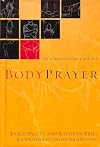
In this book, Doug Pagitt and Kathryn Prill describe 30 physical postures that can enhance and focus our prayers to Jesus. Each chapter is headed by a prayer focus (for example, "A Prayer for Willingness"), a brief introduction, a line drawing of the prayer show more posture, a poem and a longer description of the posture. An appendix gives Scriptural references for the prayer topic.
But this book was just a bit too... lightweight, simplistic. It was often hard for me to see the meaning for a particular body pose (or more accurately, how it 'meant' the prayer topic.
I love the idea of physically representing our prayer, but I'm not crazy about the implementation of this particular book. show less
In this book, Doug Pagitt and Kathryn Prill describe 30 physical postures that can enhance and focus our prayers to Jesus. Each chapter is headed by a prayer focus (for example, "A Prayer for Willingness"), a brief introduction, a line drawing of the prayer show more posture, a poem and a longer description of the posture. An appendix gives Scriptural references for the prayer topic.
But this book was just a bit too... lightweight, simplistic. It was often hard for me to see the meaning for a particular body pose (or more accurately, how it 'meant' the prayer topic.
I love the idea of physically representing our prayer, but I'm not crazy about the implementation of this particular book. show less
Emergent Manifesto of Hope, An (emersion: Emergent Village resources for communities of faith) by Doug Pagitt
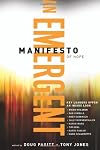
If there were ever a manifesto that outlined the modus operandi of the Emerging Church, "An Emergent Manifesto of Hope" is certainly it. Written by numerous movers and shakers within the EC they touch upon a range of issues such as: evangelism, community, ecclesiology, ecumenism, theology, orthopraxy, inclusiveness, sexuality, social justice, racial reconciliation and so much more. The beliefs and practices outlined in this book are what Brian McLaren terms, "a generous orthodoxy". An show more orthodoxy that is culturally relevant, inclusive to all, and a step away from the modernistic Enlightenment approach that today's Evangelical Christianity has become complicit with. This is not liberalism or conservative ideology wrapped with religious speak. It is simply a self examination on how we as Christians currently live our lives, do church, and what we can do differently in order to make an everlasting impact upon the world in which we live. Let's face it, the church today has become complacent and apathetic, often engaging in fruitless battles with one another and struggling against the post-modern culture that surrounds it. In order to come out from this rut, we must embrace a new paradigm. A paradigm that embraces a new hope in a church that emerges from the ash heap of modernism and a return to a vintage Christianity that involves a major change in how we do things. This book offers that hope; at the very least a starting point in a new direction. A new direction that I embrace and will instill upon my children effecting many generations to come. show less
You May Also Like


Associated Authors
Statistics
- Works
- 12
- Also by
- 1
- Members
- 1,233
- Popularity
- #20,820
- Rating
- 3.4
- Reviews
- 12
- ISBNs
- 31
- Languages
- 1
