
Jonathan Powell (1) (1956–)
Author of The New Machiavelli: How to Wield Power in the Modern World
For other authors named Jonathan Powell, see the disambiguation page.
About the Author
Image credit: Wikipedia, in public domain.
Works by Jonathan Powell
Tagged
Common Knowledge
- Birthdate
- 1956-08-14
- Gender
- male
- Education
- Cathedral Choir School, Canterbury
The King's School, Canterbury
University of Oxford (University College)
University of Pennsylvania - Occupations
- diplomat
banker
civil servant - Organizations
- British Labour Party
Save the Children - Relationships
- Helm, Sarah (wife)
- Short biography
- Jonathan Powell, a former diplomat at the British Foreign & Commonwealth Office, was appointed Downing Street Chief of Staff by Tony Blair after the 1997 General Election victory by the Labour Party. He would remain in office until June 2007. He was particularly involved with Blair during the Northern Ireland Peace Process. He was a banker from 2008-9 at Morgan Stanley. He established a Charity Inter Mediate in 2010 and is also a board member of Save the Children International.
- Nationality
- UK
- Associated Place (for map)
- UK
Members
Reviews

https://fromtheheartofeurope.eu/the-new-machiavelli-by-jonathan-powell/
This is a general memoir about the art of government under Tony Blair by Jonathan Powell, who was his chief of staff for the entire 1997-2007 period, and is now the National Security Adviser to Keir Starmer. It’s the second of three books about Powell’s time at the top, the first being about Northern Ireland and the third about war, especially Iraq, so those important subjects are downplayed here.
Powell takes one of show more Machiavelli’s aphorisms as the anchor point for each of the twelve chapters, but doesn’t let it constrain him; each of the chapters is a fairly disciplined musing of 18 to 36 pages on a particular aspect of governance and power. There is very little here about formal mechanisms of office, apart from the tactics of cabinet reshuffles; there is more about the architecture of Number Ten, and a lot – really a lot – about how awful Gordon Brown was.
Powell is of course defensive about the overall record of the Blair government, and writing just after the 2010 election he doesn’t see the disasters of Brexit and Boris Johnson coming down the road. This makes his admissions of error all the more interesting. One that I had completely forgotten, but that he comes back to several times, so it clearly was traumatic, was the disastrous speech made by Blair to the Women’s Institute in 2000. Part of the problem was that despite the efforts of his despairing staff, Blair was both undisciplined and micro-managing in the process of writing major speeches. Nine times or more out of ten, he got away with it, but on that day in Wembley, he didn’t.
One of the interesting chapters was on the role of spin and the media. It’s clear that no British government will ever undertake the necessary reforms of the media outlined by the Leveson Inquiry (which reported after this book was published). The major media are simply too powerful and politicians too scared of them. It would take a cross-party alliance between government and opposition, prepared to face down bullying and dirty tricks from unaccountable billionaires, and it’s just not going to happen.
One institution that Powell doesn’t have much time for is the monarchy. The Queen comes up twice, once in the aftermath of the death of Princess Diana, where Blair intervened to tell the clueless Royals what to do; and again when Blair and his team are invited to the royal barbecue in Balmoral – but Powell and his partner are shunted off the scene, because the Queen did not want an unmarried couple visibly present. It’s unusual and frankly refreshing to find a memoir from the top of the British government that treats the Royals with anything other than awe-struck deference. Again, this was published in 2010, with more than ten years of the Queen’s reign left to go. (One wonders what other monarchy stories Powell was persuaded to leave out.)
Anyway, this was a lot more interesting than I had expected, and I’ll look out for the other two books in the sequence. show less
This is a general memoir about the art of government under Tony Blair by Jonathan Powell, who was his chief of staff for the entire 1997-2007 period, and is now the National Security Adviser to Keir Starmer. It’s the second of three books about Powell’s time at the top, the first being about Northern Ireland and the third about war, especially Iraq, so those important subjects are downplayed here.
Powell takes one of show more Machiavelli’s aphorisms as the anchor point for each of the twelve chapters, but doesn’t let it constrain him; each of the chapters is a fairly disciplined musing of 18 to 36 pages on a particular aspect of governance and power. There is very little here about formal mechanisms of office, apart from the tactics of cabinet reshuffles; there is more about the architecture of Number Ten, and a lot – really a lot – about how awful Gordon Brown was.
Powell is of course defensive about the overall record of the Blair government, and writing just after the 2010 election he doesn’t see the disasters of Brexit and Boris Johnson coming down the road. This makes his admissions of error all the more interesting. One that I had completely forgotten, but that he comes back to several times, so it clearly was traumatic, was the disastrous speech made by Blair to the Women’s Institute in 2000. Part of the problem was that despite the efforts of his despairing staff, Blair was both undisciplined and micro-managing in the process of writing major speeches. Nine times or more out of ten, he got away with it, but on that day in Wembley, he didn’t.
One of the interesting chapters was on the role of spin and the media. It’s clear that no British government will ever undertake the necessary reforms of the media outlined by the Leveson Inquiry (which reported after this book was published). The major media are simply too powerful and politicians too scared of them. It would take a cross-party alliance between government and opposition, prepared to face down bullying and dirty tricks from unaccountable billionaires, and it’s just not going to happen.
One institution that Powell doesn’t have much time for is the monarchy. The Queen comes up twice, once in the aftermath of the death of Princess Diana, where Blair intervened to tell the clueless Royals what to do; and again when Blair and his team are invited to the royal barbecue in Balmoral – but Powell and his partner are shunted off the scene, because the Queen did not want an unmarried couple visibly present. It’s unusual and frankly refreshing to find a memoir from the top of the British government that treats the Royals with anything other than awe-struck deference. Again, this was published in 2010, with more than ten years of the Queen’s reign left to go. (One wonders what other monarchy stories Powell was persuaded to leave out.)
Anyway, this was a lot more interesting than I had expected, and I’ll look out for the other two books in the sequence. show less
An interesting insiders view of the Blair governments as seen from the position of the chief of Staff.
Facsinating in parts, especially when he covers the poisionous relationship between Blair and Brown, and tedious in others where he brushes over the scandals as though they were minor speed bumps.
You cannot help but think that the Machiavelli link is a touch arrogant, as he tries to justify the autocratic way that they ran the government as the right way.
Facsinating in parts, especially when he covers the poisionous relationship between Blair and Brown, and tedious in others where he brushes over the scandals as though they were minor speed bumps.
You cannot help but think that the Machiavelli link is a touch arrogant, as he tries to justify the autocratic way that they ran the government as the right way.
"We were not trading arms for hostages, nor were we negotiating with terrorists"
Ronald Reagan.
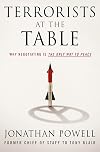
Terrorists at the Table: Why Negotiating is the Only Way to Peaceby Jonathan Powell is a practical look at dealing with terrorism using the historical record as an example. Powell is a British diplomat who served as the first Downing Street Chief of Staff, under British Prime Minister Tony Blair from 1995 to 2007. He was the only senior adviser to last the whole period of Blair’s leadership. show more During this period, Powell was also the chief British negotiator on Northern Ireland. He runs the charity Inter Mediate which works on armed conflicts around the world.Powell is currently the UK's special envoy to Libya.
We all have heard it. Political leaders have repeated it. Hollywood loves to use it in everything from cop shows to blockbuster movies -- "We do not negotiate with terrorists." It seems to be an immutable law in contemporary international relations but is it? Even if it is, is it correct? Powell looks at several cases in the recent past. Northern Ireland, FMLN in El Salvador, Nepalese Maoists, South Africa and Mandella, Sri Lanka, and other conflicts are all included.
It must be recognized that there are several different groups with different structures and goals. The group responsible for the Japanese subway attack quickly disappeared after its leader was captured effectively ending the organization. The Maoist terrorists in Nepal became the ruling party in a democratic election, creating their own legitimacy. Groups like the PLO have stood their ground for so long they have become recognized. The PLO holds observer status at the United Nations. Other groups or opinions of groups change over time. There was a time Mandela was considered a terrorist (Reagan put Mandela and the ANC on the terrorist watch list) and bin Ladin a freedom fighter. Some groups combine others simply disappear like the Symbionese Liberation Army.
There are groups with permanence that need to be addressed. The IRA, Sri Lanka, and South Africa are prime examples where a negotiation was required. In Sri Lanka, both sides tired from the killing. South Africa was under great international pressure to end apartheid and free Mandela. The IRA was seeing very negative effects by their violence. It created a negative image for the movement rather than support. The became the oppressor and not the victim in many people's eyes.
Perhaps the most spectacular and focused act against a government was the ETA attack on the prime minister of Spain in 1973. A bomb built under the road lifted the prime minister's car over sixty feet in the air clearing the building it was driving past and depositing the car on the second story balcony of the inside terrace. Four decades later the ETA is asking for a negotiated settlement.
Once it decided by both sides that the violence needs to end, the real work begins. Making initial contact, when to use a mediator, when to meet face to face, what issues will be discussed, where can the meeting take place safely for both parties all come into play. Powell spends most of his words on these topics and uses the same historical cases to make his points. Not all the situations are the same and not all groups need to be negotiated with. The key to everything is building trust. Taking up arms against a system demonstrates a lack of trust and successful groups have, what they believe are, valid claims. Negotiation is not a magical moment of changing people's long-held views, but establishing trust so that problems can be worked out peacefully through the political system. Powell explains how this is done and has been done.
Quite a remarkable book on a controversial subject. If peace is the desired outcome, fighting usually will not give that result. Bomb one terrorist group into submission, and another will rise. It will possibly be worse than the previous group as we are seeing with the rise of ISIS. It also seems that the longer we go without negotiations the less desirable the groups we are fighting become. Terrorists at the Table is a well thought out and practical guide of the problem of terrorism and what to do about it. Government's stance on not negotiating with terrorists is like people and the speed limit law. We all know the law, but we all break it. Unlike speeding, negotiating may save lives and build a safe society. show less
Ronald Reagan.
Terrorists at the Table: Why Negotiating is the Only Way to Peaceby Jonathan Powell is a practical look at dealing with terrorism using the historical record as an example. Powell is a British diplomat who served as the first Downing Street Chief of Staff, under British Prime Minister Tony Blair from 1995 to 2007. He was the only senior adviser to last the whole period of Blair’s leadership. show more During this period, Powell was also the chief British negotiator on Northern Ireland. He runs the charity Inter Mediate which works on armed conflicts around the world.Powell is currently the UK's special envoy to Libya.
We all have heard it. Political leaders have repeated it. Hollywood loves to use it in everything from cop shows to blockbuster movies -- "We do not negotiate with terrorists." It seems to be an immutable law in contemporary international relations but is it? Even if it is, is it correct? Powell looks at several cases in the recent past. Northern Ireland, FMLN in El Salvador, Nepalese Maoists, South Africa and Mandella, Sri Lanka, and other conflicts are all included.
It must be recognized that there are several different groups with different structures and goals. The group responsible for the Japanese subway attack quickly disappeared after its leader was captured effectively ending the organization. The Maoist terrorists in Nepal became the ruling party in a democratic election, creating their own legitimacy. Groups like the PLO have stood their ground for so long they have become recognized. The PLO holds observer status at the United Nations. Other groups or opinions of groups change over time. There was a time Mandela was considered a terrorist (Reagan put Mandela and the ANC on the terrorist watch list) and bin Ladin a freedom fighter. Some groups combine others simply disappear like the Symbionese Liberation Army.
There are groups with permanence that need to be addressed. The IRA, Sri Lanka, and South Africa are prime examples where a negotiation was required. In Sri Lanka, both sides tired from the killing. South Africa was under great international pressure to end apartheid and free Mandela. The IRA was seeing very negative effects by their violence. It created a negative image for the movement rather than support. The became the oppressor and not the victim in many people's eyes.
Perhaps the most spectacular and focused act against a government was the ETA attack on the prime minister of Spain in 1973. A bomb built under the road lifted the prime minister's car over sixty feet in the air clearing the building it was driving past and depositing the car on the second story balcony of the inside terrace. Four decades later the ETA is asking for a negotiated settlement.
Once it decided by both sides that the violence needs to end, the real work begins. Making initial contact, when to use a mediator, when to meet face to face, what issues will be discussed, where can the meeting take place safely for both parties all come into play. Powell spends most of his words on these topics and uses the same historical cases to make his points. Not all the situations are the same and not all groups need to be negotiated with. The key to everything is building trust. Taking up arms against a system demonstrates a lack of trust and successful groups have, what they believe are, valid claims. Negotiation is not a magical moment of changing people's long-held views, but establishing trust so that problems can be worked out peacefully through the political system. Powell explains how this is done and has been done.
Quite a remarkable book on a controversial subject. If peace is the desired outcome, fighting usually will not give that result. Bomb one terrorist group into submission, and another will rise. It will possibly be worse than the previous group as we are seeing with the rise of ISIS. It also seems that the longer we go without negotiations the less desirable the groups we are fighting become. Terrorists at the Table is a well thought out and practical guide of the problem of terrorism and what to do about it. Government's stance on not negotiating with terrorists is like people and the speed limit law. We all know the law, but we all break it. Unlike speeding, negotiating may save lives and build a safe society. show less
Mr. Powell presents an interesting hypothesis to the age-old problem of terrorism. That is, the only solution to terrorism is to engage with and negotiate with the terrorists. He comes to this belief through his experiences with the IRA, as well as with other "terrorist" groups. His arguments are persuasive. Coming from a lifetime career in law enforcement, I was extremely uncomfortable with the idea. I still am. This made for a very tough read for me, but I'm glad I stuck it out. Powell show more does make a lot of sense. While I still believe in the "old ways", I see his point. I'm very glad that there are people with the patience of Mr. Powell to deal with the "terrorists". show less
Awards

You May Also Like


Statistics
- Works
- 4
- Members
- 173
- Popularity
- #123,687
- Rating
- 3.8
- Reviews
- 8
- ISBNs
- 56
- Languages
- 9