
Douglas Perry
Author of The Girls of Murder City: Fame, Lust, and the Beautiful Killers who Inspired Chicago
About the Author
Image credit: Douglas Perry
Works by Douglas Perry
The Girls of Murder City: Fame, Lust, and the Beautiful Killers who Inspired Chicago (2010) 501 copies, 21 reviews
Associated Works
Tagged
Common Knowledge
- Other names
- Perry, Douglas M.
- Birthdate
- 1968
- Gender
- male
- Education
- University of Southern California
Universita per Stranieri di Perugia
DePaul University - Occupations
- journalist
- Nationality
- USA
- Places of residence
- Portland, Oregon, USA
- Associated Place (for map)
- Oregon, USA
Members
Reviews
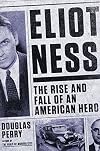
Excellent coverage of Ness and how his TV series persona ( and worse, the film version of The Untouchables) are an exercise in myth making and fail to capture the man with all his assets and flaws. Ness has much to commend him on many fronts as he was honest and obsessively dedicated to the mission of dismantling gangster operations. After he moved from Chicago to Cleveland as Public Safety Director, he took on the enormous task of rooting out corruption in the Cleveland police ranks and show more battling the underworld empire there. In the process he made Cleveland a forerunner in using modern law enforcement techniques such as use of patrol cars instead of the foot beat, and establishing profiling suspect systems based on polygraphs, fingerprints, and crime patterns.
Unfortunately, his commitment to his job made his personal life a shambles, leading to neglect of his wife and a divorce. Contrary to his squeaky clean image, Ness was a heavy drinker and womanizer, which would ultimately contribute to his undoing. show less
Unfortunately, his commitment to his job made his personal life a shambles, leading to neglect of his wife and a divorce. Contrary to his squeaky clean image, Ness was a heavy drinker and womanizer, which would ultimately contribute to his undoing. show less
The Girls of Murder City: Fame, Lust, and the Beautiful Killers Who Inspired Chicago by Douglas Perry

I am much fonder of the musical Chicago than I probably should be. I’ve never seen it on stage, but the movie version came out at a time when...well, let’s just say that a story about thwarted women who killed their men wasn’t all that far-fetched to me, and I loved “The Cell Block Tango” (still do). I’m not sure when I learned that the show was fact-based, but it was when I read Douglas Perry’s The Girls of Murder City that I discovered just how “ripped from the headlines” show more - of 1924 - it really is. By the way, the word “Chicago” in the book’s subtitle really is properly offset by quotation marks or a change in font, because it refers to Chicago the show, not Chicago the city; while the “merry murderesses of the Cook County Jail” certainly did captivate the city, I’m not sure how truly inspiring they were. Having said that, Perry’s book is also concerned with another woman - reporter Maurine Watkins, who indeed was inspired to base her first stage play on two of the sensational murder trials she covered for the Chicago Tribune. I think she was pretty inspiring, to be honest.
Perry relies on both contemporary accounts and later works in his exhaustive research for The Girls of Murder City, but the last adjective that describes this work of narrative nonfiction is “dry.” Its primary subject is the consecutive murder trials of “Beautiful Beulah” Annan and “Stylish Belva” Gaertner - the models for Chicago’s Roxie Hart and Velma Kelly - both in court during the spring of 1924 to defend against charges of shooting and killing men who were not their husbands. Both cases were salacious and scandalous, and Chicago’s many newspapers fed the public appetite for news about the glamorous defendants. Women were rarely convicted of murder by Chicago’s all-male juries - especially if they were good-looking women - but following a couple of recent guilty verdicts, there was more at stake for Beulah and Belva.
Within this framework, Perry also delves into the stories of several other Chicago murderesses of the time, the reporters - mostly women, including Watkins - who told those stories to the public, the way things operated and the challenges faced by women at the newspapers where those reporters worked, and the unrestrained climate of Prohibition-era Chicago, where underground jazz clubs flourished and illegal liquor flowed freely. (If you ask me, Prohibition is an object lesson in irony.) He’s got great material to work with, and he crafts it into a page-turner with a firm sense of its time and place. The pace is brisk, and the writing is vivid and occasionally breathless, but Perry succeeds in putting the reader right in the midst of events, including Watkins’ application of her satirical eye to shape them into a hit, prize-winning stage comedy (the musical adaptation came years later).
The environment described in The Girls of Murder City seems to be the birthplace of the celebrity-obsessed, fame-for-its-own-sake mindset we know all too well these days, and it’s fascinating in much the same way. Despite being almost a century old, the story here has a sense of immediacy and a contemporary feel, and its blend of true crime and modern history absolutely held my attention - even without “The Cell Block Tango.” show less
Perry relies on both contemporary accounts and later works in his exhaustive research for The Girls of Murder City, but the last adjective that describes this work of narrative nonfiction is “dry.” Its primary subject is the consecutive murder trials of “Beautiful Beulah” Annan and “Stylish Belva” Gaertner - the models for Chicago’s Roxie Hart and Velma Kelly - both in court during the spring of 1924 to defend against charges of shooting and killing men who were not their husbands. Both cases were salacious and scandalous, and Chicago’s many newspapers fed the public appetite for news about the glamorous defendants. Women were rarely convicted of murder by Chicago’s all-male juries - especially if they were good-looking women - but following a couple of recent guilty verdicts, there was more at stake for Beulah and Belva.
Within this framework, Perry also delves into the stories of several other Chicago murderesses of the time, the reporters - mostly women, including Watkins - who told those stories to the public, the way things operated and the challenges faced by women at the newspapers where those reporters worked, and the unrestrained climate of Prohibition-era Chicago, where underground jazz clubs flourished and illegal liquor flowed freely. (If you ask me, Prohibition is an object lesson in irony.) He’s got great material to work with, and he crafts it into a page-turner with a firm sense of its time and place. The pace is brisk, and the writing is vivid and occasionally breathless, but Perry succeeds in putting the reader right in the midst of events, including Watkins’ application of her satirical eye to shape them into a hit, prize-winning stage comedy (the musical adaptation came years later).
The environment described in The Girls of Murder City seems to be the birthplace of the celebrity-obsessed, fame-for-its-own-sake mindset we know all too well these days, and it’s fascinating in much the same way. Despite being almost a century old, the story here has a sense of immediacy and a contemporary feel, and its blend of true crime and modern history absolutely held my attention - even without “The Cell Block Tango.” show less
The Girls of Murder City: Fame, Lust, and the Beautiful Killers Who Inspired Chicago by Douglas Perry
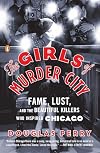
First off. In the extended title of this book, it says "who inspired Chicago". It literally took me half the book to realize "Chicago" meant Chicago, not Chicago. The play, not the city. Before that, I had thoughts about the way the story had been drawn out, and why there was so much time with the reporters and not just with the murderesses (I wanted more murderesses, dammit) and it's a whole different perspective, to be honest. In that light, The Girls of Murder City is fabulously done.
I'm show more more an ancient history person, and years of reading traditional fantasy has me deeply interested in Western Europe... but something about Chicago pulls me in. From a purely romanticized perspective, Chicago was its own world of blood and deceit and danger. Between The Girls of Murder City and The Devil in the White City, color me officially intrigued in Chicago. The city pulled me into this book, and it ended up being a hybrid of crime history and theatre history and I gobbled it up. I'm sure there is a lot to Chicago that's beautiful and fabulous, but I'm so drawn by its dark history.
Douglas Perry does a fantastic job of laying out the narrative. There were a few times where I thought I heard the same quotes more than once, but as a general rule, the story felt like a story. The best historical narratives, in my opinion, are the ones that bring history to life. The Girls of Murder City makes you curious about Beulah Annan and Belva Gaertner. They're brought to life through various interviews and articles, but they are kept separate from Maurine Dallas Watkins - the reporter who covered their stories in the '20s, and author of Chicago. You'll learn about these women's trials than you will from their Wikipedia articles, and with a little innocence creative eloquence, they fly off the page.
Not just Beulah and Belva, though. Several women of murderesses row - or at least of that period in Chicago history - jump off the page. If anything, Perry makes them seem larger than life, far more stylish and beautiful than they were in actuality. If you're even vaguely interested in the sordid history of the Second City, or in crime history in general, The Girls of Murder City is a fascinating, interesting story and told in such a way that it would hold anyone's attention.
In short? I loved the way the history was told and I enjoyed dipping into this period of history for the first time in several years. If the subject interests you at all, I highly recommend it. show less
I'm show more more an ancient history person, and years of reading traditional fantasy has me deeply interested in Western Europe... but something about Chicago pulls me in. From a purely romanticized perspective, Chicago was its own world of blood and deceit and danger. Between The Girls of Murder City and The Devil in the White City, color me officially intrigued in Chicago. The city pulled me into this book, and it ended up being a hybrid of crime history and theatre history and I gobbled it up. I'm sure there is a lot to Chicago that's beautiful and fabulous, but I'm so drawn by its dark history.
Douglas Perry does a fantastic job of laying out the narrative. There were a few times where I thought I heard the same quotes more than once, but as a general rule, the story felt like a story. The best historical narratives, in my opinion, are the ones that bring history to life. The Girls of Murder City makes you curious about Beulah Annan and Belva Gaertner. They're brought to life through various interviews and articles, but they are kept separate from Maurine Dallas Watkins - the reporter who covered their stories in the '20s, and author of Chicago. You'll learn about these women's trials than you will from their Wikipedia articles, and with a little innocence creative eloquence, they fly off the page.
Not just Beulah and Belva, though. Several women of murderesses row - or at least of that period in Chicago history - jump off the page. If anything, Perry makes them seem larger than life, far more stylish and beautiful than they were in actuality. If you're even vaguely interested in the sordid history of the Second City, or in crime history in general, The Girls of Murder City is a fascinating, interesting story and told in such a way that it would hold anyone's attention.
In short? I loved the way the history was told and I enjoyed dipping into this period of history for the first time in several years. If the subject interests you at all, I highly recommend it. show less
The Girls of Murder City: Fame, Lust, and the Beautiful Killers Who Inspired Chicago by Douglas Perry
Somehow both bland and trashy at the same time. Douglas Perry's The Girls of Murder City focuses on the brief period in 1920s Chicago when a number of women who had almost certainly murdered their husbands or boyfriends were not only acquitted of their crimes but became minor local celebrities—a phenomenon which ultimately inspired the play and later the musical Chicago.
But while the marketing for this book promised a gripping social history, this is really a fairly shallow recounting of show more the events (Perry mentions in passing that African American women in similar circumstances were treated very differently, but foregoes the opportunity to trace one of their stories and so look with a clearer eye at how whiteness played a role in the construction of the "Beautiful Killers") with some truly awful prose ("Maybe he would take her now, right here on the couch. Yank her underthings off and split her open, with the breeze from the window rolling over them"? Ugh). Forgettable. show less
But while the marketing for this book promised a gripping social history, this is really a fairly shallow recounting of show more the events (Perry mentions in passing that African American women in similar circumstances were treated very differently, but foregoes the opportunity to trace one of their stories and so look with a clearer eye at how whiteness played a role in the construction of the "Beautiful Killers") with some truly awful prose ("Maybe he would take her now, right here on the couch. Yank her underthings off and split her open, with the breeze from the window rolling over them"? Ugh). Forgettable. show less
Lists
True Crime (1)
You May Also Like


Associated Authors
Statistics
- Works
- 12
- Also by
- 2
- Members
- 673
- Popularity
- #37,520
- Rating
- 3.5
- Reviews
- 25
- ISBNs
- 35
- Languages
- 3