
Christopher Rowe (1) (1969–)
Author of The Navigating Fox
For other authors named Christopher Rowe, see the disambiguation page.
Series
Works by Christopher Rowe
The Voluntary State [novelette] 12 copies
Asimov's Science Fiction: Vol. 47, No. 11 & 12 [November/December 2023] (2023) — Contributor — 8 copies, 1 review
Another Word for Map is Faith 7 copies
Asimov's Science Fiction: Vol. 48, No. 5 & 6 [May/June 2024] — Contributor — 5 copies
Nowhere Fast 2 copies
Sally Harpe 2 copies
Kin To Crows 2 copies
Horsethieves And Preachermen 2 copies
Vfd Adventures 2 copies
Gather 2 copies
Brownsville Station 1 copy
...is this a cat? a question — Editor — 1 copy
The Four Last Things 1 copy
Men Of Renown 1 copy
The Unveiling 1 copy
Associated Works
Steampunk! An Anthology of Fantastically Rich and Strange Stories (2011) — Contributor — 759 copies, 26 reviews
The Year's Best Science Fiction: Twenty-Second Annual Collection (2005) — Contributor — 578 copies, 11 reviews
The Year's Best Fantasy & Horror 2007: 20th Annual Collection (2007) — Contributor — 223 copies, 3 reviews
The Best Science Fiction and Fantasy of the Year Volume One (2007) — Contributor — 215 copies, 6 reviews
Some of the Best from Tor.com: 2019 Edition: A Tor.com Original (2020) — Contributor — 157 copies, 3 reviews
The Best Science Fiction and Fantasy of the Year Volume Seven (2013) — Contributor — 154 copies, 3 reviews
The Del Rey Book of Science Fiction and Fantasy: Sixteen Original Works by Speculative Fiction's Finest Voices (2008) — Contributor — 140 copies, 5 reviews
The Big Book of Science Fiction and Fantasy: Sixteen Great Works of Speculative Fiction (2025) — Contributor — 20 copies
Tagged
Common Knowledge
- Birthdate
- 1969-12-25
- Gender
- male
- Relationships
- Bond, Gwenda (wife)
- Nationality
- USA
Members
Reviews
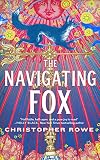
The Navigating Fox is the most creative book I've read all year. The world building is interesting and immersive, and I'm pretty sure I spent most of the time I set aside to read this every night to keep notes about the fantastic alternative world Rowe has created here.
Representation:
- there are a lot of diverse secondary characters
Quintus Shu'al, the world's only navigating fox, has a chance to redeem himself after leading his last expedition to their deaths. All he has to do is lead a show more fresh group—a Holy Priest, the sister of one of the first journey's victims, twin raccoon cartographers, and a well-respected bison ambassador—to the very gates of Hell. If he does this, then Quintus can finally learn about his own origins and why he's the only fox to have been given human-like sentience and speech.
I don't think I've loved a world so much since Ursula Le Guin's Earthsea. Even though it's an alternative reimagining of the Roman Empire and not a completely new creation, it still feels just as refreshing, creative, and original. In Christopher Rowe's world, humans (although it's not quite remembered when it happened or by whom) have figured out a way to give animals human-like speech and thought. These animals are considered Knowledgeable, and those that have not been meddled with are "regular" Unknowledgeable animals.
The Roman Empire has expanded, not only to what seems like East Asia, but pre-colonial North America as well—or, at least, it has alliances with these places. I won't lie, it might have taken me three-fourths of the novella to really understand the scope of the world, but that was part of the fun. For me, at least, because it seems like this made the story less enjoyable for other reviewers.
So yes, yes, I loved the world to death, but when it came to characters and plot, things were less entertaining. Our main character, Quintus, was very strong and had a great sense of humor, but the others seemed a little flat by comparison (wait, except for the bison Walks Along Woman, who is perfect in every way and needs her own standalone; actually, a whole cycle of novellas in this universe would be everything I ever needed). There was also a slightly disrespectful tone used whenever Quintus or the others would talk or think about nomadic tribes or smaller indigenous peoples. Although I'm not sure if that was a result of him and them being a part of the "great Empire", and looking down on those who weren't.
The plot also was a bit messy, and the climax a kind of strange and muddled. Ill-used humor shattered the tension, and because Quintus didn't care about anything that was happening during the climax, it was hard for me to care, too. But I still came out of the story feeling fond of the world and its characters—and most importantly, wanting more. The writing style was also elegant and witty in a way was never not cheap or reduced to solely snappy dialogue, and I'll definitely keep an eye on this author to see what he does next.
A huge thanks to NetGalley and Tordotcom for allowing me to read a copy of this book! show less
Representation:
- there are a lot of diverse secondary characters
Quintus Shu'al, the world's only navigating fox, has a chance to redeem himself after leading his last expedition to their deaths. All he has to do is lead a show more fresh group—a Holy Priest, the sister of one of the first journey's victims, twin raccoon cartographers, and a well-respected bison ambassador—to the very gates of Hell. If he does this, then Quintus can finally learn about his own origins and why he's the only fox to have been given human-like sentience and speech.
I don't think I've loved a world so much since Ursula Le Guin's Earthsea. Even though it's an alternative reimagining of the Roman Empire and not a completely new creation, it still feels just as refreshing, creative, and original. In Christopher Rowe's world, humans (although it's not quite remembered when it happened or by whom) have figured out a way to give animals human-like speech and thought. These animals are considered Knowledgeable, and those that have not been meddled with are "regular" Unknowledgeable animals.
The Roman Empire has expanded, not only to what seems like East Asia, but pre-colonial North America as well—or, at least, it has alliances with these places. I won't lie, it might have taken me three-fourths of the novella to really understand the scope of the world, but that was part of the fun. For me, at least, because it seems like this made the story less enjoyable for other reviewers.
So yes, yes, I loved the world to death, but when it came to characters and plot, things were less entertaining. Our main character, Quintus, was very strong and had a great sense of humor, but the others seemed a little flat by comparison (wait, except for the bison Walks Along Woman, who is perfect in every way and needs her own standalone; actually, a whole cycle of novellas in this universe would be everything I ever needed). There was also a slightly disrespectful tone used whenever Quintus or the others would talk or think about nomadic tribes or smaller indigenous peoples. Although I'm not sure if that was a result of him and them being a part of the "great Empire", and looking down on those who weren't.
The plot also was a bit messy, and the climax a kind of strange and muddled. Ill-used humor shattered the tension, and because Quintus didn't care about anything that was happening during the climax, it was hard for me to care, too. But I still came out of the story feeling fond of the world and its characters—and most importantly, wanting more. The writing style was also elegant and witty in a way was never not cheap or reduced to solely snappy dialogue, and I'll definitely keep an eye on this author to see what he does next.
A huge thanks to NetGalley and Tordotcom for allowing me to read a copy of this book! show less
This is my first exposure to Christopher Rowe's work, not being a big consumer of short fiction, but the high-concept description of the story fascinated me, and I was impressed enough to hunt down "The Voluntary State" almost immediately after I finished. Why was I impressed? What it boils down to is that Rowe does a fine job of giving you post-singularity weirdness, emotional regret, and a sense of a past conflict that is really not past, and does so in a very economical package; sometimes show more less is more. show less
My snap reaction to this work is that it's certainly very clever, and if I chose to make nominations for the Hugo next year it would definitely make my novella "short list." Your question is likely to be whether this story rises above feeling like the fragment of a larger work; in regards to the main character Quintus Shu'al, the story arc remains open-ended. I'd certainly like to see Rowe go further; while Quintus might be the only navigating fox, his name suggests that there were four show more before him. I would also observe that if you liked Avram Davidson's stories about Virgil the Wizard, you should, at least, really like this story. show less
Really fascinating novella with a ton of worldbuilding in the background (the Voluntary State of Tennessee, formerly ruled by the AI Athena Parthenus, the reconstituted federals who have adopted some of the AI’s strangest and most terrifying tech as their own, the not-human semi-sentient dependents, and Marcia, a former fed from Kentucky who is just trying to survive her completely reconstituted and repopulated homeland) and a confusing, shifting landscape that includes the last of show more Parthenon’s Commodores, giant mechas with near-godlike powers. I don’t know what it means but I really enjoyed it. show less
Lists
Awards


You May Also Like


Associated Authors
Statistics
- Works
- 29
- Also by
- 35
- Members
- 561
- Popularity
- #44,551
- Rating
- 3.7
- Reviews
- 25
- ISBNs
- 30
