
Owen Hopkins
Author of Reading Architecture: A Visual Lexicon
About the Author
Works by Owen Hopkins
Tagged
Common Knowledge
- Gender
- male
- Education
- The Courtauld Institute of Art (MA|History of Art)
The Courtauld Institute of Art (BA|History of Art) - Occupations
- architecture historian
curator
writer - Organizations
- Newcastle University (Director of the Farrell Centre)
Sir John Soane's Museum (Senior Curator of Exhibitions and Education)
Royal Academy of Arts (Architecture Programme Curator) - Nationality
- UK
- Places of residence
- Newcastle upon Tyne, England, UK
- Associated Place (for map)
- England, UK
Members
Reviews
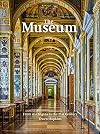
This book proved a fascinating look at museums--both historical and present-day! I learned so much, and especially enjoyed seeing then-and-now pictures of museums I've visited, documenting how they've changed over the years. The extensive commentary provided plenty of insight into the whys and wherefores, as well.
As the covid pandemic continues, so does my appreciation for books such as this one, which acknowledge the weird/crazy/abnormal (I don't want to include the overused "u" word, lol) show more times we live in--and also remind us of what has been, and what will be again. It's all too easy to get pandemic-induced tunnel vision and forget what life looked like outside covid; as I look ahead to the future and consider how I want my own life to look afterwards, this read provided surprising insight into that inner dialogue.
I also enjoyed seeing pictures of museums I'm unlikely to visit in person (even pandemic aside); while the interest level (or travel advisories) may preclude a "live" visit, I can still learn from reading about them! (Plus, how cool is it that Nashville has a Parthenon replica with a 42-foot statue of Athena?! I had no idea--and would love to see it!)
The last section of the book provides a thought-provoking read on colonialism and repatriation. Certainly there isn't a quick, easy, or "pat" solution/response, nor is this section comprehensive in its examination of either. Channeling George Santayana (a Spanish philosopher) and Winston Churchill: “Those who cannot remember the past are condemned to repeat it,” and “Those that fail to learn from history are doomed to repeat it.” These quotes drive me and, I hope, others in the dialogue.
I received an eARC of the book from the publisher via NetGalley. All opinions are my own. show less
As the covid pandemic continues, so does my appreciation for books such as this one, which acknowledge the weird/crazy/abnormal (I don't want to include the overused "u" word, lol) show more times we live in--and also remind us of what has been, and what will be again. It's all too easy to get pandemic-induced tunnel vision and forget what life looked like outside covid; as I look ahead to the future and consider how I want my own life to look afterwards, this read provided surprising insight into that inner dialogue.
I also enjoyed seeing pictures of museums I'm unlikely to visit in person (even pandemic aside); while the interest level (or travel advisories) may preclude a "live" visit, I can still learn from reading about them! (Plus, how cool is it that Nashville has a Parthenon replica with a 42-foot statue of Athena?! I had no idea--and would love to see it!)
The last section of the book provides a thought-provoking read on colonialism and repatriation. Certainly there isn't a quick, easy, or "pat" solution/response, nor is this section comprehensive in its examination of either. Channeling George Santayana (a Spanish philosopher) and Winston Churchill: “Those who cannot remember the past are condemned to repeat it,” and “Those that fail to learn from history are doomed to repeat it.” These quotes drive me and, I hope, others in the dialogue.
I received an eARC of the book from the publisher via NetGalley. All opinions are my own. show less
The Museum: The history and architecture of the world's most iconic cultural spaces by Owen Hopkins is an informative and wonderfully illustrated coffee table book that offers a bit more food for thought than many such books do.
As a history of the idea(s) of a museum through the various stages of both appropriation and construction Hopkins offers a nice broad history by focusing largely on the major institutions. This approach actually works very well, it touches on how and why items come show more into the museums, the design and construction of the buildings and exhibit spaces themselves, as well as the more recent movements to "decolonize" the museums.
As to be expected, only so much can be covered in a reasonable size book, so some wonderful institutions and stories have been omitted or touched on only briefly. This by no means is a weakness since trying to include too much would have kept Hopkins from getting a little deeper into the hows and whys of the broader changes over history.
would als recommend a couple of other books I have read recently as nice companions to this, though there are no doubt many others. For those in the US there is a new book from NYU Press titled The Museum: A Short History of Crisis and Resilience by Samuel J Redman. It concentrates on the major institutions in the US from the early 20th century to now. For those curious about the ongoing debate/discussion about the role of the encyclopedic museum in contemporary society, I'd recommend Under Discussion: The Encyclopedic Museum edited by Donatien Grau. It consists of conversations with museum administrators, leaders, architects, artists, critics, and journalists. The ideas expressed are wide ranging and present a nice look at where we are, where we might be going, and the many difficulties involved.
In suggesting those other books, I do not think this volume should be overlooked. In some ways this work serves as a great foundation to better understand the historical aspects of the current debates. So I highly recommend this book, probably ideally before reading the others, as a way to both grasp the personal histories of some of the museums as well as place everything in a nice context both chronologically and philosophically.
Reviewed from a copy made available by the publisher via NetGalley. show less
As a history of the idea(s) of a museum through the various stages of both appropriation and construction Hopkins offers a nice broad history by focusing largely on the major institutions. This approach actually works very well, it touches on how and why items come show more into the museums, the design and construction of the buildings and exhibit spaces themselves, as well as the more recent movements to "decolonize" the museums.
As to be expected, only so much can be covered in a reasonable size book, so some wonderful institutions and stories have been omitted or touched on only briefly. This by no means is a weakness since trying to include too much would have kept Hopkins from getting a little deeper into the hows and whys of the broader changes over history.
would als recommend a couple of other books I have read recently as nice companions to this, though there are no doubt many others. For those in the US there is a new book from NYU Press titled The Museum: A Short History of Crisis and Resilience by Samuel J Redman. It concentrates on the major institutions in the US from the early 20th century to now. For those curious about the ongoing debate/discussion about the role of the encyclopedic museum in contemporary society, I'd recommend Under Discussion: The Encyclopedic Museum edited by Donatien Grau. It consists of conversations with museum administrators, leaders, architects, artists, critics, and journalists. The ideas expressed are wide ranging and present a nice look at where we are, where we might be going, and the many difficulties involved.
In suggesting those other books, I do not think this volume should be overlooked. In some ways this work serves as a great foundation to better understand the historical aspects of the current debates. So I highly recommend this book, probably ideally before reading the others, as a way to both grasp the personal histories of some of the museums as well as place everything in a nice context both chronologically and philosophically.
Reviewed from a copy made available by the publisher via NetGalley. show less
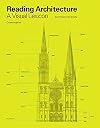
This is the very first book i bought with kindle, and my opinion is based upon that.
This is a book that introduces architectural elements and does a short gistorical review using one building of some era and breaking it down to its elements, it also has a glossary at the end.
The books has little text and doesnt really go that deep which is good for somebody whos first introduction to the topic is this, but if you already know something, it will not be illuminating. aesthetically its pleasing show more with carefull crafted diagrams, concerning material classification it lacks.
but the ebook i read was really disorganized; there was one page dedicated to structures and then one dedicated to materials and back again to structures. I hope the physical book is better with this aspect. show less
This is a book that introduces architectural elements and does a short gistorical review using one building of some era and breaking it down to its elements, it also has a glossary at the end.
The books has little text and doesnt really go that deep which is good for somebody whos first introduction to the topic is this, but if you already know something, it will not be illuminating. aesthetically its pleasing show more with carefull crafted diagrams, concerning material classification it lacks.
but the ebook i read was really disorganized; there was one page dedicated to structures and then one dedicated to materials and back again to structures. I hope the physical book is better with this aspect. show less
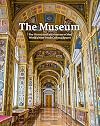
Museums are very dear to me. If I had the means, I’d spend the rest of my life traveling abroad and visiting art installations–there’s so much beauty in the world I’d like to see first-hand! Until someone delivers a truck full of money to my doorstep, though, traveling via books will have to do.
That’s why I’m glad publishers like Quarto exist
That’s why I’m glad publishers like Quarto exist
Awards

You May Also Like


Statistics
- Works
- 24
- Members
- 296
- Popularity
- #79,167
- Rating
- 4.1
- Reviews
- 9
- ISBNs
- 41
- Languages
- 9