
Kerry Drewery
Author of Cell 7
About the Author
Series
Works by Kerry Drewery
Tagged
Common Knowledge
Members
Reviews
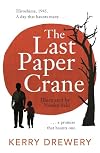
Publisher’s synopsis
1945, Hiroshima: Ichiro is a teenage boy relaxing at home with his friend Hiro. Moments later there is a blinding flash as the horrific nuclear bomb is dropped. With great bravery the two boys find Hiro’s five-year-old sister Keiko in the devastated and blasted landscape. With Hiro succumbing to his wounds, Ichiro is now the only one who can take care of Keiko. But in the chaos Ichiro loses her when he sets off to find help.
Seventy years later, the loss of Keiko and show more his broken promise to his dying friend are haunting the old man’s fading years. Mizuki, his granddaughter, is determined to help him. As the Japanese legend goes, if you have the patience to fold 1,000 paper cranes, you will find your heart’s desire; and it turns out her grandfather has only one more origami crane to fold ...
It’s hard to know where to start with trying to convey how such a horrifying and truly terrible story can also be described as beautiful, yet it is the author’s ability to convey this apparent contradiction which makes this one of the most powerful stories I’ve ever read about the ongoing psychological struggles experienced by survivors of Hiroshima. The narrative uses a combination of straightforward prose, free verse and haiku poems. To my surprise, I found that this made me slow down the pace of my reading, “forcing” me to take time to reflect on what I was reading, as well as the impact it was having on me. In addition, Natsko Seki’s simple, but starkly bold, illustrations capture such evocative images of the changed world Ichiro, Hiro and Keiko had to negotiate following the devastating effects of the bomb that they added an impressive depth to the storytelling, at times almost taking my breath away. I loved the fact that all the haikus were encircled by bold, red brush strokes because this too made me stop, reflect and then reread each one.
I don’t want to go into any details about the way in which the story develops because its impact lies in the gradual unfolding of Ichiro’s story, the immediate impact his experiences on the day of the bombing of his hometown, the ongoing effects of the trauma throughout the rest of his life, and the way in which his relationship with Mizuki, his caring, determined granddaughter, enables him, eventually, to confront the past and find peace. Not only did I immediately feel an emotional investment in each of these convincingly-portrayed characters, but the descriptions of the unrecognisable, bomb-devastated town teenage friends Ichiro and Hiro must negotiate to find five-year-old Keiko, were so powerful that I felt caught up in the horrific sights they were seeing, in their confusion about what had happened and their visceral fear of what was to come. This is a story about survivor’s guilt, secrets, shame, regret, loss and grief but is, ultimately, about courage, hope, friendship, love and redemption. There were various points in the story when I found myself in tears but I found myself sobbing as I read the beautifully captured emotion in the free verse which concludes Ichiro’s story.
I loved the Japanese legend of having the patience to fold a thousand paper cranes in order to achieve your heart’s desire and admired the creative way in which the author wove this thread throughout the story. The fact that there is a sheet of coloured paper at the end of the book, with detailed instructions on how to make your own origami crane adds something very special to this hauntingly, beautiful story.
In her author’s note Kerry Drewery, in reflecting on the fact that there are some events, some stories, which should never be forgotten, concludes by saying “Fear isn’t exclusive to any decade, gender, country or culture. Neither is guilt. Or love. The Last Paper Crane is about all those things.” I think that in this haunting, intensely moving and beautiful story she has conveyed this message with an intensity which is unforgettable. Just before going to serve in the war, Ichiro’s father had given him a four-volume book and made him promise to read it, saying “there is magic in books”. This is something I experienced in this book and think it’s a story which would appeal to all age groups. I cannot recommend it highly enough … and I cannot imagine that it won’t find a place on my “top ten reads of 2020”.
With many thanks to Readers First and the publisher for a copy of this book in exchange for an honest review. show less
1945, Hiroshima: Ichiro is a teenage boy relaxing at home with his friend Hiro. Moments later there is a blinding flash as the horrific nuclear bomb is dropped. With great bravery the two boys find Hiro’s five-year-old sister Keiko in the devastated and blasted landscape. With Hiro succumbing to his wounds, Ichiro is now the only one who can take care of Keiko. But in the chaos Ichiro loses her when he sets off to find help.
Seventy years later, the loss of Keiko and show more his broken promise to his dying friend are haunting the old man’s fading years. Mizuki, his granddaughter, is determined to help him. As the Japanese legend goes, if you have the patience to fold 1,000 paper cranes, you will find your heart’s desire; and it turns out her grandfather has only one more origami crane to fold ...
It’s hard to know where to start with trying to convey how such a horrifying and truly terrible story can also be described as beautiful, yet it is the author’s ability to convey this apparent contradiction which makes this one of the most powerful stories I’ve ever read about the ongoing psychological struggles experienced by survivors of Hiroshima. The narrative uses a combination of straightforward prose, free verse and haiku poems. To my surprise, I found that this made me slow down the pace of my reading, “forcing” me to take time to reflect on what I was reading, as well as the impact it was having on me. In addition, Natsko Seki’s simple, but starkly bold, illustrations capture such evocative images of the changed world Ichiro, Hiro and Keiko had to negotiate following the devastating effects of the bomb that they added an impressive depth to the storytelling, at times almost taking my breath away. I loved the fact that all the haikus were encircled by bold, red brush strokes because this too made me stop, reflect and then reread each one.
I don’t want to go into any details about the way in which the story develops because its impact lies in the gradual unfolding of Ichiro’s story, the immediate impact his experiences on the day of the bombing of his hometown, the ongoing effects of the trauma throughout the rest of his life, and the way in which his relationship with Mizuki, his caring, determined granddaughter, enables him, eventually, to confront the past and find peace. Not only did I immediately feel an emotional investment in each of these convincingly-portrayed characters, but the descriptions of the unrecognisable, bomb-devastated town teenage friends Ichiro and Hiro must negotiate to find five-year-old Keiko, were so powerful that I felt caught up in the horrific sights they were seeing, in their confusion about what had happened and their visceral fear of what was to come. This is a story about survivor’s guilt, secrets, shame, regret, loss and grief but is, ultimately, about courage, hope, friendship, love and redemption. There were various points in the story when I found myself in tears but I found myself sobbing as I read the beautifully captured emotion in the free verse which concludes Ichiro’s story.
I loved the Japanese legend of having the patience to fold a thousand paper cranes in order to achieve your heart’s desire and admired the creative way in which the author wove this thread throughout the story. The fact that there is a sheet of coloured paper at the end of the book, with detailed instructions on how to make your own origami crane adds something very special to this hauntingly, beautiful story.
In her author’s note Kerry Drewery, in reflecting on the fact that there are some events, some stories, which should never be forgotten, concludes by saying “Fear isn’t exclusive to any decade, gender, country or culture. Neither is guilt. Or love. The Last Paper Crane is about all those things.” I think that in this haunting, intensely moving and beautiful story she has conveyed this message with an intensity which is unforgettable. Just before going to serve in the war, Ichiro’s father had given him a four-volume book and made him promise to read it, saying “there is magic in books”. This is something I experienced in this book and think it’s a story which would appeal to all age groups. I cannot recommend it highly enough … and I cannot imagine that it won’t find a place on my “top ten reads of 2020”.
With many thanks to Readers First and the publisher for a copy of this book in exchange for an honest review. show less
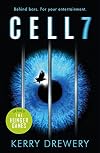
Excellent concept and delivery. In the not too distant future, murderers are voted in or out for execution in a show called "Death is Justice" in 7 days. ( Each day the person is guilty on the viewer vote line, the closer they are to Cell 7 - the one where you are executed.
Jackson Paige - a huge celebrity (think : Ellen or Oprah but male) has been shot dead. Martha who is 16 has confessed to the crime but there is something behind her confession. This is the story of trial by media and what show more happens when you take away the courts and "innocent until proven guilty" mantra. It is a love story and also a great satire on the current thirst for reality TV and more and more shocking events to captivate television viewers.
Has mature themes obviously ( death, torture, rape and prostitution) and also strong language in the F word but I think mature Year 8s could handle it. show less
Jackson Paige - a huge celebrity (think : Ellen or Oprah but male) has been shot dead. Martha who is 16 has confessed to the crime but there is something behind her confession. This is the story of trial by media and what show more happens when you take away the courts and "innocent until proven guilty" mantra. It is a love story and also a great satire on the current thirst for reality TV and more and more shocking events to captivate television viewers.
Has mature themes obviously ( death, torture, rape and prostitution) and also strong language in the F word but I think mature Year 8s could handle it. show less
In de (nabije) toekomst kiest Groot-Britannië er voor om te stoppen met rechtspraak door rechters, maar ligt dit in de handen van een televisieprogramma, waarbij de kijker kan kiezen of de verdachte schuldig of onschuldig is. De verdachte van een (fatale) misdrijf wordt in Cel 1 opgesloten. Een kleine ruimte, met een bed en een toilet. Je mag alleen nog maar beperkt contact hebben met een vast therapeut, en verder met niemand. Na iedere nacht kom je in een andere cel terecht, steeds show more kleiner, kouder, benauwender. De dagen lijken heel lang te duren. In iedere cel is er wel iets om je te doen breken. Uiteindelijk kom je in Cel 7 terecht. Midden in deze cel staat de elektrische stoel als herinnering dat dit je laatste dag kan zijn.
In het programma 'Dood Is Gerechtigheid' worden er dagelijkse updates gegeven over de gevangenen, wordt er gediscussieerd over je jeugd en school, vrienden en wat je tot de daad heeft gedreven.
De hoofdpersoon, de 16-jarige Martha Honeydew, heeft bekend een beroemd persoon, Jackson Paige te hebben vermoord. Zij staat zelfs met het wapen in de handen als de politie ter plaatse verschijnt. Toch lijken er veel dingen niet te kloppen.
Het boek laat het gevaar zien die de invloed van de (sociale) media kan hebben, zeker gelinkt met de mogelijkheden om bewijzen te vervalsen of zelfs te laten verdwijnen. In de diverse hoofdstukken zien we steeds een wisselende perspectief, en soms beleven we eerdere gebeurtenissen met Martha mee.
Door de vlotte schrijfstijl van Drewery leest het boek lekker vlot weg, show less
In het programma 'Dood Is Gerechtigheid' worden er dagelijkse updates gegeven over de gevangenen, wordt er gediscussieerd over je jeugd en school, vrienden en wat je tot de daad heeft gedreven.
De hoofdpersoon, de 16-jarige Martha Honeydew, heeft bekend een beroemd persoon, Jackson Paige te hebben vermoord. Zij staat zelfs met het wapen in de handen als de politie ter plaatse verschijnt. Toch lijken er veel dingen niet te kloppen.
Het boek laat het gevaar zien die de invloed van de (sociale) media kan hebben, zeker gelinkt met de mogelijkheden om bewijzen te vervalsen of zelfs te laten verdwijnen. In de diverse hoofdstukken zien we steeds een wisselende perspectief, en soms beleven we eerdere gebeurtenissen met Martha mee.
Door de vlotte schrijfstijl van Drewery leest het boek lekker vlot weg, show less
If I wasn’t so aware of how books are often mostly ruined by being made into films, I would definitely want this as a film. I also feel like the film could have a different audience to the book. It could be a lot darker.
At the start of the book, we are put at the crime scene, and it’s good that the book delves in deep right from the start. The whole of the book is filled with emotion – that felt by the characters, as well as the emotions the reader will feel. Mostly anger and show more disappointment, but you need to be angry.
The criminal system in this book is horrible, so horrible I can’t even bring myself to actually call it a justice system, because I feel there is often no justice. If it was slightly different, I might be praising it. I’ve also been slightly unsure of my of my view on the death penalty. On one hand, I believe it is fair in some cases, individuals shouldn’t get off lightly with killing someone else, but how can you teach someone killing others is wrong by killing them? I feel the whole thing is contradictory.
I felt some areas of the book were a bit predictable, for example, the person who Martha is friends with (their identity is unknown at the start, we just know there’s someone), but there were also plot twists I wasn’t expecting and they were so. good.
I love the fact that the book was written to make you feel angry. At the injustice, the unfairness, the death. There are small, happy parts, but that is not the point in the book. All I can say is I hope it is never like this in the future. show less
At the start of the book, we are put at the crime scene, and it’s good that the book delves in deep right from the start. The whole of the book is filled with emotion – that felt by the characters, as well as the emotions the reader will feel. Mostly anger and show more disappointment, but you need to be angry.
The criminal system in this book is horrible, so horrible I can’t even bring myself to actually call it a justice system, because I feel there is often no justice. If it was slightly different, I might be praising it. I’ve also been slightly unsure of my of my view on the death penalty. On one hand, I believe it is fair in some cases, individuals shouldn’t get off lightly with killing someone else, but how can you teach someone killing others is wrong by killing them? I feel the whole thing is contradictory.
I felt some areas of the book were a bit predictable, for example, the person who Martha is friends with (their identity is unknown at the start, we just know there’s someone), but there were also plot twists I wasn’t expecting and they were so. good.
I love the fact that the book was written to make you feel angry. At the injustice, the unfairness, the death. There are small, happy parts, but that is not the point in the book. All I can say is I hope it is never like this in the future. show less
Awards


You May Also Like


Statistics
- Works
- 11
- Members
- 233
- Popularity
- #96,931
- Rating
- 3.7
- Reviews
- 11
- ISBNs
- 55
- Languages
- 9