
Michael McGuire
Author of God's Brain
About the Author
Michael McGuire is professor emeritus of psychiatry and behavioral sciences at the University of California at Los Angeles. He is the coauthor of God's Brain (with Lionel Tiger), Darwinian Psychiatry (with A. Troisi), and ten other books. His distinguished academic career includes positions at show more Harvard Medical School and the University of California Medical School, as well as director of UCLA's nonhuman primate research facility for twenty years and director of the Gruter Institute for Law and Behavioral Research. show less
Works by Michael McGuire
An Eye For Fractals: A Graphic And Photographic Essay (Studies in Nonlinearity) (1991) 33 copies, 1 review
Collaborative Public Management: New Strategies for Local Governments (American Governance and Public Policy) (2003) 10 copies
Blind Rain [short story] 1 copy
Associated Works
Tagged
Common Knowledge
- Gender
- male
Members
Reviews
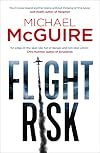
Post 9-11 it's hard to think that there hasn't been speculation about the next shock and awe campaign. I bet nobody thought there'd be an Australian, rough and tumble ex-commercial pilot, come spy at the centre of it all. The theory that Michael McGuire proposes in his thriller FLIGHT RISK is, however, just believable enough to make you feel decidedly twitchy about the possible reality. Right from page one FLIGHT RISK is out of the starter's gate at a hefty clip, moving quickly through the show more back story of Ted Anderson: disgraced former pilot, widower and estranged father, former a lot of things really; currently an agent of a top-secret Australian government agency, tasked with investigating terror-related incidents, straight into the thick of things when passenger planes start going missing mid flight.
There's heaps of action in FLIGHT RISK, which is odd as there's also a fair bit of time spent sitting in aircraft. Granted one of the planes spends some of that time being forced out of the air by the Indonesian airforce, and to be fair, it's a chance sighting and a gut reaction that sees Anderson switch from an ignominious return flight to Sydney to a high risk flight to Ukraine, only to find himself landing his passenger flight somewhere in Western Africa, right into the middle of preparations for an attack that will make the world really sit up and take notice.
What definitely helps make all this high-risk, high-octane action work is the central character of Ted Anderson. A cynical maverick with a dust-dry sense of humour and deeply entrenched guilt over his personal life screw-ups, he's impulsive, instinctual, tough and wonderfully engaging. All the way through - from the moments of regret over his estrangement from his daughter and his drinking that meant his wife was out looking for him on the night she was killed; and his occasional bafflement that his boss selected him to work in counter-terrorism despite his myriad screw ups in the past - he's an all out action hero in a (much-loved) leather jacket who is vulnerable and prone to a massive headache if belted around the ears often enough. In short, Australian, real, believable. Whilst the plot itself is over the top thriller stuff, and there's a cliff hanger ending that will either intrigue (as it did for this reader) or make others chew the book covers off, there was much to really like in FLIGHT RISK.
Of course you're going to have suspended your disbelief a while before a lone spy happens to observe a cleaner in an airport behaving oddly. You're going to be working on the principle that somewhere up in the sky there are flying command centres with more computer hardware than your average data centre (not so hard to believe really), and that a couple of agents can basically launch into a joint investigation without so much as a "hang on I might have to get clearance on all of this". But then you'll also be called upon to to believe that wiggle room happens if you're the only person in a cabin that manages to grab an oxygen mask, the spy on the spot that happens to be able to fly a plane, and when you're duct taped to a seat, but so what...
FLIGHT RISK is pure adrenaline pumping thriller territory and you're going to be turning pages, sometimes laughing, sometimes cringing, questioning whether you really do need to fly anywhere ever again, and frequently wondering just how much of this could be a real plot.
https://www.austcrimefiction.org/review/flight-risk-michael-mcguire show less
There's heaps of action in FLIGHT RISK, which is odd as there's also a fair bit of time spent sitting in aircraft. Granted one of the planes spends some of that time being forced out of the air by the Indonesian airforce, and to be fair, it's a chance sighting and a gut reaction that sees Anderson switch from an ignominious return flight to Sydney to a high risk flight to Ukraine, only to find himself landing his passenger flight somewhere in Western Africa, right into the middle of preparations for an attack that will make the world really sit up and take notice.
What definitely helps make all this high-risk, high-octane action work is the central character of Ted Anderson. A cynical maverick with a dust-dry sense of humour and deeply entrenched guilt over his personal life screw-ups, he's impulsive, instinctual, tough and wonderfully engaging. All the way through - from the moments of regret over his estrangement from his daughter and his drinking that meant his wife was out looking for him on the night she was killed; and his occasional bafflement that his boss selected him to work in counter-terrorism despite his myriad screw ups in the past - he's an all out action hero in a (much-loved) leather jacket who is vulnerable and prone to a massive headache if belted around the ears often enough. In short, Australian, real, believable. Whilst the plot itself is over the top thriller stuff, and there's a cliff hanger ending that will either intrigue (as it did for this reader) or make others chew the book covers off, there was much to really like in FLIGHT RISK.
Of course you're going to have suspended your disbelief a while before a lone spy happens to observe a cleaner in an airport behaving oddly. You're going to be working on the principle that somewhere up in the sky there are flying command centres with more computer hardware than your average data centre (not so hard to believe really), and that a couple of agents can basically launch into a joint investigation without so much as a "hang on I might have to get clearance on all of this". But then you'll also be called upon to to believe that wiggle room happens if you're the only person in a cabin that manages to grab an oxygen mask, the spy on the spot that happens to be able to fly a plane, and when you're duct taped to a seat, but so what...
FLIGHT RISK is pure adrenaline pumping thriller territory and you're going to be turning pages, sometimes laughing, sometimes cringing, questioning whether you really do need to fly anywhere ever again, and frequently wondering just how much of this could be a real plot.
https://www.austcrimefiction.org/review/flight-risk-michael-mcguire show less
This novel is certainly a page turner.
It is one of the books chosen for the monthly book group that I belong to, mainly because the author is from Adelaide.
One of the greatest mysteries of aviation history happened on March 8, 2014. Malaysia Airlines MH370 went missing on a flight from Kuala Lumpur to Beijing. The plane left its programmed flight path and headed south towards the Indian Ocean. Over the years Australian aviation authorities, among others, have spent a lot of time and energy show more on working out what happened to this plane, and finding its final resting place. There have been tv programmes about it. My recollection of that latest one I saw is that it is thought the pilot deliberately took the plane off course and eventually crashed it. The remains are supposedly somewhere off the West Australian coast. Bits and pieces have been found.
FLIGHT RISK reminded me of that event. And what if, instead of just one plane, there were four? And what if, in true Agatha Christie style, there was a mastermind behind it all? I won't say any more. I will let you discover the plot yourself.
One of the things McGuire makes you think about is how the pilot could get away with an event like this. Why wasn't he overwhelmed by other crew and passengers? Read the book to explore this scenario. Will you ever get on a plane again? show less
It is one of the books chosen for the monthly book group that I belong to, mainly because the author is from Adelaide.
One of the greatest mysteries of aviation history happened on March 8, 2014. Malaysia Airlines MH370 went missing on a flight from Kuala Lumpur to Beijing. The plane left its programmed flight path and headed south towards the Indian Ocean. Over the years Australian aviation authorities, among others, have spent a lot of time and energy show more on working out what happened to this plane, and finding its final resting place. There have been tv programmes about it. My recollection of that latest one I saw is that it is thought the pilot deliberately took the plane off course and eventually crashed it. The remains are supposedly somewhere off the West Australian coast. Bits and pieces have been found.
FLIGHT RISK reminded me of that event. And what if, instead of just one plane, there were four? And what if, in true Agatha Christie style, there was a mastermind behind it all? I won't say any more. I will let you discover the plot yourself.
One of the things McGuire makes you think about is how the pilot could get away with an event like this. Why wasn't he overwhelmed by other crew and passengers? Read the book to explore this scenario. Will you ever get on a plane again? show less
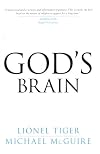
Religion has been with us as long as there has been human civilization, if not longer. Conversely, for as long as there has been human civilization, religion has been a battleground, both real and theoretical. Even today we see it in fanatics killing those with whom they disagree or the advent of the so-called 'new atheism. Too often lost in both the pervasiveness of religion and the commotion it can generate is the key question of its purpose.
Lionel Tiger and Michael McGuire are among the show more latest to investigate and opine on the answer to that question. At bottom, the one they provide in God's Brain is quite simple. Taking the position that any one religious belief or total lack thereof is immaterial to finding the answer, they conclude that the purpose of religion is to 'brainsoothe.' In other words, religion exists to help the brain deal with both internal and external stress and anxiety, something they call 'brainpain.'
Tiger and McGuire are not the first to analyze the brain's role in religion. Some have argued that religion is an evolutionary tool so humans can cope with knowing death is inevitable, an awareness other species do not possess. Others debate whether the brain specifically originated religion or if it is simply the result of neural connections that evolved for other purposes. Still others question the whole idea that religion may be 'hardwired' into the brain, containing it is simply a sociological adaptation. Tiger, a professor of anthropology, and McGuire, a psychiatrist and neuroscientist, combine their expertise and ultimately conclude the brain is both the source and principal beneficiary of religion.
God's Brain is meant for a lay audience. The authors frequently express their concepts in simple, everyday terms. For example, 'Religion is to the brain what jogging is to the legs.' Even those of us who can barely cope with chemistry for dummies can grasp that concept. That may be in part due to the fact they are dealing with a subject that has far less empirical data than other subjects. Still, McGuire and Tiger invoke a wide range of social and 'hard' sciences, whether brain chemistry or the study of nonhuman primates. Although the range can make the material somewhat kaleidoscopic at times, they do not let the book become too abstract or academic.
Essentially, McGuire and Tiger see religion as a coping mechanism for the brain to deal with anxiety, fear and stress. They argue that the socialization, rituals and beliefs that make up religion help the brain alter itself, to 'brainsoothe.' To some extent, their contention turns religion into a self-sustaining system. 'As oxygen is to air, guilt is to religion,' they observe. Yet what is one way the brain copes with guilt? Through religious ritual, such as Catholic confession, and belief, such as the forgiveness of sins.
Some, particularly those with a fundamentalist bent toward any religion, may see this theory as an effort to substitute brain chemistry for God. Tiger and McGuire take pains to point out and aim to predicate their analysis on it not being dependent on whether any or all religion is true. They argue that because religion is 'as diffuse as oxygen and seemingly as imperative,' we need to attempt to understand it as it is rather than fight over its validity or value. In that regard, even with its occasional weaknesses God's Brain is a welcome respite from the frenzied cacophony that too often attends discussion of religion.
(Originally posted at A Progressive on the Prairie) show less
Lionel Tiger and Michael McGuire are among the show more latest to investigate and opine on the answer to that question. At bottom, the one they provide in God's Brain is quite simple. Taking the position that any one religious belief or total lack thereof is immaterial to finding the answer, they conclude that the purpose of religion is to 'brainsoothe.' In other words, religion exists to help the brain deal with both internal and external stress and anxiety, something they call 'brainpain.'
Tiger and McGuire are not the first to analyze the brain's role in religion. Some have argued that religion is an evolutionary tool so humans can cope with knowing death is inevitable, an awareness other species do not possess. Others debate whether the brain specifically originated religion or if it is simply the result of neural connections that evolved for other purposes. Still others question the whole idea that religion may be 'hardwired' into the brain, containing it is simply a sociological adaptation. Tiger, a professor of anthropology, and McGuire, a psychiatrist and neuroscientist, combine their expertise and ultimately conclude the brain is both the source and principal beneficiary of religion.
God's Brain is meant for a lay audience. The authors frequently express their concepts in simple, everyday terms. For example, 'Religion is to the brain what jogging is to the legs.' Even those of us who can barely cope with chemistry for dummies can grasp that concept. That may be in part due to the fact they are dealing with a subject that has far less empirical data than other subjects. Still, McGuire and Tiger invoke a wide range of social and 'hard' sciences, whether brain chemistry or the study of nonhuman primates. Although the range can make the material somewhat kaleidoscopic at times, they do not let the book become too abstract or academic.
Essentially, McGuire and Tiger see religion as a coping mechanism for the brain to deal with anxiety, fear and stress. They argue that the socialization, rituals and beliefs that make up religion help the brain alter itself, to 'brainsoothe.' To some extent, their contention turns religion into a self-sustaining system. 'As oxygen is to air, guilt is to religion,' they observe. Yet what is one way the brain copes with guilt? Through religious ritual, such as Catholic confession, and belief, such as the forgiveness of sins.
Some, particularly those with a fundamentalist bent toward any religion, may see this theory as an effort to substitute brain chemistry for God. Tiger and McGuire take pains to point out and aim to predicate their analysis on it not being dependent on whether any or all religion is true. They argue that because religion is 'as diffuse as oxygen and seemingly as imperative,' we need to attempt to understand it as it is rather than fight over its validity or value. In that regard, even with its occasional weaknesses God's Brain is a welcome respite from the frenzied cacophony that too often attends discussion of religion.
(Originally posted at A Progressive on the Prairie) show less
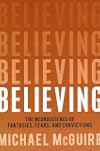
I must say that I am a bit disappointed with this book. Its full title is "Believing: The neuroscience of fantasies, fears and convictions". And at the end of the prologue the author says that he was interested in studying what beliefs are, where they come from, how they relate to evidence, why they persist in the absence of evidence or in the presence of contradictory evidence and what the role of the brain is. Promising, right? So maybe naively, I expected answers to these questions. But show more the book turned out to be more philosophical in its discussion, and less "neuroscientific". The little of neuroscience discussed in the book is more in the line with what a common person will say. For example, a common person will say that someone did X because that was pleasing to him - directly or indirectly. The neuroscientists will say that action X causes activity in the pleasure centre of the brain that can be measured by an fMRI (probably the result of dopamine production) and that makes us feel good. Well, this latter explanation does not really advance our understanding of why this person did X more than the former explanation.
So how far down the causality chain did I expect the author to delve? Well this depends on what we consider as a satisfactory explanation. Do we need to get down to elementary particles? Not if an explanation at the molecular level suffices to explain how a process works and what we can do to change it. For example, if we know how the brain creates a feeling of pleasure (by secreting dopamine) and how dopamine production eventually stops (by dopamine inhibitors) and how hallucinatory drugs become addictive (by blocking the action of the dopamine inhibitors and thus cause the brain to be flooded with dopamine), then we can change the addiction by creating pharmaceuticals that either inhibit dopamine production or inhibit the action of the hallucinatory drugs on the inhibitors.
Part of the problem with this book is that the definition of a belief is too broad. The author does not restrict his inquiry into religious or ideological beliefs but extends it to cover even common day-to-day beliefs. For example, it is my belief that if I turn on the faucet, water will come out and further it is also my belief that if I drink the water my thirst, or that weird feeling I am having right now, will be gone. The author says that our brains have a bias in creating beliefs. Well thank God for that because if they did not we will have to start from scratch every time we wake up!
The author says that for some beliefs the distance between them and evidence is very small or non-existent (as will be the case after I turn on the faucet once), while for others it is very large, and that our brain has a tendency to eliminate this gap either by looking at the evidence or making it up! Again, not surprising. Of course our brain will try to close the gap because if it did not then someone could believe in something even though he also knew that what he believed in was either incorrect or unsupported by evidence?
Which brings us to evidence. Some evidence are easy to establish as the causal agents of something and are also easy to gather. For example, in the case of the faucet, I just need to do the experiment once to figure out the causality between turning the faucet and water running out. But what of other more complicated things: for example, I believe that my spouse loves me. So what do I need as evidence to close the gap between my belief and "reality"? Would taking a bullet for me be too much to ask? What about if she just said that she loves me? Clearly, then the "evidence" in this case are subjective and may vary substantially from person to person. So then what kind of evidence are they? And how useful is it to describe beliefs and distance from evidence?
In any case, I got to thinking that maybe I was being foolish to expect answers to questions that should not even be posed in the first place. For example, although we know a lot about dopamine production, it may not be very productive to ask "but why some actions, that do not involve the physical intake of a substance, cause dopamine production and others do not?" And there can be an infinite series of "whys" that could only have answers if molecules had goals and "objective functions", which they do not, other than the ones given to them by evolution. show less
So how far down the causality chain did I expect the author to delve? Well this depends on what we consider as a satisfactory explanation. Do we need to get down to elementary particles? Not if an explanation at the molecular level suffices to explain how a process works and what we can do to change it. For example, if we know how the brain creates a feeling of pleasure (by secreting dopamine) and how dopamine production eventually stops (by dopamine inhibitors) and how hallucinatory drugs become addictive (by blocking the action of the dopamine inhibitors and thus cause the brain to be flooded with dopamine), then we can change the addiction by creating pharmaceuticals that either inhibit dopamine production or inhibit the action of the hallucinatory drugs on the inhibitors.
Part of the problem with this book is that the definition of a belief is too broad. The author does not restrict his inquiry into religious or ideological beliefs but extends it to cover even common day-to-day beliefs. For example, it is my belief that if I turn on the faucet, water will come out and further it is also my belief that if I drink the water my thirst, or that weird feeling I am having right now, will be gone. The author says that our brains have a bias in creating beliefs. Well thank God for that because if they did not we will have to start from scratch every time we wake up!
The author says that for some beliefs the distance between them and evidence is very small or non-existent (as will be the case after I turn on the faucet once), while for others it is very large, and that our brain has a tendency to eliminate this gap either by looking at the evidence or making it up! Again, not surprising. Of course our brain will try to close the gap because if it did not then someone could believe in something even though he also knew that what he believed in was either incorrect or unsupported by evidence?
Which brings us to evidence. Some evidence are easy to establish as the causal agents of something and are also easy to gather. For example, in the case of the faucet, I just need to do the experiment once to figure out the causality between turning the faucet and water running out. But what of other more complicated things: for example, I believe that my spouse loves me. So what do I need as evidence to close the gap between my belief and "reality"? Would taking a bullet for me be too much to ask? What about if she just said that she loves me? Clearly, then the "evidence" in this case are subjective and may vary substantially from person to person. So then what kind of evidence are they? And how useful is it to describe beliefs and distance from evidence?
In any case, I got to thinking that maybe I was being foolish to expect answers to questions that should not even be posed in the first place. For example, although we know a lot about dopamine production, it may not be very productive to ask "but why some actions, that do not involve the physical intake of a substance, cause dopamine production and others do not?" And there can be an infinite series of "whys" that could only have answers if molecules had goals and "objective functions", which they do not, other than the ones given to them by evolution. show less
Awards


You May Also Like


Associated Authors
Statistics
- Works
- 16
- Also by
- 4
- Members
- 209
- Popularity
- #106,075
- Rating
- 3.7
- Reviews
- 9
- ISBNs
- 45
- Languages
- 2