
Shirley Geok-lin Lim
Author of Among the White Moon Faces: An Asian-American Memoir of Homelands (The Cross-Cultural Memoir Series)
About the Author
Image credit: Poetry Foundation
Works by Shirley Geok-lin Lim
Associated Works
Literature: An Introduction to Fiction, Poetry, and Drama (1995) — Contributor, some editions — 1,011 copies, 7 reviews
Premonitions: The Kaya Anthology of New Asian North American Poetry (1995) — Contributor — 27 copies
Over Ten Million Served: Gendered Service in Language and Literature Workplaces (2010) — Contributor — 7 copies
Tagged
Common Knowledge
- Birthdate
- 1944
- Gender
- female
- Education
- University of Malaya (BA)
Brandeis University (PhD) - Occupations
- English professor, University of California, Santa Barbara
- Nationality
- Malaysia
USA - Birthplace
- Malacca, Malaysia
- Map Location
- Malaysia
USA
Members
Reviews
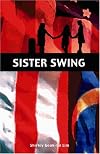
Some years ago Shirley Lim wrote a story called Mr. Tan’s Girls which won the Asiaweek short story contest and found its way into several anthologies, including The Merlion and the Hibiscus which is where I first came across it.
In Sister Swing, she picks up the same cast of characters and replays the short story in the first chapter. But this time the father, Ah Kong, meets his end in a rather more shocking manner - he dies after seeing his two elder daughters examining their private parts show more in a mirror! (It's a terrible secret the elder sisters share and I was surprised Lim didn't make much more of this later in the novel).
The novel is the story of three sisters, Yen, Swee Yin and Paik, and the narration moves between them with Lim inventing a separate voice for each of them.
Swee Yin, nicknamed Sister Swing, is really the character at the centre of the story. She sees the family name wing as “an occult name … conjuring feathers and flight" and the metaphor is a fitting one because she does indeed test her wings and is the first to fly the nest.
The sisters are left a tidy sum of money in their father's will and Swee decides to take up a course in New York State, where she is incredibly lonely. She's also the first sister to discover love, and has an affair with her lecturer, Professor Lopez.
The complex relationship between the sisters and their various rivalries is very well drawn. Yen, whom Swee refers to as "my oldest sister who grew up to become younger than me" grows up a little lazy, more laid back than Swee Yin, and very much dependent on her younger sister.
Lim spoke at a reading at Silverfish some time ago about the problems that writing the voice of this characters in such a way that it retained something of the quality of Malaysian English, yet was intelligible by American readers.
I was interested to see how Lim rises to the challenge she sets herself, particularly as other Malaysian and Singaporean writers will find this an issue that they also need to resolve.
In Yen's case, though, I must confess the voice does not entirely convince. It is somewhat uneven – some complex grammatical constructions are perfectly, yet in other places phrases in broken English are scattered in and seem a little jarring.
The third sister, Peik, is their father’s favourite child, the one who tries hardest to please. After the father dies she feels left out when Yen becomes Swee's closest confidant, and finds consolation in religion, turning to an evangelical church and changes her name to Pearl. Lim convinces rather more with this voice, particularly with the way her speech is peppered with biblical expressions. (One can't help feeling very sorry when she tells Swee later in the novel that her husband “did not want to make me big with child”.)
I must say that I like the colour and humour of the Malaysian chapters better than those set in an America which is quite cold and distancing.
Yen decides that she also would like to study in the States and the sisters take up courses in Long Beach, California where Swee becomes quickly involved with Sandy, ex-military and studying welding part time, while Yen becomes involved with a biker called Wayne. I really felt frustrated that the girls take up with such obvious losers! Sandy turns out to belong to a white supremacist group, although Swee is very slow to pick up on this.
Central to the novel is the theme of Asian identity, which Lim handles very well. Everyone in America seems to have an idea about what Asians are, or what Asians should be, and seem to want to put everyone together in the same box.
Swee finds herself lumped together with all other Asians, regardless of nationality, and subject to all kinds of preconceptions. Her first lover, Lopez, himself only too aware of racism, urges Swee to "find her community".
Mrs. Butler, her lecturer for Race in America, teaches her about slavery and the history of the blacks, but shows her resentment against the upstart Asian immigrants who “aren’t willing to wait their turn”, and in a clever kind of reverse racism, Swee is not given the A for an assignment she so clearly deserves. “I know you fresh immigrants” says Mrs. Butler “you’re pushy”.
Swee is criticised by a driving instructor who says Asians are too timid and cause accidents by going too slowly. And the sisters are called “gook girls” and “sluts” by the child-wife of Keith, Sandy’s welding teacher (but actually the leader of the white supremacist group). Pinny, a Hong Kong student Swee remembers from her first college, adapts to fulfil racial stereotypes perfectly, and plays the part of a Vietnamese “mamma-san” in a bar for Vietnamese veterans .
Swee is forced to lead an uneasy double-life. As she grows more aware of how Asians are perceived in America, and begins to write articles to give a voice to the wider Asian community, with whom she finds herself identifying increasingly. At the same time, she finds herself increasingly pressurised by Sandy to reinvent herself as "Sue" and dye her hair brown, so as to appears almost white.
In her naivety she cannot see Sandy for what he is, or the danger he poses, and this ignorance has tragic consequences.
Paik also ends up in California, running a mission with her husband Robert and his father Pastor Fung to minister to a congregation of mainly Latinos and Asians. She decides that she wants to spend her portion of the inheritance installing a huge cross atop the makeshift church which uses the premises of a disused furniture warehouse - but like Swee she is impossibly naive and good intentions backfire. Both girls really are unequipped to really cope with life in America, and the novel is really a journey for them to find themselves.
While the plot, in the wrong hands, could have been fodder for melodrama, Lim's writing shows just the right of amount of restraint.
If anything I would have liked the novel to be have been longer and to have explored Paik's story rather more. And the tying up of ends in the last couple of chapters seems rather too neat.
It's almost as if the novel it could have developed into something really good but got somehow reigned back abruptly before it quite got there ... and one wonders why. Sister Swing comes frustratingly close to really working, to becoming the kind of novel that might have found commercial success in an international market (now that Tan, Twan, Preeta, Chiew-Siah et al have upped the ante). But not quite. show less
In Sister Swing, she picks up the same cast of characters and replays the short story in the first chapter. But this time the father, Ah Kong, meets his end in a rather more shocking manner - he dies after seeing his two elder daughters examining their private parts show more in a mirror! (It's a terrible secret the elder sisters share and I was surprised Lim didn't make much more of this later in the novel).
The novel is the story of three sisters, Yen, Swee Yin and Paik, and the narration moves between them with Lim inventing a separate voice for each of them.
Swee Yin, nicknamed Sister Swing, is really the character at the centre of the story. She sees the family name wing as “an occult name … conjuring feathers and flight" and the metaphor is a fitting one because she does indeed test her wings and is the first to fly the nest.
The sisters are left a tidy sum of money in their father's will and Swee decides to take up a course in New York State, where she is incredibly lonely. She's also the first sister to discover love, and has an affair with her lecturer, Professor Lopez.
The complex relationship between the sisters and their various rivalries is very well drawn. Yen, whom Swee refers to as "my oldest sister who grew up to become younger than me" grows up a little lazy, more laid back than Swee Yin, and very much dependent on her younger sister.
Lim spoke at a reading at Silverfish some time ago about the problems that writing the voice of this characters in such a way that it retained something of the quality of Malaysian English, yet was intelligible by American readers.
I was interested to see how Lim rises to the challenge she sets herself, particularly as other Malaysian and Singaporean writers will find this an issue that they also need to resolve.
In Yen's case, though, I must confess the voice does not entirely convince. It is somewhat uneven – some complex grammatical constructions are perfectly, yet in other places phrases in broken English are scattered in and seem a little jarring.
The third sister, Peik, is their father’s favourite child, the one who tries hardest to please. After the father dies she feels left out when Yen becomes Swee's closest confidant, and finds consolation in religion, turning to an evangelical church and changes her name to Pearl. Lim convinces rather more with this voice, particularly with the way her speech is peppered with biblical expressions. (One can't help feeling very sorry when she tells Swee later in the novel that her husband “did not want to make me big with child”.)
I must say that I like the colour and humour of the Malaysian chapters better than those set in an America which is quite cold and distancing.
Yen decides that she also would like to study in the States and the sisters take up courses in Long Beach, California where Swee becomes quickly involved with Sandy, ex-military and studying welding part time, while Yen becomes involved with a biker called Wayne. I really felt frustrated that the girls take up with such obvious losers! Sandy turns out to belong to a white supremacist group, although Swee is very slow to pick up on this.
Central to the novel is the theme of Asian identity, which Lim handles very well. Everyone in America seems to have an idea about what Asians are, or what Asians should be, and seem to want to put everyone together in the same box.
Swee finds herself lumped together with all other Asians, regardless of nationality, and subject to all kinds of preconceptions. Her first lover, Lopez, himself only too aware of racism, urges Swee to "find her community".
Mrs. Butler, her lecturer for Race in America, teaches her about slavery and the history of the blacks, but shows her resentment against the upstart Asian immigrants who “aren’t willing to wait their turn”, and in a clever kind of reverse racism, Swee is not given the A for an assignment she so clearly deserves. “I know you fresh immigrants” says Mrs. Butler “you’re pushy”.
Swee is criticised by a driving instructor who says Asians are too timid and cause accidents by going too slowly. And the sisters are called “gook girls” and “sluts” by the child-wife of Keith, Sandy’s welding teacher (but actually the leader of the white supremacist group). Pinny, a Hong Kong student Swee remembers from her first college, adapts to fulfil racial stereotypes perfectly, and plays the part of a Vietnamese “mamma-san” in a bar for Vietnamese veterans .
Swee is forced to lead an uneasy double-life. As she grows more aware of how Asians are perceived in America, and begins to write articles to give a voice to the wider Asian community, with whom she finds herself identifying increasingly. At the same time, she finds herself increasingly pressurised by Sandy to reinvent herself as "Sue" and dye her hair brown, so as to appears almost white.
In her naivety she cannot see Sandy for what he is, or the danger he poses, and this ignorance has tragic consequences.
Paik also ends up in California, running a mission with her husband Robert and his father Pastor Fung to minister to a congregation of mainly Latinos and Asians. She decides that she wants to spend her portion of the inheritance installing a huge cross atop the makeshift church which uses the premises of a disused furniture warehouse - but like Swee she is impossibly naive and good intentions backfire. Both girls really are unequipped to really cope with life in America, and the novel is really a journey for them to find themselves.
While the plot, in the wrong hands, could have been fodder for melodrama, Lim's writing shows just the right of amount of restraint.
If anything I would have liked the novel to be have been longer and to have explored Paik's story rather more. And the tying up of ends in the last couple of chapters seems rather too neat.
It's almost as if the novel it could have developed into something really good but got somehow reigned back abruptly before it quite got there ... and one wonders why. Sister Swing comes frustratingly close to really working, to becoming the kind of novel that might have found commercial success in an international market (now that Tan, Twan, Preeta, Chiew-Siah et al have upped the ante). But not quite. show less
You can determine the content of the book from its title, so the real question becomes, are the selections worthwhile? To say it simply, yes. The short stories, excerpts, poems, and plays are generally of very high caliber from solid writers. There were occasional choices I didn't like as much, which I expect from any anthology, really, but I enjoyed the vast majority. High profile authors, such as Maxine Hong-Kingston, Amy Tan, Bharati Mukherjee, and Carlos Bulosan, are accompanied by show more authors that I had never heard of, but plan to pursue now that I've had a taste of their style.
The selections are arranged according to theme, rather than region, but each chapter has a wide selection of writers from different areas of Asia, as well as variety in immigrant versus American born writers, men and women, and different perspectives on the same issues. My only quibble with the book is that there are a lot of excerpts from novels. This is a personal issue, really, since I like to read the whole book, not just pieces, and would have preferred more short stories here instead. On the whole, though, this is an excellent collection of work, and I am glad that I finally got back to this unfinished college read. show less
The selections are arranged according to theme, rather than region, but each chapter has a wide selection of writers from different areas of Asia, as well as variety in immigrant versus American born writers, men and women, and different perspectives on the same issues. My only quibble with the book is that there are a lot of excerpts from novels. This is a personal issue, really, since I like to read the whole book, not just pieces, and would have preferred more short stories here instead. On the whole, though, this is an excellent collection of work, and I am glad that I finally got back to this unfinished college read. show less
A story spanning 3 countries (Singapore, Malaysia and USA), it talks about an idealistic, westernized young woman growing up in her conservative hometown of Kuala Lumpur, married to a college sweetheart and his confucian family, only to become involved briefly with a white American , leading on to an illegitimate Eurasian child. The novel expresses very clearly the stigma of such a forbidden union during the days then. How much things have changed since then!
Quite a nice read, except that show more many loose ends were yet to be tied by the end of the story, and i don't really see how the title is relevant to the novel :P show less
Quite a nice read, except that show more many loose ends were yet to be tied by the end of the story, and i don't really see how the title is relevant to the novel :P show less
Shirley Geok-lin Lim has written a novel set in multi-ethnic Malaysia where a woman moves to self-reliance and reconciliation with her past.
After gaining its independence in the 1960s, Malaysia experienced conflicts among its various ethnic groups. Li An, Lim’s major character, enjoyed friends who were Chinese, Malay, and Islamic, until violence brought tragedy. Looking for safety she had drifted into a marriage with another Chinese, but she was also attracted to an American Peace Corps show more volunteer, who appears as the “colonizer.” His return to his own country occupies second section of the novel, which I found a diversion from the main story. The last section focuses again on Li An and the successful life she and three other women create in Singapore—a life threatened by her own past.
Lim’s novel is engaging and a revelation to a reader like myself who knew nothing of Malaya history. Lim portrays the violent ethnic divisions from the inside is one of the strengths of the book. Sympathy for the different conflicting groups creates a special tension. Lim herself grew up in Malayasia and maintains close ties there while teaching at the University of California—Santa Barbara. Her own experience in Women’s Studies adds insight in her depiction of Li An and the problems she faces. This is a good, but not a great book.
A recommend read, especially for those wanting to understand more about the global range of women’s experiences. show less
After gaining its independence in the 1960s, Malaysia experienced conflicts among its various ethnic groups. Li An, Lim’s major character, enjoyed friends who were Chinese, Malay, and Islamic, until violence brought tragedy. Looking for safety she had drifted into a marriage with another Chinese, but she was also attracted to an American Peace Corps show more volunteer, who appears as the “colonizer.” His return to his own country occupies second section of the novel, which I found a diversion from the main story. The last section focuses again on Li An and the successful life she and three other women create in Singapore—a life threatened by her own past.
Lim’s novel is engaging and a revelation to a reader like myself who knew nothing of Malaya history. Lim portrays the violent ethnic divisions from the inside is one of the strengths of the book. Sympathy for the different conflicting groups creates a special tension. Lim herself grew up in Malayasia and maintains close ties there while teaching at the University of California—Santa Barbara. Her own experience in Women’s Studies adds insight in her depiction of Li An and the problems she faces. This is a good, but not a great book.
A recommend read, especially for those wanting to understand more about the global range of women’s experiences. show less
Awards

You May Also Like


Associated Authors
Statistics
- Works
- 32
- Also by
- 10
- Members
- 411
- Popularity
- #59,240
- Rating
- 3.9
- Reviews
- 7
- ISBNs
- 54