
Jeri Watts
Author of Kizzy Ann Stamps
About the Author
Works by Jeri Watts
Kimmy ann stamps 1 copy
Tagged
Common Knowledge
- Gender
- female
Members
Reviews

This is a difficult book for me to talk about. It's beautifully written with evocative imagery and a location that absolutely leaps from the page. I love the detail and care that went into Ellen's personal story and that of her family and friends.
But....this isn't necessarily a good book for readers who struggle with mental illness or who are worried about developing mental illness. As a compassionate look at what it's like to have a parent with bipolar disorder, to say "you are not alone, show more it is difficult" - yes, absolutely this is a valuable book. But for the kids who struggle with it on their own? I'd shy away.
There is a message throughout that mental illness is a burden and suffering and basically a horrific thing and Ellen is terrified of being like her mom. That is a message that people with mental illness do not need to be told - we often fear that we are burdensome, may hate ourselves for causing our loved ones to suffer because of our own suffering. Bipolar disorder, depression, anxiety - mental illness isn't fun, but it isn't only suffering, and by not only telling a story from the dependent child's pov but having her say how afraid she is of being bipolar (which often runs in families!)...it's just not very great for mentally ill readers.
I do appreciate that no one tries to force Ellen's mom to change, and they acknowledge that there isn't a cure to make her better. She is sometimes brilliant and sparkling and active and sometimes can't get out of bed or feed herself, and the only thing to do is be kind and patient and remind her that she has friends who care.
The mental illness of Ellen's mother is just one facet of the overarching theme of the book: adults who aren't very good at being trustworthy adults. Ellen's father basically abandoned the family to enlist for WW2, but eventually he regrets his actions (when he sees how awful war is). One of the boys in the village, who eventually becomes Ellen's friend, has an abusive father. (Some of the abuse is depicted on page, other things are only alluded to or referenced later.) One village woman desperately wants to be seen as urbane and wealthy, but her life is shallow and petty.
This really is a great book for middle grade readers just starting to understand that adults aren't always impeachable authority figures, or who need to see ways of living with irresponsible or sick adults to feel less alone. The imagery and writing is so enjoyable. But, yet, the takeaway message that mental illness is a burden and something horrific (no matter how true that might feel) isn't something that many people should be reading. show less
But....this isn't necessarily a good book for readers who struggle with mental illness or who are worried about developing mental illness. As a compassionate look at what it's like to have a parent with bipolar disorder, to say "you are not alone, show more it is difficult" - yes, absolutely this is a valuable book. But for the kids who struggle with it on their own? I'd shy away.
There is a message throughout that mental illness is a burden and suffering and basically a horrific thing and Ellen is terrified of being like her mom. That is a message that people with mental illness do not need to be told - we often fear that we are burdensome, may hate ourselves for causing our loved ones to suffer because of our own suffering. Bipolar disorder, depression, anxiety - mental illness isn't fun, but it isn't only suffering, and by not only telling a story from the dependent child's pov but having her say how afraid she is of being bipolar (which often runs in families!)...it's just not very great for mentally ill readers.
I do appreciate that no one tries to force Ellen's mom to change, and they acknowledge that there isn't a cure to make her better. She is sometimes brilliant and sparkling and active and sometimes can't get out of bed or feed herself, and the only thing to do is be kind and patient and remind her that she has friends who care.
The mental illness of Ellen's mother is just one facet of the overarching theme of the book: adults who aren't very good at being trustworthy adults. Ellen's father basically abandoned the family to enlist for WW2, but eventually he regrets his actions (when he sees how awful war is). One of the boys in the village, who eventually becomes Ellen's friend, has an abusive father. (Some of the abuse is depicted on page, other things are only alluded to or referenced later.) One village woman desperately wants to be seen as urbane and wealthy, but her life is shallow and petty.
This really is a great book for middle grade readers just starting to understand that adults aren't always impeachable authority figures, or who need to see ways of living with irresponsible or sick adults to feel less alone. The imagery and writing is so enjoyable. But, yet, the takeaway message that mental illness is a burden and something horrific (no matter how true that might feel) isn't something that many people should be reading. show less
 This review was written for LibraryThing Early Reviewers.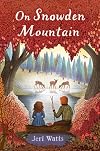
When Ellen's dad leaves to fight in World War II, her mother sinks into a deep depression. As things get dire for Ellen and her mother in Baltimore, she calls the only family she has - her mother's sister - who takes them home to Snowden Mountain, which doesn't even have electricity, much less the society of Baltimore. As Ellen settles into the routine of a tiny town that she swears will never be "home" to her, with a one-room school house and her brusque and distant aunt, she grapples with show more the discovery of history of her family, the distance of her father, and the worry that she too will succumb to the tendency of depression. This book deals with a lot of heavy subjects - mental illness (depression), domestic abuse, alcoholism - during a time period when they were not discussed much. The book has a very open ending, leaving readers to decide what fate has for the characters. It definitely does not give answers to these weighty problems of life, but readers who struggle with these issues will feel less alone after reading. show less
This review was written for LibraryThing Early Reviewers.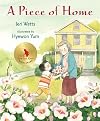
A sweet story about a Korean family adjusting to life in America. We see Hee Jun's growing comfort with a strange new language, the English words transforming from "stones" to "bubbles" on his tongue. This story about the immigration experience is much more straightforward than the others I've read. There is no allegory or complex symbolism, just a simple and direct narrative of a young boy adjusting to a foreign place. He finds a "piece of home" in his new friend's garden when he sees a show more familiar flower, mugunghwa, and shares it with his homesick grandmother.
Side note: I'm noticing a trend...two-thirds of the books about immigrants I checked out from the library this week are authored by white women who are not immigrants. Concerning discovery. show less
Side note: I'm noticing a trend...two-thirds of the books about immigrants I checked out from the library this week are authored by white women who are not immigrants. Concerning discovery. show less
I never thought I'd write to the teacher at the white school. I don't know as I've ever thought about the white school, really, before all this integration business got started. But here I am, fixing to go there come September.
--Chapter 1
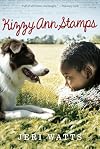
This historical fiction novel tells the story of integration in a small town and how a young girl sees things. Kizzy Ann Stamps is a young girl of color who doesn't really want to go to the "white school". The book is set up as letters Kizzy writes to her show more new teacher and once school starts, a journal. Each chapter is a letter and later a journal entry. Kizzy loves to write and enjoys telling Miss Anderson all about her and her dog Shag in her letters.
Kizzy is very honest in her letters and expresses what she is feeling about whatever is going on in her life. As the story progresses, we see that Kizzy has a strong personality and sometimes speaks when she shouldn't and it gets her in trouble. But, Kizzy is also very smart, very determined and very resilient.
The author writes beautifully and really captures the voice of a young black girl during the time of segregation. At least as far as I can tell, being pretty far removed from that myself. I guess what I'm saying is, Kizzy is a compelling character and she seems real. Kizzy goes through some highs and lows. She is kept from doing some things because of the color of her skin, but she does break some barriers.
To me, this novel speaks of hope. How even though things seem set in concrete, there are always people with open minds who are willing to see the benefits of change. Of course there are those who are dead set against change, but that doesn't mean we stop trying to make life better.
Enough preaching. Here are some quotes that I especially liked.
I cannot believe the upside-downness of the world. One day your biggest problem is whether you feel like you can work with a man whose eyebrows are alive, and the next minute your problem is that your country's president is dead.
How can one man dying make the whole world hush?
He's my daddy, you know. But sometimes, I just don't know what's right. He'll do something and it feels, um, ugly or mean or something. I get mixed up then. I just don't always know what's right. You know what I mean?
The makeup didn't bring back the old me. It wasn't the old Kizzy Ann. It was just some other girl, someone I didn't know. It was a disguise, just a disguise.
I was not amazed at the hug from you -- I know by now that you really do love me even if you are white and I am not -- but when the crowd gasped, I thought we were in trouble.
I looked to my friends, my friends who were there for me, there with me, this finest moment in my life. I knew that it didn't matter whether we won any place at all. For that experience, on that course, I was an equal.
I enjoyed this book very much. Historical fiction seems to be growing on me. I used to think I didn't like this genre much. But, recently I've read several historical fiction books that touched me. It's always fun to discover something new that you enjoy.
Recommended to:
Readers in grades 3-5 that enjoy historical stories or stories about young girls overcoming odds. show less
--Chapter 1
This historical fiction novel tells the story of integration in a small town and how a young girl sees things. Kizzy Ann Stamps is a young girl of color who doesn't really want to go to the "white school". The book is set up as letters Kizzy writes to her show more new teacher and once school starts, a journal. Each chapter is a letter and later a journal entry. Kizzy loves to write and enjoys telling Miss Anderson all about her and her dog Shag in her letters.
Kizzy is very honest in her letters and expresses what she is feeling about whatever is going on in her life. As the story progresses, we see that Kizzy has a strong personality and sometimes speaks when she shouldn't and it gets her in trouble. But, Kizzy is also very smart, very determined and very resilient.
The author writes beautifully and really captures the voice of a young black girl during the time of segregation. At least as far as I can tell, being pretty far removed from that myself. I guess what I'm saying is, Kizzy is a compelling character and she seems real. Kizzy goes through some highs and lows. She is kept from doing some things because of the color of her skin, but she does break some barriers.
To me, this novel speaks of hope. How even though things seem set in concrete, there are always people with open minds who are willing to see the benefits of change. Of course there are those who are dead set against change, but that doesn't mean we stop trying to make life better.
Enough preaching. Here are some quotes that I especially liked.
I cannot believe the upside-downness of the world. One day your biggest problem is whether you feel like you can work with a man whose eyebrows are alive, and the next minute your problem is that your country's president is dead.
How can one man dying make the whole world hush?
He's my daddy, you know. But sometimes, I just don't know what's right. He'll do something and it feels, um, ugly or mean or something. I get mixed up then. I just don't always know what's right. You know what I mean?
The makeup didn't bring back the old me. It wasn't the old Kizzy Ann. It was just some other girl, someone I didn't know. It was a disguise, just a disguise.
I was not amazed at the hug from you -- I know by now that you really do love me even if you are white and I am not -- but when the crowd gasped, I thought we were in trouble.
I looked to my friends, my friends who were there for me, there with me, this finest moment in my life. I knew that it didn't matter whether we won any place at all. For that experience, on that course, I was an equal.
I enjoyed this book very much. Historical fiction seems to be growing on me. I used to think I didn't like this genre much. But, recently I've read several historical fiction books that touched me. It's always fun to discover something new that you enjoy.
Recommended to:
Readers in grades 3-5 that enjoy historical stories or stories about young girls overcoming odds. show less
Lists
Awards


You May Also Like


Associated Authors
Statistics
- Works
- 5
- Members
- 1,149
- Popularity
- #22,348
- Rating
- 3.9
- Reviews
- 53
- ISBNs
- 33
