
Philip Houston
Author of Spy the Lie: Former CIA Officers Teach You How to Detect Deception
Works by Philip Houston
Spy the Lie: Former CIA Officers Teach You How to Detect Deception (2012) — Author — 511 copies, 21 reviews
Get the Truth: Former CIA Officers Teach You How to Persuade Anyone to Tell All (2015) 94 copies, 2 reviews
Tagged
Common Knowledge
There is no Common Knowledge data for this author yet. You can help.
Members
Reviews
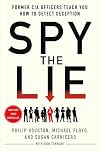
Six-word review: Experts reveal how they expose lies.
Extended review:
• Cultivate the ability to look and listen at the same time.
• Watch for clusters of deceptive behaviors and not just single instances.
• Learn to ignore truthful behavior.
• Be alert to nonanswers and avoidance of response to direct questions.
• Notice stalling tactics.
• Recognize attacks on the questioner for what they are.
These are but a sampling of techniques that the authors have incorporated into the model show more they teach in investigative settings from law enforcement to corporate security. The authors explain why each aspect of the model is used and how to apply it. The model is not intended to prove that the person being questioned is lying, but it sure does point to people and topics that warrant further attention.
This book is a fast, easy read that I found remarkably educational. In fact, I'd consider it worth a second read, since once I know what's coming I think I may find it easier to absorb and retain information the second time around.
I'm not involved in any kind of investigative activity and rarely have the need to question anyone in a situation where deception is a concern. Yet I found my awareness of deceptive behavior multiplied by some significant amount. As it happened, I finished the book yesterday, and today on NPR I heard a segment of an IRS official's hearing before the Senate in the matter of targeting conservative groups seeking tax exemptions. I almost laughed out loud to hear this person giving responses and evasions that could have come straight out of this book.
Interestingly, the authors anticipate and answer the charge that knowledge of their techniques will teach people to become better liars. The behaviors they've learned to spot, they say, operate on an unconscious and involuntary level and are very difficult to suppress, especially because the level of concentration that would take is pretty hard to sustain while you're also preoccupied with perpetrating plausible falsehoods. Even if you could manage some of them, others would give you away.
Remember, they don't regard any of the telltale signs as proof of deception but only as an indicator of where more attention is needed.
Even if all I've learned is how to hear politicians differently, I'll consider this a worthwhile read. show less
Extended review:
• Cultivate the ability to look and listen at the same time.
• Watch for clusters of deceptive behaviors and not just single instances.
• Learn to ignore truthful behavior.
• Be alert to nonanswers and avoidance of response to direct questions.
• Notice stalling tactics.
• Recognize attacks on the questioner for what they are.
These are but a sampling of techniques that the authors have incorporated into the model show more they teach in investigative settings from law enforcement to corporate security. The authors explain why each aspect of the model is used and how to apply it. The model is not intended to prove that the person being questioned is lying, but it sure does point to people and topics that warrant further attention.
This book is a fast, easy read that I found remarkably educational. In fact, I'd consider it worth a second read, since once I know what's coming I think I may find it easier to absorb and retain information the second time around.
I'm not involved in any kind of investigative activity and rarely have the need to question anyone in a situation where deception is a concern. Yet I found my awareness of deceptive behavior multiplied by some significant amount. As it happened, I finished the book yesterday, and today on NPR I heard a segment of an IRS official's hearing before the Senate in the matter of targeting conservative groups seeking tax exemptions. I almost laughed out loud to hear this person giving responses and evasions that could have come straight out of this book.
Interestingly, the authors anticipate and answer the charge that knowledge of their techniques will teach people to become better liars. The behaviors they've learned to spot, they say, operate on an unconscious and involuntary level and are very difficult to suppress, especially because the level of concentration that would take is pretty hard to sustain while you're also preoccupied with perpetrating plausible falsehoods. Even if you could manage some of them, others would give you away.
Remember, they don't regard any of the telltale signs as proof of deception but only as an indicator of where more attention is needed.
Even if all I've learned is how to hear politicians differently, I'll consider this a worthwhile read. show less
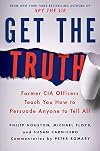
This was a fast, fascinating read. The authors are CIA agents who do polygraph tests for the peiodic re-checks for security clearances. It is presented as a series of true-life stories, with names anonymized, detailing how particular interviews, expected to be routine, turned into interrogrations eliciting much more information than the subject intended to provide.
Forget the "enhanced interrogation" tactics you hear about on the news. These have nothing to do with torture, and everything show more with how to talk with someone, one-on-one, to pull the truth from them via empathy and building rapport. This book also analyzes how to structure the interview / interrogation, what kinds of questions to ask, how to ask them, and how to keep your subject in a state of mind conducive to answering them.
The book is fascinating from a real-world security standpoint, but also shows how to prepare for negotiations and getting favorable terms in things like divorce settlements. In some ways, it is a focused version of winning friends and influencing people. I'm now going to look for their first book, Spy the Lie, since these are clearly the two sides of the coin. show less
Forget the "enhanced interrogation" tactics you hear about on the news. These have nothing to do with torture, and everything show more with how to talk with someone, one-on-one, to pull the truth from them via empathy and building rapport. This book also analyzes how to structure the interview / interrogation, what kinds of questions to ask, how to ask them, and how to keep your subject in a state of mind conducive to answering them.
The book is fascinating from a real-world security standpoint, but also shows how to prepare for negotiations and getting favorable terms in things like divorce settlements. In some ways, it is a focused version of winning friends and influencing people. I'm now going to look for their first book, Spy the Lie, since these are clearly the two sides of the coin. show less
Spy the Lie: Former CIA Officers Teach You How to Detect Deception: How to Spot Deception the CIA Way by Philip Houston
This is an interesting book that provides some very clear instructions for determining whether or not someone is telling the truth. The book was put together using the knowledge of three CIA personnel who have been involved in interrogations and in training interrogators over many years. These former CIA employees are now selling their training to various agencies, including the CIA.
It would be easy to dismiss this book as a marketing gimmick, but it does contain useful information on the show more subject and is an easy read. For quick reference purposes some of the key points are summarised in the margins of the book.
Other useful content is the debunking of received knowledge about how to tell if someone is lying, e.g. eye-contact, touching the face, etc. These are not totally dismissed, but they are demonstrated not to be fool-proof indicators and that they cannot be taken in isolation.
One interesting aspect of the book is the wording used when the indicators indicate an untruth: the phrase used throughout this book is "that subject warrants further attention". I interpret this as their defence against law suits for over promising. Had they said "this indicates the subject is lying" they could leave themselves open to legal challenge in some situations.
All-in-all a worthwhile read and I will be using it as a reference book. show less
It would be easy to dismiss this book as a marketing gimmick, but it does contain useful information on the show more subject and is an easy read. For quick reference purposes some of the key points are summarised in the margins of the book.
Other useful content is the debunking of received knowledge about how to tell if someone is lying, e.g. eye-contact, touching the face, etc. These are not totally dismissed, but they are demonstrated not to be fool-proof indicators and that they cannot be taken in isolation.
One interesting aspect of the book is the wording used when the indicators indicate an untruth: the phrase used throughout this book is "that subject warrants further attention". I interpret this as their defence against law suits for over promising. Had they said "this indicates the subject is lying" they could leave themselves open to legal challenge in some situations.
All-in-all a worthwhile read and I will be using it as a reference book. show less
This is an incredible read that goes so far beyond pop culture myths on reading lies and liars. I'd recommend it to anyone who enjoys reading human behavior. While geared at people with some investigative professional career (and with the warning of don't practice these techniques on your significant other) it's also useful for anyone who manages others, negotiates, works with people who stretch the truth, or even works with one coworker who lies constantly. There's also an appendix with show more sections of useful questions for specific applications such as parents of teenagers.
I'd also highly recommend this for current or aspiring white-hat social engineers. Reading this along with the book "Unmasking the Social Engineer" [disclaimer - I work for the publisher of that book] would give you a good set of techniques to practice all levels of detecting deception in others and also how to avoid setting off someone else's deception detection triggers in your own work. While the authors of "Spy the Lie" caution against the work related to facial micro-expressions explored in "Unmasking the Social Engineer" I'm convinced that with sufficient practice the techniques advocated in both books are useful. show less
I'd also highly recommend this for current or aspiring white-hat social engineers. Reading this along with the book "Unmasking the Social Engineer" [disclaimer - I work for the publisher of that book] would give you a good set of techniques to practice all levels of detecting deception in others and also how to avoid setting off someone else's deception detection triggers in your own work. While the authors of "Spy the Lie" caution against the work related to facial micro-expressions explored in "Unmasking the Social Engineer" I'm convinced that with sufficient practice the techniques advocated in both books are useful. show less
Awards

You May Also Like


Associated Authors
Statistics
- Works
- 4
- Members
- 608
- Popularity
- #41,353
- Rating
- 3.7
- Reviews
- 23
- ISBNs
- 27
- Languages
- 3