
Joe Navarro
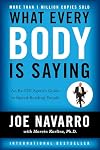
Author of What Every Body Is Saying: An Ex-FBI Agent's Guide to Speed-Reading People
About the Author
FBI Special Agent (Ret.) Joe Navarro is widely regarded as one of the world's leading experts in nonverbal communication. He is the bestselling author of five books, which together have sold more than a million copies and have been translated into dozens of languages. Tonic Sciarra Poynter is a show more writer and editor who lives in New York City. show less
Works by Joe Navarro
What Every Body Is Saying: An Ex-FBI Agent's Guide to Speed-Reading People (2008) 1,843 copies, 24 reviews
Dangerous Personalities: An FBI Profiler Shows You How to Identify and Protect Yourself from Harmful People (2014) 234 copies, 4 reviews
Louder Than Words : Take Your Career From Average To Exceptional With the Hidden Power of Nonverbal Intelligence (2009) 133 copies
Three Minutes to Doomsday: An Agent, a Traitor, and the Worst Espionage Breach in U.S. History (2017) 94 copies, 3 reviews
Phil Hellmuth Presents Read 'Em and Reap: A Career FBI Agent's Guide to Decoding Poker Tells (2006) 92 copies, 3 reviews
Be Exceptional: Master the Five Traits That Set Extraordinary People Apart (2021) 60 copies, 1 review
The Power of Body Language: An Ex-FBI Agent's System for Speed-Reading People (2009) 18 copies, 2 reviews
O Que Todo Corpo Fala Um Ex-agente Do Fbi Ensina Como Decodificar A Linguagem Corporal E Ler As Pessoas (Em Portugues do Brasil) (2019) 5 copies
O que todo corpo fala: Um ex-agente do FBI ensina como decodificar a linguagem corporal e ler as pessoas (2021) 4 copies
Außergewöhnlich: Ein FBI-Agent enthüllt die 5 Eigenschaften, die Menschen erfolgreich machen (2021) 3 copies
Allein gegen den Feind : Wie FBI-Agent Joe Navarro den grössten Spionageskandal der USA aufdeckte (2017) 2 copies
Mastering Connections: Build Stronger Relationships with the Science of Body Language (2026) 2 copies
Nebezpečné osobnosti : jak je odhalit a chránit se před nimi : příručka bývalého agenta FBI (2015) 1 copy
What Every Body Is Saying, The Dictionary of Body Language, The Definitive Book of Body Language 3 Books Collection Set (2023) 1 copy
Poems y Poemas 1 copy
For the Sisters 1 copy
Kūno kalba 1 copy
Što nam tijelo govori? 1 copy
The Power of Body Language 1 copy
Associated Works
Hearts of Darkness: Serial Killers, the Behavioral Science Unit, and My Life as a Woman in the FBI (2023) — Foreword, some editions — 100 copies, 2 reviews
Tagged
Common Knowledge
- Birthdate
- c. 1953
- Gender
- male
- Education
- Brigham Young University (BS)
- Occupations
- FBI Agent
- Organizations
- Federal Bureau of Investigation, National Security Division
Saint Leo University - Short biography
- Not many can say they were personally approached to join the FBI, but this is exactly what happened to Joe Navarro while he was working as a police officer at the tender age of 23. He accepted their offer and became one of the youngest agents ever to join the renowned investigative agency.
Joe spent the next 25 years at the FBI, working both as an agent and supervisor in the areas of counterintelligence and counterterrorism. Through his work he was able to study, refine and apply the science of non-verbal communications. His acumen in this field and his success as a spy-catcher, led Joe to begin training FBI agents and the intelligence community.
Retiring from the FBI in 2003, and meeting overwhelming demand for his notable insights into human behavior, Joe has dedicated himself to speaking and consulting with major corporations worldwide.
Today Joe is recognized as one of the world’s foremost authorities on reading non-verbal communications and he is regularly interviewed on programs such as NBC’s Today Show, Fox News, ABC’s Good Morning America, CBS’ Early Show, BBC News, and for publications such as The Washington Post, South China Morning Post and Psychology Today.
http://www.jnforensics.com/#!bio/csjh... - Nationality
- USA
Cuba (birth) - Birthplace
- Cienfuegos, Cuba
- Places of residence
- Tampa, Florida, USA
- Associated Place (for map)
- Tampa, Florida, USA
Members
Reviews
Pretty fascinating book. I'm pretty good at reading other peoples non-verbal cues but HORRIBLE at realizing what my own are. I'm sure I'm the most expressive person ever and I'm sure my body language betrays me all the time. Reading this book just helped me understand why we act and move the way we do even though we're not even aware we're doing it. Each chapter breaks down a different section of the body and how to speed read someone's mood, tell if they're lying, nervous, happy, or show more uncomfortable based off subtle body movements. I learned the most on the section about feet, they're one of the most expressive parts of your body and also one of the most overlooked. Feet placement can be very indicative of a person's true emotions. Overall an interesting and enlightening read; full of information that I've already started putting to use. show less

Interesting topic, and the author is clearly an authoritative subject matter expert, but a mediocre book. Fundamentally this topic is visual, so a video or live/in person lecture is always going to be better, but the book (and especially audiobook) were below what was possible even given medium constraints — lots of repetition and general awkwardness.
The core message is that nonverbal cues can convey comfort and discomfort, as well as sometimes intentions. Some (feet, gross body show more positioning, etc) are more inherently truthful than others (some facial expressions.). Unfortunately there was really only about 2-3 pages worth of material here, expanded to book form. I listened to it at 3.5x during a flight and it didn’t feel at all too fast; a summary would have had all of the real information in the book. OTOH, I would still happily go to an hour or two lecture by the author. show less
The core message is that nonverbal cues can convey comfort and discomfort, as well as sometimes intentions. Some (feet, gross body show more positioning, etc) are more inherently truthful than others (some facial expressions.). Unfortunately there was really only about 2-3 pages worth of material here, expanded to book form. I listened to it at 3.5x during a flight and it didn’t feel at all too fast; a summary would have had all of the real information in the book. OTOH, I would still happily go to an hour or two lecture by the author. show less
What a great book. This book is a revelation -- it points out a large number of cues that others pick up on effortlessly, and does so with enough underlying body language principles that I come away with a sense that I understand the material, rather than just having a set of memorized poses with associated meanings. This is a book that I tried to read slow, giving myself time for the ideas to sink into my brain and be observed in the real world before moving on to the next section
It show more contains a very good balance of specifics and patterns, and I thought that the concept repetition in the book was minimal and very useful in building out underlying principles when it did occur. I've found overused repetition to be rife in non-fiction and self-help-style books alike, so this was a breath of fresh air. However, it doesn't say anything shocking or new, and therefore isn't a book for people who already "get it" innately; this is definitely a book for people who get something from intellectualizing normal social interaction.
What Every Body is Saying is not about detecting deception -- in fact, the author repeatedly notes that deception is extremely hard to detect -- but rather about detecting comfort and stress in others. Awareness of others' feelings of comfort and stress, especially those feelings of comfort and stress that they are struggling to keep politely quiet from others, provides an extra layer of information about many situations that is extremely useful. The author gives examples of job interviews, waning relationships, new employment, infidelity, belligerent children, and negotiations, in addition to many examples from the FBI. (The FBI examples are given in little call-out boxes that I first sneered at as indicating a severe case of business-book-itis, but grew to appreciate for their real-world significance.)
The downsides of this book are few and far between. There are academic citations throughout the book that are weird, out of place, and clearly tacked on; I repeatedly rolled my eyes, because they are irrelevant to this sort of popular work. They seem much more about asserting respectworthiness to people who are impressed by that sort of thing than improving content. The Foreword and first chapter were likewise very much full of business-book-style bragging and maneuverings for respect based on what others have said. Those both decreased in presence and annoyingness throughout the book, however; by the end they weren't noticeable. Really, the largest piece of information this book lacked was an appendix where the various examples from the book were organized by the principles they exhibit and their body location. If the book had had that, there would have been nary a thing to quibble about. As it is, I still have very little to quibble about (and I have notes that serve the same purpose as an appendix :)).
Recommended, but only to IxTJs and those who aren't particularly intuitive with social interaction. show less
It show more contains a very good balance of specifics and patterns, and I thought that the concept repetition in the book was minimal and very useful in building out underlying principles when it did occur. I've found overused repetition to be rife in non-fiction and self-help-style books alike, so this was a breath of fresh air. However, it doesn't say anything shocking or new, and therefore isn't a book for people who already "get it" innately; this is definitely a book for people who get something from intellectualizing normal social interaction.
What Every Body is Saying is not about detecting deception -- in fact, the author repeatedly notes that deception is extremely hard to detect -- but rather about detecting comfort and stress in others. Awareness of others' feelings of comfort and stress, especially those feelings of comfort and stress that they are struggling to keep politely quiet from others, provides an extra layer of information about many situations that is extremely useful. The author gives examples of job interviews, waning relationships, new employment, infidelity, belligerent children, and negotiations, in addition to many examples from the FBI. (The FBI examples are given in little call-out boxes that I first sneered at as indicating a severe case of business-book-itis, but grew to appreciate for their real-world significance.)
The downsides of this book are few and far between. There are academic citations throughout the book that are weird, out of place, and clearly tacked on; I repeatedly rolled my eyes, because they are irrelevant to this sort of popular work. They seem much more about asserting respectworthiness to people who are impressed by that sort of thing than improving content. The Foreword and first chapter were likewise very much full of business-book-style bragging and maneuverings for respect based on what others have said. Those both decreased in presence and annoyingness throughout the book, however; by the end they weren't noticeable. Really, the largest piece of information this book lacked was an appendix where the various examples from the book were organized by the principles they exhibit and their body location. If the book had had that, there would have been nary a thing to quibble about. As it is, I still have very little to quibble about (and I have notes that serve the same purpose as an appendix :)).
Recommended, but only to IxTJs and those who aren't particularly intuitive with social interaction. show less
General Background and Overview
OK, I admit it. I put a reserve on this book the moment I saw it come up in the Auckland City Library catalogue, because it sounded like a perfect cross between education and entertainment, with a tie-in straight to my obsession of choice – Criminal Minds. You see, this is a book on body language, written by an ex-FBI agent who may not have actually worked as a profiler in the Behavioural Analysis Unit, but sounds like he came pretty damn close in terms of show more the kind of work he did. So really. How was I supposed to resist?
Good Stuff
This book did everything I was hoping it would – and more, to be honest. It’s the first book on non-verbal communication I’ve read this year that actually feels as though it goes deep enough into the issues I’m interested in (not just *what* different non verbal cues mean, but why we do or display them) – starting with an explanation of how our brain’s limbic system works, and how this is at the root of all our non-verbal communications, and moving on from there to discuss the cues given off by each area of the body in turn. It’s the first one to really underscore to the reader that most of the cues that are taken as indicating deception actually do no more than indicate discomfort or stress... and that unless you dig further, you have absolutely no idea what’s causing that stress. It’s also the first book I’ve read that recognises that gestures (and even clusters of gestures) on their own mean nothing – that what’s critical in understanding non-verbal communication is how and when it changes – and in direct response to what. Which means it’s the first book to explicitly and repeatedly caution readers that unless you get a baseline of body language cues when someone is relaxed, you can’t actually tell when it changes – a refreshing change from many of the books I’ve read recently.
In addition to all of the above, this book is meticulously researched... almost every assertion is backed up with a reference to a study (or in a few isolated cases, Mr Navarro will say ‘There’s no empirical research to support this statement, but I’ve observed it consistently in interviews/interrogations I’ve run’), and the bibliography at the back is two and a half pages long. And you can bet I’ll be trying to track down some of the books he lists at the back myself – colour me impressed.
And finally, there’s the entertainment part of the book. The vast majority of specific non-verbal cues the author discusses are illustrated in side-bar boxes that detail particular cases he (or other people he knows of) worked on in which noticing that particular cue proved to be the thing that cracked the case. So not only was I learning, but it was also like getting to watch Criminal Minds cases being played out in front of me. Repeatedly. Multiple times per chapter. Again, I ask you: seriously, how was I supposed to resist???
Bad Stuff
This is probably the first non-fiction book I’ve read this year where, when I try to identify bad stuff, I come up blank. Perhaps there’s a certain internal embarrassment with just how squee-y I get with the whole combination of entertainment and education... there’s a real guilty pleasure for me in having a book that supplied so much useful information, and at the time was so much fun for me to read. Although that says far more about me than it does about the book.
The only other thing I find disappointing is that this is the ONLY book by Mr Navarro that the library has in. I think I’m going to be recommending a couple of his other ones, just because he’s so damn interesting to read.
Rating and Recommendations
Right – as I’m sure you can tell, I enjoyed this book. A lot. And to be honest, the only way I can see someone NOT enjoying it is if they’re either a/ not interested in non-verbal communication in the first place, or b/ interested, but believe that the fact it’s written by an ex-FBI agent makes it somehow suspect or less valuable than if it were written by a professional academic. Which I guess is a viewpoint, but not one I share. I’m therefore officially giving this book the FIRST 10/10 rating that I’ve given a non-fiction book (and in fact, the first one I’ve given any book, ever). Which should probably say something about the level to which it impressed me.
And the next non-fiction book on my list is “Sway: the irresistible pull of irrational behaviour” by Ori & Rom Brafman. Because I’m kind of enjoying branching out into applied psych as well as communication. show less
OK, I admit it. I put a reserve on this book the moment I saw it come up in the Auckland City Library catalogue, because it sounded like a perfect cross between education and entertainment, with a tie-in straight to my obsession of choice – Criminal Minds. You see, this is a book on body language, written by an ex-FBI agent who may not have actually worked as a profiler in the Behavioural Analysis Unit, but sounds like he came pretty damn close in terms of show more the kind of work he did. So really. How was I supposed to resist?
Good Stuff
This book did everything I was hoping it would – and more, to be honest. It’s the first book on non-verbal communication I’ve read this year that actually feels as though it goes deep enough into the issues I’m interested in (not just *what* different non verbal cues mean, but why we do or display them) – starting with an explanation of how our brain’s limbic system works, and how this is at the root of all our non-verbal communications, and moving on from there to discuss the cues given off by each area of the body in turn. It’s the first one to really underscore to the reader that most of the cues that are taken as indicating deception actually do no more than indicate discomfort or stress... and that unless you dig further, you have absolutely no idea what’s causing that stress. It’s also the first book I’ve read that recognises that gestures (and even clusters of gestures) on their own mean nothing – that what’s critical in understanding non-verbal communication is how and when it changes – and in direct response to what. Which means it’s the first book to explicitly and repeatedly caution readers that unless you get a baseline of body language cues when someone is relaxed, you can’t actually tell when it changes – a refreshing change from many of the books I’ve read recently.
In addition to all of the above, this book is meticulously researched... almost every assertion is backed up with a reference to a study (or in a few isolated cases, Mr Navarro will say ‘There’s no empirical research to support this statement, but I’ve observed it consistently in interviews/interrogations I’ve run’), and the bibliography at the back is two and a half pages long. And you can bet I’ll be trying to track down some of the books he lists at the back myself – colour me impressed.
And finally, there’s the entertainment part of the book. The vast majority of specific non-verbal cues the author discusses are illustrated in side-bar boxes that detail particular cases he (or other people he knows of) worked on in which noticing that particular cue proved to be the thing that cracked the case. So not only was I learning, but it was also like getting to watch Criminal Minds cases being played out in front of me. Repeatedly. Multiple times per chapter. Again, I ask you: seriously, how was I supposed to resist???
Bad Stuff
This is probably the first non-fiction book I’ve read this year where, when I try to identify bad stuff, I come up blank. Perhaps there’s a certain internal embarrassment with just how squee-y I get with the whole combination of entertainment and education... there’s a real guilty pleasure for me in having a book that supplied so much useful information, and at the time was so much fun for me to read. Although that says far more about me than it does about the book.
The only other thing I find disappointing is that this is the ONLY book by Mr Navarro that the library has in. I think I’m going to be recommending a couple of his other ones, just because he’s so damn interesting to read.
Rating and Recommendations
Right – as I’m sure you can tell, I enjoyed this book. A lot. And to be honest, the only way I can see someone NOT enjoying it is if they’re either a/ not interested in non-verbal communication in the first place, or b/ interested, but believe that the fact it’s written by an ex-FBI agent makes it somehow suspect or less valuable than if it were written by a professional academic. Which I guess is a viewpoint, but not one I share. I’m therefore officially giving this book the FIRST 10/10 rating that I’ve given a non-fiction book (and in fact, the first one I’ve given any book, ever). Which should probably say something about the level to which it impressed me.
And the next non-fiction book on my list is “Sway: the irresistible pull of irrational behaviour” by Ori & Rom Brafman. Because I’m kind of enjoying branching out into applied psych as well as communication. show less
Lists
You May Also Like


Associated Authors
Statistics
- Works
- 66
- Also by
- 1
- Members
- 2,885
- Popularity
- #8,879
- Rating
- 3.8
- Reviews
- 39
- ISBNs
- 120
- Languages
- 14
- Favorited
- 3
