
Stan Tekiela
Author of Birds of Minnesota Field Guide
About the Author
Naturalist Stan Tekiela is an award-winning wildlife photographer and the author of many popular state-specific field guides. He has written educational books about wildlife, including children's books, quick guides and more, presenting birds, mammals, reptiles, amphibians, trees, wildflowers and show more cacti. show less
Series
Works by Stan Tekiela
Bird Trivia: Funny, Strange and Incredible Facts about North American Birds (2018) 41 copies, 1 review
Birds of Maryland & Delaware Field Guide: Includes Washington, D.C. & Chesapeake Bay (2005) 38 copies, 2 reviews
Birds of the Southwest: Your Way to Easily Identify Backyard Birds (Adventure Quick Guides) (2014) 21 copies
Birds of Prey of the Midwest: Your Way to Easily Identify Raptors (Adventure Quick Guides) (2013) 12 copies
Wildflowers of the Midwest: Your Way to Easily Identify Wildflowers (Adventure Quick Guides) (2017) 12 copies
Stan Tekiela’s Birding for Beginners: Midwest: Your Guide to Feeders, Food, and the Most Common Backyard Birds (Bird-Watching Basics) (2020) 11 copies
Reptiles & Amphibians of Michigan Field Guide (Reptiles & Amphibians (Adventure Publications)) (2004) 10 copies, 1 review
Stan Tekiela’s Birding for Beginners: Northeast: Your Guide to Feeders, Food, and the Most Common Backyard Birds (Bird-Watching Basics) (2020) 9 copies
Stan Tekiela’s Birding for Beginners: California: Your Guide to Feeders, Food, and the Most Common Backyard Birds (Bird-Watching Basics) (2020) 7 copies
Stan Tekiela’s Birding for Beginners: Pacific Northwest: Your Guide to Feeders, Food, and the Most Common Backyard Birds (Bird-Watching Basics) (2020) 7 copies
Water Birds of the Midwest: Your Way to Easily Identify Water Birds (Adventure Quick Guides) (2013) 7 copies
The Kids' Guide to Birds of Ohio: Fun Facts, Activities and 85 Cool Birds (2019) 6 copies, 2 reviews
Birds of the Northwest: Your Way to Easily Identify Backyard Birds (Adventure Quick Guides) (2017) 6 copies
Shorebirds of the Southeast & Gulf States: Your Way to Easily Identify Shorebirds (Adventure Quick Guides) (2017) 6 copies
Birds of the Southeast: Your Way to Easily Identify Backyard Birds (Adventure Quick Guides) (2014) 6 copies
Birds of the Northeast: Your Way to Easily Identify Backyard Birds (Adventure Quick Guides) (2015) 5 copies
Stan Tekiela’s Birding for Beginners: South: Your Guide to Feeders, Food, and the Most Common Backyard Birds (Bird-Watching Basics) (2020) 4 copies
Stan Tekiela’s Birding for Beginners: Southwest: Your Guide to Feeders, Food, and the Most Common Backyard Birds (Bird-Watching Basics) (2020) 4 copies
Midwest Birding Companion: Field Guide & Birding Journal (Complete Bird-Watching Guides) (2021) 4 copies
Bears of North America: Black Bears, Brown Bears, and Polar Bears (Favorite Wildlife) (2023) 4 copies
Bird Feathers & Eggs of the Midwest: Identify 40 Species of Common Backyard Birds (Adventure Quick Guides) (2025) 2 copies
Stan Tekiela’s Birding for Beginners: Rocky Mountains: Your Guide to Feeders, Food, and the Most Common Backyard Birds (Bird-Watching Basics) (2020) 2 copies
Birds of Nebrask Field Guide 2 copies
Birds of the South: Your Way to Easily Identify Backyard Birds (Adventure Quick Guides) (2021) 1 copy
Associated Works
Tagged
Common Knowledge
- Birthdate
- 1961
- Gender
- male
- Education
- University of Minnesota (BS, Natural History)
- Occupations
- photographer
author
naturalist - Organizations
- Minnesota Naturalists Association
Minnesota Ornithologists' Union
Outdoor Writers Association of America - Short biography
- [from Owls: The Majestic Hunters]
Naturalist, wildlife photgrapher, and writer Stan Tekiela is the originator of the popular Wildlife Appreciation series that includes Loons. Stan has authored more than 190 educational books, including field guides, quick guides, nature books, children's books, and more, presenting many species of animals and plants.
With a Bachelor of Science degree in natural history from the University of Minnesota and as an active professional naturalist for more than 30 years, Stan studies and photographs wildlife throughout the United States and Canada. He has received national and regional awards for his books and photographs and is also a well-known columnist and radio personality. His syndicated column appears in more than 25 newspapers, and his wildlife programs are broadcast on a number of Midwest radio stations. You can follow Stan on Facebook, Instagram, and Twitter, or contact him via his website, naturesmart.com. - Nationality
- USA
- Places of residence
- Victoria, Minnesota, USA
- Associated Place (for map)
- Minnesota, USA
Members
Reviews
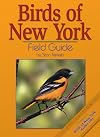
This is a perfect field guide for New York birders. As it includes only those birds seen in New York, it eliminates the often tedious identification process of sifting through the entire continent's population found in the more voluminous North American guides. The book is pocket-sized, organized by each bird's prominent color for quick identification, and includes large, clear photos rather than drawings. There is an extensive introductory section, and informative, detailed notes for each show more species. Of particular mention is the very useful "compare" feature for each entry, which helps distinguish between look-alikes. This book is part of Stan Tekiela's State Field Guide Series. While the series does not cover all 50 states, American birders would be wise to check out the series to see if their state is included. Indispensable. show less

For a while I'd been thinking I need another flower ID book and when I moved here I decided that a state-specific book would be good. For the most part it is, but the idea of what is pink or purple is sometimes wrong in my eyes. Maybe it's how differently we all see color, but it is misleading and I've often not found my flower in this book only to find it in another, look here and see it's filed under a strange color I didn't think to look under. Overall though this book is organized well show more and there's good information about the species depicted. Each flower entry includes its range, when and where it blooms, a description and little icons to help you with flower type (shape), leaf type, leaf attachment and the fruit it makes. It's from the same publisher as the Midwest Mushrooms book and is equally cute. show less
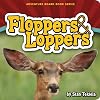
Adventure Publications is a new publisher I looked at when I was at ALA in summer 2017. I've been looking at a few different books from them and I found one of their board books to review today.
Although it's not quite clear from the title, this is a book about animal ears. Each spread shows a photograph of an animal. There is a small white caption that labels the animal, an inset photograph showing a close up of their ear with a pop-out quote, and an additional fact about them in a brightly show more colored inset. So for a cricket there's a photograph of a cricket, an inset of their ear on their leg, and the text reads "This white spot on my leg is my ear!" and "Crickets' ears are on their front legs, below their knees."
The photo of an owl doesn't show its ears, which are hidden by feathers, but its feather tufts which are not ears (the text explains this). The book is a traditional square, sturdy cardboard, and the layout is fairly simple and uncluttered.
I like photographs for board books and simple illustrations. The concept of different creatures having different ears is probably best for at least a toddler age but even younger babies will enjoy looking at the animals. This is a good example of nonfiction in board books, as opposed to some other things which I will not mention here.
Verdict: A good addition to your board book collection.
ISBN: 9781591934240; Published 2013 by Adventure Publications; Borrowed from another library in my consortium show less
Although it's not quite clear from the title, this is a book about animal ears. Each spread shows a photograph of an animal. There is a small white caption that labels the animal, an inset photograph showing a close up of their ear with a pop-out quote, and an additional fact about them in a brightly show more colored inset. So for a cricket there's a photograph of a cricket, an inset of their ear on their leg, and the text reads "This white spot on my leg is my ear!" and "Crickets' ears are on their front legs, below their knees."
The photo of an owl doesn't show its ears, which are hidden by feathers, but its feather tufts which are not ears (the text explains this). The book is a traditional square, sturdy cardboard, and the layout is fairly simple and uncluttered.
I like photographs for board books and simple illustrations. The concept of different creatures having different ears is probably best for at least a toddler age but even younger babies will enjoy looking at the animals. This is a good example of nonfiction in board books, as opposed to some other things which I will not mention here.
Verdict: A good addition to your board book collection.
ISBN: 9781591934240; Published 2013 by Adventure Publications; Borrowed from another library in my consortium show less
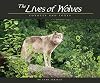
This is a more comprehensive book than I at first expected it to be. While it follows in the footsteps of [b: Fox|1902241|The Adoration of Jenna Fox (Jenna Fox Chronicles, #1)|Mary E. Pearson|https://images.gr-assets.com/books/1388715600s/1902241.jpg|1903936] by having some disinformation in it concerning the care and management of wolf-dog-hybrids, for the most part this is a very good book about the habits of grey wolves, red foxes, and coyotes. They compare the animals to show how some show more canidae behavior is true across the board, and highlight some of the differences in a respectful manner. At the back of the book is a breakdown of the variety of fox and wolf species in North America, with a nod to the mad number of coyote subspecies (in this book estimated at 19) and wolf subspecies. Only a brief mention is given to the red wolf controversy.
I respect the manner in which the author writes. The pictures are positively stunning as well, an teh respect he affords his animal subjects is high. There are only a few moments where his writing gave me pause. Primarily when he talked about the alpha dogs in the wolf pack, although he did end up backtracking a bit to explain the fallacy of that myth. The main issues I had with the book were in regards to the hybridization of the Eastern Coyote, Red Wolf, etc. Due to decreases in territory there has been pretty extensive mating between wolves, coyotes, and dogs in the North East. This canis soupus has spread as far south as here in MD, and is easily seen by the size and coloring of the coyotes.
You can even see them in golden retriever yellow.
Further, breeding coydogs has happened for centuries here in America. The Native Americans used to do it, and in the west it is still occasionally done to produce superior hunting dogs. While it is good to discourage this, saying it never happens is naive. Same with wolf dogs. Calling all wolf dogs dangerous is a discredit to the proper breeding that can go into producing them and responsible owners who care for the animals.
Still, all in all this is a beautiful and well-researched book. It's worth checking out for the photos alone, the good information within it is just a bonus to what is already great visual content. show less
I respect the manner in which the author writes. The pictures are positively stunning as well, an teh respect he affords his animal subjects is high. There are only a few moments where his writing gave me pause. Primarily when he talked about the alpha dogs in the wolf pack, although he did end up backtracking a bit to explain the fallacy of that myth. The main issues I had with the book were in regards to the hybridization of the Eastern Coyote, Red Wolf, etc. Due to decreases in territory there has been pretty extensive mating between wolves, coyotes, and dogs in the North East. This canis soupus has spread as far south as here in MD, and is easily seen by the size and coloring of the coyotes.
You can even see them in golden retriever yellow.
Further, breeding coydogs has happened for centuries here in America. The Native Americans used to do it, and in the west it is still occasionally done to produce superior hunting dogs. While it is good to discourage this, saying it never happens is naive. Same with wolf dogs. Calling all wolf dogs dangerous is a discredit to the proper breeding that can go into producing them and responsible owners who care for the animals.
Still, all in all this is a beautiful and well-researched book. It's worth checking out for the photos alone, the good information within it is just a bonus to what is already great visual content. show less
Lists
Tour of Iowa (1)
Awards


You May Also Like


Associated Authors
Statistics
- Works
- 199
- Also by
- 1
- Members
- 6,127
- Popularity
- #4,017
- Rating
- 4.1
- Reviews
- 64
- ISBNs
- 407
- Languages
- 1
- Favorited
- 1
