
Benjamin Lorr
Author of The Secret Life of Groceries: The Dark Miracle of the American Supermarket
About the Author
Benjamin Lorr is the author of Hell Bent, a Critically acclaimed exploration of the Bikram Yoga community that was the first book to detail patterns of abuse and sexual misconduct by guru Bikram Choudhury. Lorr is a graduate of Montgomery County public schools and Columbia University. He lives in show more New York City. show less
Works by Benjamin Lorr
The Secret Life of Groceries: The Dark Miracle of the American Supermarket (2020) 646 copies, 33 reviews
Hell-Bent: Obsession, Pain, and the Search for Something Like Transcendence in Competitive Yoga (2012) 84 copies, 5 reviews
Tagged
Common Knowledge
- Gender
- male
- Education
- Columbia University
- Occupations
- high school teacher
- Nationality
- USA
- Places of residence
- Manhattan, New York, New York, USA
- Associated Place (for map)
- New York, USA
Members
Reviews
Hell-Bent: Obsession, Pain, and the Search for Something Like Transcendence in Competitive Yoga by Benjamin Lorr
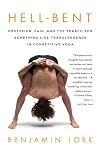
As a near-daily practitioner of yoga myself, who is very familiar with this particular sequence of poses, and had just so happened to have already seen a documentary about the insanity that is Bikram, I am happy to report that I was set up for a perfect 5-star experience reading this book. The film is not too long and I highly recommend watching it if you have Netflix (Bikram: Yogi, Guru, Predator), or at least doing some background research of your own and seeing basic pictures on Google of show more what a real hot yoga class with him looks like before diving into this book. It's. Crazy.
Normally I despise when nonfiction books about a specific educational topic turn into the style of a memoir, but it works incredibly well when Lorr does it (I loved his other book, too). I loved reading about his experiences in back-bending club (yikes) and eventually as a student of Bikram (also yikes). I loved listening to this audiobook in the car on my way to and from yoga. It got me strangely excited about my practice, even though the stuff covered in this book is mostly straight up brutal and not at all what yoga should be... that's why it was so entertaining. show less
Normally I despise when nonfiction books about a specific educational topic turn into the style of a memoir, but it works incredibly well when Lorr does it (I loved his other book, too). I loved reading about his experiences in back-bending club (yikes) and eventually as a student of Bikram (also yikes). I loved listening to this audiobook in the car on my way to and from yoga. It got me strangely excited about my practice, even though the stuff covered in this book is mostly straight up brutal and not at all what yoga should be... that's why it was so entertaining. show less
This book wasn't quite what I was expecting. What I was expecting was a thorough, systematic, fact-filled look at the operation of the American grocery industry, probably including an exposé of some of its more disturbing practices. Well, the exposé part is definitely here, and it extends well beyond the grocery chains, including some deeply disturbing explorations of everything from exploitative practices in the American trucking industry, to the complex and wholly inadequate system of show more food inspection, to slave labor in Thai shrimp fishing, all of which the author investigated personally. But, ultimately, this is less a thorough declaration of facts than an extended philosophical meditation on the taken-for-granted bounty and the hidden horrors of the most mundane-seeming aspects of modernity. I wasn't entirely sure how I felt about this, at first, as in places it did kind of feel like it bordered on the pretentious, but ultimately I did find it rather powerful, with lots of disturbing -- if you'll forgive the pun -- food for thought. show less
The grocery store is the high temple of Late Capitalism, an unending cornucopia of everything that you want. And like any good high temple, it has its shadowy underbelly, a galaxy of corruption and lies that makes the magic work. Food is one of the key universals, but how we eat is highly specific. Lorr follows Upton Sinclair's classic muckraking in The Jungle, mixing cultural theory with extended anecdotes based on his reporting to show all sides of store. As I write this, the high price of show more groceries is one of the key issues of the 2024 election. Yet historically, Americans spend about 10% of their income on groceries today, compared to 30% in 1950 and 50% in 1900. The system is efficient and bountiful, even as parts of it are rotten.
Premier Gorbachev marveling at the produce at Randall's Supermarket in 1989. Tear down these savings!
The first thing to note is that the modern supermarket is a relatively new phenomenon, only arriving in the early 20th century and coming into its own in the immediate postwar boom. The ideology of the supermarket is abundance, choice, and cost. To get there, there is an intensive process that takes raw living organisms, crops and animals, and processes them into industrial commodities. Then, these commodities are transformed into products, everything from a single banana ("It's one banana, Michael, how much could it cost? 10 dollars?") to a frozen meal with dozens of ingredients. Finally, we place in our cart and take it home, where only then does it become food.
Managing the product stage is one key part of the grocery experience. Lorr conducted an extended interview with "Trader Joe" Coulombe, founder of the eponymous chain, who is usually and rightfully deemed a product visionary. Trader Joe's went in a unique direction in the 1960s, focusing on a Southern California customer base of the 'overeducated and underpaid', and achieving record profitability by focusing on employees, profit per square inch of shelf space, and unique products with an aura of sophistication.
Trader Joe's has a unique vision, but most grocery stores are Walmart/Safeway/ALDI. The thousands of products represent not so much a unique vision of the shopper as a random selection of brands engaged in brutal Darwinian competition. And it is truly Darwinian. Another major arc follows the tragically named Slawsa and its intensely driven owner Julie Busha (she was subsequently on Shark Tank) towards potential success on the shelves. Of new products, over 90% of them disappear within a year. Slawsa is made in a small (by food logistics standards, it's several thousand square feet of reconfigurable production space) industrial kitchen in North Carolina that makes hundreds of unique products on demand.
The story of Slawsa is one of those American dreams of an idea that might make it big. Its manufacturing is also hygienic, fair, and efficient. Getting on shelves and then into shopper's carts, is where the corruption lies in this story. Groceries are a notorious unprofitable business, with stores making perhaps 1.5% profit on what they sell. The money is in kickbacks from distributors. A fee for getting in the store, another for better shelf space, mandatory bonus cases in each shipment, requirements to purchase ads in those newspaper inserts that get thrown away unread, two-for-one deals at the distributor's expense. It's pay-to-win, and unless you come in with deep pockets, you simply won't.
A similar story of is in the various certifications on products: Organic, FairTrade, Sustainable Fisheries, etc and so on. Food safety auditing is overwhelming privatized, ethical labelling even more so. In one sense, this public-private partnership, backed up by class action lawsuits, has made American food much safer since the 1990s, as recalls have fallen immense. On the other hand, auditors are barely trained, report to the people who hire them, and have conflicting incentives to not see problems that don't make customers sick.
Ethical and supply-chain labels conceal horrific problems, as the back half of the book focuses on, with a segment with the NGO Labor Protection Network, its founders, and one of its exemplars, a former fisher named Tun-Lin. Tun-Lin was born in Burma, illegally immigrated to Thailand in search of work, wound up enslaved on a fishing boat for five years (where he witnessed his only friend beaten to death and tossed overboard), enslaved on land in a shrimping facility for more years, and then went back to another boat of his own free will before losing a hand. Slavery is endemic in shrimp, chocolate, and coffee, among other commodities. The pressure is to reduce prices in the store and look the other way, and Lorr is deeply skeptical about reforms doing anything than pushing the problem to another region.
While not technically slavery, the whole grocery system runs on trucking, and trucking is profoundly bad. Lorr rides with Lynne Ryles for a week, a veteran owner-operator who routinely works up to the legal limit of 14 hours a day, 70 hours a week, in the exhausting and alienating ordeal of driving a big rig, and who makes maybe $100 a week above expenses, if everything goes right. Ryles is slowly killing herself in pursuit of the open road, and she's good at this. Trucking as an industry has about a 120% annual turnover, and only functions by a constant influx of indebted trainees, who front the costs to learn how to drive, are coerced to sign owner-operator leases, and then have the money sucked out of them by literally everyone else in the system.
Against this, ordinary grocery retail is merely ordinary bullshit. Lorr worked six months at Whole Foods, just prior to the Amazon acquisition, and retail is long hours, crazy customers, and just-in-time staffing that prevents people from having a predictable income, or a schedule stable enough to work a second job or have a life. (As an aside, as someone who has only had good 9-5 jobs, I strongly believe this kind of mandatory just-in-time staffing should be illegal, and the officers of any company found practicing it should be required to serve jail time in 12 hour shifts at random until their sentence is completed.)
There are things to genuinely critique in this book. It's a series of anecdotes backed up by data, not a systematic analysis. Lorr is definitely an MFA style writer, and dances a fine line of over-egging his prose. The conclusion about how grocery stores reflect and represent us isn't wrong, but dissipates its impact in a cushion of theory. Yet those flaws are minor. This book cuts to the core of American life. You may not like what you see, but that's what's for sale. show less
Premier Gorbachev marveling at the produce at Randall's Supermarket in 1989. Tear down these savings!
The first thing to note is that the modern supermarket is a relatively new phenomenon, only arriving in the early 20th century and coming into its own in the immediate postwar boom. The ideology of the supermarket is abundance, choice, and cost. To get there, there is an intensive process that takes raw living organisms, crops and animals, and processes them into industrial commodities. Then, these commodities are transformed into products, everything from a single banana ("It's one banana, Michael, how much could it cost? 10 dollars?") to a frozen meal with dozens of ingredients. Finally, we place in our cart and take it home, where only then does it become food.
Managing the product stage is one key part of the grocery experience. Lorr conducted an extended interview with "Trader Joe" Coulombe, founder of the eponymous chain, who is usually and rightfully deemed a product visionary. Trader Joe's went in a unique direction in the 1960s, focusing on a Southern California customer base of the 'overeducated and underpaid', and achieving record profitability by focusing on employees, profit per square inch of shelf space, and unique products with an aura of sophistication.
Trader Joe's has a unique vision, but most grocery stores are Walmart/Safeway/ALDI. The thousands of products represent not so much a unique vision of the shopper as a random selection of brands engaged in brutal Darwinian competition. And it is truly Darwinian. Another major arc follows the tragically named Slawsa and its intensely driven owner Julie Busha (she was subsequently on Shark Tank) towards potential success on the shelves. Of new products, over 90% of them disappear within a year. Slawsa is made in a small (by food logistics standards, it's several thousand square feet of reconfigurable production space) industrial kitchen in North Carolina that makes hundreds of unique products on demand.
The story of Slawsa is one of those American dreams of an idea that might make it big. Its manufacturing is also hygienic, fair, and efficient. Getting on shelves and then into shopper's carts, is where the corruption lies in this story. Groceries are a notorious unprofitable business, with stores making perhaps 1.5% profit on what they sell. The money is in kickbacks from distributors. A fee for getting in the store, another for better shelf space, mandatory bonus cases in each shipment, requirements to purchase ads in those newspaper inserts that get thrown away unread, two-for-one deals at the distributor's expense. It's pay-to-win, and unless you come in with deep pockets, you simply won't.
A similar story of is in the various certifications on products: Organic, FairTrade, Sustainable Fisheries, etc and so on. Food safety auditing is overwhelming privatized, ethical labelling even more so. In one sense, this public-private partnership, backed up by class action lawsuits, has made American food much safer since the 1990s, as recalls have fallen immense. On the other hand, auditors are barely trained, report to the people who hire them, and have conflicting incentives to not see problems that don't make customers sick.
Ethical and supply-chain labels conceal horrific problems, as the back half of the book focuses on, with a segment with the NGO Labor Protection Network, its founders, and one of its exemplars, a former fisher named Tun-Lin. Tun-Lin was born in Burma, illegally immigrated to Thailand in search of work, wound up enslaved on a fishing boat for five years (where he witnessed his only friend beaten to death and tossed overboard), enslaved on land in a shrimping facility for more years, and then went back to another boat of his own free will before losing a hand. Slavery is endemic in shrimp, chocolate, and coffee, among other commodities. The pressure is to reduce prices in the store and look the other way, and Lorr is deeply skeptical about reforms doing anything than pushing the problem to another region.
While not technically slavery, the whole grocery system runs on trucking, and trucking is profoundly bad. Lorr rides with Lynne Ryles for a week, a veteran owner-operator who routinely works up to the legal limit of 14 hours a day, 70 hours a week, in the exhausting and alienating ordeal of driving a big rig, and who makes maybe $100 a week above expenses, if everything goes right. Ryles is slowly killing herself in pursuit of the open road, and she's good at this. Trucking as an industry has about a 120% annual turnover, and only functions by a constant influx of indebted trainees, who front the costs to learn how to drive, are coerced to sign owner-operator leases, and then have the money sucked out of them by literally everyone else in the system.
Against this, ordinary grocery retail is merely ordinary bullshit. Lorr worked six months at Whole Foods, just prior to the Amazon acquisition, and retail is long hours, crazy customers, and just-in-time staffing that prevents people from having a predictable income, or a schedule stable enough to work a second job or have a life. (As an aside, as someone who has only had good 9-5 jobs, I strongly believe this kind of mandatory just-in-time staffing should be illegal, and the officers of any company found practicing it should be required to serve jail time in 12 hour shifts at random until their sentence is completed.)
There are things to genuinely critique in this book. It's a series of anecdotes backed up by data, not a systematic analysis. Lorr is definitely an MFA style writer, and dances a fine line of over-egging his prose. The conclusion about how grocery stores reflect and represent us isn't wrong, but dissipates its impact in a cushion of theory. Yet those flaws are minor. This book cuts to the core of American life. You may not like what you see, but that's what's for sale. show less
Muckraking at its finest and bleakest, The Secret Life is an absolutely horrid odor you can't stop smelling. Lorr investigates the eldritch maw of the grocery industry not with outrage but awe. As the subtitle suggests, A Dark Miracle indeed.
The section about the shadow world of American trucking will turn you into the joker. How fleets con the poor and dispossessed into debt and modern indentured servitude with misleading advertising for jobs that don't exist. Or that turnover in trucking show more has ranged from something like 90%-112% over the last decade. The overwhelming amount of sexual harassment and assault that the minority of female truckers face in the industry. Then there's the section on migrant slave fisherman in Thailand. Still, there are moments of hope if you squint. One woman's journey to get her passion project, Slawsa, on shelves in supermarkets. That's the combination of coleslaw and salsa in a jar, sort of a relish or a cousin of the southern chow-chow. It's just fun to say. Slawsa. Really all the human stories throughout the industry are a balm. The section about the origins of Trader Joe's is particularly interesting and hopeful, until the founder sells the chain to its current owners, a german super-conglomerate.
Anyway, there's a lot to chew on but I liked how Lorr grapples with the futility of investigations like this in the closing pages. The answers at the bottom of the well after all the digging are answers we crave and want to be outraged by but do not want to learn from. Answers that illuminate symptoms not the disease. (The disease is certainly capitalism and perhaps humanity). show less
The section about the shadow world of American trucking will turn you into the joker. How fleets con the poor and dispossessed into debt and modern indentured servitude with misleading advertising for jobs that don't exist. Or that turnover in trucking show more has ranged from something like 90%-112% over the last decade. The overwhelming amount of sexual harassment and assault that the minority of female truckers face in the industry. Then there's the section on migrant slave fisherman in Thailand. Still, there are moments of hope if you squint. One woman's journey to get her passion project, Slawsa, on shelves in supermarkets. That's the combination of coleslaw and salsa in a jar, sort of a relish or a cousin of the southern chow-chow. It's just fun to say. Slawsa. Really all the human stories throughout the industry are a balm. The section about the origins of Trader Joe's is particularly interesting and hopeful, until the founder sells the chain to its current owners, a german super-conglomerate.
Anyway, there's a lot to chew on but I liked how Lorr grapples with the futility of investigations like this in the closing pages. The answers at the bottom of the well after all the digging are answers we crave and want to be outraged by but do not want to learn from. Answers that illuminate symptoms not the disease. (The disease is certainly capitalism and perhaps humanity). show less
Awards


You May Also Like


Statistics
- Works
- 2
- Members
- 730
- Popularity
- #34,782
- Rating
- 3.9
- Reviews
- 38
- ISBNs
- 18